
After an extensive career as an editor in the documentary field and some short jobs in direction, The Catalan Meritxell Colell surprised everyone and everyone with a solid debut in the field of fiction. with the wind It was an eclectic work., with a mixed architecture that mixed narrative strategies from both audiovisual genres. There he introduced us to Monica, a mature woman, profession dancer, who returns to his hometown due to the death of his father. In a subtle, but be careful introspection process, Monica reunited with her origins, represented in the harsh landscape and living conditions of rural Burgos, as well as with a family from whom he had distanced himself and with whom he closed wounds and old differences.. In the middle of all this, dance appeared as an external expression of his intimate self, as well as an escape route from those tensions pending or to be resolved.
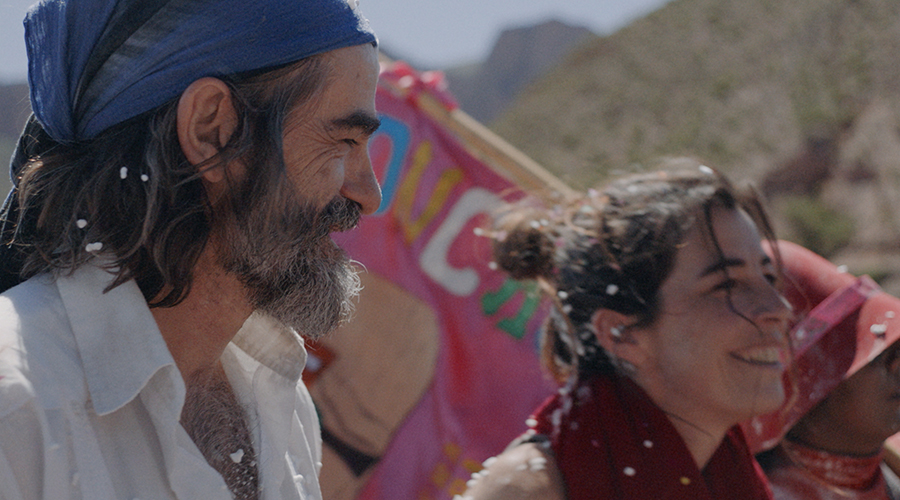
Con Duo, his second long work of fiction, which these days previews the Cinema Jove International Film Festival, Colell returns to his main character, Monica, and places him in a time after those events to face a new stage of his life. New stage, new conflicts. After the experience lived in his town, Monica (performed again by the dancer Mónica García), goes on tour with a small dance show with Gonzalo, your partner, through the desolate lands of northern Argentina. Among the difficulties of traveling through an inhospitable and hostile territory, and meetings with small indigenous populations to whom they offer their performances and who welcome them, a relationship clearly in crisis develops. After the trip to his town, Monica wonders many things. She is no longer the same woman. Despite the long relationship that has united them, Is Gonzalo the man he wants to spend the rest of his days with?? We talk to its author about cinema, dance and so many other things that this particular work has suggested to us.
Duo opens in commercial theaters next 2 of September.
Duo It is a title that seems especially suggestive to me., that referred me to many things. What does it mean to you?
Yeah, Yeah. It's like this. Duo by the couple, evidently, because of the duo that they stage… And then there is like that idea of duality that I wanted to be very present in the film, because the Andean worldview is based a lot on that, in duality, in which there is no sun without moon, there is no man without a woman, they say it like this, this idea of the complementary. and then, because the structure that the film ended up having is that of a double journey. The shared journey of this tour and the parallel journey that Monica makes internally.
with the wind y Duo They are two films that have a kind of continuity, not only plot, but also dramatic. They are like two parts of an ongoing process., What is Monica's trip that you mention?. Why did you feel the need to make that sequel??
It's very nice how you described it., like two pieces of something that is in continuity and in progress. It's like life. The need to make this film has to do with that. When you portray a slice of life, you portray a character in a moment in which he has transformed and, therefore, opens to something new. So, appears Duo to see how this something new affects your previous life, and how this transformation generates a new crisis and, therefore, a new inner journey, where to? Just as in with the wind There was this idea of return and of opening up to ties and reconnecting with the outside in a process of a woman closed in on herself., and then more and more open, here is the idea is to start as a couple, disconnecting from your own relationship, to make the decision of where to go. It's a "here", no; but, “where to”. It is a questioning movement. That's one answer and the other is because [Monica Garcia and me] we wanted to continue working together (laughter)
There was something left pending…
Yeah, bueno. Because working together we experience it as something very beautiful. In the end, we are two creators and, therefore, two traveling companions. When I saw all the evolution of Mónica in like the wind, I felt like I had grown as an actress.. In fact, I believe that in Duo it's magnificent. It was about being able to do this whole process together and say: “let's see how he grows now and where this character can go, and she as an actress”. It was something that interested us a lot..
Your films have something of an almost anthropological search for the past. What are you looking for in that past? Is it a refuge or does it offer us a look back to make a reckoning and move forward??
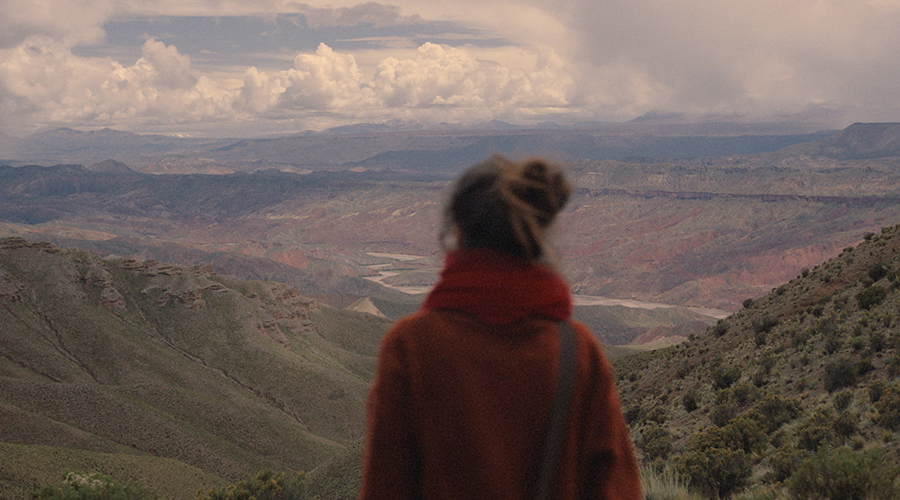
More than with the past (and the search is still there, I'm still involved) It is with what way we have to connect with the origins. On the one hand, Monica is checking her identity. In that sense, when you think about what you want and who you are, There is also something about “where you come from”. And then there is space. This Andean territory is the territory of the original communities, that have a connection with the different tradition, much closer to the origin, to an original relationship of people with the land. That's something that seemed interesting to me because, in any search for identity, one has to rethink what way one has to reconnect with the earth.
In your films there is an almost extreme search for naturalness. In that sense, How do you approach working with actors??
Just as in the case of with the wind we work without a script, in Duo, both Gonzalo and Mónica had the script, they read it, but when we were filming, that script was there, but it was not necessary for us to follow him. In this there were scenes and scenes. The scenes inside the car are different [during the couple's trip] which is pure fiction. Here, as long as they felt comfortable, We were crossing out dialogues and working a lot physically.. From there, we articulated the staging. And then there are the scenes with the communities or with the local people, in which we adapted a lot. Here the staging revolved around them and there was some improvisation. For example, when we were filming a scene about one of the community rituals, posed a situation to the actors, but we tried not to intervene too much so as not to interrupt the ritual and to be able to compose that staging.
Another important element of your films is the landscape and, above all, the sound that is associated with that landscape. I'm not just referring to the exterior landscape, sound is also relevant in human spaces. How do these elements arise or integrate within the continuum of the story??
When one seeks to make a sensory cinema, when you seek to transmit thermal sensations, tactile, There the relationship of image and sound is key. There the sound helps a lot to create textures, the cold, For example. Think about how you listen, helps create a certain three-dimensionality to the image and that landscape. It's not just putting a wind, but to ask yourself what sounds can generate certain sensations. Veronica Font, the sound engineer we always work with, He does an incredible craftsmanship of little sounds that are repeated to try to create resonances within the film. That is to say, It's about trying to make almost lyrical musical and rhyming work with space and sound..
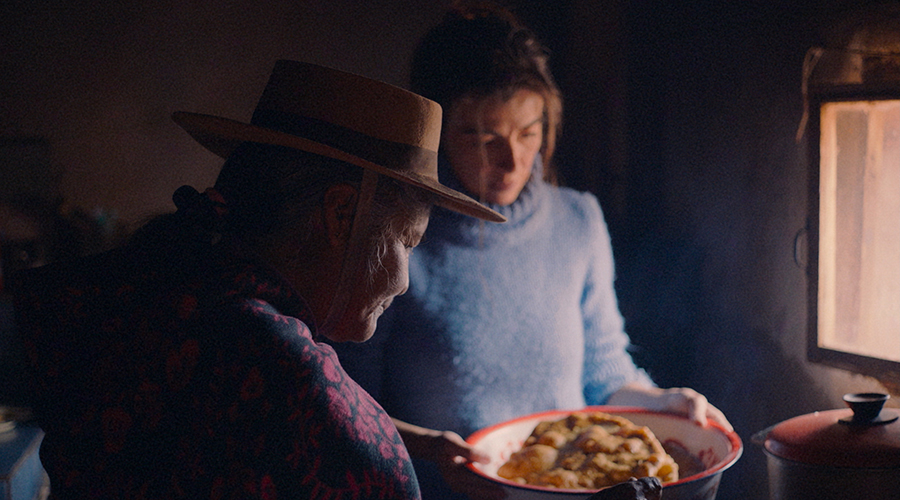
In your two films, dance is a central element. What is your implication with this form of expression?
I am passionate about dance, I find it a wonderful place of expression. But, beyond that, there are two things. On the one hand, dance is at the origin of humanity. Any daily and collective ritual goes through dance, since the beginning of time. There is something there that is telluric and very elemental and magical for the human being that I like to rescue.. In this sense, The two films propose to go from a contemporary dance, more theatrical, to a dance more related to nature, more linked to life. And on the other hand, because cinema is bodies in motion (laughter). Ask myself why dance seems very strange to me. Well because it's cinema. Cinema and dance go hand in hand. We can call it a dance when we see two people doing a more stipulated dance as such, but seeing a tree moving by the wind is also dance. For me, Working with dance is seeking that intensification of gesture and movement.
There is a phrase from the film that has especially caught my attention and that is when, at a time of crisis in the relationship between the two protagonists, Monica wonders: “dancing for what and for whom”. It seems to me that there is something about you in those questions that I suppose is related to cinema.. In these times that run, make cinema, because? Y, for whom?
Yeah, absolutely. Bueno, is that in the film there is a speech below that states that, when a film crew goes to make a movie in a place like that, why do you do it? So that? for whom? For us it was key that those two fictional characters who tour those places were our alter-ego as a film team that is doing that same route and that is doing those same processes of talking to the community., to hold assemblies, etc. It was about questioning why, the from where, how we related to them. Yeah, what is cinema? So that? for whom? It's a question that's always there.. I myself sometimes have crises in which I wonder, "Yeah?, make movies? So that?” (laughter) But even more so if we go to an area that has been colonized and in which you are the colonist., because you come from Spain. It was about questioning whether that relationship can be transmuted or transformed into something else..
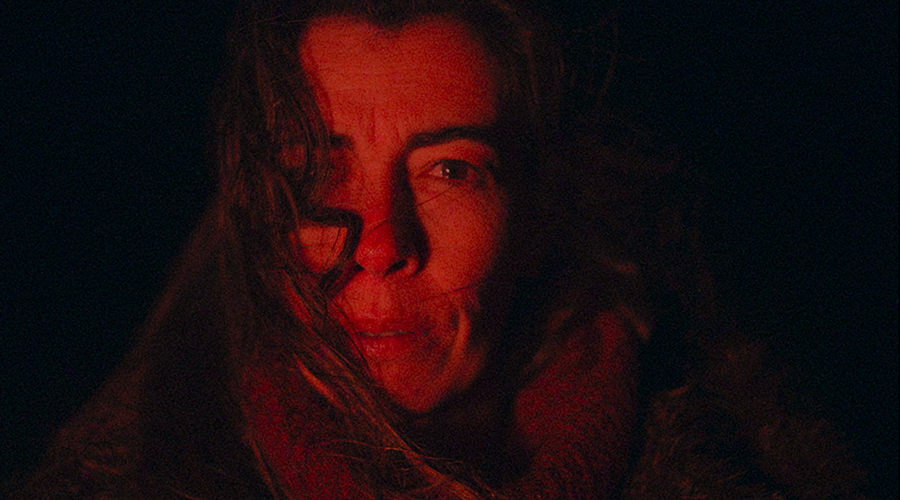
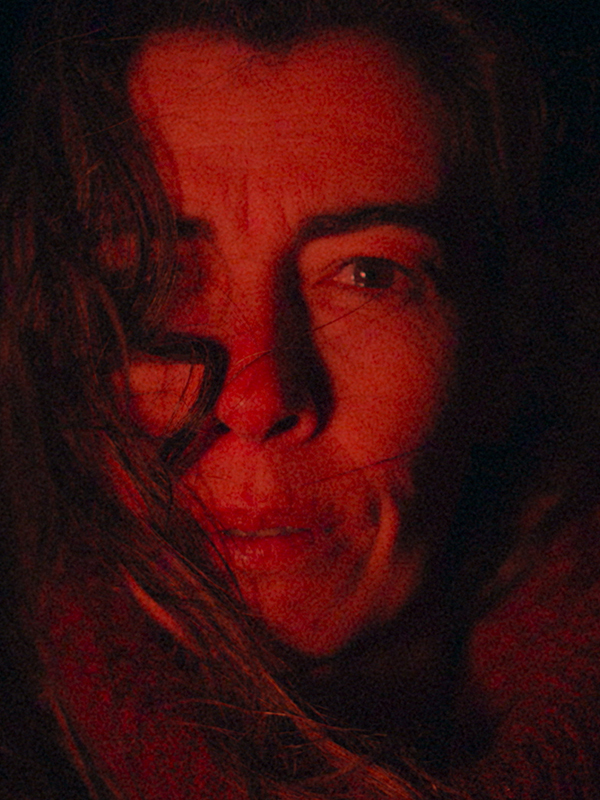
in your movie, and it also happens in with the wind, there is a special love for faces. Especially faces of elderly women, in your wrinkles, in skin texture. What value do they have for you??
Dreyer said that all the deepest landscapes are in faces.. For me there is something like that. To understand a territory, You have to learn to read faces because in those faces is that territory. When you see a face, his expression, your wrinkles, his look, etc. you can understand many things, not only from that person's soul, but also the type of life he has led. The face and hands are the two elements that speak to you, not just that person, but of a way of life and a territory. And also because there is something very mysterious in a silent face, and you see many things that are happening inside that person, but you can't express them literally, you can't translate them into words, there is a mystery. For me that is always a search engine, to see what's behind.
Your career as a filmmaker begins as a documentary editor. I believe that an editor has a particular vision of cinema. To what extent has that training influenced your cinema?? I mean, above all, about a very important factor that is the management of narrative time.
Indeed, I am an editor (laughter). But I also write like this, I ride constantly because, in the end, mounting has to do with putting into relationship. And for me this is cinema. It is not so much the staging in a certain way or a script and its narrative., but to work from those connections and the contact between the images, the sounds… And in relation to time, That's what Godard said about, if the filming is look, the montage is heartbeat. And there we return to the dance a little. It's about finding the cadence, that's why I spoke before about musicality and poetry. Building a film has to do with imagining it as if it were a body: how it moves, at what pace is it going, when does it stop, when does it accelerate... go from there.
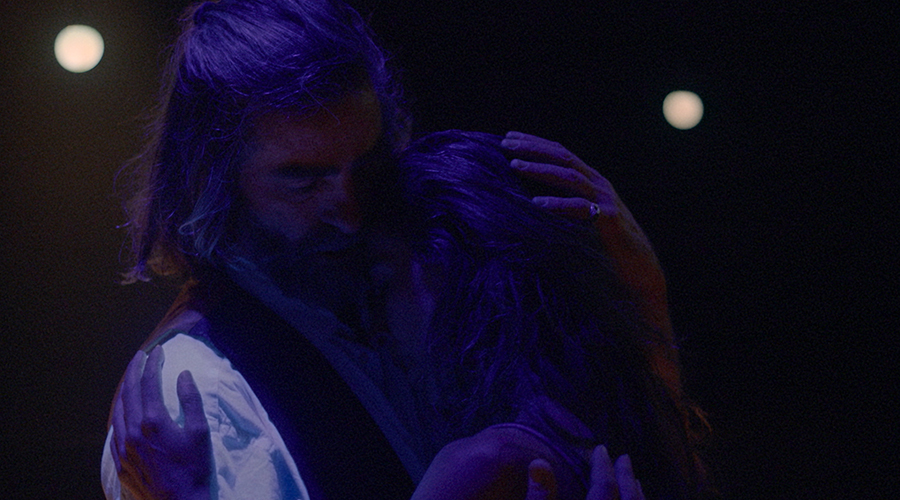
Your two films mix elements of fiction and documentaries.. How do you fit both forms into the narrative??
Perhaps the most complex thing to fit is when there are written dialogues and how these dialogues can stand out from the general tone of the film.. But that doesn't worry me much because I think it's okay for films to be heterogeneous., that can go through several shades. You don't have to be afraid of that. In my case, I write very in touch with reality. That is to say, I had a script written, but there were five documentation trips in which everything that happened, conversations, situations, they went to the script. So, when you get to the fiction that finally rolls, It is an open fiction, because it is already written thinking that many uncontrollable things are going to happen. Since the narrative of the films I direct is very basic (in this case, a couple in crisis, she searches for who she is) it allows you to open it a lot, unlike other cases in which you have to follow very strict gender codes.
Your two films have a continuity, as we said at the beginning, but it also seems that Duoremains open to a next stage or continuation. Have you considered it?
Yeah, What I would like very much is that when Monica is seventy years old or so, when I'm older, make a movie about who she is after so long. But for now it remains open. Now I have also opened another story that is not with her as a character, but if, like life, remains open.