
three different men, the same destination. This could be the summary of Anatomy of a moment, the essay that the writer Javier Cercas published in 2009 and that took up one of the most notable events in our recent democratic history. The text is set in a very specific moment. Year 1981, Congress of Deputies. That day's session was intended to ratify a new government at the hands of the UCD candidate, Leopoldo Calvo Sotelo. A session that would be suspended when a group of civil guards burst into the chamber to take it by force.. It was the first coup d'état of our democracy. Supported by his subordinates, Lieutenant Colonel Antonio Tejero, after shooting several times in the air, took control of the camera shouting “Everyone get down!”!”. Before the riot, the deputies, terrified, obey. All, except three: Adolfo Suarez, outgoing president of the government, General Gutiérrez Mellado, Suárez's vice president and defense minister, and Santiago Carrillo, general secretary of the Communist Party of Spain.
Starting from this moment, Cercas creates a story about the relationship that unites these three men and that will lead to that image. After Franco's death, Spain had entered a new political period. Democracy was making its way in the country, but its conditions and viability were still hindered by forces that conspired against it and in favor of an order that was a continuation of the previous regime.. This circumstance torpedoed Suárez's intentions to establish a state that would guarantee freedoms that would open the doors to all political options., which included those who had faced each other during the civil war. Without the participation of the communists, democracy was lame, which questioned its own legitimacy. To achieve this purpose, Suarez will “conspire” on two fronts. One with Carrillo, to accept the conditions of the new political period. And another that maintained the military establishment, heir to the dictatorship, under control. The result of both confabulations will converge at that moment of Tejero's entry into Congress.
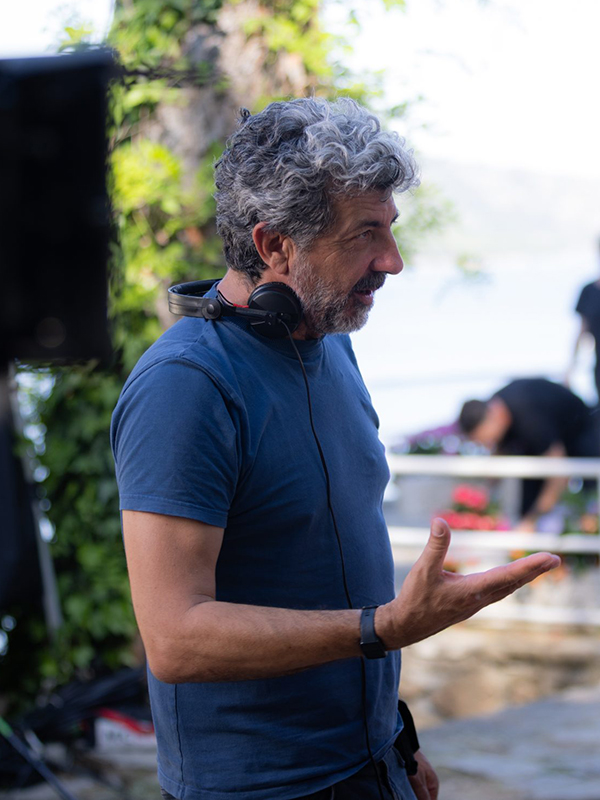
Anatomy of a moment now comes to life from the hand of the Sevillian director Alberto Rodríguez (The minimum island, The man of a thousand faces) which adapts Cercas' book into a new four-chapter miniseries for the Movistar+ platform. in the distribution, a group of luxury actors like Álvaro Monte, Eduard Fernández and Manolo Soto. The series premiered on November 20th, coinciding with the fifty years since the dictator's death.. GERARDO LEON
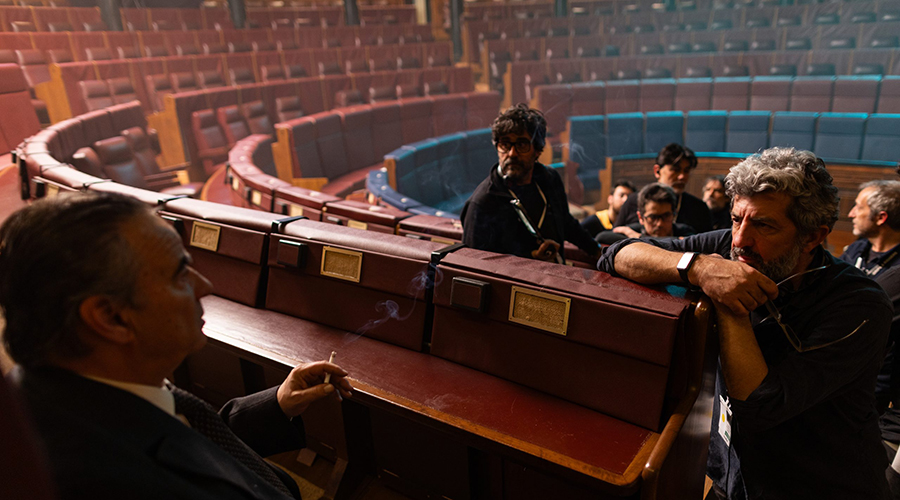
The premiere of Anatomy of a moment coincides with the celebration, if you can call it that, of the fifty years since Franco's death. How did the project come about?? Was it due to a particular interest in Cercas' book or did it arise due to this event??
No, is independent of this fact. What happens is that with this he has found good support, as release date. But not, The project comes from Domingo Corral from Movistar and José Manuel Lorenzo from the DLO Production Company.. At first, What was a project about the Transition like?, The truth is that I told them no. but they told me, read the book, and when I read the Cercas book I realized that it was a fantastic project and I said yes. And that's how it comes about, like a project.
In Spain it is quite common to adapt novels, but a test, although it has a certain novelistic style, it is uncommon. What attracted you to the text??
Bueno, Cercas' book has been defined several times as a “non-fiction novel.”, and I really think it is. Me, what I liked was that central idea, that thesis that is based on the story of the three traitors, what is, in the end, what is in the series. They are three characters who betrayed their ideals, to yours, and practically to the world in which they lived to find a new future. And then there is the fact that the origin of that betrayal, let's say, your reasons, They are not as obvious as they seem. The book of Cercas, just like I think happens to the series, does not whitewash any character. About the same historical event or a historical decision, gives different versions. Sometimes you can think if Suárez or Carrillo are doing this from historical perspective and at the moment you are thinking that, simply, They do it out of addiction to power or ego. It seems to me that that is the fundamental thing, how multifaceted all the characters became, how interesting and rich they were.
The series has a literary voice that tells us the story. Who is that voice that is telling us? Why do you decide to use that voice??
It is the voice of the journalist who covers the trial against Tejero and the rest of the coup plotters. He says that “that's me”. Yeah, has a literary origin, but the book had it too. Then, I think it helps advance the story., but, fundamentally, as a counterpoint. We use it to make sense of humor, to make more mundane the great historical events described in the book and that occurred. I think it comes in very well as a counterpoint..
The series is divided into four chapters that correspond to each of the protagonists of this story.. Why did you choose that structure over another in which these four stories would be more intertwined??
That also comes from the book. There Cercas talks about the three traitors and that is what articulates the novel a little.. I mean, the three men who did not fall to the ground when the assault occurred, They are the three who betray their own. Gutiérrez Mellado betrays all the military and the entire Franco regime, Suarez, who was a Falangist by origin, betrays them all, and Carrillo betrays all the ideals that the party had maintained in exile during 40 years. That structure of the first three chapters was very clear. What cost a little more was finding the fourth chapter, but so many things had already been done about the coup that we thought it would be interesting to deconstruct it based on the military trial that was given to the coup plotters.. And this is how the fourth chapter was created., what, In fact, is the blow, the trial, but it is also a summary of many ideas that Cercas tells in the book about what was the very placenta of the coup. I mean, the number of facts and issues that were arranged for the coup to occur, that seemed like a spontaneous thing, but it wasn't.

Today the Transition is perhaps more questioned than ever. There are those who support it very radically and there are those who criticize it with the same vehemence. Since those criticisms, Would you say they were right or wrong?? What would be your assessment??
If they were right or wrong? Bueno, We are here. They must have done something right [laughter] Because I think the panorama was very complex and it is very difficult to see it in perspective.. Those who say they were wrong... Well, there are certain things that were not reviewed, like the properties, For example. That a review was not done on 40 years of dictatorship and the years before the war? Well yes, It's true. And there are probably problems we have today that have to do with that.. But, specifically, these three characters, maybe they were very wrong, but they did things well because, in the end, We went from a dictatorship to a democracy and they had a lot to do with it.
In Spain it is not common to find jobs that, from fiction, address our recent history, something that does happen in other countries around us, like Italy. Not long ago I watched Marco Bellocchio's series about Aldo Moro, For example (Exterior night). Why isn't this type of work more common??
Mira, It's funny because the series was at the Rome Film Festival a month ago and it scared me a little precisely for that reason., because they make a lot of political cinema and we make very little. I thought that, being a story about a different country, They weren't going to be interested. And it was very curious to enter at the end and see the entire room applauding. I think these types of stories are very interesting and this, specifically, it's exciting. Why aren't they made more?? Probably because everything is so polarized.. We are not such a broad audience and, unfortunately, Sometimes it happens that people dismiss things because they believe they have a political bias. I approached this story with the idea of developing the characters in all the complexity they have.. And all three represent practically antithetical political options. But they are so complex that I think, in the end, there is no commitment to an ideological bias of any kind, and that makes the series interesting.
You open the way for my next question.. Is an unequivocal account of our history possible?
No, that can't be. The thing is that what can be expanded is the size of the diopters, which I think is what Cercas does. What you can do is observe each character and dismember them and expand the battlefield eternally, What does the series do?, and discover that all the reasons, the reasons, all the complexity that the characters have, makes them much more human. The epic of Cercas and I think the epic of the series is that, in the end, they are human. But, evidently, history is always biased.
What was the process of constructing the intimate personality of these three characters??
This was pretty much built into the script.. some things, in fact, They are not in the Cercas book, like this incredibly contradictory character of the communist millionaire [Teodulfo] lagoon, which was the support of a good part of the communist party in its exile in France. This has been something that the two screenwriters, Rafael Cobos and Fran Araújo, They have been documenting themselves until they have obtained enough information to speak with some propriety about their private life.. Always from a licensing point of view, because we must not lose perspective that this is fiction. About some historical facts, but it's a fiction.
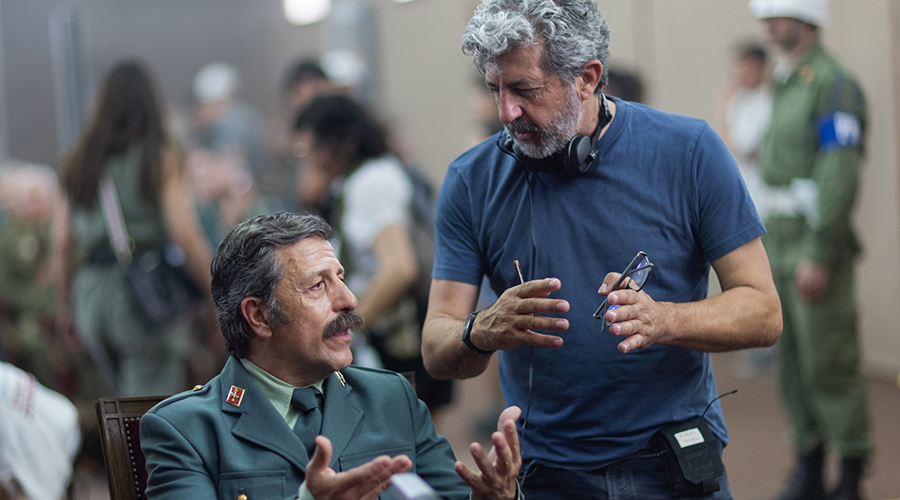
When building these characters you have to fill those gaps that perhaps only real people can fill., which I understand is a challenge when it comes to doing that work of fiction.
Yeah, Yeah. For example, in the Chapter 1, Cercas told the scriptwriters about this problem that Suárez had with his jaw [a condition that is outlined in the series] that caused terrible pain and they saw the light, above all, because they found something human there, something that can happen to anyone. Of course, a president also has to go to the dentist. And I think that, For example, It is very well written and defines the relationship between Gutiérrez Mellado and him very well..
In the book, Suárez is a really complex character. On the one hand, has hero attributes and, for another, He is described as someone who suffers from a certain pusillanimity. Was it someone who understood its historical role? Didn't you know how to see it? Or both at the same time?? How would you write it?
Bueno, Cercas does that a little. It is this idea that Suárez ends up believing the role he plays. In Suarez there is something tremendously complex that has to do with a man who came from the ovimiento, who was minister of the Movement, and that ends up legalizing the Communist Party and bringing democracy. But, above all, He is someone who dismantles Francoism. It is as if the historical figure himself had gotten out of hand, consciously or unconsciously. And all of this was done practically in a couple of years., in less. I mean, which seems incredible to me.
The other character is Carrillo. In the series you reproduce the Paracuellos event, which is another issue that raises blisters in our country.. Why is it so problematic to talk about it??
Bueno, because that's what they always threw in Carrillo's face. The throwing weapon with which they continually reminded him of a past full of blood. I think people have short memories, why, For example, in Badajoz they executed 4.000 prisoners in a bullring with machine guns and, however, It is an event that almost no one has any idea about.. This was done by the other side., Of course. I'm not justifying anything, I'm simply saying that all of that was amplified in an intended way.. Carrillo denied that it was his responsibility. But the fact of reproducing it was normal because, like i said before, It was the throwing weapon of the right and the extreme right against Carrillo. It must be taken into account that Carrillo was the enemy during 40 years; Carrillo not, the communist party, which was the only party in opposition to the dictatorial regime. That's the truth.
There is a fourth figure that I think is very important., and it is also very enigmatic, What is King Juan Carlos I?. It is a figure that, even in the series, It is not very clear what role it plays in this framework.. For many years the figure of the king has been given great value and now he is a somewhat degraded character. His memoirs have recently come out, which have also raised many comments. How do you see it? Is it someone who is in the middle of everything? Are you not participating?, but participate? Is it both at the same time??
According to Cercas, according to what the novel maintains and I think that is more or less contrasted, The worst thing he did was listen to the coup plotters and continually ask that Suárez be taken away from him. That seems to have been denied in the memoirs., but I think it is more than contrasted. I think the worst thing he did was not try to stop the blow., inhibit, and that gave rise to a big problem. This is what Cercas maintains in the book, just as he holds, because it was like that historically, what, at a certain time, He had the possibility of proposing a person other than Calvo Sotelo, A military, For example, and he didn't.
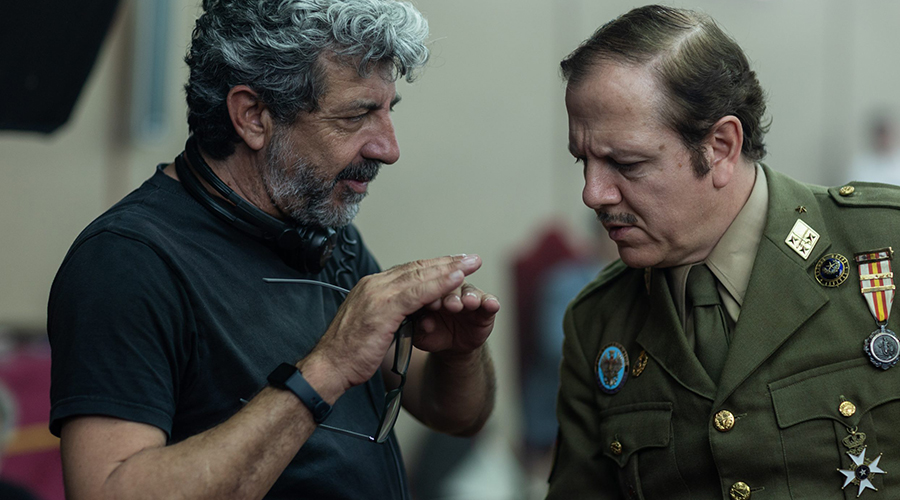
In the series it seems that they are characters who are coping with a certain ambiguity all the time.. How do you value that ambiguity?? Was it inevitable or do we make too harsh a judgment, without nuances when evaluating these events?
I think there is an interesting thing that comes out of this speech in the novel, which is that the events, when they have no perspective, when you are immersed in them, They are not so easy to evaluate. And what humanizes these characters, what makes them real, what makes them close, It is precisely that they cannot see their motivations clearly because they are immersed in history., because they are part of the game. I think that Cercas reflects it in a brilliant way and it was the most interesting.
I would say that, roughly, In Spain there are like two trends, one that encourages us to remember the past permanently and another that says that we remember too much. Can it happen that, in that battle of sides, we end up causing a null effect, of indifference, before history?
I'm afraid we have remembered too little. A journalist recently asked me what I thought, according to surveys, he 20% of young people between 18 y 24 years are nostalgic for the Franco regime and that has to do with how little we have remembered because, If there is that support 1 decade 5, That means they don't know what they're talking about.. They don't know what it's like to have freedoms taken away., that there is not even a right to assembly, that there is total impunity against any type of law, a single thought, a dictatorship, vaya. That's terrifying.
In Spanish cinema, It seems that any approach to facts like those you address in the series, are colored by a certain prior prejudice. Do you think that one day we will overcome that drive??
Well I don't know, Maybe it would be useful to go back to exactly the opposite of what you asked me before., go back to our history, maybe one day it will help us get rid of this. It is likely.
I believe that Suárez came across a reform project and that gave a boost to his presidency and his figure.. But, from there, We are entering a “democratic normality” that seems to be very tangled and that we do not seem to be managing very well either.. I was going to ask you if this normality has made us feel bad or something like that..
Bueno, You also have to take a look at the whole world. I think it answers itself. Right now we are in a time of great confusion and I fear that many terrible ideas have ended up prevailing that almost have to do with the market., more than with politics.