
UNTIL SUNDAY 27/9
THE ETHNO. Corona, 36
There are Valencians who cook the pasta with dye; that's how deep-rooted is that yellowish color brought by saffron to our dishes (before artificial coloring appeared). It is associated with the pan, of course, but also in fideuà or Manchego gazpacho, which is also a main dish in some regions of the Valencian Country. Precisely in La Mancha, in Albacete specifically, saffron was cultivated, which a few clever novices knew how to market to bring it to Mumbai, Manila or Casablanca. Let's talk about the first spice that traveled from the West to the East, and not the other way around. He 1862, Spain was the world's largest producer of saffron and today fourteen hundred-year-old companies dedicated to the business are still active, some run by the sixth generation. Although many, We buy, they import the product from Iran—a country that produces 90%—and will have to look for alternative routes if the war drags on.
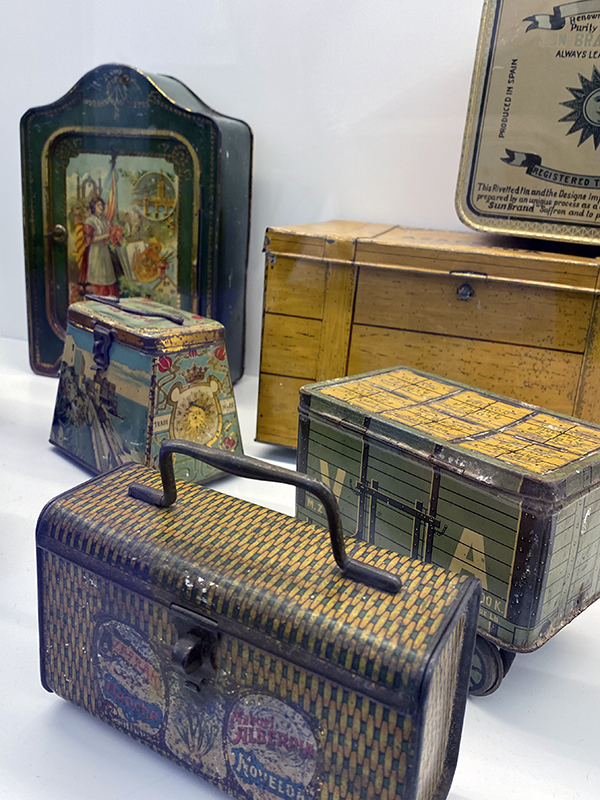
But at the end of the 20th century Albacete was the land of production and Valencia the nerve center of commercialization, hence the city had the only saffron market in Spain, on Carrer Botelles (hui, Boatella). Before arriving here, the female pickers from Albacete had gathered the delicate flowers in violet-tinged saffron trees and had picked them apart to extract the three precious stigmas, which were then roasted to intensify the aroma and flavor. They are needed 250.000 flowers to extract a kilo of saffron!! After, the novelists would package them in elegant metal cases adorned with lithographs to attract national and international markets.
The exhibition L’or roig tells another story of Valencian popular culture, from the collection of David Beltrá Torregrosa. It is not easy to set up an exhibition around a well-documented but graphically unexploitable story, but L'Etno has made up for the shortcomings with large photographs printed on the walls and an attractive graphic display. The protagonists are a bunch of metal cans that contained the precious saffron, authentic artistic "canvases" that reveal the aesthetic trends of the time. The woman is, certainly, the capital figure of the designs: we see her evolve from the stinking Decimononic lady to the refined modernist figure. But the images also include monuments, everyday scenes, animals, means of transport, hindu deities, religious reasons, board games or fashion themes; and the shapes of some cases are pure fantasy: trunk, suitcases and dominoes… Etno has its eye on the most expensive spice in the world, the most Valencian of all species, showing off their beautiful wraps. S.M.