
FROM THE DIJOUS 11/6
The Way, 44 (alcohol)
Few museums exist in the Valencian Country dedicated to the country's singers. Not in Concha Piquer, Ovidi Montllor nor Raimon; i Nino Bravo, Yes, I had, he sees an uncertain future after his heirs have rescinded the property transfer contract, brand and image at Aielo de Malferit Town Hall. It seems that its new destination will be a project in Cap i Casal that is still to be defined, and will join the very expensive Sorolla exhibition of the Hispanic Society of America at the Museu de la Ciutat de Valencia (primer) and at the Palace of Communications (finally).
alcohol, of moment, he has not dedicated a museum to one of his illustrious sons, Ovidi Montllor, but from June Camilo Sesto will have one, the most universal artist from Alcoy. One of the buildings of the old asylum has been rehabilitated to accommodate this one Camilo Sesto Museum, which proposes an exhibition route articulated on two floors that affect two perspectives: that of the common person, Camilo Blanes Cortés, with his memories, his objects and the link with his hometown; and that of the artist who filled stages in Spain and Latin America, starred in the musical Jesus Christ Superstar and cemented one of the most recognizable trajectories of pop in Spanish in the seventies.

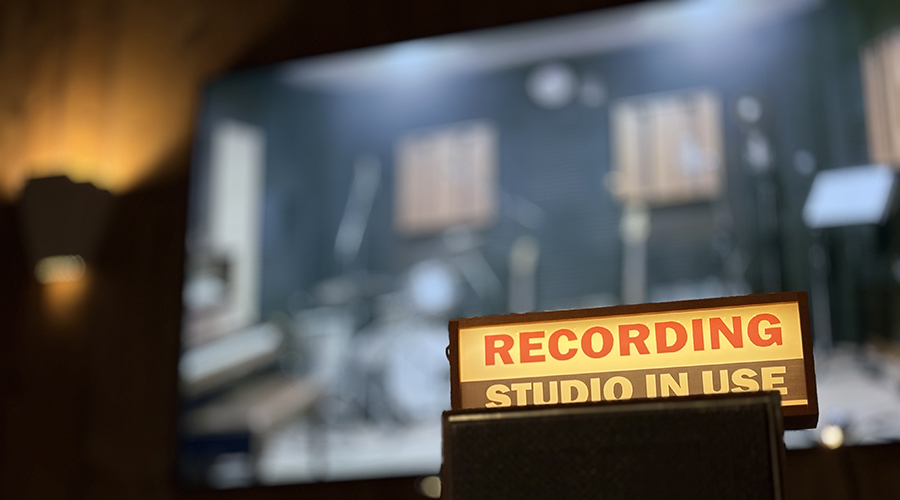
The museum will gather nearly a thousand pieces linked to the singer, which will be shown on a rotating basis to keep the expository discourse alive. Wardrobe, premise, discos, documents, instruments, personal objects and materials from his legacy will coexist with audiovisual resources, interactive elements, artificial intelligence and a hologram that wants to connect with the younger audience. One of the great attractions will be the recreation of spaces linked to his creative process, such as a recording studio, next to a karaoke space, scenographic resources, an interactive graph that will allow to play the songs of the artist and a section dedicated to his international impact. Your relationship with the aforementioned will also have a special weight Jesus Christ Superstar, one of the milestones that consolidated its artistic dimension and marked a before and after in the musical scene in Spain.
Camilo will start in Alcoi with Los Dayson el 1962, when the bands had to get the professional card by passing an exam, and from here he joined the Madrid group Los Botines (1964), where they signed contracts with the right to paella. At the beginning of his career he had to paint pictures to survive, and made hearts in the middle of Spain, from Juan Pardo to Marisol. But it would not take long to compose his first great success, “Something about me” (1971); then he participated in the OTI and published a flurry of number ones dedicated to love, until the immortal "To live like this is to die of love" arrived.
Well known in Mexico, Argentina and Xile, Camilo became the first great Spanish idol in Latin America. He sang in Valencian, german, Italian and Portuguese, and succeeded in Japan and the United States, where he was described as the "Spanish Sinatra". The American musical was taken from there Jesus Christ Superstar to set up and star, complex sense, the Spanish version the 1975, became the most expensive show in the history of the country until then. Franco ruled with an iron fist and they had to pass the censorship cut. He was never forbidden anything. Jesus Christ Superstar it was the great phenomenon that popularized the modern musical in Spain and changed the perception of Alcoy. He was an obsessively demanding musician, with absolute ear, tenor baritone tessitura, a lot of expressiveness, good phrasing and loving lyrics that connected with the collective imagination of the time. A great voice, definitely, which obscured other facets such as composer and producer.
The new Camilo Sesto Museum in Alcoi will serve as a tribute to his town, his generation remembers him and the new ones, who do not know him or see him as an eccentric character associated with the programs of the choir, understand why it is a key piece in the history of pop music in Spanish. A musician who popularized the musical in Spain and redefined the Spanish melodic song, projecting it internationally with a power never seen before. S.M.