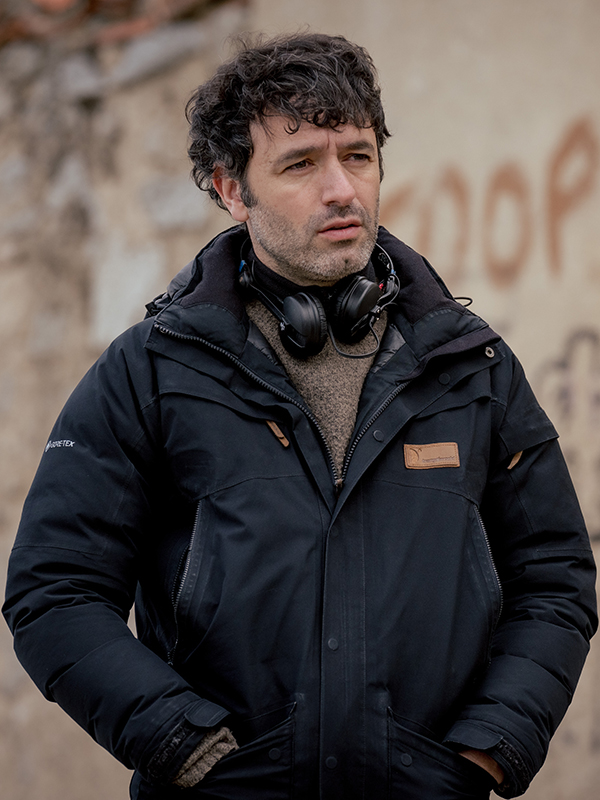

Stockholm, May God forgive us, The kingdom, Anti-disturbances, The beasts, Blackout, All these movies and series have a common denominator, directed by Madrid native Rodrigo Sorogoyen. To this already long career, joins now The new years, his latest series for the Movistar platform +. The new years tells ten years of the life of Ana and Óscar, a couple who meet on new year's day, when both have just completed their 30. From here and during the ten chapters that the series lasts, We will attend your comings and goings, to your existential doubts, to their family conflicts, of work, to their breakup and their reunion, in a journey of a decade that can be the journey of any viewer. in front, Iria del Río (The incredible waning weekend) and Francesco Carril (The reconquest).
The new years It has been described as a generational series. Does that adjective bother you or was there really an intention in the series to be a sample or reflection of a generation??
No, no, what's going on. Bueno, Every time they ask me I say it wasn't our intention., but it doesn't bother me. In fact, I think it's a virtue. If a work ends up being generational, It means that you have connected with a generation, that has managed to speak of a generation. It doesn't bother me at all, I think it's a compliment. For this reason I confess that it was not our intention, because it seems very daring and very complicated to achieve it.
The film covers ten years of a relationship. Why did you consider that deadline?? Was it a necessity or perhaps the story could have been told differently?? How did this idea of telling the story over that time come about??
You can always tell stories in other ways, that's the beautiful thing. Other scriptwriters take this and tell you the story of Ana and Óscar in a different way.. It wouldn't be better or worse. Simply, I would connect with people in another way. But, why did we decide to do it like this? Well, to begin with, because a decade seems to me, obviously, a round number, clean, that looks good and that allowed us to do 10 chapters. Besides, I don't know why, but sometimes we separate our lives into decades. They always say that “you have entered your 30s” or “you have entered your 40s”. It made a lot of sense, for me, then take 10 years. And about the 10 chapters was, so, as an obligation when wanting to cover those 10 years. In fact, Movistar told me at one point if I couldn't do fewer episodes because there were too many and maybe people would get disengaged., because it cost more money and such. But I told them it didn't make sense, that wouldn't seem honest to me. Each of us lives every year, and if we have 10 new years eve in a decade, Well, I liked to count the 10. And it was a challenge to try not to disengage the viewer., make an emotionally interesting story, fun, entertaining, that each chapter was different, that would contribute something, but, at once, were credible... I took it as a challenge.
Would you say that, somehow, there is a continuation here with Stockholm, your first movie? I mean the experiential element. The characters of Stockholm They are in a moment of life, and these are at another time, maybe later. Would you say that there could be a kind of continuity of the experiences of that generation??
We haven't thought about it like that. Obviously, The new years, I don't want to say that it looks like, but it does play more with Stockholm that with This is how you dressed, For example. the universe, the world, the characters… I understand that the characters of The new years They can go out partying one day and meet the characters from Stockholm, but I don't think it's close enough. For me Stockholm It was a more tragic and violent experience, is light years away.
One of the characters' conflicts is this apparent inability to know or not know where they are or who they are.. Are we so insecure? Would you say we're so lost?
Bueno… We are lost, but I don't think it's bad to be lost. I think that, if you are not lost, You don't ask yourself questions and then you make the decisions you're supposed to make or the path you're supposed to take., and so?, sometimes, it's more dangerous. This is what they told us 18, that you have to know what you want to be when you grow up and study a career. To the 18, You already have to know if you want to be a doctor. In that sense, I think what they have done to us is barbaric.. Another thing is that the socioeconomic situation is not so good or not so safe. [laughter]. In that sense, yes we can be lost, but I think we understand the world better every time. I want to think that, the truth. In this case, Ana and Oscar, they don't learn everything, but I think they know better what they want with 40 that with 30.
The series also makes a decisive portrait of previous generations, that of the parents of this couple, very present in the plot. What did that contrast contribute when approaching the story??
Bueno, everything starts because I believe that, if you count the lives of two people, have 440 minutes to do it and you want to tell the most about those lives, parents quickly appear. There are the friendships, work and parents. It seems to me to be the triangle that I spend the most time, energy and love one dedicates in life. It was mandatory. Another thing is, as you say, what, by telling those parents, take advantage of that contrast. there is, but it's not that I wanted to tell it. It exists and it was totally organic and logical that it appeared.
Another central issue in the series is, as you said before, the question of work, the world of work. In what sense was it significant for you to focus on the relationship of the characters with that context??
I already tell you, we wanted to count two people, of the lives, two worlds. And how do we portray these people? Well, we try to portray it in a credible way.. For me, Verisimilitude and emotion are equally important., that both contribute something, let them advance, make it interesting. Yes it is very interesting, but it is very unlikely, I'm not interested in anything. And if it is very, very plausible, but it's not very interesting, I'm not interested either. We tried to make something that worked and, in that sense, It worked well for us that one did well, but the conditions were very bad, and the other was climbing, that he doesn't know exactly what he wants, but let it be testing, which allowed us to be in several places, And if I was in several places I would have several coworkers and sometimes I would be happier and other times sadder or more depressed.. It wasn't a question of wanting to tell this. The thing is, simply, you are telling it logically, parallel. Of course, This way we can also talk about the issue of labor instability. How can you not tell it?? But it was not so much an a priori intention, as the consequence of trying to be honest, both with the description of the characters, as with the world around them.
You were talking to me before about the script. The series has a relatively light plot, a couple conflict, but what occupies those 10 chapters that make it up. When it comes to structuring this story and sustaining that plot, that interest you speak of, What would you say was your biggest challenge or greatest difficulty??
I think that, as the chapters were totally independent, con 10 different adventures, y no hay cliffhangers [suspenseful endings], The biggest challenge was to create a personal evolution of each character/conflict/plot in which both learned something and that made sense.. First they start half apart. Then, they stay together because they fall in love and, later, they separate. But the important thing was that everything had to do with how they are., with something that was genuinely of his nature. And then what, starting from that base, they will end up getting together or never separating, and that there was a moderately positive ending in the sense that, bueno, “there is still hope”. The most difficult thing has been, not so much create the adventure of the chapter 7 or the one in the chapter 3, but the entire internal evolution of each character, make a lot of sense, from where they start to where they end, and that where they end up makes sense for the development of the series.
The series relies a lot on the dialogues. in your movies, the action has, in general, quite important, but here it has less weight in favor of dialogues. it is, For example, that chapter that narrates that family dinner in which the characters are talking to each other practically all the time. What did it mean to you?, as director, when facing this aspect?
Bueno, our movies have a lot of action, but they are also very dialogued, or at least the dialogues have a lot of presence. The kingdom It's a movie in which they don't stop talking, and in Anti-disturbances There are also many dialogue scenes. I think I'm very familiar, I really like the dialogues. I really like creating and evolving the plot through these scenes.. And well, the challenge has been, above all, that seemed real, that seemed plausible.
It is always said that actors contribute a part or something to the characters, beyond what the script dictates. In that sense, I wanted to ask you about Iria del Río and Francisco Carril, your protagonists. Taking into account that generational association, While you are watching the series it seems to you that there is something that arises more from them than from the plot itself.
I think that actors always contribute a lot.. I try to leave them space to contribute as much as possible., because I fall in love, because I love them and if I direct them it is because they have fallen in love with me and they have convinced me [laughter] In The new years There are many things of dialogue that they have contributed. That doesn't mean that the script wasn't already written in a very naturalistic tone.. But later, we have to put that on its feet. The situations are, but then you can put something in there so that it provides more naturalness. The space has been opened for them and they have done it in a wonderful way.
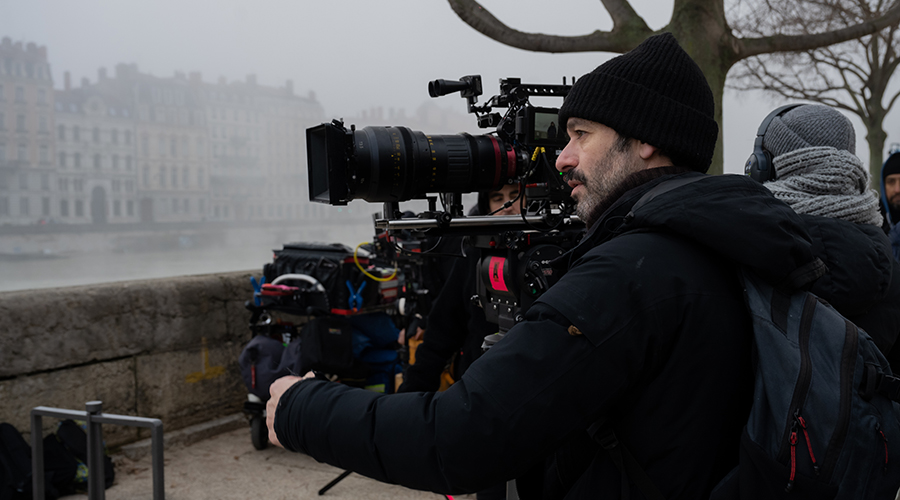
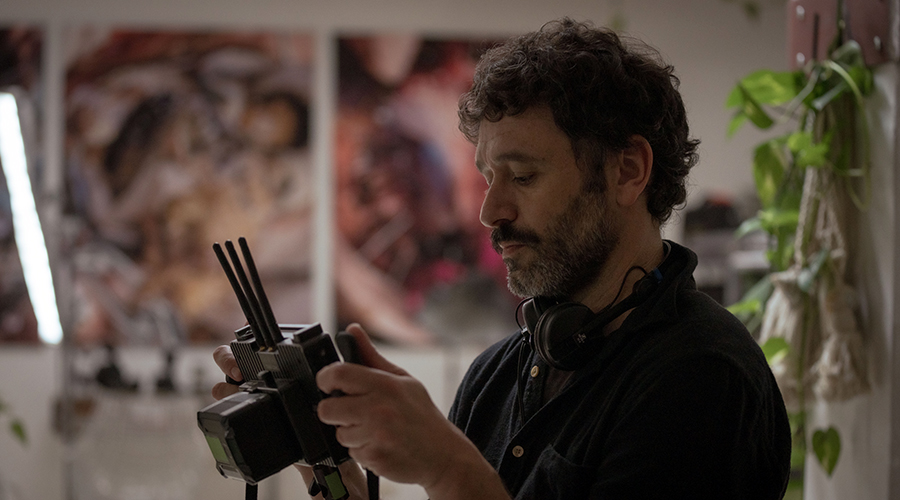
I would like you to tell me about the camera. There is a camera that I have perceived to be looser, more direct than other times. For such an intimate story, you use the camera on your shoulder. I don't know if that was in keeping with the series format or if you were looking for a deliberate aesthetic for this specific project..
We have done very exhaustive camera work, very specific and precise because they are 10 chapters, because there are many minutes and because I like to offer the viewer the maximum possible richness. In this case, besides, I saw it as very logical to make an evolution. For example, the handheld camera appears in the middle of the chapter 7, before there is no camera in hand. And with optics we have also made an evolution, with the format… In the case of lenses, In the first five chapters we use anamorphic lenses and in the next five, spherical lenses. The handheld camera appears more towards the end, as if trying to tell that, bueno, even if you grow up and are older and it seems like you have more secure things, it's the other way around. There can be much more instability there, you can have, even, things less clear. That is to say that, the more you grow, It does not have to be synonymous with security.
When you see these types of stories or stories, References like Woody Allen always appear, Noah Baumbach o un Richard Licklater. Did you have any reference in your head?
Bueno, The three directors you mentioned fascinate me. [laughter] and I guess that must be there. Lincklater, for obvious reasons, was a reference. Then, What happens is that we try to forget the references and that history, I peel it, take your own personality. But Linklater is a very clear reference for Before dawn, before sunset and all this. So yes, Yeah, of course.
You're combining your work for the big screen with work for television. To finish, I wanted to ask you about your relationship with the platforms.. On the one hand, It seems that they are expanding production opportunities, but, for another, because of the multiplicity of offers, It could also end up limiting the possibilities of dissemination of the works, to reach more audiences. How do you live this relationship?
Bueno, you adapt to what there is. If you do a series, you know what he has. And if you make a movie, you know what it has or what it can have. Then, there are movies, there are series that, suddenly, They travel a lot and films that a priori have more possibilities, but then they don't travel at all. And vice versa. I accept everything very well and try not to be surprised by the things that happen because it is within the game.. I have had, above all, contact with Movistar, with whom I have a great relationship. With the Movistar creative team, who is the one who decides what is done and what is not done, I get along very well, We understand cinema and fiction in the same way and we work together very comfortably.. But come on, I haven't worked with Netflix, I have not worked with Amazon and I have not worked with HBO.
And in the relationship with the viewer? I have the impression that, on the one hand, platforms expand these possibilities of accessing more productions, but, for another, segments the public so much that, probably, the jobs are also a little overshadowed.
Of course, but it's not just because of the platforms, it's the world. The platforms are a reflection of the world we are creating. Which obviously has good things, but there is something that overwhelms me and that does not seem positive to me, which is, that, the immediacy of everything, the little value that everything has, the little weight that everything has. Then, if on top of that you do something without weight, Imagine. That's why I believe that you have to try to make an effort to do something that weighs, that continues, what interest, so that it is not forgotten, because it is very easy to forget everything. That's very frustrating, of course.