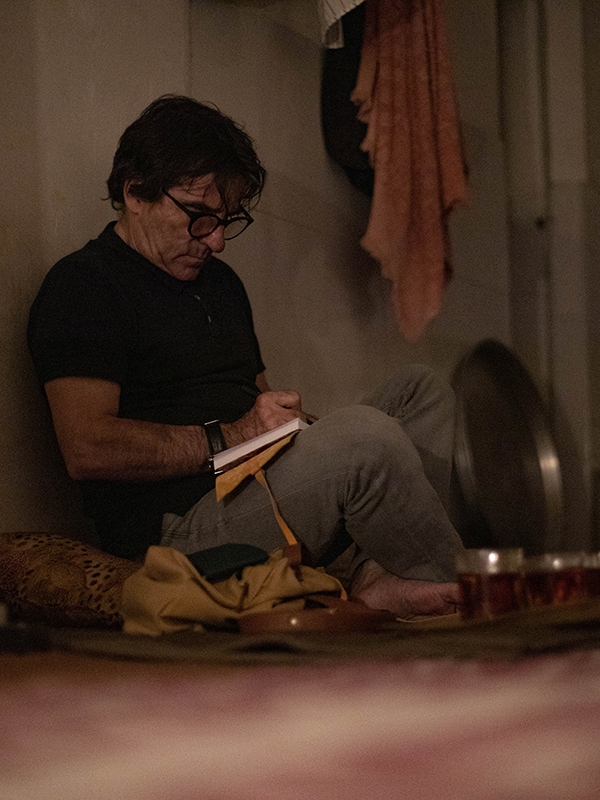
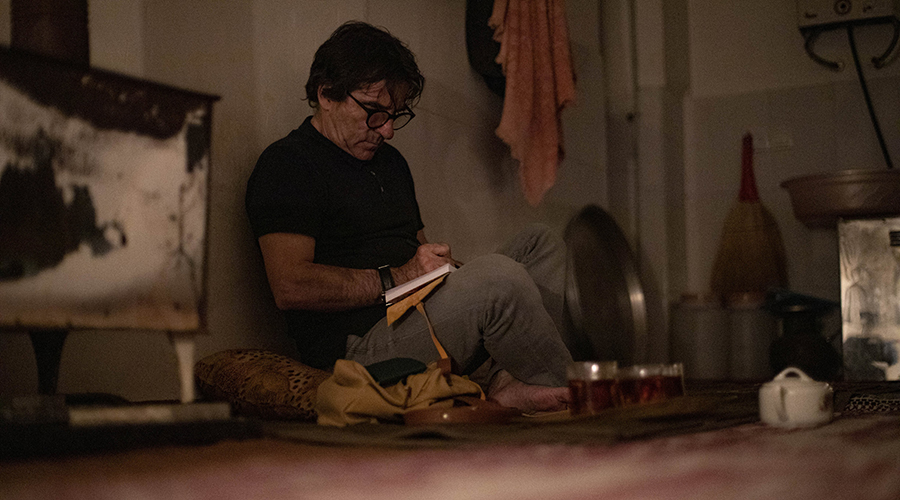
Mentioning the name of Javier Tolentino is invoking the memory of so many decades of one of the most recognizable film programs on the radio: The seventh vice. This can be both an advantage, for the recognition it implies in advance, as a disadvantage if we think that we find ourselves in a world where, when you go a little outside of what you usually do, It seems that he has to redouble his efforts to gain some credibility. So, Yeah, Tolentino, in addition to doing journalism, now he makes movies. And his first movie is called A blues for Tehran.
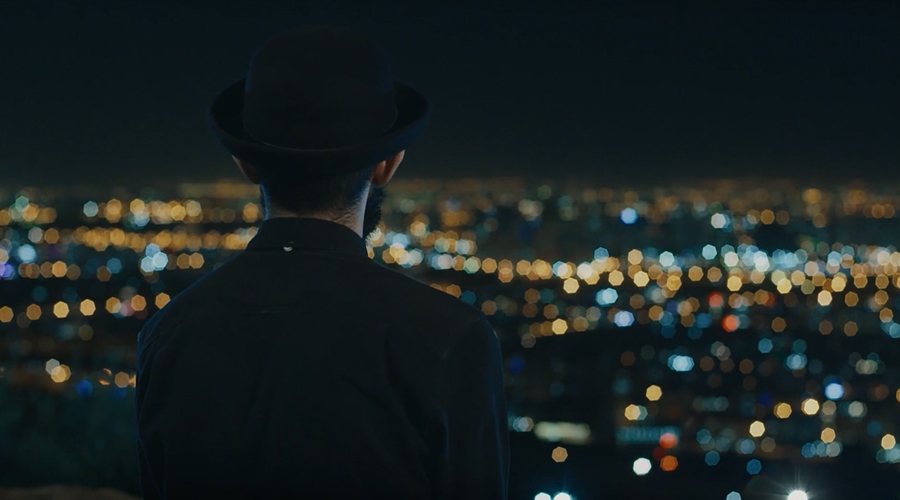
“And what is this about??”, It would be the first question we could ask ourselves as soon as we heard the news.. But giving an answer is not an easy task.. It's a documentary, that's for starters. In your images there is a young man, Erfan Shafei, that serves as a companion through contemporary Iran. Next to him, There is a group of musicians of various ages and origins, stray, professionals, aficionados; hay, besides, a landscape that changes shape and color as we move from the big city to the rural world, and there is, besides, a fisherman who laments on camera the fate to which his country and the generations that follow him have been condemned.
We will find all this in this feature film that premieres next Friday, day 2 of July, in commercial rooms and about which we chatted with its director.
Tell us who Erfan Shafei is. Why did you choose him as a guide or guide for this story??
Erfan is a young Iranian of Kurdish origin who dreams of making his first feature film, his first song and, maybe, find your first love, that loving experience that you have read in the texts or verses of your favorite poets. While all that comes, lives with his parents, with a parrot that is one more of his family and, at night, He meets with his friends to sing and perform in improvised concerts under the stars of Tehran.
After so many years dedicated to cultural journalism and, specifically, to the cinema, What pushed you to take the leap into direction??
It was not something premeditated, It's just a natural consequence., I think. While I was developing my journalistic activity, radio, wrote scripts, I made short films and attended training periods in film direction, some under the direction of Abbas Kiarostami, Asghar Farhadi and Victor Erice.
In the film notes, you point to those directors like Abbas Kiarostami or Jafar Panahi, as previous references to this film. What unites you with them and in what sense do you think their inspiration is found in the film??
Especially with Abbas Kiarostami and Víctor Erice, their ways unite me., its cadence, the relationship of his cinema with poetry, with an intimate sense of the story.
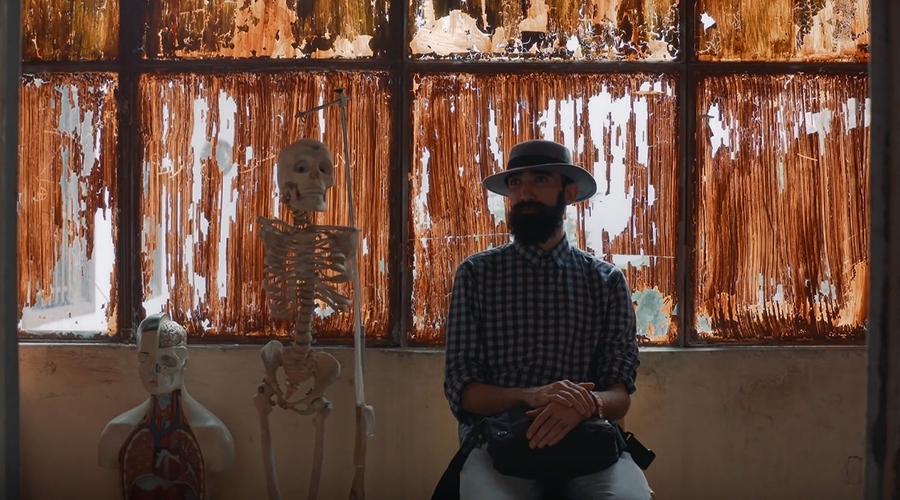
Why Iran? What connects you to this country to take it as the subject of your first feature film??
Iran is the metaphor of our civilization, the defeat of our thinking, the wound of the losers. Being one of the peoples and the original culture of the Latin world, is found in the unreason of social equality. poetry, music, their verses are not enough for a more egalitarian social organization.
You have decided to make a film about music as a vehicle to make this portrait of Iran., instead of focusing on others more directly related to political or social aspects of their society. Why did you make this decision?
I did not and do not want to carry out a political process against Iranian society., I didn't go for that, to judge, I went because I am interested in Iran, because I feel closely related to their poets, with his filmmakers and, above all, with his music, that Persian musical universe that is infinite and of which much of the musical culture of southern Spain is tremendously heir.. From music I wanted to try a dialogue with the Persians, with citizens who do not set foot in university chairs, neither carpets of political nor journalistic power.
Each of the characters that appear on the screen describe what it is, for them, the meaning of music. There are those who maintain that it is the sound of love. For others it is the universal language of communicating feelings.. What does music mean to Javier Tolentino?
Music is the expression of emotions, the daily soundtrack of our mood. Every day you wake up different, depending on the wishes and objectives of that day, music builds the score of the day, open windows and doors (like Erfan does at the beginning). In the radio programs I have directed, Music has occupied more time and space than words... music is in our lives, in the forests, on the street, in history... Every era has its soundtrack, his music. Music does not judge or supervise... music does not require translations from you, you come to stay.
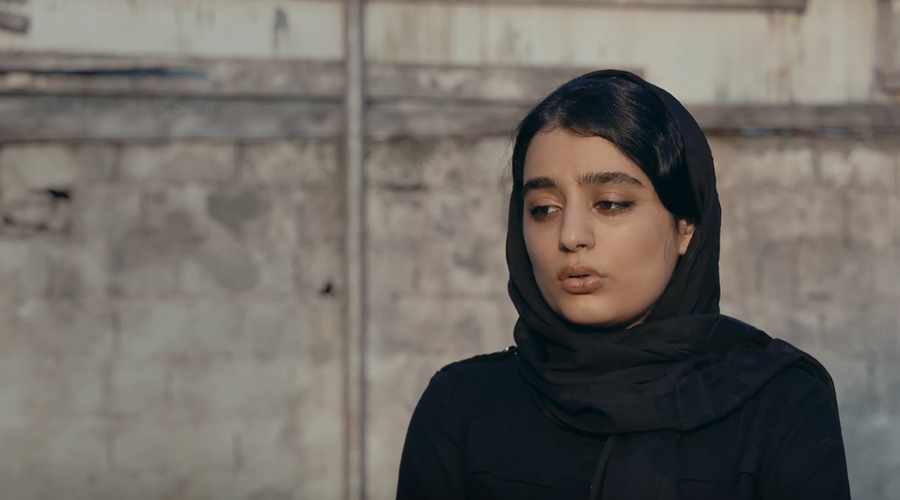
In the film there is no description of some events or of a social and political situation or conflict.. It is rather, a kind of collage, A landscape, an impression. Was this structure in the project script from the beginning or was it forged during filming and subsequent editing?? At what moment did you realize what it was you wanted to tell??
The film had an initial approach: A European chronicler travels to Iran to search for the most beautiful songs in the country's youngest voices. On that trip I would try to decipher part of the labyrinth or, at least, of the distance between East and West. That is the beginning and that is in the film that we are going to release. Development is the experience of a team that works together and that raises and questions the style of the story.. I have always said that language is what matters to me and in language (the structure) of A blues for Tehran The entire team has been ready to find him. I think that among all (production, photograph, sound, music, pre-assembly, edición, post-production, address, etc.) we found it.
Something that draws a lot of attention in the film is the connection between professional musicians and popular culture., so that the line that separates one from another remains very blurred. In this sense, I would highlight the sequence of the rice fields. What was your intention on this issue??
This sequence is very particular, rice fields inside the rural community of Taleshi, a community completely unknown in Europe and even almost banned and silenced in Iran, a cultural minority very rich in its music. The sequence was planned as an operatic symphony, a brushstroke of the color green (color of hopes for equality and freedom in Iran), It was intended as a trace of rural life where the daily life of the rice field embraced nature., to music and horses, the motorcycles, the cars, where the peasants showed or show that civilization, Culture is not exclusive to academia or the media. There is another life beyond Tehran, of power and political organization.
One of the most interesting characters is that of that fisherman who reflects on camera about life in contemporary Iran.. It's like an anomaly, he almost looks like an intruder. What role does it play for you in the whole story??
Asghar, the Caspian fisherman, It is the voice of the illiterate that, however, He is very clear about the history of his country, the origins of the human being. He desperately shouts that daughters are better than sons in a speech in which he destroys all the hereditary laws of his community. Charge against the kings who fled Iran like rats, as monarchies always do, leaving his people at the mercy of the gallows. Asghar quotes and sings from his poets and says that the changes do not reach the humble and honest people who, unfailingly, They will have to solve their lives on their own.
As a journalist, How do you think the making of this film has changed your outlook on cinema?. What is Javier Tolentino like after A blues for Tewheran?
Everything affects a person, the latest radio show, the last interview, a movie, a song... This project has confirmed that my desires to make films had their plot, its truth. I love journalism, the radio... That's what I always wanted to do and to which I have dedicated a part of my life. There's not that much difference with filmmaking., It's another language, another structure and another stage in which I am now totally dedicated.
Will there be a continuity?
I'm going to do everything possible. At the moment I am editing my third short film with Cecilia Gala as the protagonist and Walter Geromet in the construction of the soundtrack., and I hope we can start in the first quarter of 2022 the filming of the next feature film. But the cinema, literature... has its industrial dynamics that do not depend only on one's desires and projects. The business fabric that makes it possible or impossible also counts..