

Jaime Rosales' career is no longer a thing of promises. In front of the viewer or specialized commentator we are already faced with a long and solid corpus, with clear personal axes. And although, when reviewing his filmography, we find some deviations from that main axis (case of Petra), there are some constants that remain. We talk about urban spaces, social types, conflicts. In Wild sunflowers, Rosales takes us back to the outskirts of Barcelona, physical and sociological space of The hours of the day o loneliness, his first two films, to tell us Julia's story, a young mother of two trying to get out, both of his job insecurity, as, above all, sentimental. In this last aspect, Julia will jump from one relationship to another with several men. The first of them, Oscar, He turns out to be a violent subject who will soon show his true narcissistic nature.. The second is the father of her children with whom she will try to return. Maybe the third time's the charm. But, who knows? On the journey between one relationship and another, however, Julia seems to find her own way. With every stumble, a lesson. We never stop learning from ourselves. Rosales, arrived this week at the Lys cinemas in Valencia to present his latest work, which opens this Friday 14 In commercial rooms.
"Generally, “I go from one movie to another looking for something different.”, Rosales commented at a press conference after the screening of the film regarding his cinema's return to his native Barcelona and those suburbs we were talking about.. "Indeed, in Petra It was the story of a millionaire artist who has a farmhouse in Empordàn and who belongs to a middle class and a specific elite.. In Beautiful youth I had set my sights on the periphery, in the young. And in this I had the need to retell this story marked by that environment. From movie to movie, I vary things. There are others that I maintain. Many times, I see my career more as if it were a spiral.. It's something that progresses, but taking turns. It is not a line nor is it a circle. It would be like a mix of both., what is a spiral. Sometimes I change the language, sometimes I change the theme, sometimes the environment, “Those changes take me from one film to another”, The director commented.
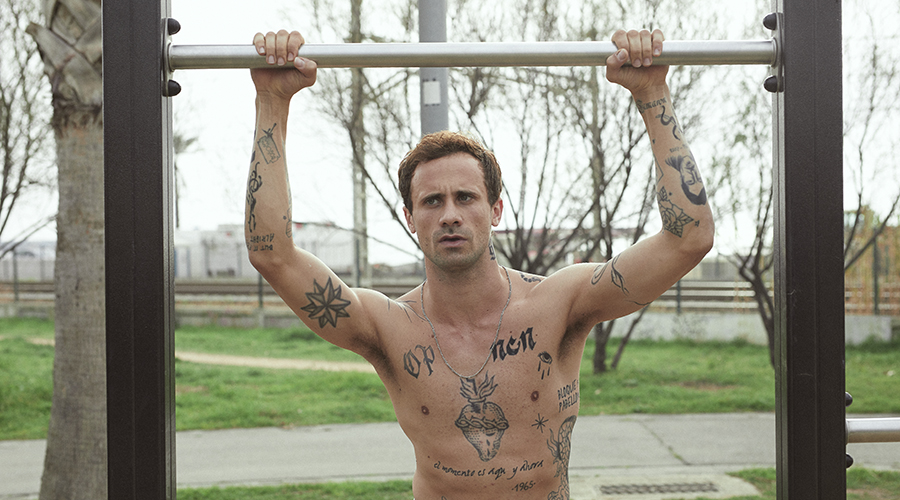
On these questions about his cinema, continue reflecting. “My films so far fall into two groups. The first four and the next three, until Dream and silence”, the director elaborated. “The first four (from The hours of the day until Dream and silence) They are films that always have one foot in the industry, but they are more artistic films, more personal. I ripped them out by myself and, basically, he told the producer, who is my partner: “this is the movie”. From Dream and silence I have a personal crisis. It seems to me that the first two had a certain balance, perhaps more inclined to art than industry, but a certain balance, and the next two are very markedly artistic and almost anti-industrial. That gives me a very harsh response from the industry.. In Dream and silence, The industry turns its back on me a lot and so does the viewer.. So, It's when I change my pace and tell myself that I don't want to end up being a martyr filmmaker., as there have been many, also in this country. From that moment, I tell myself that when I make a project I am going to develop it by telling the story to the producer.. I tell him: oye, I have several ideas. I present three and of those three I ask you which one you think makes the most sense.. And there I start to work. In the last three movies, every time, the weight of the producers has been greater. You could say that I make self-commissioned films., while the others were increasingly authorial films”, confessed.
That search for balance between the authorial and industrial side (commercial?), pivots or is also confronted in the back room of Wild sunflowers, a narratively linear work, but where does that personal voice persist?, indisputable, both in thematic and formal aspects. In the thematic aspect, the question of family appears, another of the constants of his cinema. “For me, family is at the core of my films. I personally have very strong ties with my family of origin., with my parents, and with my created family, with my wife and my daughters. That relationship of being the son of my parents and being the father of my daughters and the husband of my wife., It is an enormous intensity of my life. You can say that my life is practically the cinema and my family. With which, Cinema rubs off on my family and so does my family.. For me the family is a source of well-being and conflict. In the global, Well-being weighs more than conflict, but there are also conflicts. I am very interested in how conflicts are resolved in the family and how, depending on that resolution, the family survives or breaks. That's central to all my films.. There are mothers in all, there are parents, there are children, It is never an individual against the world or an individual against another individual.. It is always an individual within a family who has to resolve his existence or his existential problems within a family.. That is very important to me”.

We must not forget, however, that Rosales' cinema is based today. And nothing more current than the question of so-called masculinities. When Julia meets Oscar, his first partner, looks like a prince charming. As time goes by, is showing its darkest side. But Rosales' vision tries to escape all contemporary Manichaeism.. “This new word for masculinity is not in my vocabulary.”. I talk about men and women. And I talk about relationships and conflicts. There are different types of men. There are four relevant men in the film. I believe that the men in the movie, including father, They are very different from each other. And each one invites different models”, Rosales reflected.. “The first, If I had to define it, it would be quite archaic. He is a type of man that continues today, but it's from another time. I think he is a very immature man., very childish, but what, on the other hand, It is very attractive from the point of view of desire for women. That desire manifests itself because it is very fun, he is very handsome, we can guess that it is sexually very satisfying, and inflates the other person's ego a lot. He tells her that she is wonderful, who has never known anything like it. The second man is a very different typology. He is a man who does not even inflate his ego., It's probably not that fun and it's probably not that sexually satisfying.. It's something more mature: he gives you money, has a job, welcomes the children, but it is insufficient maturity, stays halfway. The third man is very different. He is a more mature man.: has a job, he is a more modern man (It helps her with household chores and also helps her get ahead with her studies.), but not from the exaltation of the ego of the first. He is a more modern man, but, on the other hand, he is not a prince charming. He is not only the one who takes care of the children, the one who helps her, he who has a job and, besides, the funniest and most handsome guy in the world. And finally, there is one more man, who flies over the film and who is her father. The father is a very tolerant man: does not give him lessons, It doesn't tell you what to do., the soul, and when he has to support her, supports her. That is the journey of the men we see”.
Julia's story is based on a true story of a character that the director saw in a report whose story he would transfer to fiction.. “From there I thought I would take it to a Spanish world, to which I am going to add conflicts that interest me, economical, social, as a couple, psychological… The character seemed to me to have extreme difficulty finding the balance between his bad decisions and his good decisions., the relationship between the starting point and the arrival point. He is a character who makes wrong decisions, but he does not become a victim. Learn from those decisions so as not to repeat them and mature or evolve; gets older. That maturation, to those of us who believe that life is that process of maturation, we will see it as positive. To those people who are more Peter Pan or romantic, it will make them more sad. But I think it would be worse for Julia if the second man were a variation of the first man., and the third a variation of the second. So, yes she would be trapped in her own psychology. She's not trapped, “she progresses”.
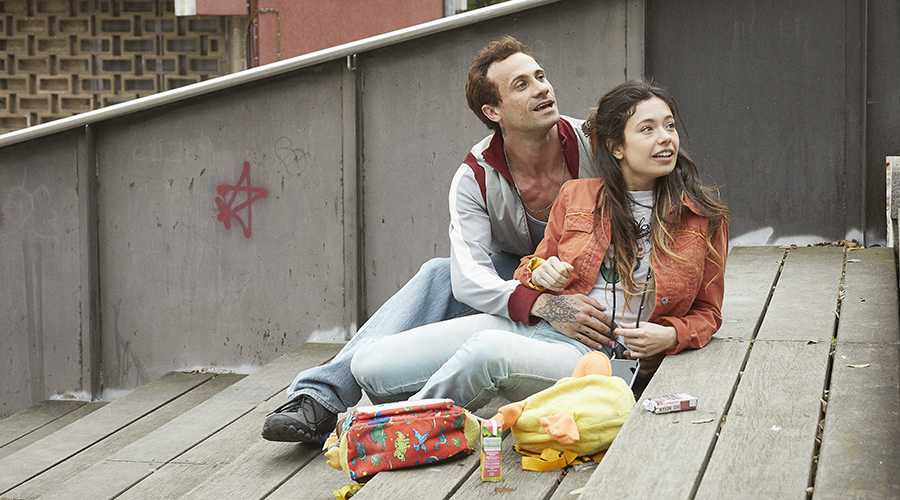
Wild sunflowers It is a job that stands on several legs. a serious, as we have seen, the script, that is to say, the story the film tells. But what it says would lose weight without the interpretation of a cast of actors who achieve a veracity rarely seen in our cinema.. “I have a peculiar way of working with them that seeks that spontaneity and that creation. It seems to me that, when I give them freedom both to act and to defend the character, The actors, not only do they achieve more credibility, but they provide part of the text that has not occurred to me. [in the movie] there are things that are written, others that are improvised, “It’s a mix.”
In that struggle and tension between the authorial and industrial face of his cinema, The first is revealed above all in the staging and, above all, in the use of the camera. that camera, the plane, definitely, It is more than a descriptive resource. In Wild sunflowers there is a presence that observes everything. Is it the author? Does the spectator? “What is essential in cinema, just like in literature, the thing is, when one writes, he does it from a voice. It could be a character, can be a witness, can be yourself. in the cinema, that voice is the camera's point of view. in this movie, for me, It was very important to have two points of view. One was that of an external narrator, and then her point of view. And never take the point of view of one of them. The camera is always a little outside or in it. And that for me is very important because, in the cinema, the point of view is linked to the desire. And it was very important to explain her desire. Why do you want this? Why do you want this other this other way?? Why does he end up wishing the third party again in this other way??”, Rosales explained.. "In Petra there is only one point of view. I called him the angel. It is someone who is present, but it's not entirely human. Enter and exit, colder. In this case it is a narrator who is involved, is very close, are interested in what is happening, that's why he's looking. If I were a third person narrator in a novel, it would be someone who is there, who knows the history of the characters because he has had a relationship with them.”
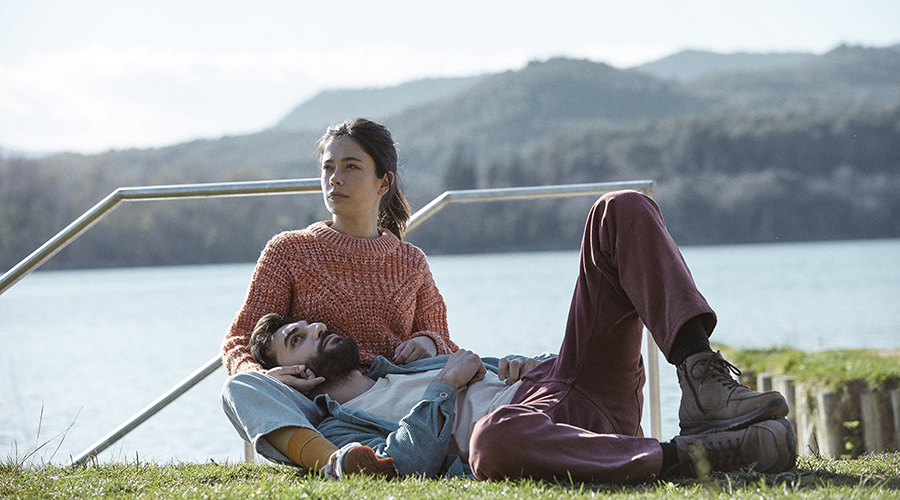
The dimension of Rosales' proposal, however, it doesn't end here. We still have the political aspect or description of society for a work that, as confirmed at the press conference, defines itself as a cinema of the present. After a fight between Julia and Oscar after a night of partying, she ends up reporting him for assault. Definitely, one of the most tense scenes in the movie. “For me it was very important to point out that it is desirable to report. If we look, she is about to regret it. He is already asking for forgiveness. If the police don't take her away, “That is repeated until it kills her.” For Rosales “it was very important to highlight the need to mark these types of things.”. I think we live in a world in which there is a welfare state that serves a function, but there is another function that is individual. She doesn't victimize herself., She does not expect that either the State or anyone else will take her chest out of the fire because she is going to depend on it.. But the State, on the other hand, does his job, What is extracting this person?, that is toxic, of the social fabric. That is the role of the State. But ultimately she does not become a victim and moves forward on her own and that also seems important to me to highlight.. He is a person to whom many difficult things happen., But keep going and it ends better than it begins.”
wild sunflowers It is a film whose criticism has focused in some chronicles on the basis of a Rosales that is somewhat more syrupy than on other occasions.. The rawness of films like Headshot o The hours of day. Remember the vision of the world that the director himself slipped between reflections on cinema in his book The pencil and the camera. “Power naturally tends towards corruption.”, it said there. The director himself acknowledged at the press conference that his film Beautiful youth, His vision fit the hopelessness that was opening up in the younger generations due to the consequences of the economic crisis in post-crisis Spain. 2008. Today you see things differently.
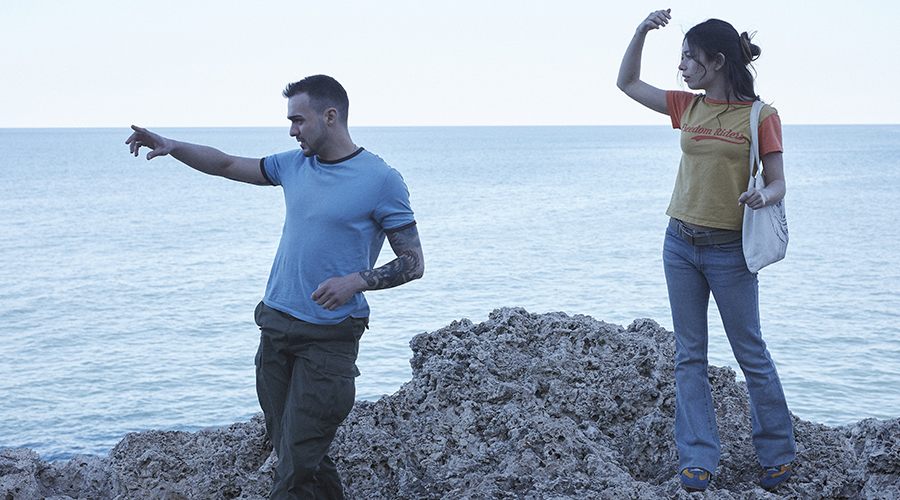
“I am a person who believes in human hope. We live a human evolution that, clearly, It is a story of getting better. From cave times to today, going through the middle ages, the napoleonic wars, the rebirth, modernity and postmodernity, It's a success story. We live better materially, we eat better, We are better off in our homes and in our vehicles than the cavemen were., which in turn was worse than those of the medieval age, which in turn was worse than those of the Renaissance. That we have been improving from a material point of view, it is indisputable. From the political and social point of view, we have also been improving. From the chief of the tribe to the totalitarian king, to a modern democracy, has been improved and social improvements, also. It is better to be homosexual today than thirty years ago, It is better to be disabled today than thirty years ago, It is better to be from a racial minority today than thirty years ago and, Of course, It is much better to be a woman today than thirty years ago.. For me, this progress makes me think that our children will also improve., and our grandchildren will also improve in the civilizing process, like all previous generations have done. And it seems to me that the film had to convey that hope”, said the Catalan director. “The world is difficult, there are difficulties and it can be improved. But it's going that way. When I did Beautiful youth, that hope, in my case, I was a little damaged because there was such a hostile environment that it made me wonder if that generation was going to make it.. Then, humanity has experienced worse than the crisis 2008, which shows that, after any catastrophe, we move forward. But, just as there was that end so hard and hopeless, in this case it was a very different movie at a different time. For me it is important to convey to young people and everyone that the traditional family has mutated, but this other family, not bad either, and you can obtain a certain happiness.”