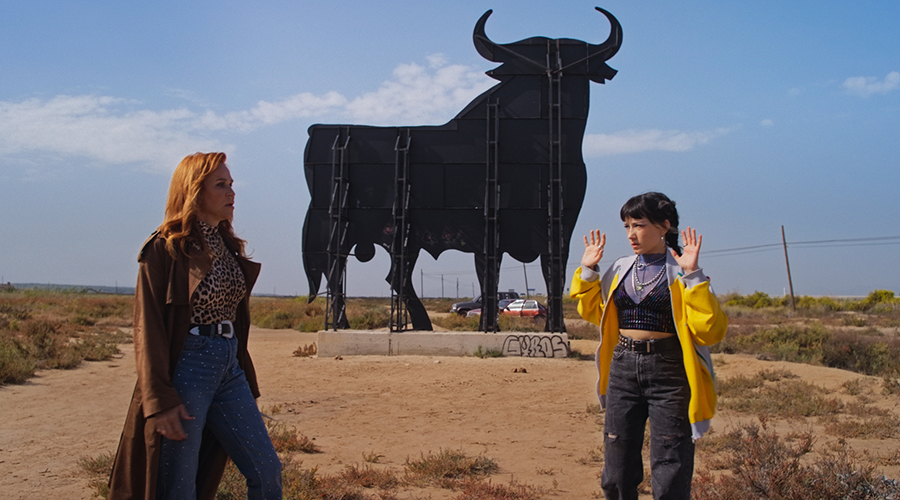
After a long career in the field of short film and in the audiovisual sector, Valencian Guillermo Polo opens this year the Cinema Jove festival with the projection of his long -awaited debut in the length. The devil carries him Tristan's story tells, A man who leads an anodine life as an employee of a company that is dedicated to the manufacture of those sugar overflows that put you in bars when you ask for a coffee. Despite its shy and submissive character, Tristan has a secret aspiration: become a writer. But he feels frustrated. He has been working in his first novel for years (that all publishers reject) And his only creative work is reduced to writing those ingenious slogans that we find in sugar envelopes.
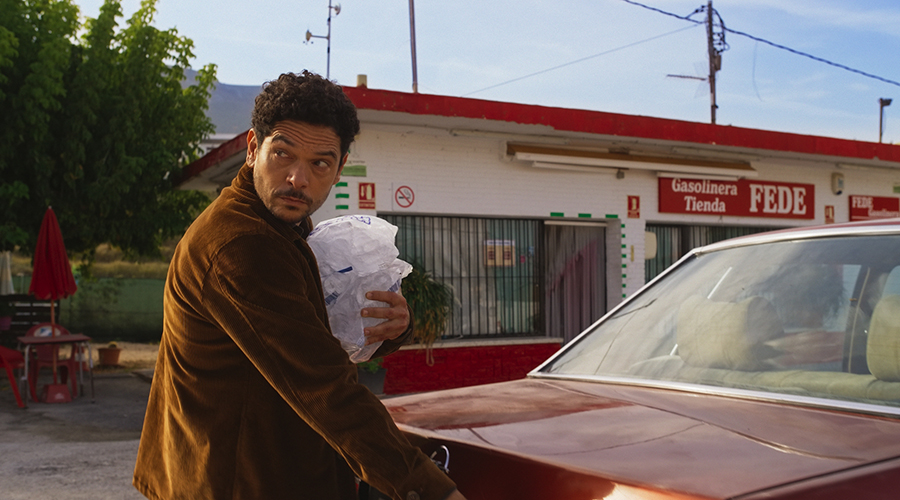
One day, Tristan receives a strange commission. His brother Simon has died and, In his last wills, asks you to do one last favor: Buy him at the foot of a tree that served both of play space in his childhood in the city of Benidorm. That and take care of your dog. At first, Tristan disregards that last demand from his brother, who had not seen years ago and whose death seems related to murky businesses between traffickers. But a succulent reward persuades him, Beginning, So, To an unusual and surreal travel through secondary roads of the Spanish geography. On the way, meet a girl, Àxlex, with which he does not share anything, but what, forcibly, will follow. While, Another strange character chases our protagonists to get their loot. We talked to Guillermo Polo about this premiere. G.LEON
It is your first long. How do you feel?
I think that making a movie is already a great achievement, especially if it is a project that is born from one and you have to look for all the supports to lift it. I guess there will be directors who manage to finance your movie more quickly, But in our case it has been a process of many years that, In many moments, He has been able to hit a thread for having an aid or that among one more producer at a given time. Oh well, I am very happy to have reached the end of the road. In fact, The filming went to me a walk because, as producer of the two, I have been so involved in that part of the financing that, When I got the camera on the set, Beyond running against the clock, It was an absolute enjoyment.
I was going to ask you precisely for that part of the financing. Apart from the Valencian aids of the IVC and à Punt, You have the help of the Canary Islands Government. What has been the most complicated aspect of production?
We first granted us the help of Valencia, But then the covid broke out, With what there was an exception with the issue of times and financing. In that process, I was looking for more markets to move the movie. Fortunately, In that phase, The project worked very well. We were in Malaga, an abycine [Albacete International Film Festival], And also in the Canary Islands. The Canary Islands was one of those little decisions that depend on a small detail. The night that closed the Call of the Canary Islands, I entered by chance on the web, And I hesitated. In fact, I wrote to another of the producers of the movie and told him: I don't know, Do we introduce ourselves? I sent it and a week they told us that they had selected us. It was there that I met Volcano Films, who joined the project. Following that, We ask for the help from the Canary Islands. The first year did not come out, But to the second. Then, In Abycine the last producer that was Batiak Films ended. That was when we all get together, Japonica Films, what is from Barcelona, The Polo brothers, Our producer, Volcano, y Batiak Films, that are from Madrid. And already between the four, We were able to build financing. Suddenly, having clicks on the last minute changed the perspective of the movie. I don't know how many times I have wondered, If the help of the Canary Islands had not left, What would have happened?
What is the origin of this crazy story?
(laughter) I wrote the first project treatment in the 2011. The idea starts from a very anecdotal situation. The landlord of the floor that I had in Valencia before going to Madrid told us that his mother had died and that, among other things, He had left his cat. Not that he would have left it in inheritance, but, suddenly, The man had to deal with his mother's cat. He was a quite surreal lawyer who didn't like animals too much. The uncle was as tormented with the subject, but, at the same time, I thought that was the only thing that was alive of his mother. I had to deal with the animal, but, at once, I didn't even know how to feed him. That situation made me funny. From that germ of idea to what has come out in the movie there have been many rodeos (laughter), But the dog that, somehow, Sale on the movie, It is the representation of this cat. Little by little, Tristan's relationship with this dog became the reflection of the relationship he had with his brother. That idea of reconciling or trying. Then, The tone of black comedy, The form of road movie And all the elements that the film has were already taking shape in the process of building the story.
The film tells us about the family as that knot to which, whether we want it or not, We always feel tied. Considering that the protagonists are two brothers and you have that creative relationship with yours, What about you in the movie or in the characters?
(laughter) Yeah, It is a question that they have asked us, But fortunately I have a good relationship with my brother, to the point of having mounted our producer together and having dedicated both to the cinema. Obviously, All sibling relationships have their fluctuations and I suppose, At certain times, Each one can represent ourselves in each of the two brothers in fiction, But I don't think it's a faithful portrait of us. This is that love/hate game that can have each other, That "I can't live with you or without you" and that in the movie materializes on the trip.
One of the ideas that could summarize your protagonist's journey would be contained in this motto that Tristan himself plays and that would encourage us to pursue our dreams. To what extent do you make this reflection of yours?
I do believe that there is a parallel between the character of the character and my own with the movie. All the nearby people who know me know that I have been talking about the movie for many years and, in the end, You look like a lunatic that talks about what does not exist. It is the nature of cinema. As I heard Guillermo del Toro say the other day in a statement: The natural state of a film is that it is not made. I make my reflection. In the recent Berlanga exhibition [made at the CaixaForum Center in Valencia] I also saw the amount of films I had to make and that I had never carried out. In the end, You become a charlatan who talks about projects that have not materialized until you get it. That is why I have felt reflected in Tristan and in that novel that he fails to publish and how, somehow, is mired in that reverie or routine in which he lives. In that sense, I believe that the sugar overflower that writes become the reflection of their vital status. On the one hand, You are trying to convey these motivational and inspiring messages to which you try to give your personal touch and, at once, His life is the opposite. That creative and identity discovery that has in the movie and in the life itself is reflected in those little things, And I think that treating him with sarcasm and irony was part of the game.
And now that you have finished the process and the cycle has been fulfilled, How would you say that the film responds to those created expectations?
In the end, Apart from dedicating yourself to the cinematographic process, You have to be almost fortunate because you have to write something that has to interest five or six years. The part of dilation over time has something positive and is that you are meditating, maturing and filtering everything left over from the film. But, on the other hand, It has that point of frustration. You are afraid that similar projects will come along the way, For example. Now, With all the exhibition we have to the networks, that input It is almost instantaneous. I have occurred to me that, Between that I have thought about them, They have been done and had not even created a first script version. Probably, In past times it was harder to lift the projects, But on the other hand I think people lived a little more in peace in terms of not having a constant exhibition to what is being done. I think that now is an evil that affects many areas, But in the cinema you can generate that anxiety that you have to do things in a hurry, when, at once, The creation process asks you to pause and meditate on things. For me to finish it, it has been a mixture between relief and desire to close this chapter, That the movie make its trip. Somehow, It's as if I had said goodbye to her, Like a kind of mourning. Now you have to let it go and get the following.
As you said, The movie is clearly a road movie. I believe that one of the most complex challenges of this genre is that, While on the one hand it marks the path that the narrative follows, The trip, for another, It seems difficult to sustain dramatic interest in the same. With what facts fill that space between the starting point and the arrival point? What has been, in that sense, Your biggest challenge?
I believe that the most complex thing this script had is that it is a road movie With many details that affect each other so that the plot makes sense. Already the premise that originates the trip has a slightly rocambolesco approach. On the other hand, Maintain the essence of the movie's message and not lose sight of the character, is a bit passive (When many times in these films the main character looks for something in a more proactive way), It was already a difficulty because we did not want everything that happened around Tristan would always be resolved externally. In that sense, anything we played collided with many narrative problems. What was the origin of the trip? What had happened so that who is chasing him had his own reasons to do it? There were many details that complicated the story, What forced us to make many script versions.
What would you say that it is for you the most difficult when making a comedy?
For a start, Every time we met with producers, platforms or televisions, For example, at the time you named the word “comedy” It was lit as an alert pilot because what we understand by comedy in Spain are these biggest budget films that work at the box office. But if you say black comedy, You realize that each person has an idea of what that means. In our movie, The key was that the characters will take seriously the circumstances they were living. And I think that we managed to convey. Many actors, When they get into the comedy code, They immediately seek to constantly mark the gag For the viewer to know that you are making a joke, And here we were looking for the opposite. Another problem was to find Spanish referents where to look at us. Many times I found more referents in Argentine cinema, In American or European movies, that they also have, than in Spain.
What did Pablo Molinero have for you in the cast?
Pablo had seen it in To the fish And then I saw him in other recent films. And the truth is that he got a lot involved. Three scriptwriters have participated in the script with which I have made many versions. But the last phase was made last summer to record the movie, in which I was like a week at Pablo's house, Where we played everything, as I saw whether or not it worked. With which, then, When we went to filming, Everything worked very well because I was very settled, especially Paul's relationship with mere [González, which plays Álex], that was the main one of the movie. There was only a matter of adjusting, More than touching some of the root. That facilitated that there would be no blockades in which each one was understanding a different thing.
The rest of the characters make up a kind of sample of freaks difficult to classify. Where do they come from?
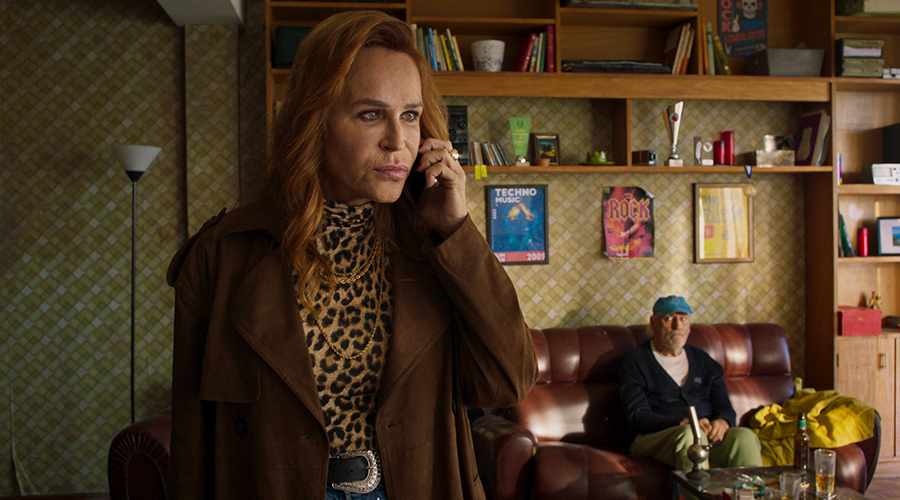
Yeah (laughter). The first contact that you see with that is that there are different features, both aspects and factions and characterization. In that sense, We wanted to put on the table the fact of how we tend to pigeoner certain types of canons, When in the world we have all that variety, both racial and compositions. That was an aspect that I wanted to introduce in the movie in a natural way. On the other hand, The character's own trip enters us in a slightly dreamlike universe where Tristan is discovering himself and, at once, You discover those landscapes and places. One thing I talked to Paul was that they trista, more than a person who has lived all his life away from the most wild side of life, Actually a certain attraction has always felt, Same as his brother. It's just that he had asleep. As soon as the trip begins, a certain curiosity wakes up in him, And that's there, In those characters, In landscapes or buildings, When he begins to find his inspiration for his novel.
Somehow, Each of these characters has its little intrahistory. What difficulties did you find when fitting all those little stories in the main narrative?
I believe that something they have in common road movies That's that, that as you are making stops on the trip, You find yourself with characters that can arouse something that makes you want to know more about them. It's something we all experience when we travel. Is that person who found yourself in a coffee, In a restaurant, in a park and with which, suddenly, You had a brief conversation, And then you fantasized about how you could of your life. It was about transmitting that, that there was a travel experience in the viewer and that, As he met these places, It will generate certain questions. What would the next day be here, on this site?
There is in the movie, And it is also in some shorts whose, as I fell in love, A QUEENCE FOR THIS POPULAR SPAIN, A little cane, of bars, of bad death hostels, of gas stations in the middle of nowhere, etc. Where does this fixation come to you for these elements?
In the year 2011 I went to live almost five years to Los Angeles, to the United States. When I went there, I had a certain creative blockade in Spain with respect to what I wanted to do cinematographically. I admired many Spanish cinema things, But at that time I was a little blocked on where I should throw to find my own voice. There were aspects, From how the interpretation or aesthetic part was raised, I didn't just find. On the other hand, It also had a very idealized American indie cinema, Like another European. Un oxygen, Jarmush, Cohen ... I am fascinated and I am very interested how they visually frame both characters and spaces, And although sometimes they are more expressionist approaches, I wondered why I couldn't do the same here. So, When I disenchanted many aspects of that American culture, When returning to Spain, I remember that I had a kind of “re-enamination” or a flash. That woman who is eating a churro in the bar of a bar, to the taxi driver who carried his pendants and his cross and his flags, Suddenly all that seemed very cinematographic to me and I wanted to find a way to congenage those two things, a more photographic or expressionist look with something that was authentic Spanish. And that is a bit what I have tried to put into practice, both in that video clip, That was like a first essay, Like later in the movie.
I think Benidorm combines all those things a bit. What does Benidorm have to repel and attract us the same time?
Yeah, I think Benidorm summarizes that very well. From that Anglo -Saxon culture to that metropolis idea that they wanted to raise in the sixties, seventy, And that generates that surrealist place; It seemed very good idea to end the trip there. Since then, I have seen many things that have followed this same line, both in video clips, as in films that have been made in Benidorm. Somehow, It seems that there are many people who have also reached these conclusions. But if, I seemed interesting to finish the trip there for all that symbolizes.
You have commented before, But I didn't want to stop asking you about references. I also see a David Lynch hidden around, Maybe in photography work, The appearance of the strange ...
Yeah. I was very interested in Hopper's painting reference, For example. I am also interested in photographers like Eggleston, Stephen Shore, Mary Frey… Yo, in fact, I made a photography book three years ago about all my experience in Los Angeles that I think is very connected to the movie, With that look. I have many referents as a filmmaker. Then, There are referents that may interest me as a spectator, But maybe not so much when I get in the practice of creator. But, Yeah, All this universe.
In the presentation of Cinema Jove, It was said that Valencian cinema was in the official section in its own right. How do you see the general situation as a Valencian filmmaker?
I agree with what Carlos said [Madrid, Festival director]. There is a very powerful growth. We have Lucía Casañ in Shanghai, (I really want to see your movie A private bathroom; The photo director also worked on our movie), We have Elena López Riera recently in Cannes, have Valencian also in the official section, the house [From Álex Montoya] that is working very well ... ten years ago we had that boom of Andalusian cinema, con The minimum island And all these productions that, suddenly, They put themselves on the national and international map, And I would like to think that something similar can happen to Valencian cinema and that, for my own merits, Movies also win interest and respect, both nationally and internationally. I feel there is a generation, Not necessarily age, but on a margin of twenty years, who are doing things with ambition and wanting the movies to travel the world.
What would you say are those two or three axes that you think should follow Valencian cinema to achieve those goals?
Bueno, First be connected to the present, With what is already doing, With what are current interests, How we have changed socially. And the same with visual and narrative language. I think you are betting on telling things differently and that, without losing the essence of what can be more local or what, at a personal level, Touch you, try to find that story that can obtain an interest beyond Valencia. If you extrapool it to a better known case, It would be what an Almodóvar outside Spain means, How has you achieved that, through him, that imaginary of what is Spanish is interested. Well, I think the same, But what we are here, out. I do not know, We'll see.