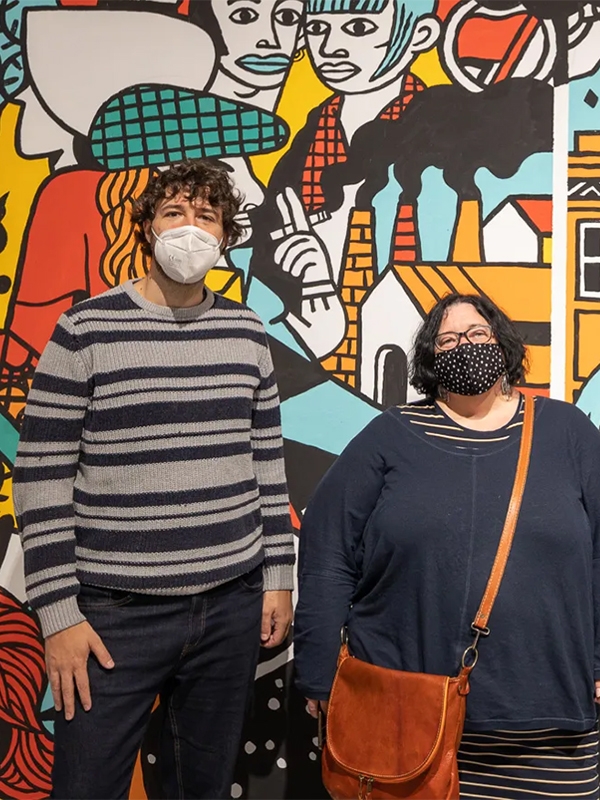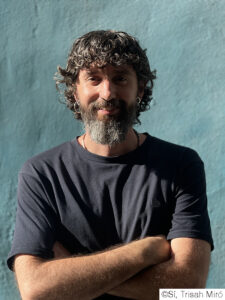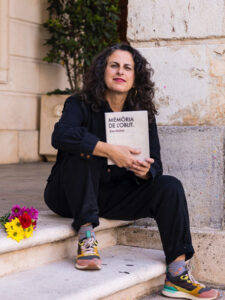
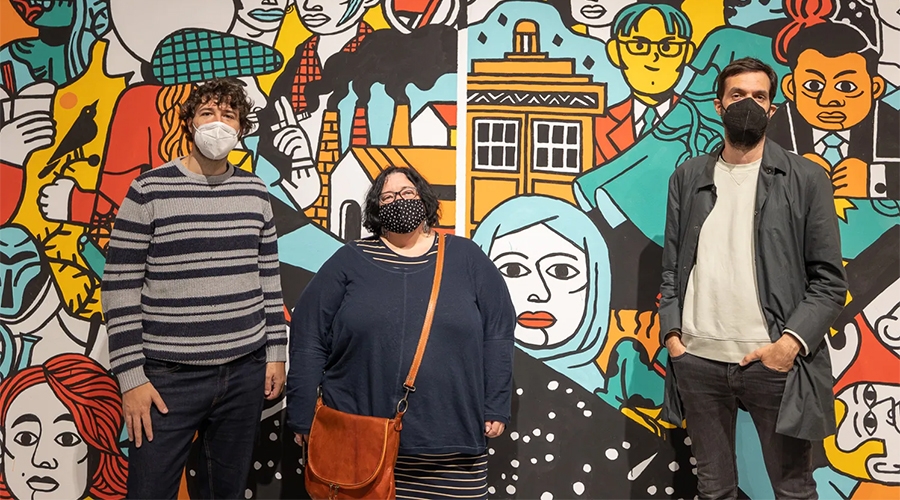
Aurea Ortiz, Mikel Labastida and David Brieva are, among many other things, those responsible for the podcast and the series festival, LABdeseries, which this April is celebrated in Valencia del 26 from April to 1 May and which will bring together a good handful of television series professionals in a new meeting with the public. With them we talked about this contest and the present and future of television series. More than an interview, a chat between friends. Pay attention. G. LION
More than a series festival, LABdeseries is a space to talk about them. Why do we like to talk about series so much??
Aurea Ortiz: [LABdeseries] It is a meeting point. That is the idea of the festival: bring together people from many different fields and talk about series. The three of us really like to talk about series, how we like to talk about so many other things that we like. But it is true that series are in all conversations, They are in all the media. With series you try to explain anything. The idea is to sit down and talk and create a relaxed space in which there are people with many different knowledges to give their point of view.. It seemed like a nice formula to us..
Mikel Labastida: I believe that series have become a good tool to explain the world. They are being used from various places and areas, from the economy, politics… I think they are reaching a large audience and they touch on very diverse topics, that's why we like to talk about series so much.
David Brieva: The thing is, of all fictions, They are the ones that are most attached to the present, those who react faster to all the issues that arise, both historical and thought. And then, viewing formats, whether it's the new marathon formats in which an entire season appears and you gobble it up and have to talk about it on social networks, like week to week, They greatly encourage conversation. One thing that frequently happens to us is that, every time we say we have a festival, The conversation always ends with the person we are talking to telling us about the series they are watching and asking us what we think of it.. It has happened to us anywhere, at the notary, when you go in the taxi... This is one of the explanations why there is so much talk about series, But I think the phenomenon is much bigger than we can explain..
What do you think is due to the boom of the format?
TO THE: I think part of it has to do with the growth of the platforms.. There is now a much larger supply than there was ten years ago.. The issue of platforms can lead to two phenomena. A, to a certain homogenization. Some products, how they are successful, they repeat. But, at the same time, there is also a lot of diversity. Now there are topics that are discussed in the series that were previously unthinkable to be raised.. They are stories about faces, about bodies or landscapes that usually do not appear in commercial cinema (I'm not saying in other types of cinemas). And well, There is also the fact that we have gone home to watch series. This is before the pandemic, but it has to be multiplied by a lot. It's that pleasure of following a story that you want and watching it at your own pace..
DB: With many of the series it happens that they accompany you, that you identify, you feel part of it. Watch a series like Two meters underground or so many others is to spend five years with those characters. In the end, They are part of your family. I believe that the format itself, that tells a story in the long run, is the key to success.
ML: I believe that there has always been a boom of series. Maybe now there is a speech, there is more prose around this, but we have always talked about series and we have followed them a lot. The name always comes up Twin Peaks, but it happened with Remington Steele, con Los Angeles Law…They were series that also created conversation. What happens is that everything has been amplified with social networks and the media. Now we are in another time, but the series have always generated a boom around them.
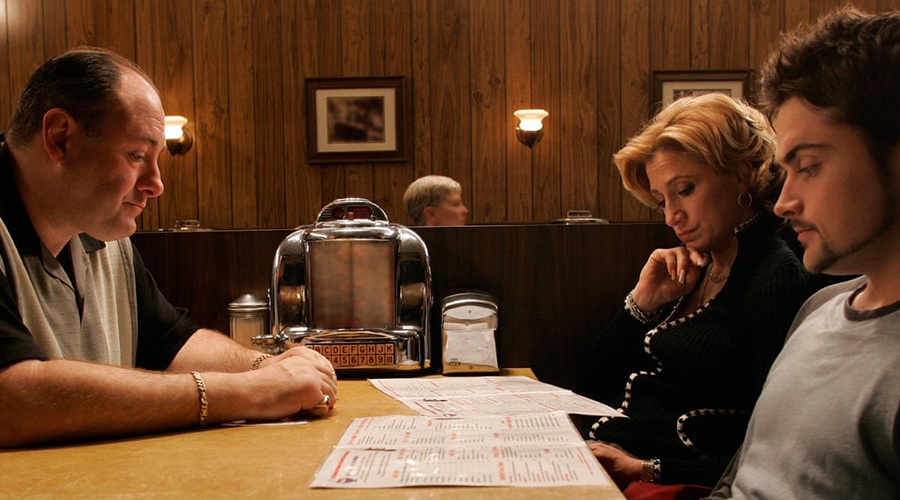
TO THE: The thing is that they were not a cultural phenomenon, like now. It was understood that they were something different from cinema, which was for a domestic environment, like they didn't have the substance of cinema. They were something more related to entertainment, except very specific cases, as Twin Peaks o, then, The Sopranos. Now they have another cultural and social space.
DB: The paradigm has totally changed. If before it was the minor medium to which great directors or great actors did not want to go, Now it is the place where all eyes are fixed.
Every week you receive information about “the series you have to watch” or “the best series in history”. If you heed these alerts, They all seem exquisite to you, which is impossible. In this tidal wave, How does one separate the wheat from the chaff??
DB: [On the podcast] we try to sift a little. We try to talk about series that we think are worth it and explain why. But it's very difficult, even for us, we are in the middle. You can't reach everything, Of course. In the end, You are guided by creators you know and can trust, by platforms or chains that you like, there are different ways. But it's really difficult because what comes out is too much for anyone.
ML: You don't have to see everything. I think we have to disengage ourselves from that permanent anxiety in which we live., in which you have to consume everything and discuss it the next day. We do not read all the books that are published, and a lot are published. There is also a lot of trash, by the way. There are also a lot of shitty movies made, which seems to only happen with series, but not. Well that, no rush. Y, above all, building each one the series they want to see, not the series that “has” to do with it, which is very different.
TO THE: I believe that the networks are the ones that exert enormous pressure there.. And it's hard to escape, even being aware of it. Like everyone is talking about this, I'm going to see it, if only to enter the conversation. All types of consumption, the audiovisual included, you have to take it easy. You have to choose the series. If you feel like having fun that doesn't have the slightest seriousness, forward. At your time and at your pace.
ML: That's important. Separate? Well, it depends. It's like when they ask us, what series do I watch now? Well, it's like deciding which sweater to wear.. It depends on your tastes, your size, what you are going to use it for, etc. It puts you in a commitment because, What do I know... I don't know you at all! (laughter)
DB: I still remember the time when you were able to reach practically everything that came your way.. A ver, at least, some episode of all the series and be talking about all of them. It is true that it is not necessary to watch all the series and that you do not have to watch the one they are telling you that you have to watch, but the one you like the most, but I admit that it is difficult to find it. If you are not a big follower, It is very difficult to know which series you are going to like among the fifty that come out that week.
Another great slogan that has been established about television series is that the writer is the star. Do you agree with this idea?? Are we living in a golden age of scriptwriting?? On the other hand, that preeminence of the script, is it a step backwards, to the era of the big Hollywood studios where the story once again takes center stage?
TO THE: Bueno, here is the figure of showrunner, what, in general, He is the creator of history, the one that has the framework of the story and maybe some chapters. That has set the gaze, I think for the better, about the screenwriters, that have always been very forgotten, even in the world of cinema. I think that part of the phenomenon of the series also has to do with that.. If the series are made by their own creator, who knows their world and is the one who develops them and who ends up controlling the product, It also guarantees that something personal will come out., different. All the series that are considered the great classics, as The Sopranos o Two meters underground, They are from a creator who has a very clear idea of what he wants to tell.. This has helped the series have more and more viewers., because they find something meaningful, such a story. That is important.
ML: It is important, but I don't know if that much is happening. It is true that there is a claim from the screenwriter, but we talk about big names. There are many others that we don't know. In fact, another phenomenon is happening. Now it's being said: “it's a Netflix series”, but we don't know who is behind it because Netflix has become a brand capable of attracting more audiences than any other name., if you are not a showrunner tipo Ryan Murphy (Glee, American Horror Stories). But, the minor screenwriters? In the case of Spain, the creators are still fighting for recognition, to be invited to press conferences, that they be rewarded… I think there is still a long way to go. Not everyone is David Simon (The Wire).
DB: Here, In Spain, If you ask a series follower to tell you five showrunners Spaniards I don't think I'm capable.
TO THE: The other day I caught a taxi driver, big fan of There is no one who lives here, who knew who Alberto and Laura Caballero were. It caught my attention because it seemed very strange to me..
DB: Olivares (The ministry of time) and little more. I think that, even in the United States, where it is true that the showrunners They are very important, They are still well below film directors. Movies with the names of the directors sell more than, in general, The series are sold with the showrunners, except cases. I think they haven't arrived yet.
TO THE: And from what you said about the story, I think that series do favor a certain primacy of the story, of the argument, on a more aesthetic dimension, plastic or more discursive. Seriality itself favors a desire for things to happen, for cause-effect, for a type of “usual” story, less innovative. But it is also true that, in all the big series, and above all those that we all agree have marked, that element is totally taken care of. They are one thing and the other, at once, there is total coherence. Are The leftovers and other series that allow themselves many luxuries. The good part is that the diversity of the series and the need for such a large offering means that there is room for proposals that also skip all that..
You have introduced the theme of the Spanish series, and I wanted to ask you for a brief overview of how the series market is in our country.. The good and the less good or what we lack.
ML: If you asked us this last year, we would have told you that we are in a great moment. Last year we had Patria, Anti-disturbances y Poison, which were the three series that were most talked about. But I think the pandemic has caused a kind of recession. For me we are in a moment that we did not expect to be in for a long time.. Regardless of whether we like it more or less, The Money Heist It has been a phenomenon like few series have achieved. There is much more diversity of topics than there was ten years ago and with different approaches, especially niche. Before, In the series all family members had to appear so that everyone was represented (The Serranos). I think we have made a lot of progress there.. We have managed to ensure that Spanish series are aimed at specific audiences and no longer try to please everyone.. And then there is a little bit of risk missing. We have a long way to go. It is very recurring, but you have to name it every time because you take your hat off, and this is the case of the BBC. It's amazing. The thing is that the years go by and their series continue to be risky.
DB: It's just that a series like I could destroy you is from the BBC, one of the most risky series in recent years.
ML: Here, Spanish public television does not have that mission of undertaking risky projects.. There is a little bit on RTVE Play, but they hide it. It's weird. Also the platforms' own productions here are a bit disappointing, on both HBO and Netflix. Atresmedia is surprising a bit, but there is no risk.
DB: I think what has disappointed me the most is, precisely, the role of the platforms that are producing locally. After Crematorium, We all had the idea that with these platforms there were going to be very risky fictions of all kinds.. And it is true that it is not the place where they are appearing. They are more clonal, things that remind us of old television series. I expected more from platforms like HBO or Amazon, Netflix and others.
In relation to all this, I have sometimes attended meetings where projects for series are proposed and it seems to me that there is a tendency towards a certain homogenization of stories and ways of telling.. It's as if, since the start of the project, certain ways of manufacturing the series will be appealed to. How do you see it?
TO THE: I think they are following the manual a lot., both in the development of the script, like when presenting the series. If there is a series that has had certain success, it's like: “let's repeat it”. Creators Are Being Asked to Do What Everyone Else Do, even, as you say, in the sales process. It's great that there are workshops and meetings, and explain how to sell a series, but it ends up being like a single form that serves depending on what type of products and, probably, others that are riskier are more difficult to carry out. There are exceptions, as Poison, but, Of course, They are Los Javis and they have a very specific personality. As producers they have done Cardo, which is a super-risky series.
ML: But at first it was very difficult. Nobody believed in Poison, What happens is that they were Los Javis and they swallowed. And in the end, the surprise came. This should have been an incentive to let people develop their own ideas., but that's not happening.
TO THE: Of course, you trust the creators, but deep down you don't let them do what they want. It's not about making any idea that any scriptwriter can come up with., But if there is someone who is working on a topic, do not make the product look like another and distort it. Precisely, The golden age of series has come because the creators were trusted. That has allowed that diversity that we were talking about. In the case of public television, I agree. His role seems central to me. That Spanish Television bets on The ministry of time, which is one of the key Spanish series to understand change, and that they corner her or that a season ends and you never know if she was going to continue, or that later they couldn't even get the team back together because two years had passed and the actors were each on their own... Man, take care of something that has created a community that you have never had and with which you have had a true phenomenon.
ML: and a nuance: budgets are also missing. There is a lack of budget to compare the Spanish industry with others. And since we are here, Public televisions like À Punt should be an engine of new ideas. Neither is it being.
Do you have any theories about what the reasons could be?? I mean, that's the fact: corner a series like The ministry of time. But, what could be the reason behind?
ML: In the case of Spanish Television because they continue to be guided by audience ratings. They have no advertising and are not competing in that league, but they play that. They are not evaluating new metrics that are very important: the social conversation, the community effect, deferred hearings, which right now are essential on all platforms. Y, above all, the feeling of success. Most of the platforms' successes do not know how many audiences they refer to., We only have a “perception of success”. But Spanish Television continues to be measured as if we were in 1990.
TO THE: And with a kind of idea that it still happens that the whole family sits in front of the sofa to watch TV. I have that feeling with Spanish Television, I have it, absolutely, with À Punt… That no longer exists. It can happen at some specific time, but not as something continuous. It is true that many more people watch general television than we think., but it is also true that the grandmother thing no longer exists, the granddaughter, the father, the mother and uncle all sitting watching the same thing. Now everyone has their own screens and public and general television stations are not responding as quickly as they would require.. It happens even with The Money Heist, that was a phenomenon, but Netflix came and exploded. They wanted to say, "but, Antenna 3, Look what you've had." (laughter)
DB: There were more things there: the format of the chapters, that lasted an hour, the ads… There are a lot of elements that make it an old paradigm.
It seems to me that the format of the series is deriving, of the product over several seasons, to the short-episode miniseries. What do you think are the reasons?
TO THE: You have touched on a topic that we love (laughter).
DB: I think it is mainly a commercial issue.. If there are more miniseries it is because the networks and platforms are betting on them. And that has some reasons.. Let's not forget that many of these miniseries are misleading. They are miniseries that, when they work, continue. I mean, It is a more interesting model for them in the sense that they can make a closed miniseries, and if it works well, create a second season, instead of saying: “We signed for three seasons and maybe I have to cancel it after the first because it hasn't achieved the result”. It is much more interesting to do The maid's story y, when it works, we can consider a second season. They are doing it, even, with series like this, who is adapting a novel. But, on the other hand, Why can this type of series fail more?? There, the excess supply causes a phenomenon that we are seeing to emerge and that is that the second seasons are buried.. Very successful first seasons appear and when the second arrives, goes unnoticed.
TO THE: My feeling is that, even if we don't like it, the great stories are disappearing. Series like The Sopranos They are like great stories. You can tell the lives of these gangsters until you feel like it because what you are doing is living with them.. But I believe that these great river works are ending. The pandemic has also helped. It has created a phenomenon like Queen's Gambit, For example, o Unorthodox, a success that no one expected and that caught us all stuck at home.
ML: I think it's bad news for lifelong serial fans., and I claim myself as such, because part of the liturgy of the series was waiting to see the next season, be able to talk about it, to wonder about what was going to come... All of that was part of the experience and it is being lost with this desire to watch the series quickly. We are in a moment where, even, The platforms give you the option to quickly pass the chapter. You can see it at faster speed! But, who wants to do that? It's a kind of competition to watch the series.
DB: It is more important to see what happens than to enjoy it.
ML: Great stories were important to give time to develop the characters. This, with a movie, couldn't be done. Tony Soprano is a character that grows throughout the six seasons of the series., or Don Draper of Mad Men. Today, We only remember two surviving series that are The Crown y Better Call Soul.
DB: Y, really big: The Crown. There is more, but that have a certain relevance within the world of series, I think those. Big like the ones we have mentioned, as, at the time, Breaking Bad o Lost, we have very little left.
ML: A little hope has been born with Euphoria. The second season has gained followers and there is a desire for the third, but we will see what happens.
TO THE: Another thing that is killing this a little is the fact that you have to comment on the chapter immediately and, besides, criticize him. And the work is not complete. You have to understand that the series are not the chapters, They are the complete series. In the case of Euphoria, On Mondays you couldn't enter networks because you found that, suddenly, there was a criticism in which it was said that drugs were being glorified. But, Do you want to see it in its entirety and wait to see what it is telling you?? There is a kind of anxiety that has to do with these accelerated and consumerist times that we are in and that does not let them breathe.. This chapter-by-chapter criticism is killing the possibility of constructing a coherent story..
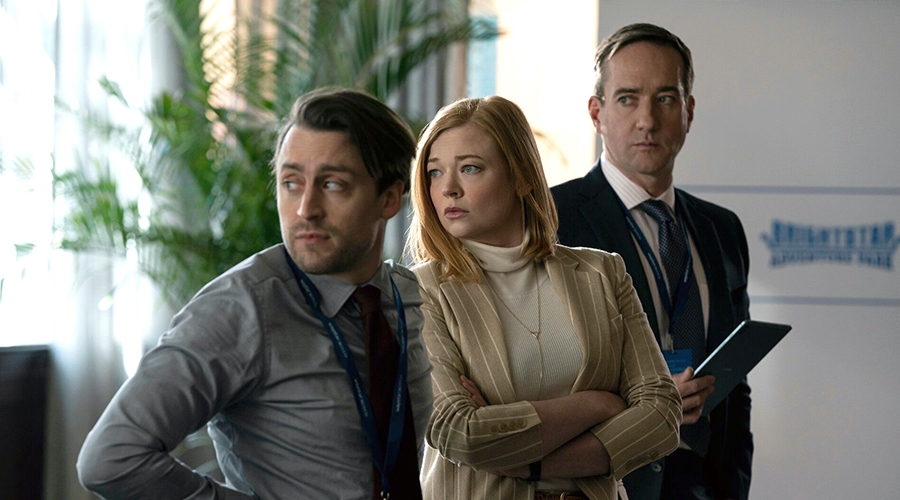
ML: Anyway, I do believe that the great stories are going to return. I have the feeling that Euphoria It is not an isolated case. It's also happening with Succession, which is already in its third season. People are looking forward to a fourth one and during the third one there was a lot of discussion and the experience was quite enjoyable.. I think they are like alerts that the phenomenon can return because we have that feeling of community again., which is something that happened to us Lost. That's where the fact of having a series to talk about for a long time began, that thing of spending week after week exchanging theories, fight over one character or another, with which the experience was expanded. We have lost that with the miniseries. They are very good, but the great stories offered us that extra.
At the festival you bring many series creators. In what sense has this contact with the authors changed your perspective of the series?? To what extent do you keep an eye, through them, to the back room, change your view on the series?
ML: At the LABdeseries we, In fact, we analyze series, more than criticizing them. And there it's cool to meet the creator because you know other ins and outs of the series, how they were shot, the circumstances, the situation... puts us a little in context.
TO THE: It also helps us understand some series. For example, In the case of a series like There is no one who lives here, that it is not a series of which I am a spectator, They tell you how they were aware of the importance of the series and its effect, or how certain characters or certain plots emerged. That seems very interesting to me.. I have a lot of respect for creators in general., even if they believe things that I don't like, because it seems very difficult to me. You have to listen to the creators. You learn much more by listening to or reading creators than by consulting books on film theory or series or the audiovisual world.. Creators have to face challenges, They are forced to make certain decisions or defend their own ways of seeing the story and I find it very interesting to hear them.
And in the case of the public, How do you see that relationship with the authors??
TO THE: Above all, the relationship they have with the kids is very interesting., with the students, adolescents and young people who, suddenly, They have the creators of the series they watch. This is very nice. There will be many who probably do not consider who creates these series, but this allows them to ask them about their own world, about seeing how these people, that is not his age, is creating his world. Those sessions are very rich, we like them a lot.
LM: Our approach to the festival is not to bring great successful figures. The people who come to the festival don't want to take a photo or ask them something stupid.. We are interested in people, more for the success it has, for the speech behind it. That attracts a type of audience eager for answers., looking forward to meeting that figure and exchanging impressions with him or her. Last year, For example, The talk about Berlanga worked very well because of how the creators of There is no one who lives here, Vote Juan o seven lives They related their work to the Berlanga universe.
DB: It is about, above all, to squeeze them in the sense that they do not come to repeat a learned speech, but, by surrounding them with unexpected people, other cultural agents, the conversation goes in other directions, let the ideas come first, the connections between that series and other things. We really like that these things happen at the festival.
There are those who have given him up for dead, but, Will the sitcom format return?
DB: ¡No! Never. (laughter)
TO THE: Yeah, will return (laughter) I think that, otherwise, but it will come back.
LM: This is very cyclical. We have witnessed the return of many trends many times and sitcoms will also be reformulated. Some day, in I don't know how many years, someone will come and say, “look at this new format” and the older gentlemen, what will we be, we will say, “no, sorry, “This has been around for a long time.”. Can't compare I love Lucy con The Big Bang theory. There is an evolution between the two, but they are still two sitcoms. Well, I think that in ten or twenty years, otherwise, reformulated, they will return.
Now to finish, some short questions. What is your favorite series?
DB: It's clear: Mikel, Two meters underground, Aurea's is Mad Men, and mine, of course, Lost.
ML: We could exchange them, except David who has not seen Mad Men (laughter)
TO THE: And we could say three more (laughter)
DB: Yeah, This is because we have repeated it on other occasions...
ML: So as not to contradict ourselves (laughter)
DB: …you become emotionally attached to what you have said, but it is true that I could say five other different ones. I could say The Wire, rather Lost, perfectly.
And what big series would you dare to say that you didn't like??
ML: The walking dead.
DB: But that's not controversial!! (laughter)
ML: But they are so happy seeing her... some.
TO THE: I have read that it has 10 spin-off. Too many zombies, Frankly... I would say Breaking Bad.
DB: Modern Family.
And that disappointing ending you said?, why did I see this?
DB: Game of Thrones.
TO THE: how I Met Your Mother. It's not that it seems like a super-series to me either., but the ending seems sad to me.
ML: House of cards.
TO THE: ¡Ah, Of course!
ML: But, let's go, It's not just because of the last season.. There are two or three previous seasons that seem horrible to me.
TO THE: Dexter.
ML: Another series that has seven or eight seasons left over.
DB: There are quite a few.
And the last one is a commission. They have asked me to ask you about Grey's Anatomy.
TO THE: (laughter) This is dedicated to me. Bueno, I lost track of him for a few seasons. It's a very long series, and that, suddenly, you get tired... But I think that the last seasons have been resumed with a lot of interest. For example, the season dedicated to the pandemic seems almost exemplary to me. It is a series that has always had a certain political dimension, but not as much as in recent seasons, especially when it comes to issues of race or sexual diversity and this kind of thing. I find it very entertaining. Sometimes you are introduced to some characters you don't like or people who do nothing but stupid things., that there are also, But it is such a pleasure to meet them and I continue to do so.. I see her, besides, weekly. It is a non-guilty pleasure that should not be given up.. (laughter)