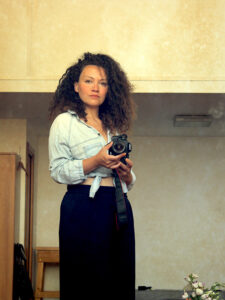

A group of friends gathers for a weekend to overcome the recent death, due to cancer, by Sam, another member of the band. during the meeting, They remember anecdotes and, above all, what they were. Already in middle age, friends feel that, one way or another, their lives are adrift. What happened to the expectations that were created?? How are they similar to what they projected about themselves in the past?? Perhaps mired in disappointment, stuck at a crossroads, Sam will come to get them out of the mess in the form of some last wishes that he has left written in a notebook.. In the letter addressed to his friends, Sam proposes a game in which each of them will have to write on a piece of paper a small wish that they would like to make., something that they never dared to do and that has been left pending. But this game contains an unexpected trap. Exposing your little wishes, each of them will face what is conditioning that moment of confusion and loss that they are experiencing..
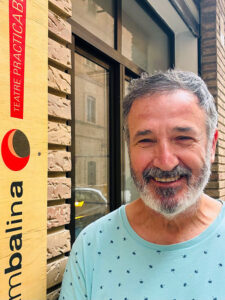
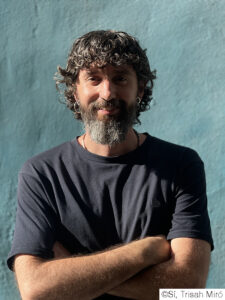
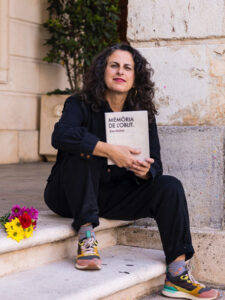
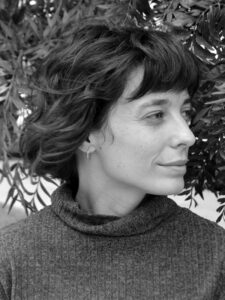
This is the argument of Things to do before you die, Valencian film produced by The fly hunter and first work by the actress Cristina Fernández and the director of photography Miguel Llorens. Things to do before you die had its premiere in Valencia at the last edition of La Mostra del Mediterrani, after which it would go through the last call for the Valencian Audiovisual Academy Awards, where he would reap a good handful of awards. Recently, the film has arrived on the video-on-demand platform Filmin, where it is receiving a notable reception from the audience. We chatted with Cristina and Miguel about life, movies and his work.

I would like to start with the story itself. The film exudes something personal, It is this type of stories that, a priori, They seem to arise from one's own experience.. “Things to do before you die" part of your script, Cristina. What is its germ?
Cristina Fernandez. Yeah, It obviously comes from personal experiences., but from a more global experience. It's not that everything has to do with me, but there is something that is general, a kind of hymn to life and the importance of friendship. We are not talking about a generational portrait, But it is something that many people of my generation agree on., those of us who are now forty, and what refers to the fact that the family base, of support we have had, it has been friendship. And also that we were very lost because we had been pursuing goals and models that are very obsolete and that no longer belong to us.. Chasing something that is almost impossible and that we don't even want anymore, We find ourselves in that loss and in that continuous frustration in which, in the end, you find those who are like you. From there, you find your way almost together. I was interested in talking about that.. I also wanted to talk about the loss, about the fact that we are not used to knowing that we are going to die, to understand it, to accept it, and how, suddenly, that is the most lucid place in which you find yourself and that makes us wake up a little. I have suffered more losses than I would like throughout my life and observation has made me see that, when they meet at that moment, what they stand out or what they are looking for, where they like to be and stay until they leave is in the small things, in the small moments. Connecting with that present is something that interested me. It is something that is necessary to find the supposed happiness and maturity that I believe, in the end, is finding yourself.
In that sense, Miguel, Cristina being the one who writes or from whom the script or story starts, In what way did you feel that it appealed to you?? What made you join the project as co-director??
Miguel Llorens. I think it's chance, like many things that happen in life. [The producer] Emilio Mencheta calls me to participate as director of photography in a teaser [a short trailer] of a story that was moving. They handed me the script and I said, I do it. So, we did the teaser of "Things…” in what for me was a first version of the script, although for Cristina it was already the I-don't-know-how-many, that is to say, that history was very advanced. But, after, during the subsequent process, there was some kind of connection. I now have a production company [together with Lorena Torres] and it was proposed to us that we participate in the project and, in a very natural way and without established premeditation, We made it our own until we ended up assuming it in its entirety.. First, I took it on as director of photography and producer.. The thing is that our way of producing is very “immersive”, that is to say, that we are not businessmen, what we do is tell stories and production is a necessity, on the one hand, tax and, on the other, logistics to be able to bring to fruition those stories we tell. We were working with Cristina and, suddenly, The idea arose that I would also participate in the direction. On the one hand, I experienced it as a process of great generosity on Cristina's part to share her story.. I believe that cinema is sharing. Share creation processes, the narrative construction processes… In this case, Maybe I have supplied some more technical parts in which Cristina did not have as much experience... (laughter)
C. All, all the techniques (laughter)
M. It has been a natural process in which I have been very comfortable. It seems to me that Cris has important virtues from a cinematographic point of view and, simply, those virtues had to be harnessed. May be missing some structures, but the essence is very powerful and this is a virtue that you rarely tell. There are people who have a lot of technical skill, but there is no heart. I think she does the opposite.. And well, to correct those small technical errors, there I was, holding.

As you have already suggested, Things to do before you die tells us about this inability to accept death. It seems that, in our society, we are always hiding the presence of death. Because? Why do we hide this fact within the flow of our lives??
M. I think we are falsely existentialists.. There is a concern for existence, but, In fact, It's very biased. We do not have an awareness of the meaning of life as a finite process. I relate this to a lack of awareness that affects almost all aspects of our existence as human beings.. This seems very momentous., but it's true. We are unaware of our condition as animals, we are unconscious of our condition of finitude, we are unaware of our dependency relationships, we believe we are infallible and we believe we are immortal. And I think there are different moments in life when this appears and makes us shake a little bit.. There is a book by Peter Handke called The moment of true sensation, a title that has always haunted me. I believe that there are moments when we have that true sense of awareness. And be on the edge, facing death, I think it provokes this awareness. It's a bit what Cristina suggests in the movie.. The moment Sam knows he's going to die, He has no better gift than facing his colleagues at that moment., to tell them, “uncles, live life now, appreciate it, enjoy it, "Do anything stupid to feel alive.". The seemingly adolescent excuse of doing something stupid is nothing more than a trigger to be aware, to take over your own life.
C. Yeah, Being aware that we are finite can give us a very special lucidity of what life is about.. All this dependence on everything material makes death here something unspeakable because it means losing too many things to which we are tied and that really are not the most important thing.. It was the connection with those little things, with the emotional part, with the small details that do not talk about having great assets or doing great things... I did not want the characters to do great things, but to do small things that connect us with who we are, almost like a child's game that links us with a part of ourselves, interior, with instincts that we forget and that Sam is “lucky”, inside the drama you are living, to be able to see.
Maybe when one is very old, losing a friend may be something more logical or reasonable. But at younger ages, in middle age, It is an event that always catches you by surprise.. How do you relate this personal experience to the film?? I am referring to this kind of collision with those random events that you encounter and that are something unplanned..
C. It happened to me when I was much younger., that you still expect it much less. At sixteen I lost two people my age in a dramatic way. That was my first connection. It gave me the opposite, It created a somewhat unhealthy anxiety for me to live., the need to do many things because of thinking that every day I was dying. I think we shouldn't be thinking every day that we can die. It is true that, at these ages, you sit down and rethink many things. you say, what's happening? What can I learn in my own life? I think that, when it's sudden, you don't have that ability, but when someone goes through a process like cancer, which is several months, Yes, you can observe how it happens and learn from that person's goodbye and do it, above all, for you, for good.
M. I believe that nothing hurts more than when it happens to yourself.. And when you see another who is very similar to you, who is your same age, in your own environment, It's unexpected because you don't expect it for yourself.. And since the group of friends is the closest thing we have to you, even more than the family, It's always a surprise. For me it is always a reunion with what we really have to be. Inside the drama, It's a life experience, What is the point of the film?. Cristina said it: The film is a portrait of a group of people in a generation, but it is not intended to be a generational portrait. And it is a portrait of a small part, It doesn't have to be extensive.. I believe that that personal experience is what we try to convey.

There is another issue that I think is very well covered in the film and it is the question of how we create those social masks behind which we usually hide in relationships.. In the group of friends it is something that is shown very clearly.. talking about the movie, we see some characters that we seem to know and, as the footage progresses, there are things about them that are revealed, that were hidden. It is curious that, in a world where we have more opportunities than ever to communicate, we are creating more and more masks that hide us from others.
M. It was a topic that interested me a lot because I think it is the essence of things.. In my personal process, vital, masks have been a necessity for a long time. I think they are nothing more than a shell, an element of protection to be what you want to be, without being what you really are. But they help you a lot. Then, There are times when you decide that it is much better to live unmasked, assuming what may come. I think it's a social problem. It seems that, between everyone, we force ourselves to be a certain way, to maintain patterns, to be in a specific way, to relate... Everything is as if corseted, despite this apparent freedom and this generosity that we have socially. I think all this leads us to hide, to generate that mask that, for me, It is infectious because we need to always be ready to smile, to this kind of general hedonism that we have as a society, not to recognize ourselves in sadness, in pain, in passion, In love, We are making up all this permanently. I believe that we must differentiate what social life is., the interlocution, the appearance, the bonhomie, and be sincere with what you feel and express. I don't know what would be better. The truth is that I am not clear. I have long since chosen not to hide. It suits me better (laughter) I advocate unmasking.
C. There are times that, Within relationships, roles are generated and, suddenly, You need to be faithful to that role because you believe that your meaning in that group is to assume it and maintain it.. Of course, defending that role, you stop being true to yourself. There is also the disability that we have, emotionally, to express ourselves. But, when these things appear and the masks fall, There is something that I like and it is the respect of others towards their space.. Everyone has their own process to unmask themselves and we cannot force it.. They are waking up to that and certain circumstances make them, sometimes, the masks begin to fall. It is true that I am very transparent. Don't look for me anymore because I have no corners. I arrive at a place and say: “this happens to me”. And another may think: “bueno, and who cares?"But I come and say it, I'm like that. Accidentally, I stay away from people I see with a very marked character, what, in my world, in the artistic and acting world, there is a lot, It's true. Y, however, people like Miguel, (laughter)…he has a way of being and saying things that has been very good for me because he is very direct. It is what it is because he also likes to be talked to like that. Rapier, to other people, could cause conflicts, It's absolutely close to me. If I have to choose, I choose this.

Now that you talk about those things and, somehow, you expose yourself a little, I find two different personalities and, maybe for that reason, two different approaches to the questions raised by history. How do you feel that the character of one and the vision of the other has influenced the film? In what sense has there been an exchange between you at that level??
C. For my part, Miguel is a source of knowledge at all levels. On a human level, He is a person who likes to study life itself. And then, knows a lot about cinema. He has a very special sensitivity. It is true that I am a very anxious being, very out, muy kamikaze, and Miguel is more about meditating things, He has more capacity than me, I'm more inclined to jump without a parachute. Then, en technical work, what can i say? Well, I had many shortcomings because I have been a bit self-taught., even in writing. I have directed theater, I am a choreographer... I have been learning. When it comes to interpretations and planning the sequences, he advocated containment. We always had the joke that he was very Nordic and I was very Mediterranean., and I think that complemented us very well because, suddenly, you can see things from another point. Not revealing everything and not letting the character spit everything out, made it more interesting. I think that in that we complemented each other a lot., He gave a lot of richness to each sequence and to the actors' interpretation..
M. I feel that I am very content. I like movies with that apparent containment, I don't like speed because I think my head is already going too fast and I need spaces of serenity. I have been lucky because, as director of photography, I haven't always had to be me, I have had to be of service to others, of other proposals. I have done comedies, westerns, I have made thrillers... but when you are an author it is more difficult because, sometimes, you are a slave to your own cinematic identity. you have a world, but if you transcend it and do not betray the content, It's much more generous., more diverse. And I believe a lot in diversity., in the miscegenation. Cris allows me that. I think there was a balance there.. I remember telling them, "but, after gritty. don't speak loud. “Use the silences”. In a small movie like ours, We were going very fast and there were times when we didn't have time to get in front of the monitor to analyze the sequence or a performance.. We looked at each other and, if everything was going well, She said “fine.”, and that's it. That has been our silent code to accept the shots. In the shots where she was on camera, She was the one who looked at me and I was the one who said okay.. Even so, after, in assembly, we have still “scratched silences”.
C. Yeah, That was something the movie needed.. That is very Miguel and it has been the great success because, suddenly, everything breathed. Apart from your look, who is very beautiful when it comes to putting things forward. Although there were certain sequences that I was very clear about, When he placed them it was like everything grew. Miguel and I had studied the script to do it together.; make two heads, a, contributing, each one, your part. It is also true that we were lucky enough to do enessays where, if we had to discuss something, we were able to work there. When you saw the sequence, new things always came up that were wonderful.
M. The movie has the emotion that we have been able to convey to it.. I think that if there are no more it is because, probably, we are not able to do more, but I think the movie does have what it needed to tell the story. Could we have had a more elaborate photograph? Of course, I know it perfectly. But that more elaborate photograph, Would it have helped make it a movie?, from a dramatic point of view, better? No. Being a director of photography, I know that photography is not the fundamental thing. It is important because it helps, subject, It's a frame, but, in the end, the story is something else, and I think we have told the story we wanted to tell. In that sense, we must mention Alfonso Suárez, the film editor. I think he's a great guy who should be taken advantage of..

Another element to highlight is the selection of the actors who have participated in the film. (Sergio Caballero, Oriol Tarrasón, Manuel Maestro, Mireia Perez, Angel Fígols, Vanessa Cano and Cristina Fernández herself). We are talking about a very particular generation of relatively young actors, all Valencians.
M. There are two things that I am very happy about in the movie.. One is the editing and another is that the actors are extraordinary.. It is a generation that seems to me to be a bitch that has not achieved transcendence at the national level., and with this movie we show that it is not their fault. It's the projects fault, that do not position them, I think. It is not an inability or a lack of professionalism, at all. I think we just have to give them work spaces., the possibilities. Without having a special appreciation for awards (although that does not mean despising them), The Valencian Audiovisual awards have demonstrated this. Most of the acting awards went to things.. I believe that we have shown that there is exceptional work there and a possibility of doing other roles that are not offered to them and that they do not have the opportunity to develop.. And more in this generation, who has a lot of training and a lot of desire to do other things that I hope they can continue doing now.
C. For me, defending the casting was important and I was lucky enough to meet Miguel and Lorena, that they respected him, because I know not everyone does it. Then, you find yourself with that condition that limits you, what is the market, ¿no? Suddenly, there are platforms and festivals that tell you: "yeah, but here, who is known?”And you say, "yeah, but if the movie was danish, "You wouldn't even wonder.".
M. Us, as producers, they have told us: “no, the movie is very good; if you had another casting, “we would keep it”.
C. It's very heavy. For me it was not just a question of friendship, but I selected people that I absolutely believe in as artists, as actors and actresses. I believe in his way of interpreting, I believe in his way of working, in the truth that they bring, in commitment to work, For me they are beasts. I was sure and I knew they would not fail. I knew they would grow the project. It is a very powerful generation that has not had the right projects or the right place.. Spain is a place where those who work once and for all work., suddenly, are repeated in all productions of the same canon. I think that in other countries there is a greater bet. In fiction series there are many unknown people, people coming from the theater, That is valued much more than how many followers you have on Instagram, that it is a very modern thing and that it is enough to shoot yourself. But it's not just the acting career, is that they destroy our profession.
M. It's an amazing thing. Here we watch Norwegian movies, swedish, Finnish movies where we see actors we don't know at all. Then, they are transcending, but they are not stars. Did we know the actors of Parasites? It is about reflecting a little on what we want and here there has also been an almost political position, cultural, with how we had to do things. We decided to make a smaller movie, but very committed. First, as producers, with Cristina, and then with our industry, If we can talk about Valencian industry. I believe that we had to maintain that commitment..

As a result of all this, Another question also arises that has to do with space. For the result, I understand that it was about filming in your city, in places that are close. There may also be a cultural complex when it comes to using them as a background or showcase for stories that go beyond a certain custom.. What was your bet in that sense??
M. Me, as a photographer, as a person who dedicates himself to looking and counting on what he portrays, I believe that there is a process that we all experience and it is the fascination with other people's things.. We are always fascinated by what is different from ours. Our unusual landscapes are the ones we love. This has to do with what Cristina was saying.. In the end, You don't want to stop being in the places that comfort you and those places are the ones that are closest.. Instead, when we are in apparent fullness of our conditions, We think: “Let's go that way.” I have discussed this with Cristina once.. I think international travel is overrated. (laughter)
C. We always talk about it. I say: “bueno, Miguel, you are in that place; I still have a lot to see.” (laughter).
M. No, I don't detract from it. I think it is very necessary, but I say it for the landscape. Coincidentally, We are now preparing a project in collaboration with Argentina and, Of course, there they have Tierra de Fuego, Patagonia, some breathtaking landscapes. Well they tell you: “no, no, “The Mediterranean is wonderful.” With the Mediterranean coasts I see Calpe (laughter). But not, Then you go to corners of the Saler pasture and say: “This is the Mediterranean.” In the end, What we do with photography is to partially collect spaces and each of us has our reference.. That is to say, From the outside they see what we have here as something fascinating and we see Buenos Aires as something fascinating. Valencia is not a bad filming city. For many years it has seemed to me that what makes urban spaces ugly are, fundamentally, the cars. But, if you remove them, you start to see very cool spaces. And that's what we did.
C. I think it is interesting to see Valencia as a city. If you want to see a fiction where there are characters who live in the city, you have to go to Madrid or Barcelona. Here all the fictions are in towns. Phenomenal, but there is also a city with some characters who lead city life, and you also have other spaces where you can breathe, like the beach where Sam lives. Valencia is a very beautiful city on an architectural level.. It has many areas that are beautiful, when they haven't ruined them, and luckily some have stopped damaging them and you can rescue them. And the light is spectacular.
It is your first feature film and you have decided to make a choral project., with a lot of cast and characters. On this, One thinks that it is easier to have a single main character who guides you. The choir, instead, It seems that it involves measuring very well a series of balances in narrative construction that are more difficult to calculate.. What has been your greatest difficulty when constructing the story through this diversity of roles??
M. Yo, in that, I'm going to disagree with you. (laughter)
Perfect (laughter).
M. Yeah, I think it is more difficult to have only one protagonist. I think that the dramatic arc of a single protagonist has a much more complex tension than using different dramatic arcs that, after all, it's what you do ein a choral movie. This movie is choral, but in every way, that is to say, that the characters are practically always all together. What happens is that, narratively, you use the strategy of isolating different moments of their different relationships. That allows you a diversity that, from the point of view of supporting the dramaturgy, It's simpler because, when a story decays, you go to the other. But, Of course, here you had the difficulty that they are together and that must be handled well. Cristina has a certain tendency towards that choral work. Now we are working on a story in which there is a main character, but it always radiates, there is a fabric, and to me that seems very interesting from a human point of view because we do not configure ourselves, we configure ourselves in relation to others. In that sense, we are a very dependent species. And that dependence is reflected in their stories.
C. It is true that the only handicap I had, as screenwriter, it's in the dialogues. It is where there is the most work because, In the case of a very specific generation, it is difficult for everyone not to speak the same because expressions are generated that we share and that we repeat.. And each one has to have their way of being and their personality., because we have it in life. Y, sometimes, I had to be very alert with that so as not to confuse them and not mix them., so that each one could be each one. For the other, I'm with Miguel, it's easier.

Cristina, as an actress, your experience is more theatrical. How has the transfer of that world to the codes of cinema been??
C. Well there I am, in full learning. Note that I have never dared to write theater nor do I think I will.. But if, I had a need. There was something in me that asked me for it. And well, I learned from working as an actress in series or movies, of reading scripts and asking for scripts to see how that language is handled, and then surrounding myself with people to whom you sent the script, with analysts, professional people from the environment who were advising you. But it is true that there is something that changes with respect to theater. When you are with the actors, the containment of cinema, the way to move, the gesture is different. But we actors are used to going from one place to another. You are playing with all those elements and tools and learning in which field you are moving.. And with the assembly, that I didn't know him, I have enjoyed it very much. It has been quite a discovery. Everything is new and I enjoy it. There are others that coincide with the theatrical because the film montage is for us like when, after having created a work, you start to “clean”, to say what doesn't work... What happens is that there you do it with the bodies present and here you do it somewhere else. That's why I was fascinated by watching the film montage., because it related it to other types of processes.
And in your case, Miguel, in that step towards the direction, What have you taken from your background in photography direction or what has direction added to your work as a director of photography??
M. When I started in this, I was always interested in photography, I was always interested in looking, see things from that perspective. From there it has been a process of how I understand cinema. And how do I understand it? Well, at first, I understood it by putting myself at the service of another's story. For me, Approaching management has been a natural process because, somehow, I have always been a bit of a director, I have always needed to get into the director's head. With all this, what I have concluded is that, simply, I'm not even a cinematographer or a director., I am a filmmaker. I believe that at the essence of what we do is picking up a camera and telling stories.. That is to say, We do the different technical functions for agility or specialization, but at the essence of our profession I believe that craftsmanship is, being able to use all the tools that are necessary for this construction process. I have always had that conception as very artisanal., very global way of seeing the stories and I think that I have been applying that. Many times, different people in the teams are the ones who give you the keys to a dramatic event. In this collective work that is cinema, it is good to have an open mind and ears to be able to capture things..

It's a movie 100% valencian. Is it screwed to make movies in Valencia?? How do you assess the situation?
M. (laughter) A ver, So, as a statement, It's not a bad idea to make films in Valencia.. It's fucked up to make a certain kind of cinema. Or the other way around: it is possible to make a certain cinema, but it is very difficult to do all the others. I think this is it. Making technically indigenous cinema is not difficult. Fortunately, For many years there have been highly qualified professionals in all departments., and that is a peace of mind. What is certain is if we want to make a film in Valencian, For example, in a native language, or we want to enhance certain talents, like the acting world, or even talents in terms of direction, there the market is very tight and it is more difficult. Solutions? It's complicated. The problem is that we can always end up making a series of very small budget-wise films., which is what allows us to combine public aid with, now, the investments that regional television can make or even a contribution from Spanish Television, but then your budgets are quite conditioned. And then we would find the market problem. How do we sell this? Are we going to sell it to TVE and the regional television stations?? It's an option. I always say that public television has to be audiovisual, what universities do to basic science: you have to investigate for the sake of investigating. We don't know where we will go, but we must investigate because there we build the foundations of the audiovisual content of the future. In that sense, you have to produce for television. Cinema has to be seen on television. Fuck, Bergman made tv-movies. And it was Bergman! Only his window was different.. Do we have to change the liturgy in which we watch movies at home?? Well, probably, Yeah. I think that, in this process, public television does not have to give up this because, unfortunately, It seems that it is the last frontier that we have left to preserve certain ways of making and constructing films because if we have to be conditioned only to Movistar, Netflix o HBO, It will be very good to feed us, but many of us will have to stop being authors. We will be cutting the wings of many creative works that do is make culture greater and reflect on ourselves., about our contexts, about our identity in every sense. It's fucked.
In that sense, what has it meant to you that the film was on Filmin?? I ask you this as a way to reach the public., but also for that opportunity that platforms provide, and I find it very interesting, to establish direct contact with the viewer, especially, through comments.
M. It seems perfect to me. What is the objective of a cinematographic work? Vale, It is the expression of a creator, but it is an expression that you make, in the end, to share it. What does not transcend, somehow, does not exist. It exists in your privacy, What happens is that cinema is so expensive to make that there is no desire for intimacy. You can shoot a very intimate story with your mobile phone and distribute it. You can even distribute it on a YouTube channel and it can have a multimillion-dollar audience. The window is an opportunity. Is it more important to release in a theater than in a digital window?? Well, as audience and as public, no. Regarding impact, bueno, The media still has this structure whereby a premiere is needed for them to welcome you and give you a voice.. Well, perhaps this is something we have to reflect on because that implies having the support of promotional and advertising campaigns that are also a very considerable waste of money in the amount of a production.. It is true that the room has something cool, dark space, that someone is interested in that story you have created, there is something magical. But I think that this process has more magic for the one who shares it than for the one who receives it.. For the one who receives it, it is like a protocol that takes you to a place, but you can also get that place at home. That in Spain this is not sufficiently developed? Well yes. I think there are few risk products, but I think it is not a risk, I think it's an investment. We have to investigate more and be less afraid.
C. When you ask for the numbers of how many people have seen it in a week, you think that, If this had gone to a movie theater, would not have happened. Because there is no sign, because we directors are not known, etc. If you release it in Valencia, well yes, people are going to go because they know you here, but if you premiere it in Barcelona or you premiere it in Madrid you have to do very strong advertising work so that that movie reaches the level of viewers that we have had in Filmin. And how, in the end, what you want is to share that movie, It has been very positive. And for the immediate comments, It's great because it helps you find out about the people who have seen it. Then, Filmin has that thing where everyone is a judge. There you also have to do an exercise, or not look at it... (laughter) Yo, before, As a spectator, I came in and evaluated the movies or, to see a movie, you looked at the ratings. But it also has that thing where you've seen a film by a director you like and you see some very damaging comments and you wonder., To what extent was this necessary?? It is a point to feel... What? Important? I think that when you give everyone's opinion, There are people who are not capable of generating an opinion with respect.. We have been lucky. We have had everything, but, in general, They are very positive. It's what's scariest, but he's being super-positive.
M. Yeah, the analysis, once the feedback is received, It's very cool because people share many of the things that happen in the movie. We have had intimate experiences of people telling you about the film, known and unknown people, suddenly, they talk very well about her. I think we are very aware of what we have done.. We are aware that we have not made a great cinematographic masterpiece, We are not going to contribute anything to the history of cinema. We swim in the history of cinema to learn from it. We wanted people to get excited., to laugh like we do every day in our lives, in very painful situations, we are capable of smiling because if not, we would die. We have always said that this is a very honest movie because we don't want to pretend anything, we don't want to be masked, as we said at the beginning. We want to be open, express a moment in life.
C. And with the desire to live. There are people who, if there is something that stands out to you, it is that if there is something that the film has transmitted to them, it is the desire to live..