
Rodrigo Cortés' career gains momentum from the release of his debut full-length, Contestant, an acidic comedy that dotted the i's against the consumer society in the figure of Leonardo Sbaraglia who played an unfortunate man who won the jackpot in a television contest. Maybe Contestant It was not the greatest commercial success in history, but the freshness of his proposal and the security of the hand behind that work at a frenetic pace, made Cortés already make the leap to very ambitious productions that would have an international cast, Ryan Reynolds case (Yeah, DeadPool) in Buried, un thriller de corte hitchcockniano, o Cillian Murphy, Sigourney Weaver and Robert de Niro for their third film, the least successful Red lights. From here, Cortés' cinematography will move between international commissions such as Blackwood, his foray into the fantasy genre, and other national productions, although filmed in English, as love in its place, a drama set in Poland during the Nazi invasion.
Con Escape, His last work, Cortés returns to our country, both in production, as in the context in which the plot is placed. Here we meet “N”, a man who, after the accidental death of his wife, that you feel guilty about, unable to return to normal life. Incapable of carrying out a day-to-day life like the rest of the mortals around him, “N” has drawn up a plan to isolate himself from the world, of the sister who takes care of him and for whom he makes life impossible and, above all, of himself. From that moment, “N”’s life has only one goal: get him locked up in jail where, cree, you will feel safe. For this purpose, it is proposed to commit all types of crimes. Escape It is a production that has had the support, no more no less, that of Martin Scorsese. in the distribution: Mario Casas, Anna Castillo, William Toledo, Blanca Portillo, Josep Mª For, Juanjo Puigcorbé, Albert Pla and the great José Sacristán. Let's go, the cream of the cream. It opens in commercial theaters this Thursday 31 October.
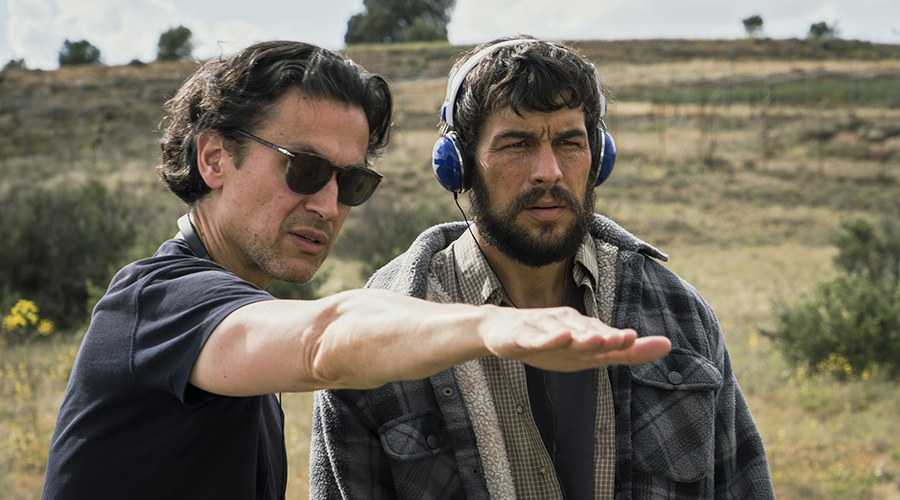
Have Scorsese in the credits as an introduction to your film, is it a help, Is it a burden or is it a responsibility??
No, a burden never. Please, no, no. It is something that I live with infinite gratitude towards life, not only towards him. And that also honors me in a very special way, because Scorsese produces from time to time, but only very occasionally does it use the “Martin Scorsese presents” sign. He reserves it for projects with which he feels emotionally attached and from which he feels particularly satisfied.. So when he told us that we could use that sign, you can imagine what it meant to me.
There is a phrase that I think is part of the crux of the film., what one of the characters says and what he says: “names don't change anything”. Your character is called “N”. What does that mean?
Names don't change anything, but at the same time, “N” dice: “that is not known”. He says it very firmly, “that is not known”. In fact, things only exist when we name them. Every time “N” says his real name, something prevents us from hearing it, either the distance or an intervening sound. own “N” It surely means something that I leave each viewer to try to figure out.. And finally he changes his name to a number and that number to another. The number they call him in prison makes him feel completely comfortable and he could only feel better if they took away his name altogether.. What I really would like is for it to be removed..
I ask you a question that the movie asks many times and that I think no one answers.: Do you believe in God?
Do you do it to me?
I do it to you and to the movie.
I'm much more interested in understanding than believing., without this denying anything.
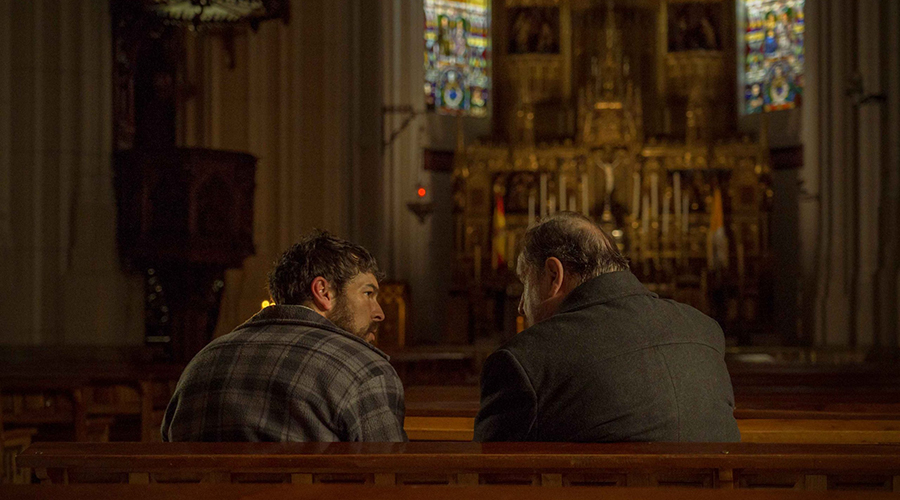
There is a moment that I think is relevant and that greatly marks the time we live in.. In the end, One of N's many demands to be locked up in jail is the possibility of having at least one day “without having to make decisions.”. Would you say that we live in a society that wants, let's say, get rid of responsibility?
I don't know if society exists, if people exist. They are concepts, They are entelechies that we normally use to throw someone at the head. People exist one at a time. However, Are there many people whose dream is not to be responsible for anything and that someone else is responsible for their decisions?? Without any doubt. The film is going to be as many as there are viewers who see it and each one is going to feel very differently about the character of N.. There are those who will feel identified, there are those who will envy him, There are those who will judge him because they will think that he is a bastard who tries to make someone else take responsibility for the consequences of his actions.. And no one will be wrong. It's not that the movie doesn't give the answer., but the film gives many possible answers, because many things are true at the same time.
How is it with N?, do we need more order? Are we not able to enjoy our own freedom?
You ask me questions about big topics, as if I were trying to express univocal things through the film, and the truth is that I do my best not to send messages. When I try to send a message, I usually turn to WhatsApp, but with films I try to establish a playing field that allows the viewer to manage what they receive as they wish.. And it's the movie's way of respecting it., precisely. as a spectator, I don't like being lectured or given lessons and that makes it very difficult for me to do so as a creator.. When you watch a movie like A Clockwork Orange, For example, you don't really know how to feel about her. some laugh, while others are scared. Some decide that, when free will is taken away, Things are going well because the character finally stops killing., but others consider that it is inhuman and degrading treatment because they take away what is. Until we reach a happy ending where he can finally rape and kill again. Therefore, the viewer has no choice but to try to manage what he receives in ways that will sometimes make him feel, even, uncomfortable with himself. But I think that on that playing field is where the most interesting things happen..
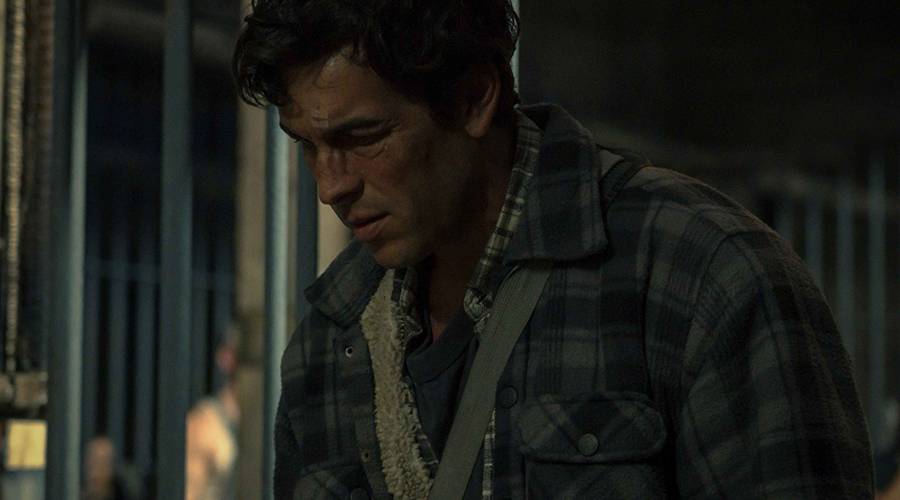
I told you precisely because, as you say, The movie doesn't answer those questions., but at least he throws them, somehow, to the viewer. There you do incite a certain awareness.
The movie is a big question, much more than an answer. There are movies that contain a hidden answer, or mysterious or secret that is finally revealed or that must be found out, but that's not even the case with this one. In this one the answers are multiple and surely simultaneous. Many things are true at the same time. I am often asked, do you laugh at the movie? And I usually answer: a lot, but always worried.
There is one thing that I liked and that I miss in a certain cinema that I call with signature and that has to do, in this case, with an aspect of that city in which the events take place. We are not facing a specific city, but we are in a specific framework which is that of the contemporary common man. I believe that current cinema has moved a long way from that common subject.. There is always a “yo” talking, which is usually the author himself, but let that common subject appear, who has a common life and to whom a series of things happen, it's not so common.
Deep down there is something possibly very Kafkaesque in that, in taking an ordinary man who, on the other hand, He is not a victim of anything other than circumstances and is not always innocent and is crushed by external forces that exceed him.. Interesting things happen there that probably couldn't happen to a hero or someone with infinite resources.. That's neither good nor bad. Movie about a hero can be equally interesting, but it is a fact that in “N” it is not.
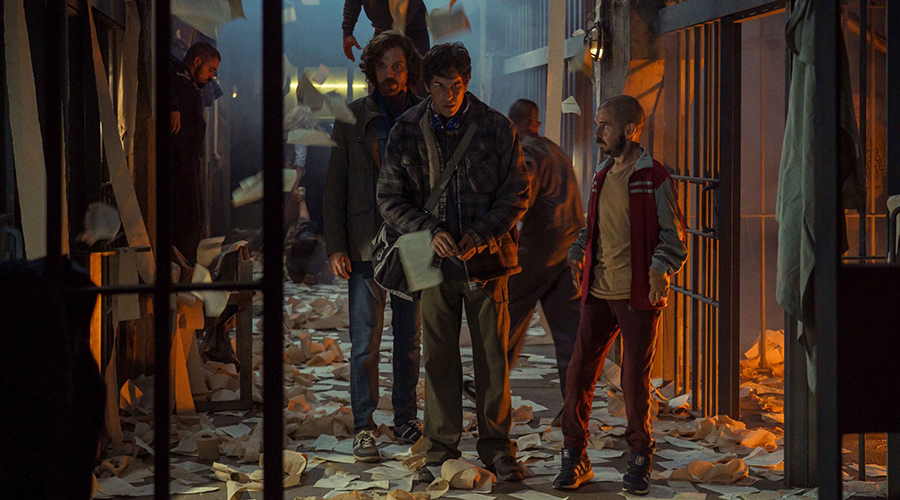
I wanted to ask you about some references. I understand that it is deliberate, but there is that sign by which N enters prison and which refers us to Perpetual Chain the Frank Darabont. Maybe it's also The man from Alcatraz…
The film takes a lot of imagery from prison cinema, precisely because it subverts. Y, indeed, our poster, instead of Rita Hayworth it has the Segovia Aqueduct (laughter), but it performs the same function. The little mirror to be able to observe behind bars, the cup that hits the bars, even the escape of Mortadelo and Filemón tying sheets to be able to hang down the window. Many of the tropes of prison cinema appear in the film, although inverted. Es The Escape from Alcatraz (Don Siegel, 1979), but the other way around. Prison works very well as a threat or as punishment, but, When it is a prize it becomes a problem because there is no way to limit the impulses of the person in front of you when what you could threaten them with is precisely their objective..
You almost just screwed me up with the next question., because I was going to ask you if the film isn't a kind of anti-thriller.
Bueno, I don't know if it's antinothing. Es, again, many things. The trailer itself that we have made with those signs as an insert that say “it's not comedy, it's not tragedy, it's not suspense, it's not action”, Deep down it tries to dismantle expectations. Try to tell the viewer: “I don't know what exactly you think this movie is going to be about., but it's going to be something else, So let go of the wheel and let's see where we go together.". When a movie is none of those things, it's probably because it's all things at once and, sometimes, simultaneously. You can see in the same scene one person laughing and another crying, sitting together. And the interesting thing is that they both do it for the same reasons.. Just as your opinion of the character can change several times during the film footage, and maybe even the next day, when the film refuses to leave your brain and continues to evolve in it.
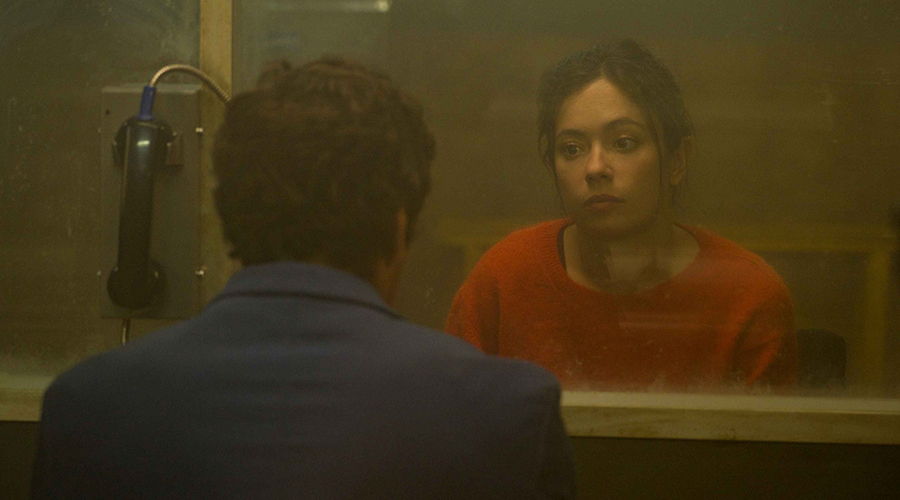
Hay, in that sense, a declaration of principles in the credit titles themselves. It is a very disruptive musical moment.
Somehow, Yeah, because it's almost a moment of broken epic, what defines the film. It is taking the most epic piece of cultured music in the history of human beings and turning it into a broken mechanism..
In that mix of genres and, I would say, of tones, a more apparently naturalistic plane coexists with another almost surrealist. What was for you the greatest complexity when it came to marking where the borders of each of these aspects were??
You don't do it rationally, but you're absolutely right that tone is the key.. The tone is where you risk everything because it is a vibrating frequency and you have to act as a tightrope walker along a very delicate edge.. Besides, the tone is, at once, difficult to transmit, because it has to soak up the art of the film, the locker room, the interpretations, music, the sound, and it is something that is not done in a second. It is through conversations, through examples, even through failed decisions that help to understand what fits in the film and what does not.. But when everyone is finally tuned to that radio frequency, everything works. The tone is very difficult to describe, but it is very easy to experiment.
For those questions you throw, The film appears at a relevant time for a society like Spain. (although I think it is also happening all over the world), where we are wondering what is the role of the law, whose functions are being questioned and hammered in a very harsh way.
after watching the movie, We will continue to question it because the film does not give those answers. (laughter)