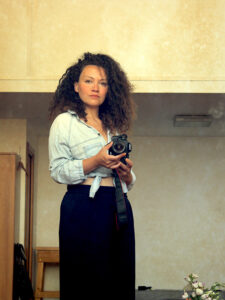
This week we interviewed the Valencian writer and lawyer Juan Francisco Ferrándiz. Nation in Cocentaina (1971) and is the author of historical novels The Secret of the Temple, The dark hours (with which it has achieved enormous public and sales success) y The flame of wisdom (Grijalbo, 2015) why we asked him in this interview.
The flame of wisdom takes place in 15th century Valencia, It seems to me to be a difficult time for women – the backbone of her novel – also for many of its inhabitants with the constant presence of hunger., the misery, pestilence and death.
Dramatic situations were experienced in any city at the time.. Death was present and was seen as something close, hence the development of The art of dying to prepare the transition to the afterlife.
I have wanted Valencia to be, more than a stage, a protagonist, that tests the characters to see if they are worthy of being. It confronts them with calamities that could occur in any city and others particular to this city., especially one that has terrorized its inhabitants since ancient times (as stated in the chronicles): a flood of the Turia river in the autumn months.
Let the setting itself be a participant in the plot, modify or twist it, gives more strength to the story, to the personal experiences of the protagonists, in addition to enriching the reader who little by little learns more about how people lived in that city..
Valencia is a very literary city.
What role did medicine and religion play at that time with science pitted against faith and reason pitted against beliefs?? Precisely in Valencia, what is considered the first hospital for the mentally ill was founded more than five centuries ago..
Reading documents from the time, it is clear that there was no clear border between illness and divine punishment.. Los advice, a kind of medical history, described the patient's symptoms, They recommended the remedy (indentations, lavativas…), They specified the drugs (They even used pills made with herbs) and finally the prayers and penances for healing.
Lluís Alcanyis himself, in his work Regiment of Pestilence attributes the disease to divine causes although it already gives certain advice on public hygiene, such as cleaning ditches or prohibiting fishing in the stretch of river that passes through the city… It will be centuries later when in medicine, science and religion separate their paths.
Tell us about Irene Bellvent, of her values as a woman in a sexist and repressive society like that of the 20th century.. XV in Europe, in the plot context of this story.
The novel begins with the dilemma faced by a young unmarried woman at the end of the 15th century.… Irene Bellvent inherits the hospital run by her parents, but the laws of the city require that the spitalers, those in charge of their management, be a marriage… Should you get married then?? What husband will want to take over a hospital full of debt and with a bad reputation for being the epicenter of strange deaths?? Is it better for you to sell the property and contribute that money to your own dowry?? And above all… What sinister threat is planned for your family??
I have searched carefully and the surprise has been to find numerous biographies and facts of women who took the difficult path, the one who dictated his heart or his conscience in the face of prejudices and, above all, the laws of the moment. We all imagine the situation of women in those times, However, there were those who followed their own path. Irene Bellvent is inspired by them and their value., Caterina, Pilgrim girl and also male characters, keys to history.
The reader will often read in The flame of wisdom, a reference to “the heartbeat of the sibyl”, I would like you to tell us about him because of his relevance in the novel.
Although it is a fictional resource of this novel, It draws from what some historians consider small female conventicles to help in the absence of public spaces for them beyond the market or religious duties.. Many women of the Middle Ages and modern times gathered to share knowledge., remedies, confidences and secrets as true communities, often secret. There are many anthropologists who interpret the “coven” or those in this sense.
In the novel we see that solidarity and company between them, Being also an escape valve where dance and flirting could fit. (It must be taken into account that many had been married by imposition and others were already widows). Ignorant and fanatical eyes would undoubtedly see in such encounters something unhealthy and sinful that should be reported to the authorities.…
Among the many historical details I have rescued that of Luis de Santangel's possible interest in some maps kept by Lorenzo de Medici, drawn by the mathematician Toscanelli... Not in vain did Columbus pass through Valencia on his tour of the courts of Portugal and Castile.
It is a fictional device but it has historical elements that led me to evaluate this possibility.. There are studies that detail which maps Columbus could have studied to calculate the possible route to the Indies.. The one made by Toscanelli stands out. These documents were in the possession of powerful families of bankers and merchants., mostly Venetians, but also the Medicci.
The Valencian Luís de Santangel was Master of Ration, beneficiary of certain royal and financial grants from the Crown. He used to travel to the royal court and was aware of Columbus's proposal. As a financier, it is logical that he would be interested in assessing whether that expedition made sense and its economic possibilities., something that could only be verified by studying the best maps of the moment. On the other hand, As you say, Columbus passed through Valencia and the letter he sent to Santangel after the first trip is also preserved..
These scattered threads are what stimulate the writer to get his imagination going.…
How did the idea of writing a historical novel about the soul of women come about?, located in the Valencian Middle Ages?
It was the fusion of two independent ideas that could have led to two totally different stories.. On the one hand, the fascinating path that Western women have taken for millennia: from Minoan times in Crete, his descent into hell with the Mycenaean Greeks, interpretations in mythology, philosophy and religion, to the intellectual debate of the women's complaint. You can sense the existence of a very subtle trace that is for me one of the greatest enigmas of Western thought..
On the other hand, Valencia at the end of the 15th century was not only a city. It was a Metropolis in the archetypal sense, that is to say, the confluence at a point in space and time of everything light and dark of the human being. A scenario with infinite edges: ostentatious buildings, the largest brothel in Europe, the struggle between nobles, merchants and bankers for power, intrigue them, corruption cases, slavery, epidemics, floods… Then there is the healthcare system., the uses and remedies of the time, its protagonists…
The setting alone already has so much power that it was very easy to place the fictional characters in it.. For me, delving into the history of this city has been an exciting journey..
GINÉS VERA