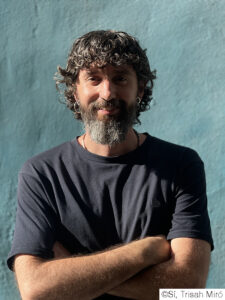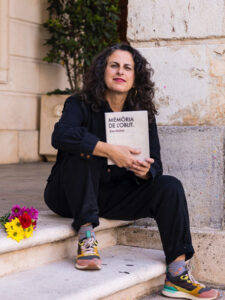

Agenda Urbana interviews the Argentine writer Guillermo Roz, winner of the XVI Fernando Quiñones Unicaja Novel Prize for Malemort, The Powerless, who publishes Editorial Alliance. Roz was born in Buenos Aires in 1973 and since 2002 resides in Madrid. He has collaborated with Cervantes Institute and the newspapers The country y The Universal from Mexico. Has published, among others: We should have come alone in 2012 (Fnac New Talent Award), y I beg you to hate me in 2013 (I Francisco Ayala Narrative Prize). In 2014 She was awarded the Marguerite Yourcenar Scholarship, In France, where he wrote an unpublished crime novel that has been illustrated by the teacher Oscar Grillo.
The novel is based on a true event, The Conquest or Desert Campaign by the Argentine army, “invaders who barely suspected the true nature of their enemies”.
Yeah, The Argentine nation has lost by almost total elimination everything that it has gained in North or Central America., what is an inheritance; We Argentines do not have an inheritance because we annihilated it, we realized late, we have not made a historical memory of that historical moment. Just as it can be said that things have been done well in recent years in human rights from the tragedy with the Argentine dictatorship of the seventies., but not from the 19th century.
This is a love story in three scenes, I read this phrase in the novel: “Love sometimes imitates life and manages to make its way”.
Yeah, love is maybe the stone, as Alejandra Pizarnik would say, the madness of life, madness in the most beautiful and most terrible senses; Love sometimes manages to make its way and it is the most extraordinary glory that can be experienced in life and in the personal case of the speaker., The heartbreak, the sentimental tragedy, It is the most horrible point. Heartbreak is like breaking up, pop, dynamite a person; an unloved person is a non-existent person.
Before the big trip, Malemort's father gives him two books, one is From the Earth to the Moon, by Jules Verne. Because?
Because it has to do with my personal story, 'From the Earth to the Moon' was my deflowering towards the shock of the written imagination, They gave it to me for my birthday. 12 years. I remember the cover, the drawing, ¿no? and it seemed impossible to me that there were people who could make me feel just with little drawings - and when I talk about little drawings I'm talking about letters drawn with little symbols -, that when I turned the pages with some tension I could travel to the moon.
It seems to me that what Malemort's father means here, Here it represents the unique possibility that art has as an inspiration for life., not as a recorder of life but as an inspirer for life. Artists help us live a more beautiful life.
Another phrase rescued from his novel is: “Pain forces us to fly, betrayal forces us to fly... There are forced trips”.
There are obligatory trips, life is a forced journey, the obligation to be, to exist, It is a matter in which we do not stop, but what a terrible thing, right??, what happens to us every day, that is imposed on us. That's why, When we are happy at some point or another in life we feel that feeling of unreality, because anyone, the ground we have to step on is that of pain, almost like a Buddhist semblance of working in a setting where the pain was.
Borges was most proud of the books he had read, said, that of those who had written. Does something similar happen with literary awards?? Should the jury take care of the works it awards?? What makes the author important is the award or vice versa??
It's a nice question, I want to believe that when an award is created, it is created with the desire that the winners enhance the award., In my case I feel that it is the opportunity to be part of a list of consecrated people that I am not part of in some way., but it is the door open or ajar to go to a different party. The Fernando Quiñones award is one of the most prestigious in this country and the pure name of Fernando Quiñones is an emblematic figure of freedom., of the trip, the literary risk fills me with pride.
GINÉS VERA