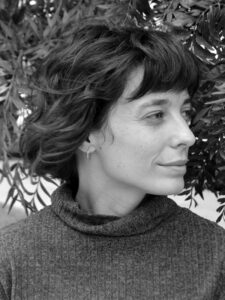

Luisa Etxenike grants me an interview (Saint Sebastian), that just published birds of paradise (nocturnal). Etxenike is the author of the novels Absolute presence, The sound detective, The blind angle (Euskadi Literature Prize), The black fish, Vino, The most serious evil, Side effects; from the plays The Inheritance (Buero Vallejo Award), Gernika is now y “The interview”; from the poetry collection The art of fishing, and several collections of stories. In addition to regularly collaborating in various written press and radio media, She directs a creative writing workshop and is director of both the digital cultural space Canal Europa and the literary festival Un mundo de writers. He has received the distinction of Knight of the Order of Arts and Letters from the French government.. GINÉS J. VERA
Although it may seem like a wild card question, rescued, I think that in this case I cannot resist asking about the intellectual or narrative germ of this story., of birds of paradise.
At the origin of birds of paradise there is the desire, the purpose of continuing to explore different aspects of personal and social impact, intimate and collective that terrorist violence has had on our lives. In previous novels I had addressed fear and the substitutions and confusions it causes or invites.. Also memory and the need not to look away from what happened... now in Birds of Paradise I raise other aspects that seem equally important to me.: the shame on which the initial construction of the character is articulated, and that Miguel, the protagonist, distinguishes from guilt. And also as the germ of the novel is the idea of transformation, that using the image of the birds that are so important in the book, we will call the mute.
But in purely narrative or plot terms, the founding image of the novel, the first one I built, It was that of a man who sees, from afar, how a woman enters the sea dressed; and feels the urge to run to her and save her. And that impulse of generosity, defense of life, him, for the life path he has led, it baffles him.
There will be those who consider that this is a short novel, also who will think that it is a long story. Beyond the label of whether it is a novel or a story, Tell us about the emotional journey of the work, not in vain it consists of two parts; of that omniscient narrating voice in the present tense.
He is a narrator of what we technically call selective omniscient.; that is to say, a third-person narrator whose perspective focuses on a character, in this case, Miguel, the protagonist of the novel. That perspective is maintained until the end, we see the whole story through their eyes. And yet I have chosen the 3rd person. Because a first-person narrator, a protagonist who says “I” means, in many ways, a character close to himself, or better, attached to himself. And Miguel is totally detached from himself; you look and feel far from what once was, without even knowing who he is now. Miguel is a “he” to himself, and in that sense the narrative voice coincides with and reinforces the character's own intimate vision. But, as it says, the novel has two parts, and as the story progresses, Miguel, through successive meetings, through emotions and thoughts that you feel able to welcome, goes from estrangement to self-recognition, and giving the narrative voice greater intimacy. And the third and the first person begin to approach, to melt.
Another feature that I thought I found has to do with that dividing line, that border, beyond the real, with the border states of human nature. Is it so?
There is a real border in the novel, the border between the French and Spanish Basque Country; between France and Spain, that Miguel constantly crosses. But there are other metaphorical and symbolic borders that it has to cross.: between the silence in which he has lived and the voice that questions and communicates; between blindness and indifference, and the look and the lucidity; between coldness and affection; between good and evil; and between the orphanhood that has characterized his family relationships and the recovery of a sense of paternity. Miguel crosses the royal border, and to do it again and again, also “crosses”, leaves one version of himself and enters another.
At the end of the pages of birds of paradise A reflection has arisen in me, an invitation as a reader, I don't know if it was in whole or in part his intention when writing it..
The transformation that occurs in the character is a beginning, the starting point of a migration. Miguel takes flight. He still doesn't know if he will be able to reach his goal.. But you already know what that goal is and therefore have a precise roadmap.. It also has new “feathers”, because he has been able to “change”, to leave behind your past attitudes. And you already know that this trip is going to be very long and surely expensive., but he doesn't care. He has learned that birds are capable of making much longer trips, that some like the Arctic tern go from one Pole to another every year, “to take advantage of the two summers”. Miguel draws his confidence from there, your hope.