
UNTIL SUNDAY 12/10
MuVIM. Quevedo, 10
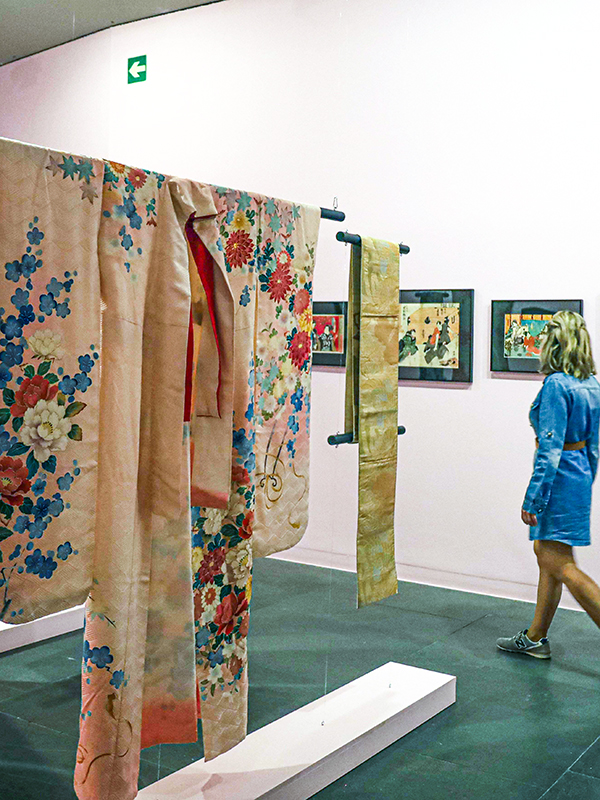
The impressionists put aside serious themes, harmonic compositions and correct drawing to embrace moments and sensations, New different topics and color schemes. This rapid start from Shit occurred thanks to two allies who helped the humans of the nineteenth century to see the world with different eyes: Japanese photography and stamp. In the 18th century, Japanese artists had abandoned the traditional themes of the art of the Far East to focus on scenes of popular life in their colored engravings that combined bold conceptions and technical mastery. Japan was forced to establish commercial relations with Europe and America measured from the nineteenth century and thus these prints came to artists from the Manet circle who knew how to appreciate their beauty and collected them with desire. Because? Because they found in them a tradition not corrupted by those academic rules that the French painters of the time wanted to sail. These Japanese prints pointed to them that they still retained many European formalisms without realizing it. The Japanese represented unusual and spontaneous aspects of the world and did it in a daring and unusual way, Like Master Hokusai (that of the Gran ola de Kanagawa), who would represent Mount Fuji seen as by chance behind a bamboo cistern; o Utamaro, that showed some of his cut figures. ¡Ah!, That in a picture do not always appear the important parts of each figure of the scene? Degas, Monet, Renoir and Vang Gogh took good note. The composition and themes of the xylographs known as ukiyo-e (Floating world images) influenced the impressionists and interest in Japanese art in general generated the French aesthetic movement called Japanese, which gives title to one of the exhibitions presented by the Muvim in its low room. It was a nineteenth -century phenomenon that transformed visual and decorative arts, Fashion, music, the cinema, The graphic design, And more recently, Global popular culture, Through manga and anime. You just need to remember the impact of Dragon Ball In the minds of the little millennials.
The second sample, The beauty mirror, It focuses on the Japanese art of the sixteenth to the twentieth centuries. Displaces the aesthetic universe of Japan from a series of basic concepts of the country's philosophy and thought, that underlie the most daily actions away from high culture. In this area, pieces of great value are combined, Like the magnificent screen of the Lady Murasaki or the delicate dolls exhibited in Japan on the day of the girls, With popular and less glamorous objects, like some chopsticks to eat, Some sandals or a saucepan with which to wash your hands and rinse your mouth, Symbol of body and soul purification. The hypnotic influence of Japanese art in the western imaginary will examine in the muvim, A museum that still does not find a marked personality (surely, Not looking for her) While again resorting to an issue with which, definitely, enjoy. And with that, It seems to be enough. S.M.