UNTIL SUNDAY 9/1
THE SHIP. University, 2
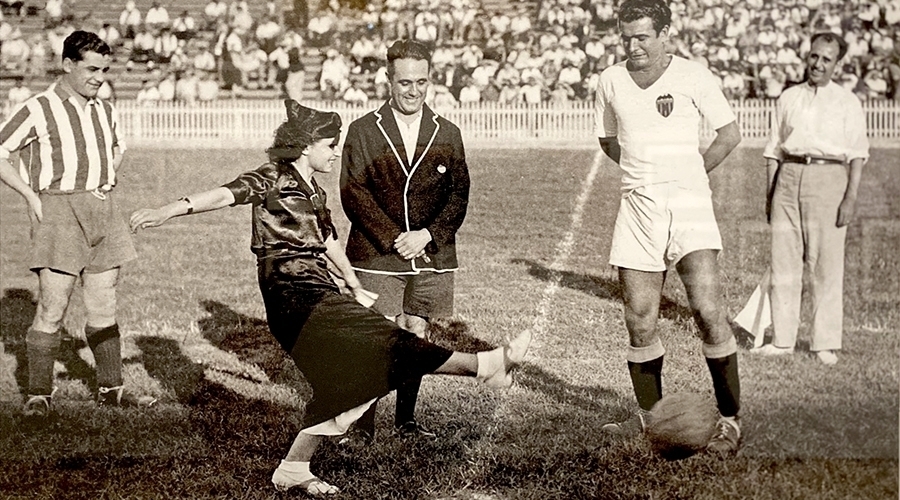
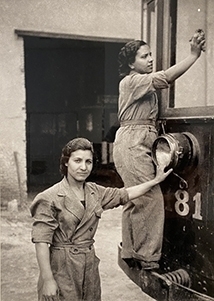
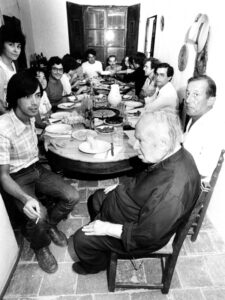
La Nau looks at republican Valencia through the lens of Valencian photojournalist Luis Vidal Corella, whom we can see in a photo together with Gerda Taro working in the Congress of Anti-Fascist Intellectuals. Ella, with a compact Leica with film from 35 mm, he with his old and awkward Ernemann of glass plates. Both the camera, as some glass plates and a plate enlarger are exhibited in the sample, to attest to the journey taken to reach our mobile phones with high-resolution cameras. Working at Valencian Mercantile, ABC and the EFE Agency, Vidal saw the arrival of those who were establishing the foundations of the new trade called war photography, professionals with Taro itself, Robert Capa or Walter Reuter. Women and resistance offers a tour of Valencia in the 1930s, the one that would become the capital of the Republic during the Civil War and welcomed hundreds of children fleeing the bombings in Madrid. The image of the arrival of 2000 children of militiamen at Estácio del Nord with their fists raised is one of the most chilling in the show. We also find photographs of railway women or organizing fellow blood donors, working men had marched to the front to defend the Republic and women could take a step to the front, out of the kitchens and away from the children. Besides, as can be seen in the exhibition, traditionally female jobs became more prominent, nurses took care of the war wounded and seamstresses made warm clothes for the troops. We are told in the exhibition that women fought at the front only during the first months of the war (at the end of the 1936 were set aside), but here we have Pilar Pérez Llopis, the first sergeant in Spain, posing proudly for Vidal on top of a bell tower with a frog and espadrilles, hat and rifle. S.M.