
UNTIL SUNDAY 22/2
VAT. Guillem de Castro, 118
Some children play “Passion” hanging on large wooden crosses. The walk of the Virgin of Villamayor de Calatrava and that of the saint of Tirteafuera enter the river in a pilgrimage to ask for rain to water the fields. A group of dwarf bullfighters pose in a row for a photo. A group of young people have lunch sitting at the table inside the river after the running of the bulls. A priest confesses in an open-air confessional next to the cemetery wall. A waiter avoids Nazarenes to serve chocolate with churros. A drunk with his underwear down shamelessly pees in front of the camera. In the images of Cristina García Rodero there is no makeup: hernias appear, drunk, toothless mouths, bare feet, women in mourning, crazy lost looks, penitents on their knees, toros enmaromaos, girls smoking… The grotesque mixes with the solemn, the gloomy with pleasure and fun, the celebration of life with that of death and the sacred with the profane, naturally, Like life itself.
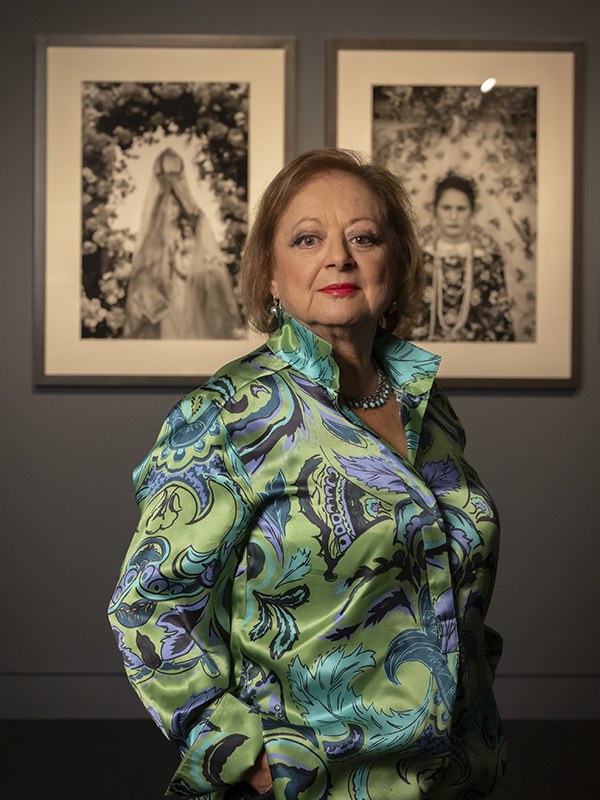
The prestigious photographer from Puertollano—National Photography Award in 1996 and the first Spanish to be part of the prestigious agency Magnum—, portraitist by vocation, ended up becoming a reporter, but he never stopped putting the spotlight on the characters, as simple as irresistible, to whom he has always approached with reverential respect. and grateful, for having agreed to let her photograph them. Just presented at the IVAM Hidden Spain, the sample that exposes the 157 black and white images from his book of the same name, a cult work within Spanish photography that has inspired many of those who came after. It was and continues to be the most important project of his life.. In it, documented parties, ceremonies, rites, traditions and ways of life of Spain in the seventies and eighties.

His inspiration was the carnival by Julio Caro Baroja —prologue in the new edition of the book—, about that winter celebration that is celebrated in various places on the Iberian Peninsula and that remains alive thanks to the efforts of some towns to continue celebrating it despite the prohibitions. The first Franco regime managed to penetrate the popular sphere and modify the ecosystem, resignifying and appropriating local elements within a “regionalism well understood”, folk, Catholics and that it did not threaten to push regional identities “beyond what is reasonable”. Holy Week lacked popular roots and was not of interest to the Church until the first third of the 20th century., The Fallas suffered a forced re-Catholicization with the floral establishment of the Virgen de los Desamparados in 1945 y, as we said before, the Cádiz carnival was banned in fact until 1948. The pagan had to be tied short, but there were towns that resisted and gave some of their great photos to Cristina Rodero, which pointed out in the presentation that the summer festivities, In fact, They are just inventions for outsiders. The holidays with soul, are the winter ones.
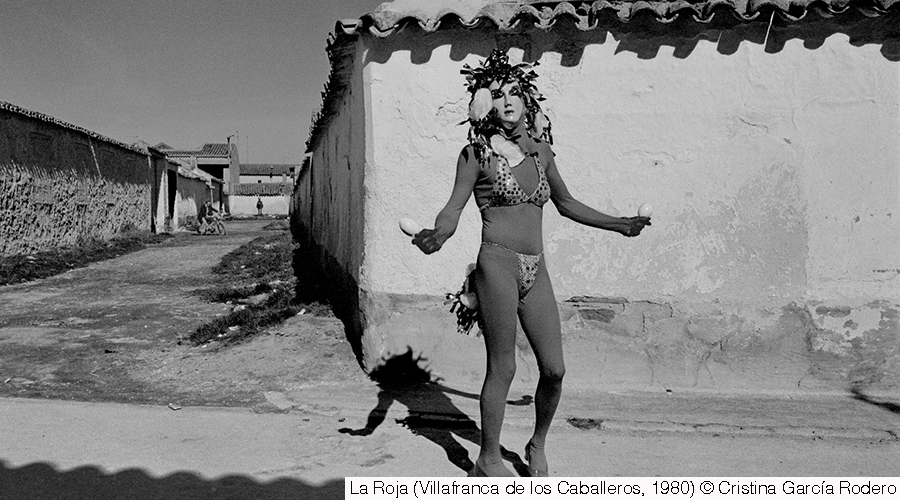
The woman from La Mancha started her macro project Hidden Spain in Almonacid del Marquesado (Cuenca) and continued to portray rural Spain for more than fifteen years (1973-1989), seeing without being seen. Yours is a simple photograph, with diagonals and perfect framing, absolutely magnetic. Within the Valencian context you can see the singers of the Virgin of Morella, the Moors and Christians of Alcoi or the Bulls in the sea of Dénia, but the range of characters presented in this exhibition comes from all over Spain and is very diverse.. Colacho appears, a festival of religious origin that is celebrated in Castrillo de Murcia (Burgos) from 1621, where a man dressed as a devil jumps on newborn babies to “deliver them from evil”. Or Jarramplas, a character with a conical mask and a suit of multicolored ribbons who walks the streets of Piornal (Jerte Valley) playing a drum while neighbors throw turnips at him as punishment. Or the Zangarrón de Sanzoles (Castile and León) —wearing a black leather mask, colorful clothes, three cowbells and two cowbells on his back and a stick from which three swollen bladders hang—which chases children and the elderly. The bladders represent fertility and the tied cowbells serve to scare away spirits.. The Zangarrón is accompanied in procession by the fifth of the year, who go in two rows covered with black capes. The mission of Zangarrón is to protect the young people of the town so that they can dance. García Rodero said that the fifth party parties were mechanisms designed so that the boys would end up paired with the girls from the town and not go with some fresh foreigner..
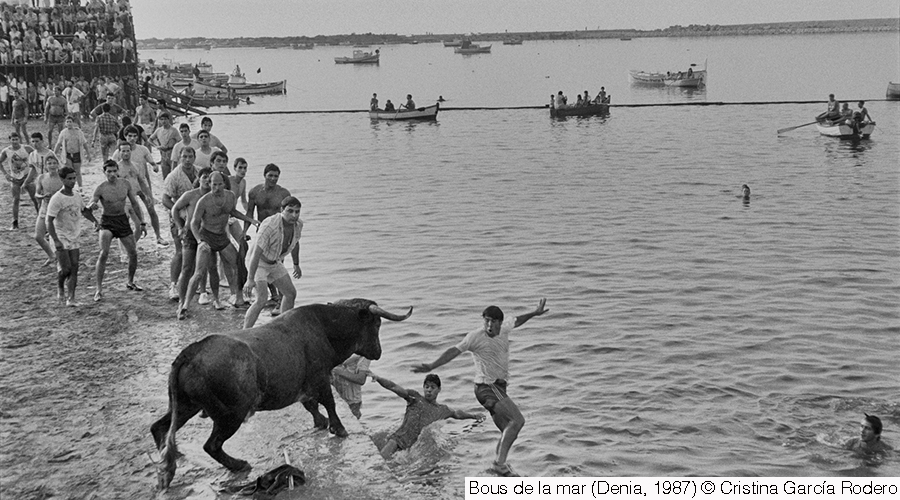
While others portrayed the modernity of the Madrid Movida, Cristina García Rodero went through the towns and villages of deep Spain in search of the most folkloric side, mysterious and hidden. Not any party was worth it just because it was old., I might not be photogenic or inspiring, but if he did, stuck his nose everywhere. because there, at the party, I had everything: architecture, landscapes, urbanism, tradition, garments, hairstyles… You had to be in the right place at the right time to capture the essence of what was important.: human beings, your beliefs, their parties and their daily life. Even so, The photographer from La Mancha said in the presentation of her exhibition that, more than the successes, one remembers the failures, of the photo that he lost because someone crossed him at the key moment.
It measures one and a half meters, He cannot avoid the heads that spoil the shot by stretching his arms up like others do.. You have to be quick and clever to be in the front line and be able to take the photo you are looking for.. Or go up to the balconies. Or walk on rooftops, despite his vertigo. It goes with tremendous force, but when he has the photo and relaxes, She remembers that she is a woman with vertigo and has to get back on all fours.. Pure passion and desire for adventure. If you ask him what his studio is, He will answer you that “the fucking street”. The bathroom was his laboratory for a long time. He has learned to live simply because much of the money he earns teaching, he reinvests it in his great passion, to whom he reserves all the time in the world. He has always worked taking time away from rest. She carried her suitcases to class and when she finished she went straight to catch the train that would take her to that town during festivals that smells of firewood and bread., with a bar where the customers gave him all the information he needed. The most beautiful, dice, is the contact with people, with waiters, priests, drummers, fairgrounds, beggars, musicians, civil guards, telephone operators, alcaldes, town criers, butlers and train passengers who have discovered that party that no one knew about (social networks did not exist). When things were discovered by asking: where are you from? What festivals are celebrated there?
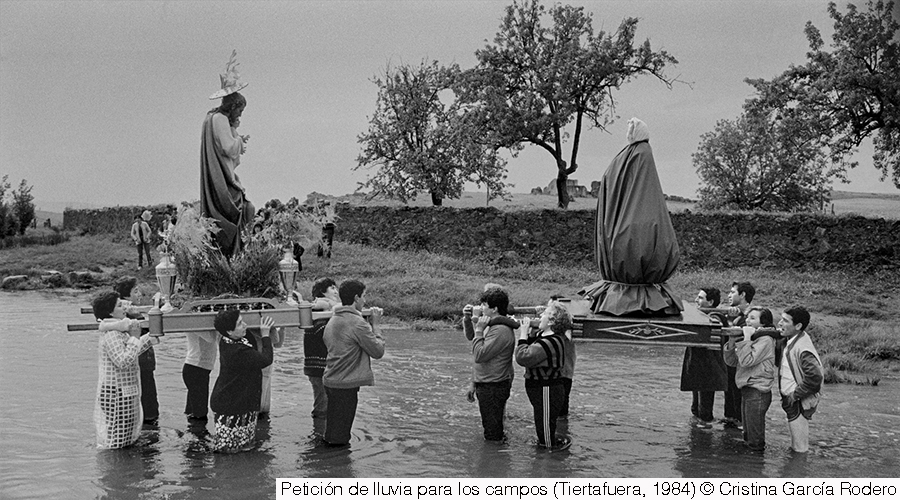
Cristina García Rodero is an adventurous woman, a devotee of photography who dedicates, feliz, hours and hours to your passion, a consummate stubborn person capable of traveling six hundred kilometers to photograph a devil. Does not like to walk superficially, She stays until night even though she has taken the photo of her life. A “photo for the Provincial Council” is not worth it. According to her, that photo that is technically perfect, but which lacks magic. Those that usually appear in the media, where current affairs rule and time presses. Work hard to get four good photos, of which three will remain and one will transcend. And to get those four good photos, She is willing to dedicate all the time in the world to her passion and anything that matters to her.. Also to present his exhibition at the IVAM. Acting clueless, He always manages to scratch his little piece of freedom to be able to do what he wants. She was absolutely indomitable in the presentation of this exhibition that she herself curated in order to be able to make all the important decisions. S.M.