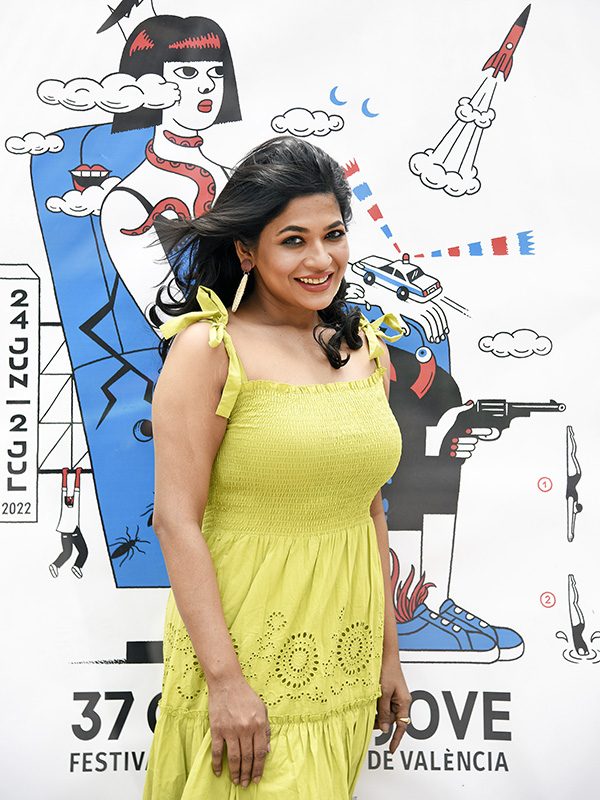

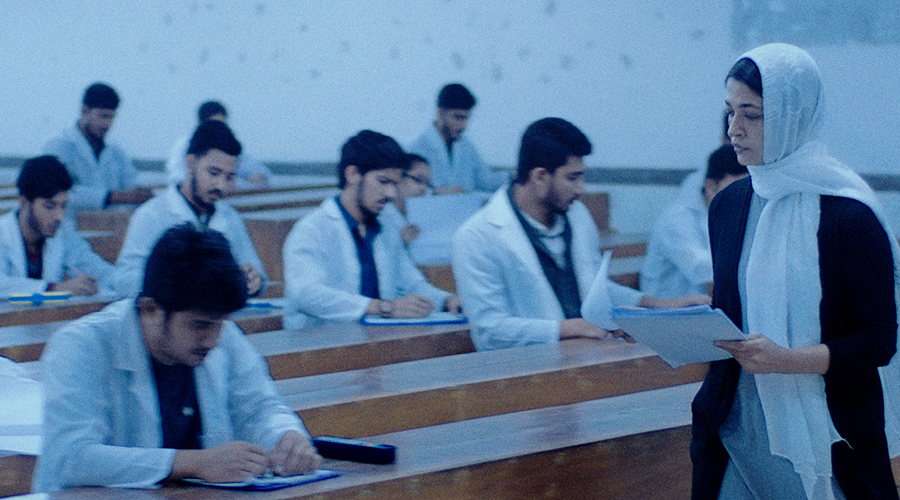
After more than a week of screenings, the jury of the 37th edition of the International Film Festival, Cinema Jove, gave his verdict, giving to the tape Rehana, by Bangladeshi director Abdullah Mohammad Saad, the award for Best Film, and actress Azmeri Haque Badhon, the highest award for acting. on this tape, Badhon incarnate a Rehana, a woman who works as a professor at a university hospital. One day, is a witness to an execrable event: the assault of one of the senior professors on one of his students. Rehana will report the incident, something that will confront her with the hierarchy of the institution for which she works and with all the students, that will be revealed against her. While all this is happening, Rehana must solve her family problems as a single mother of a daughter she cannot care for.. We interviewed the actress Azmeri Haque Badhon to talk to us about her role in this film.
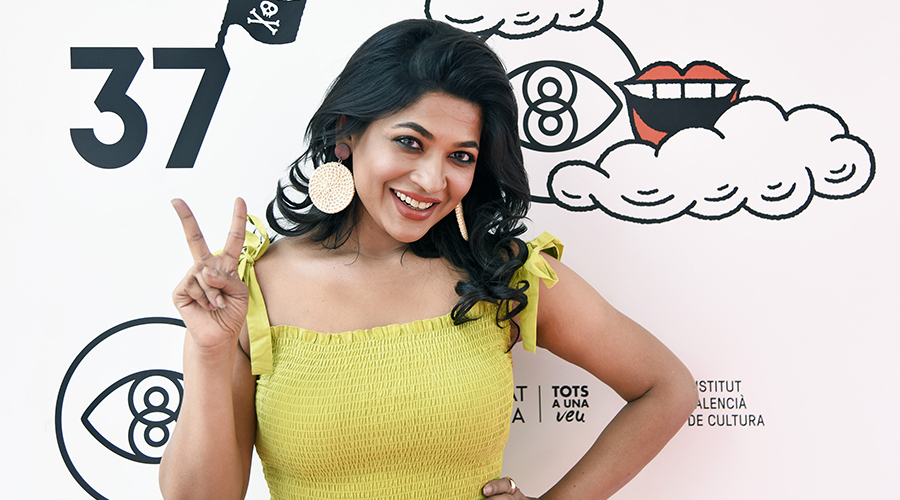
Rehana has won the award for Best Actress and Best Film at Cinema Jove. How do you feel?
I feel a little overwhelmed because I didn't expect it.. I'm also very happy for my director.. He is a person who trusted me and pushed me to a higher level than I would have dreamed of.. In our country, A woman over thirty doesn't have much to do in the movies because there aren't many leading roles for her.. So, for me, it was a rare opportunity. So, Yeah. I am very happy.
The film deals with a very important issue such as the abuse of power, especially about women. Did you feel some kind of responsibility for embodying this issue through yourself??
Yeah. In fact, I think that was the main reason why my director chose me or Rehana chose me to play her.: because in my personal life I have had to face many problems, to many traumas, to many injustices that were very bad for me and my daughter. I am a single mother, I live with my daughter, and in my country this is not very accepted. I feel like Rehana chose me., I feel it in every beat of your heart, in every breath. I know your feelings well, the challenge of the pressure of assuming that we have to talk about these things, that we have to change society for ourselves and for the next generation. We can't close the door, we cannot cast our burdens on the next generation, we have to talk about all this.
The context of the story is that university hospital where Rehana works., but reflection takes us, obviously, beyond.
It is universal. I feel that the film is not only about Bangladesh., It's about all of us. Rehana It's about the corruption of the system and that idea that we want to change it, but we can't do it. The system is very corrupted, everywhere, around the world. In different aspects, but it is very corrupted.<
As you have suggested, Rehana's fight is not only against sexual abuse, It is against the order or the structures that allow this to happen.. I am referring above all to that crowd, to the students who oppose your character and who, in the background, They are only worried about themselves, for your own interest. There is no solidarity.
I think it's a global problem. We think only of ourselves and do not realize that this does not work. I believe that we are not worthy people if we do not show empathy and do not make an effort to understand others., to society, to other people, other cultures... I try to know the situation of other countries and I always see the same thing: people are looking out for themselves, but that, in the end, does not contribute anything. We have to worry about others, we have to develop the ability to see the lives of others, your rights, their freedom... That's what I told you, the system is very corrupted. The family system, political, even the religious. I am Muslim and in all religions there is a black hole, a dark side that forces us to ask why things are this way. The problem is that we don't usually talk about it..
I was going to ask you precisely about that concept of family and motherhood that this conflict of your protagonist implies.. How do you value the conflicts related to these issues in your life and in your country??
Mira, In my real life I am also a single and divorced woman., and that has made me endure some truly terrible situations. In our country, a woman lives almost in hell because she has no rights, even on his own body, her own dreams or about her own motherhood. I have enjoyed my motherhood a lot because I have wanted to be a mother.. But in my country there is great pressure to be a mother, to get married, to be a good girl. It is a very complex situation. However, If I have enjoyed my motherhood it has been because, before having my daughter, I found myself. as a person, I can do more for my daughter the more powerful I feel.. This has given me greater determination..
I wanted to ask you about the ending of the movie.. In the end, Rehana reacts in a somewhat violent way against her own daughter, which surprised me.
Yeah, It was one of the most conflictive parts of my relationship between my director, Rehana's character and me. I didn't agree about that scene with my director because, like i told you, I would never do that. I have a daughter and I would never do what you see on the screen. It's very painful. When I was setting the scene, I had some problems because I didn't understand it. When the character closes the door on the girl's fingers, I told the director I didn't want to do it.. But my director told me I should do it. We had many disagreements and arguments about it and, even, when the film was edited, I asked him to remove that scene from the final cut. But he insisted on presenting it like this. In the end, I convinced myself. As? My parents loved me very much, but, somehow, we pass our burdens on to the next generation. This is what happens in reality and I, somehow, I was denying it. I wouldn't do that as a mother., but I also realized that, Yeah, it's what we do, even with those we love. So, Even as someone who wouldn't do that to my daughter., I finally understood that this happens frequently.
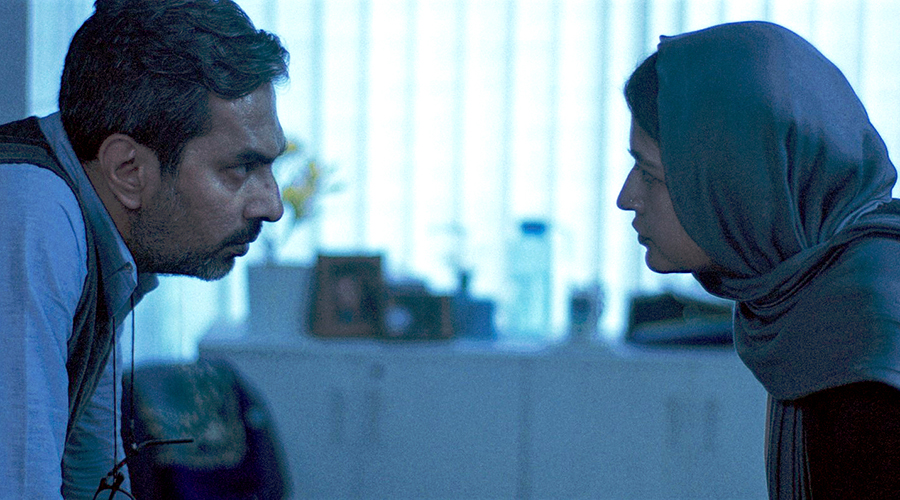
Rehana It was the first Bangladeshi film to participate in the Official Selection of the Cannes Film Festival.. What do you think this event meant for the cinematography of your country??
Our country has been independent for only fifty years and this is the first time that one of our films was selected for the Cannes Festival, which allowed its exposure throughout the world. Has been to New York, Austin, India, Malaysia… It has been a great opportunity for Bangladeshi filmmakers, to be able to dream big, to tell us that we can do it, that we can talk about our roots, tell our stories.
Sometimes it seems that there is a kind of wall between the West and Asia when it comes to cinema. How do you see this dialogue between our cultures??
I think it's okay. New windows are opening, new opportunities for our countries. I believe that through stories we can get to know each other much better.. Cinema can help us, not only in aspects that have to do with the industry, but in our progress in general. We are a developing country, we have many problems, but we must talk about them. So this type of recognition gives us the power to talk about our own reality.