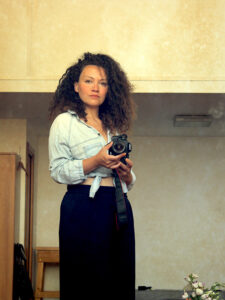

Dog loves, 21 grams, The three burials of Melquiades Estrada, Babel … Titles of films that are already part of the imagination of our culture and, especially, of contemporary cinema. But if we highlight them in this article it is because they all have a common denominator.: the presence in the credits of the man who conceived them and put them into words, the screenwriter (the film writer, How do you prefer your work to be considered?) Mexican Guillermo Arriaga. Film writer, well, novelist, director, producer of his own projects, Arriaga visits us on account of the celebration of the first edition of the Valencia Pitch Forum, a meeting for future film writing professionals taking place these days in Valencia. Initiative organized by La República del Lápiz, the Valencian Institute of Culture and the EDAV (Valencian Audiovisual Writers), among other institutions, VPF includes activities for the general public such as a masterclass that Arriaga will teach next Friday 8/11 in the La Mutant room. We talked with him about everything. script, of course, of your working method, of politics… and hunting!, perhaps his greatest hobby. I would read it to the end, It has a very nice closure. GERARDO LEON
Talking about script or film writing, the general public, although he can talk about it when he leaves a movie theater, Deep down he doesn't quite understand what that is and what part it is in a movie. If I asked you to, briefly, you will explain to an average viewer what the script is, what would you say?
It is almost always believed that what the writer does is write the dialogues. No, what it does is create the story, create the structure. Until the silences, the looks, the distances between the characters. There are many things that the writer does that the viewer does not know.. Dice, look he wrote the dialogues, but they don't know that it also does everything else, the events. If there is a chase, the writer wrote it, if there is a bank robbery, the writer wrote it, if there is a fight in a couple, the writer wrote that, If a father and son remain silent on a beach, and they don't talk, the writer wrote that. It's not just the blah blah blah, It's the whole structure of a movie, is the story. He is the original creator of what is happening in the movie.
I don't know what the situation is in Mexico. In the United States it does seem to be appreciated more, but, How do you see the writer's valuation within the industry?? In Spain it is not so well considered.
I don't know what the Spanish case is like., but I think it is our obligation, as writers, be visible. I fight so much to make it visible that I am here, in Valencia, to talk about my work. And I have been able to go to other countries where people will listen to me because I am the writer of certain films.. So, I believe that it is also our job to make ourselves visible and fight for authorship..
What makes Guillermo Arriaga choose a project?
I don't choose projects. I write stories that I have and, If any director wants to direct it, GOOD. But, no. I don't work on commission, I only write original work. All my works are original, They are my stories. It's not what the director tells me, I have a great story that I want you to develop. No, I have a story, do you want to direct it? Perfect, welcome.
And what is the process of choosing the director who is going to direct that story you have written??
The taste, It has to have the same taste as you. For example, When I worked with Tommy Lee Jones it was very clear that we had very similar taste.. We both love the desert, we both love hunting, we both love Thomas MacCarthy, Edward Hopper, Kurosawa… So, we had the same tastes there. Taste is what determines [that relationship], more than ideology.
Dog…
I have worked with right-wing directors and I am not right-wing., I am center-left, but they had good taste. I prefer taste than ideology.
That can be difficult to understand in contemporary cinema (and in the world in general) where things are very divided or polarized. Collaborate with someone who has a different ideology, not much is understood. I'm thinking of directors like Clint Eastwood, who is a director who would be on the right and who is admired on the one hand and, for another, there is a certain suspicion of him.
Mira, I just worked with an author I admire very much.. I made a film with him called Words with gods (talk to gods) that has not come out, where I called several directors to talk about their own religion. Here in Spain it was Alex de la Iglesia, who did it about Catholicism. I had Emir Kusturica, I had Mira Nair, we film all over the world. And I asked Mario Vargas Llosa to make us the order broker, how it should be. I don't care if Mario has a different ideological vision than mine.. I care very little. He is a guy that I admire for his work and with whom I can disagree.. But disagree, That's not why I'm going to disqualify him.. There is a belief that if someone does not think like you, they must be disqualified., and not. We have to talk. It's time to talk.
What you say is almost an anomaly at the moment..
But the thing is... You don't know, but the war is raging in less time than you expect. And people think not, what can you say (exaggerating) That's an idiot because he thinks like that!! These speeches end up creating civil wars. And they end up creating people-killers. It seems strange to me that Spain has not learned its lesson.
Let's see if you spread it.
They have to learn the lesson. It seems very easy because we are very nice here and we live without crime, and we are all happy and we can tell each other things as they are. But that begins to boil and people begin to kill each other.. And you never know when hatred will flare up. So, before they shoot, we have to talk.
Although I understand that it is not your case, One of the problems of the film writer is being able to convey his concerns in a text that, in many cases, someone else is going to direct.
It's not my case. Yo, For example, I'm talking about my dog Dog loves. I'm talking about my heart infection in 21 grams. I'm talking about an accident we had on a hunt in Babel. In Melquiades Estrada I am talking about my beloved peasant friend Tamauri Peco. They are very personal things, very personal. If you read my books, if you see my movies, you will see that everything is communicating vessels. There are fingerprints between each other. you see Dog loves and you read The wild one [his latest novel] and you receive the same world.
your case, as i said, It is a rarity within the industry. But, What would you say to a screenwriter who is starting out about this issue??
Well look, there are people who what they want to do is a work. What you want is to present a personal vision. I have never accepted to work on request.. Bueno, a couple of times yes, because I wanted to work with an actor that I have always appreciated, which is Brad Pitt.. But now I won't work like that again for another director.. I only have three directors I'm going to work with.: my children and me.
I was going to ask you about that because I have seen in your filmography that there are many short films, especially with your daughter.
No, no, no. She and her brother run together. Santiago and Mariana direct together.
But you are as a screenwriter.
Yeah, I write to them. I do write to them. And the reason why I have directed short films is that I am writing novels and I don't want to leave cinema completely aside because, as director, I want to stay active. I really like directing.
So, I understand that there is no difference between Arriaga writing for other directors and for himself.
No, there is not. In my case, none of the ideas come from the directors. They are my stories, They are my experiences. The characters are called like my family, like my wife, like my children, like my parents. In Babel, For example, Adriana Barraza's character is called Amelia after my mother. In Dog loves his name is Maru, like my wife. In Burning plain (Far from the scorched earth), Their names are Santiago and Mariana, or in 21 grams son Jack y Marianne. They are very personal worlds. I have never had a story dictated to me.
And in the step to the final image, when it is someone else who has directed, how is the process?
No, because I have been present. It's not that I give it to you [the script] to someone and I'm leaving. I was on set, I was at the casting, I was on location, I was in the edition, I was in music, I was in color correction. I was not outside the decisions, in no case.
You will have been lucky to have worked with directors who accept those conditions, because it will not always be possible...
That's what they have to pay to work with me. (laughter) Yeah, Why hand him over to someone and let him do what he wants?, no. It's never been like this.
In the eternal confrontation between art and industry, in the fight between the industry as a spectacle and the artist who wants to carry out a personal work that then becomes visible, What advice would you give to a screenwriter starting out??
Decide what you want to do in life. And what can you do, because sometimes you want to be an author, but you don't have the world to do it. And sometimes you want to make a blockbuster and you don't have anything to do it with. So, do what you can and what you want. First do what you want and, then, do what you can.
Is there any advice to strengthen your spirit against that industry that, in principle, is going to hinder you or is more reticent towards authorship.
Mira, we are creators and we have something to say. Simply, believe that what you have to say is important and seduce society. That also means getting the financing to do that project..
Television series seem to be the new container for fiction in the world. I wanted to ask you what you think. From what I understand, your last medium-length film [No one left behind], that you presented in Venice, could be seen as a pilot for a series.
No, I did it with the intention of talking about migration. But later, we realized that, From there there was something more. We didn't do it with the intention of making a pilot, We did it with the intention of talking about the topic, which for me is very close because, when I go hunting, I know peasants, and I know ranchers, and I know cowboys who have had to emigrate. For me it is a personal issue.
And how do you see this change in the industry towards series or series as a product??
Well look I, that I have been more or less linked to American series, I think there is too much fear for the public to accept them. So, I think they should lose their fear a little and risk more.. Because they are very scared. What if it's not selling?, etc.
It's a very conservative industry..
It is very conservative. In general, television is very conservative.
Even the platforms.
The platforms, above all. It is very conservative. They are very afraid that it will not work. I understand, they invest a lot of money. I understand the resentments.
It seems that the movie screen is losing viewers or, at least, everyone is with this catastrophic speech. What do you think?
No, I don't believe it. I am a friend of Alejandro Ramírez and Miguel Mier, Cinépolis CEO’s [Mexican company dedicated to the exhibition of films] and they are opening cinemas all over the world. They are opening theaters in Saudi Arabia (laughter) I think that people do like the experience of going to see movies on a big screen.. Now, con The irishman (The Irish), Scorsese's film, people want to see it on the big screen, He doesn't want to see it on a computer.. Want to see it big. Scorsese's work has to look great. So, I don't think the screen is missing, the truth. How many times did they tell me that the book was going to die?? And there it continues. At least, I continue selling books.
What is the difference between writing a novel and writing in images?
For me it is literature. The only thing I understand is that what I write for cinema is going to become a film and that I need there to be a certain visual aspect, so that you can “see” the movie. But for me it's the same process.
How do you think the image? How does the image get into your head?? Because the literary narrator constructs the meaning of his stories in a way, but the narrator for images thinks in images. What is that literary work like for you??
It has to do with the narrative person. The novel is almost always first person, although it is counted in third. when you say, “John thought”, you are already in first person, even if you are writing in third. And cinema is always in third person, even if there is a voice out of frame that is saying things. It's always a third person. Understand that the novel is inward and the cinema is outward.
The other day I found myself thinking that cinema in general, and even a part of auteur cinema, it has become very infantilized. The latest Cannes award surprised me, that starts with a theme, but it ends up being a genre film, with his final slaughter and that's it. I don't know if you have a similar impression?
I believe that the world has become infantilized in general because human beings are increasingly protected. They live very protected, things don't happen to them. Things don't happen to people.
Big things, dramatic?
Things don't happen to them, everything is very programmed, very neat. Now, the new generations get tattoos. It's like replacing scars. And the clothes are torn, as if the clothes had life and I didn't.
When a certain criticism is made towards a type of cinema produced by the industry, It always responds that that is what the public demands.. What is offered, It is offered because it is what the viewer demands…
No, I don't think so. That happens in Hollywood, but it doesn't necessarily happen in everyone. Very personal films have been made here. For example, Almodóvar's latest is a very personal film. What Alex de la Iglesia does, what Fernando León de Aranoa does, what Paula Ortiz does, what Isaki Lacuesta does, They are personal films.
What would you say to that audience so that cinema is not so infantilized?.
No, I do not demand anything from the public. The public can see what they want. It is not the obligation of the public. We have to do works that touch human beings. I wouldn't say the public, I would say human beings. I can't tell the public, go see my movies. I have to make a story that is attractive, that is not “commercial”, but make it attractive. Let them be interested. That's my job. The public pays and decides what to spend their money on. It is my responsibility to tell a story as best as possible and make it as interesting as possible..
When do you know that a story may interest you??
Well, I don't know when a story may be interesting or not.. For example, now that I'm writing the new novel, I'm rewriting it completely for the sixth time! And short and neat, and short and neat. When I say that I rewrite it completely, it means that I am transcribing, It's a thousand pages... it's a twelve-hour-a-day job.. And I do it because people are going to buy my book and dedicate their time and I have to give them something of quality.. When I write a film I rewrite it many times because I want the audience to see something serious.. They may not like it, but let them see that there is a professional behind it who is doing his best to make the work have weight..
How do you live with that confrontation between your work and the final reception of the work?. Will what I'm telling be of interest??
No, no. I don't even question it because, If I start to question it, I don't write anything.
I'm not saying that your cinema is always directly political., but it does touch on social aspects, Whether set in Mexico or the United States. Currently there is great interest in producing a cinema (fiction or documentary) with overtones or dealing with political issues. What do you think is the role that cinema or art can play in changing society??
None. Art does not give answers, How should politics do it?, or what science has to do. Those do have to give answers. Medicine has to give answers. What art should raise are questions. And if art is to bring about any change, it must be that it raises a question for you.. Who are we as a society? where are we going? Who am I as an individual?? What are the problems that afflict my contemporaries?? Why am I afraid? Where can I find value? These are the questions that someone has to ask themselves after reading or seeing or contemplating a work..
I have come across this idea of offering questions many times, but not offer answers. But I also think if never offering answers, because politics doesn't seem to offer answers either...
No, politics must offer answers. But, why are you a politician?
It's a good question.
No, The politician must offer answers and what must be seductive about a politician is how I help solve these problems today.. But, don't be political.
But if they are not offered, Can't that feed that state of general confusion in which we seem to live?? Many questions and few answers.
Sometimes you have to generate the answers yourself.. The answers must be generated with society. Both, you have to listen, because many times politicians do not listen. I tell you as a hunter.
You've been asked many times about that and I wasn't going to ask you., but, regarding that condition of hunter, You have a very good answer in an interview that I will make mine when the topic comes up., because I find it very interesting what you say about the hunter being very close to nature., something that is not usually understood.
What the hunter does is that he understands his belonging to a natural world, no artificial. Understand that life is fueled by death and that there are very complex paradoxes in nature. I hunt with a bow and arrow. And to hunt with bow and arrow, How can I not crawl in the Mexican desert?, I have no choice but to wait for them [to the pieces]. There is no time that I don't see death while I'm waiting. The hawk that kills a dove, the frog that eats an insect, the heron that eats the frog, the deer that kills another for the female, the coyotes that eat the fawn... All the time I'm watching, there is death. There are at least one or two deaths a day that I have to witness. But we live in a society that is scandalized by death, who wants everything to be neat and pure. And not. There are those who say, I don't kill animals because I only eat carrots. As if carrots grew in the forests, so alone, ¿no? And I live very according to nature, but here a forest was destroyed. In the building you are in there was a swamp, a forest, a jungle, some marshes... stop talking nonsense.
Is it the screenwriter, the writer, a kind of reality hunter?
In my case, Yeah. Because if something defines me it is hunting. I am a hunter in everything. My characters behave like hunters, The reflections I make are those of a hunter, My vision of life and death is that of a hunter... I don't know the others, but before being a writer I am a hunter, Before being a father I am a hunter, Before being a husband I have been a hunter. It's more, if there is a word that defines me, is that.
I'm going to quote you a phrase that I think is yours. (you correct me if I'm wrong), which I found very interesting and what it says: “Sometimes you have to make a decision: what is worth more, lie and preserve yourself or tell the truth and destroy yourself?”
That's about a book I wrote called A sweet smell of death, where there is a murder and it is easy to find out who the murderer was. But finding out who the murderer was can create a social rupture. So, what is better? Stay with the lie? I wrote in 21 grams a phrase that did not end up in the final cut that says: "He who seeks the truth, "He deserves the punishment of finding her."
It is a very complex issue because then, Are we committed to living with lies??
I believe that the only person you can't lie to is yourself.. And sometimes through lies you can discover the truth of the human being.
And what role does fiction play in this dichotomy?, in this tug of war between the truth and the lies of life?
Many authors have said this, this is not a phrase of mine, ¿no? From Vargas Llosa to Cocteau… The truth of lies. Fiction through an imaginary world ends up creating, as Stendhal says, mirrors on the road.
And in those mirrors, what do we see?
Well you can understand who you are, you can see yourself... I believe that fiction has to shed light where we don't want to see.. For example, we are here discussing, but the problem is under the seat. So, you have to see below what is there, because that is where what is defining us is.