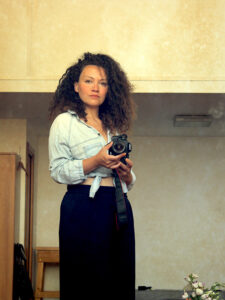

The name of Elena Martín assaulted the pages of the specialized film press with Julia ist, his debut film in which he narrated the vicissitudes of the Erasmus generation. Martín herself starred and directed a story in which she told the story of a woman from her own generation who traveled to Berlin to study., breaking their cultural and sentimental ties in the process of personal maturation. Finding herself in contemporary Europe. Before, had starred alongside other generation companions in the film Agata's friends, maybe one step earlier, in which her character said goodbye to her friends in the town where they lived just before embarking on that trip.
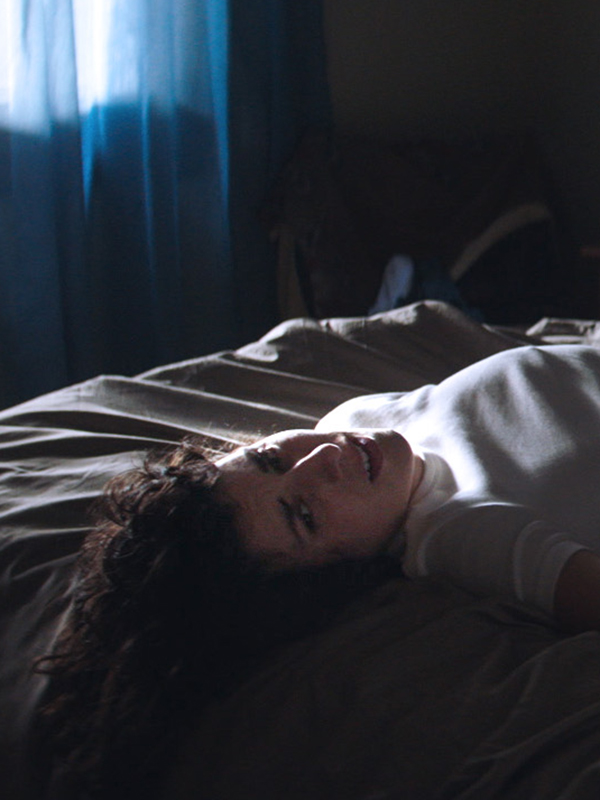
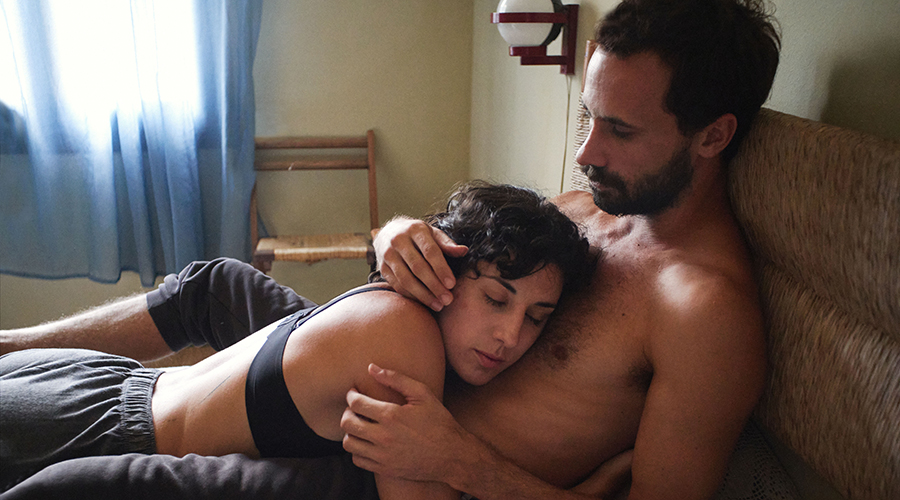
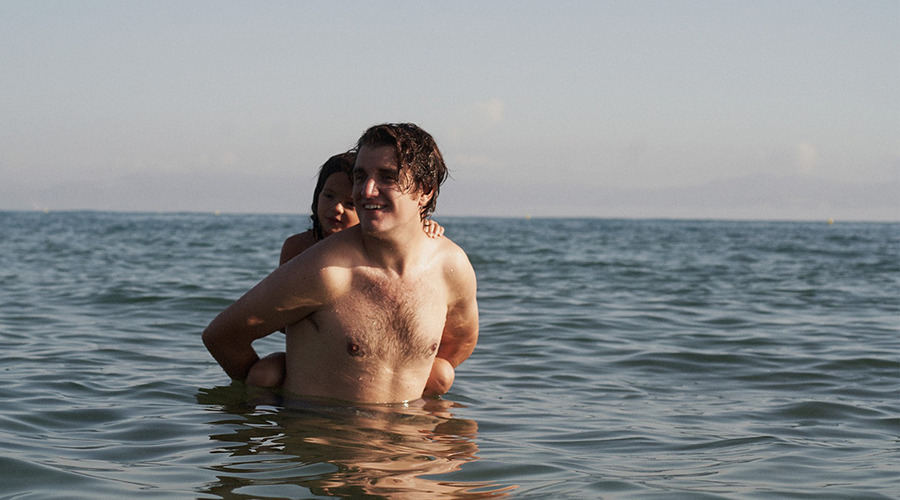
Elena Martín premieres now Creature, his second feature film. Here the characters have grown, They have become adults and have other problems. Mila, a woman in her thirties, installs with Marcel, your partner, at his parents' summer house in a coastal town. The situation seems like a dream come true for a couple who has decided to definitively escape the hardships of the big city.. But not everything is fine. Although the couple seems integrated, On a sexual level, things seem like both are disconnected.. Mila demands your attention, but he seems confused, he doesn't know what he wants. She also doesn't seem to understand her own feelings or needs.. The solution, Maybe we will find a clue in his own past, his childhood and adolescence, there where the foundations of his “confusing” sexuality were forged. G. LEÓN
What was the inspiration for this film?, that first impulse that made you think: “This is what I'm going to tell you next.”?
It started more than six years ago., when I was doing performance with a group of women. We were doing some exercises behind closed doors where we investigated the body and identity and, in that context, The topic of the construction of desire began to arise and we began to share experiences that went back to adolescence and childhood.. So, I started researching and spoke to a therapist who recommended some readings., conferences, etc. And when I started reading about desire in childhood and everything it implies in the adult, I also began to realize that these were things that had already come up in those conversations., with my friends, things that had happened to me, and that's when I decided that there was something tremendously common and, at once, so painful. I started writing things, until Clara Roquet entered (Freedom, 2021) to the project [as co-writer]. Then we were there all the rest of the time, up to a month or two before shooting, writing and doing interviews with which we complemented all that theoretical part; with real testimonies from women, of mothers, of parents and teenage girls who helped us build the story.
You have commented in an interview that the film is not a continuation of Julia ist, your first movie, but, somehow, Yes, there is a kind of correlation in terms of character development. You grow and your characters also grow with you in age and, therefore, their situations change, They move towards other motives and interests. Do you perceive that evolution?
For me they are totally different movies, even though I have acted and directed both. In fact, At many moments I had the feeling that I was making my first movie.. Julia ist era, in some respects, very anarchic. we wrote, we were rolling, montábamos, we wrote again, we were rolling again, we were riding again, and so on during the three and a half years in which the film was built on the fly. Creature comes from a theoretical thesis, there is a documentation process, then the script arrives, the interviews, then the financing, etc. And also the way of rolling. In Julia ist, most of the time we were five people on a team. In Creature we were sixty, with children, underwater cameras, etc. Of course, I understand that there is a look because, fuck, in the end it's me, ¿no? But I live it very differently.
And you don't find a correlation between the ages? That is to say, At one point in your life you ask yourself some things and then you grow and ask yourself other questions..
yes and no, because in Creature we go further back than in Julia ist. I'm not even fifteen or five years old (laughter). But of course, obviously I grow, Yeah. That is to say, when I started writing Creature had 25 and the protagonist always had 30. What I didn't know is that it would take five years to make it and that, when he shot it, I would be the same age as the protagonist. That is to say, that did not come from that place. In fact, I think that's why it took us so long., because for Clara and me the adulthood part was about things we were still understanding.
Julia ist It is a very generational film, group, and here you address more particular questions. In what sense did you perceive that this story appealed to you or do you intend for it to appeal to the viewer??
I have lived my adolescence in the 2000, I lived my childhood in the nineties and now I am an adult. That is to say, that I have gone through the same historical moments that the protagonist of the film goes through. All the women on the team, minus Tono and Stefan, they are women. Marietta Torrent, For example, what is my script (and she is Valencian, by the way), is older than me, ten or fifteen years older than me, and she was also going through the same conflicts. I like to think that we all have a body and a complex relationship with desire.. Even if you have a lot or little sex, the same; we all have a complex relationship, very difficult to explain. And for me this is the great mystery that made me want to write this movie.. It seems like magic to me. What I see in the discussions [when he presents the film] people talk a lot. I have done colloquiums presenting other films and I think I have never experienced such intense debates.. In that sense, the movie works like when someone tells you a secret, something that maybe you don't dare to say and, suddenly, you feel that this is a safe space to tell what is yours. It's like something that is unlocked. This is what I would like to happen to people., that's what excites me when it happens.
The movie has a three-piece structure that I found a little disconcerting.. You are in the present of the protagonist and, suddenly, you make a very long flashback towards his childhood, leaving the viewer in suspense, waiting for something that is going to happen. Why did you choose this way? What do you think it contributed to the story??
At first we started writing the movie chronologically, but it didn't work. Childhood and adolescence could work, but adulthood didn't because it seemed like some kind of conclusion, And I believe that adulthood is where the questions begin., precisely. That's why we go backwards. And that's why, until we find this structure, we didn't find what we were counting on. Then, when we assumed this had to be a journey back and forth, We also considered the option of them being flashbacks shorter, in which the eras intermingled and one image took you to the other, etc. But this forced us to establish relationships of causes and consequences. In the end, it ended up being this more capitular thing. It's about entering that stage and staying a while for the character to make sense.. But, indeed, What you say about suspense is something that we work a lot on editing.. The structure is in script, but in assembly we found when we went from one stage to the other or returned. Why, Of course, when you leave one of the stages and you have already become hooked on the character, suddenly, you started again from scratch and it was a downer. So, it was very important that, when we return to adulthood, it was interesting. That return occurs with the erotic dream. That dream wasn't there in the script., but we need to come back with something strong to get hooked again.
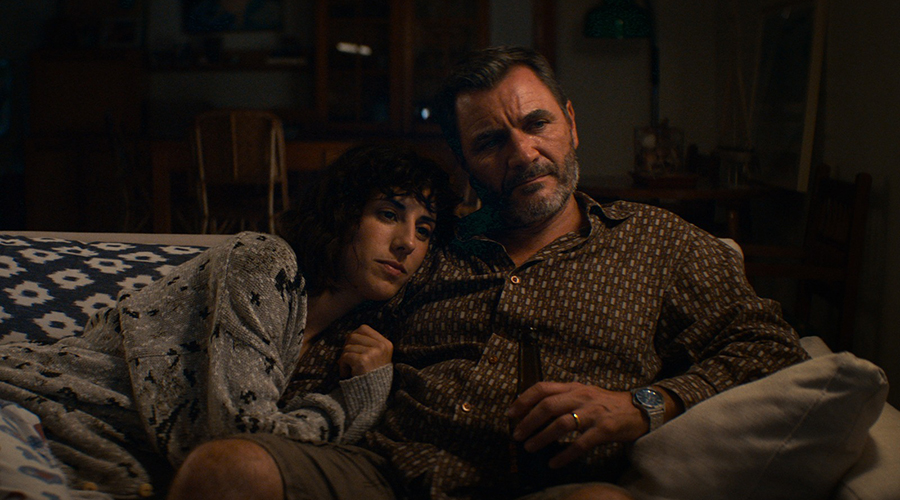
You have spoken about the issues that appeal to the main character. But I wanted to ask you about the male characters.. I admit to you that, sometimes, the motivations or reasons of the character of Marcel or Gerard They look a little fuzzy on me. I understand that there is a confrontation and in the confrontation is where the essential issues arise. What are those motivations?? What role do they play with respect to Mila's character??
If we look at it chronologically, The father is a man who has a daughter who is aware that she lives in a patriarchal world and that she is going to face hostilities. And his desire to protect his daughter leads him to confuse between protecting and castrating.. I think this is something they both share., they try to do things right, they try to position themselves in a place of goodness, but they continue to carry this inheritance that prevents them from knowing how to be vulnerable, not accepting your own fears. The father who tells his daughter that she can't go to a boy's house to sleep because he feels uncomfortable, although he is a boy who knows, knows his parents, It's a safe space, and she is also asking for it, he is not doing it from behind. It is this that they only alert us to the dangers, but it is not educated, is not accompanied. Something similar happens with the boyfriend character., a guy who feels very vulnerable with the idea that his girlfriend is having a hard time connecting with him, but he is not able to verbalize his fear until the end, when he says: “I feel like the problem is that I don't turn you on.”. It is a precious moment that I find in many men around me.. It is a time when you want to start confronting certain customs, but there is still a fear of accepting and looking at your own wounds. It is easier for him to treat his partner as if she is the one with the problem and he is the helper., she is the one who is wrong and he is there, patient, trying. And when she tells him “But something happens to you too”, he answers: "I'm fine”. For me it speaks to this, of this fear of getting into the mud of the two characters, each one with its context.
You talked at the beginning about the differences between Julia ist y Creature fourth to formal approach. I have seen that they are two different movies. Julia ist It is a very close film, in which the camera moves a lot, it is very low to the ground. And here I get the impression, almost from the foreground, that there is a greater awareness of the tools of cinema. From the travelling with which the movie begins, there is an intentionality in the use of the camera. How do you see, as director, the differences between one movie and another?
Yeah, I totally agree with what you say. The thing is Creature the ground needed to be raised a little. Magic was very important to me., The mystery, sensuality, the sensoriality of all that subjective and poetic part, that in Julia ist It is more direct and cruder. It was important because we are talking about desires, that is to say, We are entering a mental and imaginative space that seems magical to me.. The movie needed something more iconic, like when you dream and there is something that sticks in your mind that has a special symbolism. And of course, camera work had to be very different. The lighting is also very well done.. In Julia ist we always worked with natural light, and here, in Creature it looks more stylized. But even in the moments that seem most natural, inside the house, everything is very constructed to generate that gloom, that darker thing, denser, less light, less natural. And the same in the exterior scenes.. If you look, It's a movie that takes place in the Mediterranean, but the light is very nordic. We have worked the light from a much colder place, more wintery. In some moments, We've messed around with some genre elements, as in some camera movement, to generate this subjective space.
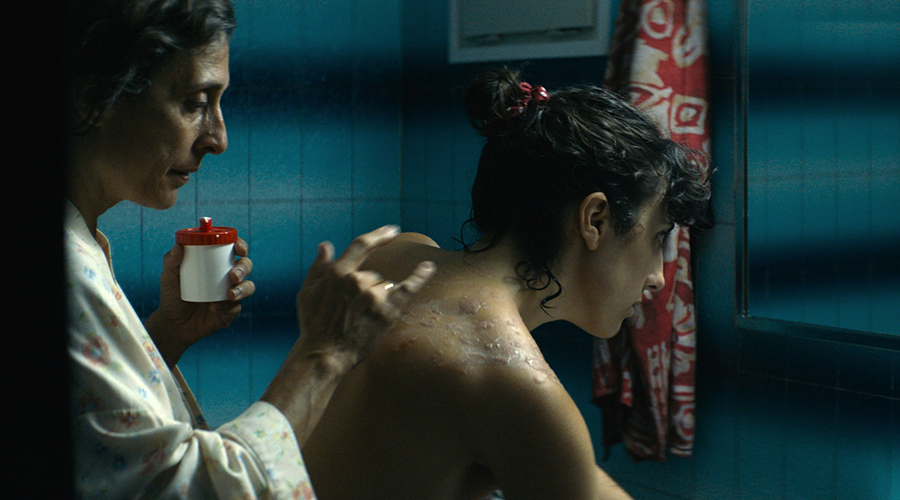
You stole my next question because I was going to ask you about working with Alana Mejía [director of photography]. The light has that tone of a fantastic story.
Yeah, Yeah, Yeah. It seems very good to me. Alana is very touchy about the whole idea of gloom.. Got many nuances in these interiors, like half off.
You have told me before about your work in the theater world and performance. There's some of that work in this movie.. You have tried to introduce these symbolic elements more related to that type of proposals than to a conventional narrative..
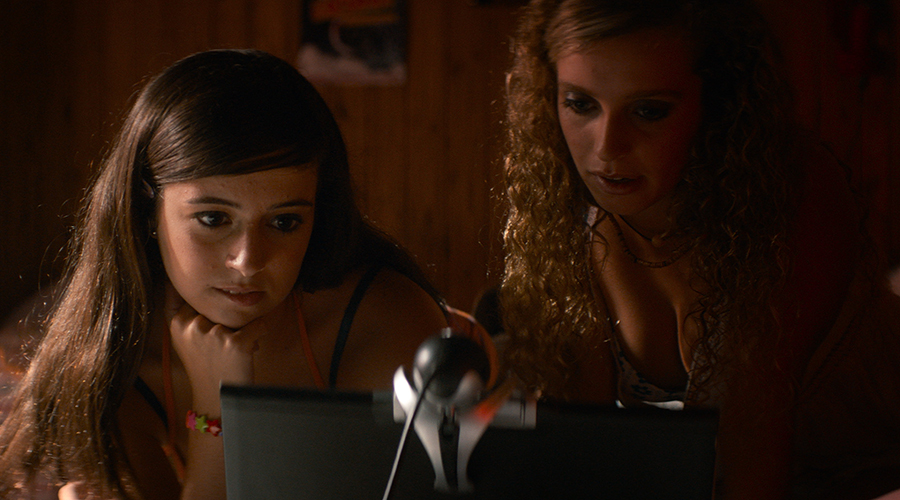
Yeah, It's true. Above all, in adolescence, where we were dealing with very hormonal material. Just as in childhood there is a super sensory and very natural approach, and it is the brightest moment of the movie, In adolescence everything was very explosive. There is that use of slow motion, etc. The dream in which she breastfeeds this group of teenagers, it's super stage. Yeah, It's true. Yes, it has a much more theatrical point.
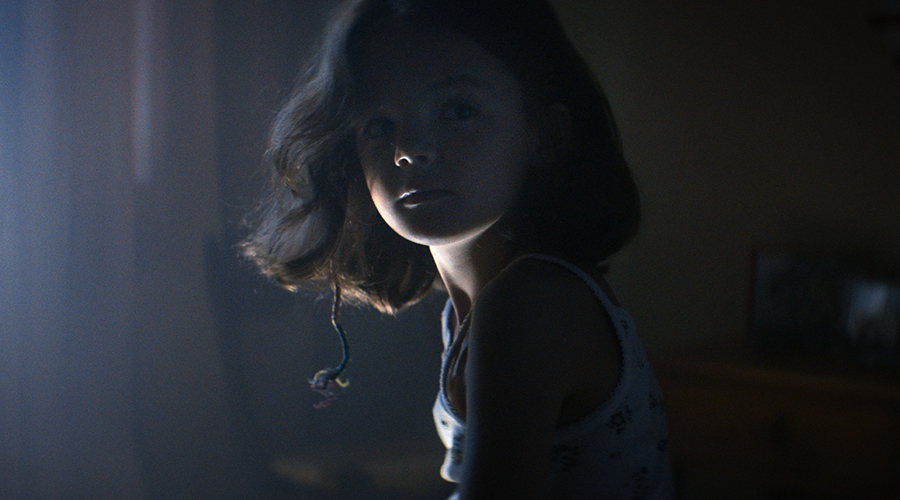
I would like you to tell us a little about how working with Mila Borrás was., with the girl because, in general, In Spanish cinema, working with children does not go very well and here it is quite natural.
Very natural! I think she is an incredible actress.. Mila is the daughter of actors, which made things a lot easier, but we also work with a coach of intimacy, with two, with Lucía Delgado and Tabata Cerezo, and with a coach of actors who is Clara Maños. It was a long job. First came getting to know each other, live together. I was going to look for her at school and we were going to play, to gain confidence. Then, we were introducing the theme of the scenes, that he was getting to know the adult actors, etc. But she was always very aware of what was work and what was play.. And the work then, difficult, because with a girl you have to adapt to her times. That is to say, What if she was tired and needed a moment of escapism?, had to be given. But when I was focused, it was very good. That was when all that moment of disconnection was worth it..
There is an issue that seems tangential in the film, but what it seems to me capital and I would almost say that it is the center. And that's how our memory deceives us, memories when building our life. How do you live it?
I think it's complicated. In the end, how things are told ends up defining how you see things, your experience of reality. There is a story about the male gaze that has to do with the socio-political context, about the importance given to male approval for a woman. like a woman, to be a real woman, You will need a man's approval at all stages of life, in infancy, in adolescence and adulthood. And this story weighs heavily on her. Mila really needs her father to test her, but his father puts himself in a position above, in which he decides what is right and what is wrong. It is a position of superiority, to the point that he overlooks that the mother was always there, with a much more humble position, much more of a question, of someone who doesn't know if something is right or wrong, trial and error. I find that very interesting. It's this mother who has been a secondary character the entire movie and, suddenly, He becomes the protagonist and takes his rightful place, breaking that narrative of how important or not important father's approval is. Thanks to this, She can then go and be cured with sea water, giving value to his mother's advice, what we hear in childhood, that sea water cures everything.