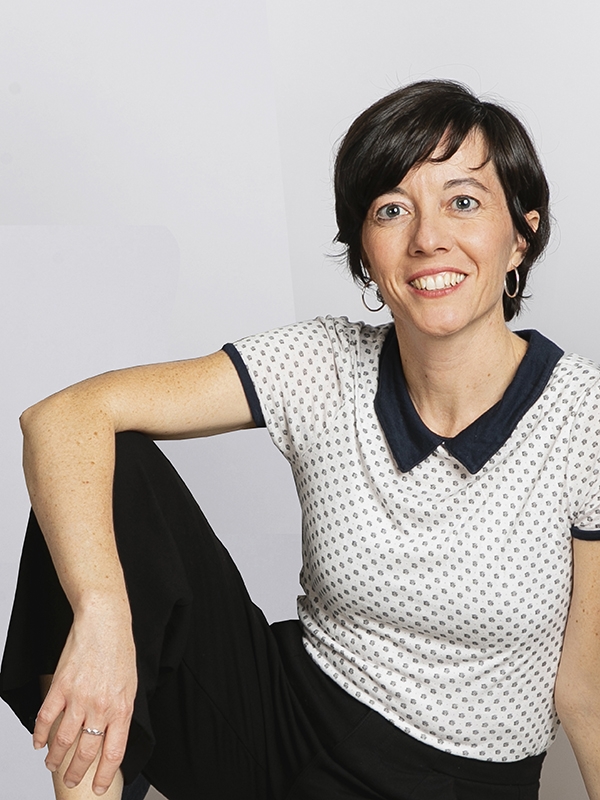
The theater can be transformed into a vegetable garden for children to touch the soil, they listen to songs and discover stories? you can. It was done by Pau Pons Horta, the play created and directed for L'Horta Teatre with which he won the IVC prize for the best show for boys and girls 2019. She is an actress, creator and co-founder of the Valencian company Pont Flotant - for which she has co-written and co-directed THE 7 differences i camping, among others—, but in January he collaborates again with the formation of Castellar, this time, in a piece designed for the youngest. Normal Family, written by Núria Vizcarro, arrives at Teatre Micalet for those who want to start 2021 with customism, earth humor, the dialogues tarantinians on stage. Two sisters who have not seen each other for a long time and the daughter of one of them meet in the village house because they have decided to put it up for sale now that the mother has died, to get the dead out of the way and get some money. Between faiths, screams and some crying, the three characters will make us reflect on the family, the property, the aging, the mother-daughter relationship, the loneliness and despair of not loving yourself.
You come from directing children's plays and, therefore, of a marked didactic side. How does the way of directing change depending on whether it is a play for adults or for children?
I think that it does not depend on the receiver to whom the work is directed that changes the way of directing, but of the type of process and project that is underway. The variables and rules of the game are other and, therefore, your work fits this new creative framework. Yes, it is true that perhaps a work like Normal Family it is more complex at the level of textual creation, direction of actresses or approach to characters, this has required more training and work in these matters. But it is no less true that jobs for girls and boys pose other types of challenges that are equally difficult to get right. Definitely, the focus of the work in one or another type of work is elsewhere i, I suppose that finding and/or discovering what is the key and the tone of each project is fundamental to consider the way in which it should be directed. We often feel, and I myself have been able to affirm it on occasion - shyly, but— that directing children's theater is more "simple", but the reality is to get the type of process right and to know (or find) the course you want to follow. In the theater for adults you have many aspects, scenically speaking, through which to connect (even if it is minimal) with the viewer; in the theater aimed at girls and boys, if the connection with the audience does not occur, you are lost, the audience is diaphanous and unforgiving. Finding this relationship of complicity with the little ones is a very big challenge posed by the theater for the little ones, which changes the way the process is approached, prioritizing research and directing work on the spectator's reception of the scenic artefact.
In the pieces you have written and directed for Pont Flotant "the difference" is very present. In Normal family, the very title of the work refers to the opposite, to the norm. How "normal" is this family you portray? What features make her Valencian??
The rule is present, precisely, in Normal Family, by absence, the title refers to this. In fact, at one point one of the protagonist sisters, Marga (Rosanna Espinós) diu: “Normal… Normal… that I am not normals, us." And Adela, who is the older sister, the one who in theory has the most sense in the family (Veronica Andres) he disputes them: “Haaaaaaaaaaaaaaaaaaa, always the same. You are not normal, but i do, I'm completely normal.” We always think that others are different, the strangers, those who do and say things that don't make sense. Many times it is difficult to see yourself from the prism with which we look at others, and this is precisely what the work highlights. Normal, normal, there is no one, who more or who less, we all stray from "the norm", there is no absolute pattern of behavior and, in any case, What rule are we talking about?? The work, underground, also talks about this, that each one of us is the one who marks—or should mark—what life we want to live, the last years, and even more so in times of pandemics, globalization, the accelerated pace of life, the copying of patterns of behavior and habits exported wholesale and without filter, excess consumption, etc. have made many of the customs that, definitely, they represent the values of our lives, they have been lost or abandoned. In this piece we build a metaphor around this idea, to sell or not to sell a lifetime home to a large speculative multinational and the direct consequences that this can have not only for housing but, especially, for family and personal relationships that is, definitely, what we talk about in the work.
What stuck you most in Núria Vizcarro's text?
We worked a lot together on the textual creation in a telematic way because a confinement caught us in the middle, and you know how we all managed teleworking those months, through the screen and at any time of the day… But that circumstance, far from being one handycap, it caused us to be much closer together throughout the initial creation process, that we will do and talk about and enjoy the whole writing process together. So it was already attached to the text from the beginning! I love quick dialogues, abundant, even excessive that the text has. It's the thing to speak so as not to be silent, and I think this piece has a lot of that. We don't need to hear every single word, rather it is often a question of rhythm, of intensities, to understand the situation above the literary. It's a text, we could say, a lot scenic, and I love that. It is a text with a lot of humor and the characters are very funny, question that was fundamental to the construction of the project, so the challenge was to make both the situation and the characters believable at the beginning and then to fit in that same context all the eccentricity that kept resurfacing as the story progressed. All, without abandoning the most tender point that brings the fact of reliving past stories with the family, anecdotes, reproaches… The crawl was great, combine the humor and agility of the dialogues with tenderness and a certain nostalgia when reliving the past, quite a challenge that I think Núria has achieved with great style; all my admiration for his creative and work capacity; a pleasure, definitely.
The work is very textual and, therefore, demanding for performers, what, as you mentioned before, they have to make extreme situations seem real, absurd and snappy. What was it like working with the actresses?, Laura Pellicer, Verónica Andrés and Rosanna Espídos? What would you highlight about them??
indeed, I think it's a demanding work for actresses, not only because of the amount of text and the speed required by the interpretative proposal, but because there are many moments when the three characters overlap, they talk at the same time - as if they didn't hear each other -, it xafen, they interrupt… and this requires a lot of connection between them, listen and be very alert at all times. On the other hand, there is also a lot of work with the objects, because the house is full of junk and we tell their stories through them, and they also move around the room a lot, there are many entrances and exits to the rooms, in the kitchen, and this also requires more concentration. But I would emphasize that it is the component of present of the piece that demands the most attention. The text is fixed and loud enough choreographed, but we have also worked on some space for thespontaneity, to live each situation with a lot of present and that this allows one margin of improvisation which requires a lot of attention in order to be able to incorporate the truth and organicity of the moment and what may arise unexpectedly but at the same time be able to stick and continue with the textual structure of the scene. That is the acting challenge: a whole textual and rhythmic choreography but with room for the unpredictability of life.
Maybe this causes startles, sometimes, but the three actresses are very - very - good and understand each other very well on stage and that's why they can work from this place. the challenge, for me when directing it was very big, but without the creative and technical capacity of the three, Veronica Andres, Rosanna Espinós and Laura Pellicer, I wouldn't have been able to pull it off, that's for sure. They have perfectly understood the role of each character, where you can get humor through your own expressiveness and, especially, understand - emotionally even - what we wanted to tell with the work: the pain that causes having to get rid of what is loved, however, at the same time, the ability to value what is closest to you, he loves her for the family. I already knew that they were three wonderful performers, but this process with them has confirmed it for me and it is a question to be valued: they are very creative actresses, of those they always propose, of those who accompany you in success and in difficulties, of those who understand and work from the stage situation, of those who make the words of others their own… and this is fundamental when defending a proposal like this. Besides, we agree on many personal issues, in terms of vital values—and also theatrical, we could say—and this has made us a great team to build the work. I couldn't have picked a better team, I loved them but now even more, this happens… it is one of the good things that still maintains theater unlike other disciplines, being able to work with close people, intimately. And in times of pandemic… even more…
Normal family portrays a very recognizable figure for everyone. That of the mother who knows they have to adapt to the new times but finds herself uncomfortable and lost with what is happening around her. Generations pass and the mantra "everything was better before" is always repeated. Tell us a little about the character played by Verònica Andrés.
That's right, Adela García Normal, which is the character played by Verónica Andrés, she is the older sister of the family, of those who have—or feel—that implicit responsibility, of being the great i, therefore, responsible for keeping the family together after the death of the parents. When the house comes, he had lived his life outside the village, had a daughter and had disengage enough of family matters. (That need we have, often, of moving away from the place that raised us and the people who educated us to find or reaffirm our own identity…) But, at the time of selling the house and returning to the family nest, without her wanting it, tot se li rebel·la de nou: the love/hate relationship with the sister; the daughter's emotional instability; the relationship with his home, the town, the memories… At a time when his life is shaking, who has done the impossible—even illegalities—to give her daughter all the indulgences she thought she needed, at a time when he has an imperative need to get money, it is precisely the house, the objects and his sister who make him see i (re)value the place of importance of the things that surround him in his life.
And that's what Adela's character is about, of the need to recognize the past as … to face the future, it has nothing to do with the "everything was better before" mantra, but by trying not to completely turn our backs on what we had, but by trying to live with it, take advantage of it. It's not a matter of nostalgia, only, the past can't come back and it wouldn't be good if it did, but the need to meet him again and be able to accept him with love, changing what is needed but not being ashamed of it.
Of the two sisters, Adela has always been the one who has worked the hardest, he has tried, she has taken risks to find a better future for herself and her daughter. His sister instead, Marga, performed by Rosanna Espiños, he is the one who has known how to enjoy life more, see the playful side, take advantage of both economic and family resources. Of course, has not succeeded in res, is precarious in everything, but unlike Adela, he has always taken it with a great sense of humor and this has made, apparently, I won't suffer so much from things. I dic, apparently because, definitely, both characters are unfortunate, they didn't just meet, to feel complete, somehow, everything goes wrong for them, they're always looking for something they can't find, work success, economic, couple relationship… And it is this ability that these characters have, precisely, of suffering what happens to them but presented with humor, what makes us laugh with them as spectators, of his little daily misfortune, laugh at what makes us identify with the difficulty of living fully, despite trying with all our might.
The daughter has utopian dreams, she wants to be a rapper but she sings terrible. Their delusions of grandeur have to do with the lying and neoliberal television discourse of “if you want, pots”?
totally, it's that speech of "if you want, pots”, "if you try you will succeed", "give your best", "believe in you", "you are worth a lot"… and many, many slogans that media platforms try to turn into perennial vital values for new generations. That is why the daughter gravitates between several unfinished artistic studies, between Valencia and London, between "I don't know what to do with my life" and "now I want to be a singer"… Again, humor, we draw a character who suffers from his own uncertainties and insecurities from a very exaggerated place, eccentric, but that helps to transform his tragedy into humor and that we can laugh with his way - frivolous, often— to face life because, in the background, many of us recognize ourselves in those changes of inexplicable decisions or see our daughters or nieces or students in those ways of speaking so randoms o loosers, in those little-thought-out behaviors that, definitely, they are the result of the lack of maturity and inexperience typical of age. I suppose no better or worse than our youth or adolescence, just different, because now the context and inputs are different and the road to maturity is longer.
The play revolves around two generations of women. You wanted to portray the changes that feminism has achieved in recent years regarding the consideration of women? Com?
There are really three generations of women on the scene, because her grandmother, despite not being present, live with them during the work, and their values and concerns can be glimpsed. It's not really a question of feminism that takes center stage in the play's discourse, but we do see three women, autonomous, who choose their own way of living independently, who positively value the historical and social legacy they have inherited but who do not sacrifice their own values in the design of their future. Brave women, emotional, sensitive, autonomous, which I think are the best example of how feminism is moving forward in recent history and even often, despite many influential groups. On the other hand, we tried that feminism was not only on the discursive side of dramatic fiction, but will be part of the structural design of the project: we worked in a team where the most visible roles were held by women, an issue that seems fundamental to us in terms of the normalization of the presence of women in positions of responsibility such as authorship or management.
You have other projects in the works for the near future?
Well… the truth is yes! I have two projects going on, of moment: one is the classes I am teaching at the Superior School of Dramatic Art in Valencia, in the Management specialty, which is one of the most exciting projects - and demanding at the same time- I've never tasted. I love teaching and sharing with the students their educational journey in a discipline that I am passionate about and encourage -in equal parts-, the stage direction. I, on the other hand, with Pont Flotant we are now starting a new stage research project with a long creation process - as is usually the case in the company - which arouses a lot of interest and curiosity for the subject we will discuss. As always, facing a Floating production is quite a challenge, always rewarding but it generates uncertainty and a creative vertigo that excites me a lot. I, of course, in the more distant future and if they let me - as they say - I will immerse myself again in another project for the Horta Teatre company. For me, working at l'Horta means living in a familiar space, where I feel very comfortable among the human team that works there and, especially, that both Alfred Picó and the rest of the team give me creative freedom and production conditions that help me a lot — a lot — to continue growing and projecting my own scenic processes. In fact, I would like to end these lines by showing you my satisfaction and gratitude for the trust and love you have always shared with me.