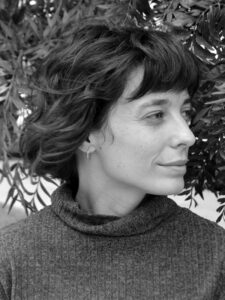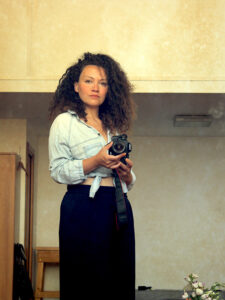

Cristina Durán is the spearhead of good comic artists who today work from Valencian lands.. It began ten years ago remembering the complicated birth of his daughter Laia in One chance in a thousand, with his partner Miguel A. January, always in charge of the scripts. Then he told the process of adopting his second daughter in Efrén's machine and in his latest graphic novel he has once again resorted to real events, in this case foreign, those that occurred around the Valencia metro accident. The day 3 She stars in the exhibition that is currently on display at Pepita Lumier and is an example of the commitment of a professional who is deeply involved in what she draws and how she draws it., either by depriving politicians who do not deserve it of a face or by drawing in a cartoon, one by one, to all the people who massively occupied the Plaza de la Virgen to protest the institutional silence surrounding the case. It was his particular tribute.
One chance in a thousand y Efrén's machine They are a kind of personal diary made into a comic, y The day 3 It's pure journalism in vignettes.. What attracts you to these pseudo-genres that Miguel A. Giner Bou and you have developed in these three works?
The first two are autobiography and were made because we felt the need to tell our story, because it was very intense. Laia [Your daughter] At birth he had a very poor initial prognosis and, although it has been advancing little by little, Today he still has a high degree of disability. He has cerebral palsy and his life is complicated. But when his evolution began to be better than we expected, we wanted to tell it and show what a family with a person with functional diversity is like inside.. We also did it a little in gratitude to all public health, to friends and all the people who had supported us. Then came the second part of our life, What was the adoption of our second daughter?, and since the first book worked very well we decided to tell this second stage. Now the two stories are together compiled in a comprehensive Astiberri with five extra pages.
In fact, the second book, Efrén's machine, It starts off engaging with Laia's story that you had started to tell in One chance in a thousand…
Yeah, could be read independently, but also in a continuous way. It was done with every intention. That's why the complete volume has turned out very nice., because the two stories are together and then at the end there are five extra pages talking a little more about the girls and that. The difference between the two books was that One chance in a thousand we write it from memory, but Efrén's machine, It was very interesting, because we knew that we were going to tell what we were experiencing.
At the Futuro Imperfecto conference at La Rambleta where you were invited to talk about graphic reporting, you commented precisely on this, that in the creation of Efrén's machine had changed a little your way of seeing the world and relating to people, because you knew you were going to tell everything that was happening…
Yeah, why, Of course, you observe in another way. Your mind and eyes open.
What came next?
Then we did When you don't know what to say to change a little registry and then The day 3, by chance. We had not considered it.
Who proposed it to you?? How did the idea come about??
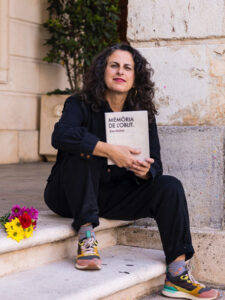
What I tell you. It was a coincidence, because Laura Ballester came to Benetússer with her book Fighting against oblivion. We had wanted to read your book for a long time and we said, since he comes to town, let's go to the presentation. It was in the friendly bookstore Somnis de paper. It was Michelangelo and while he was there he already thought: “This story is so powerful that it has a comic adaptation”. Laura writes very well, It has very beautiful prose.. He read it to him right there., in the bookstore, the first four or five pages and when he got home he told me: “let's do this”. It has been a long process because Laura did not know us.
You had to earn their trust…
Of course. We had a mutual friend. We left Laura the book One chance in a thousand so that I could read it to him and such. Oh well, before reading it he trusted us. And from there we started working with her and, above all, with the Metro Victims Association 3 of July.
Did you have contact with direct sources to document? Or did you do it exclusively through Laura Ballester and her book?
What we did in the end was a mix of everything. The main basis has been Laura's book, but we have also spoken a lot with the victims' association and we have worked on everything that the Barret cooperative did.: the documentary The strategy of silence and the 0responsables website. There was a lot of material, Jordi Évole's program too… What we have tried is to make a summary of the entire story, of everything that has happened. And then there is a difference compared to Laura's book, and it is that, this was published in 2014 y, Of course, Two more years have passed in which many things have happened. In the end, The day 3 It is the epilogue of everything that has happened after. The day 3 It was a way to contribute another grain of sand. There was the documentary, there was the website, there was Laura's book… but publishing it in a comic I think has helped a little to bring the story back to light.
Did having already published two comics about personal experiences help when it came to talking about other people's traumatic experiences??
Yeah. We always comment that we would not have dared to make this book if we had not made it before. One chance in a thousand why The day 3 it is a very book, very complicated. It is no longer just the story of the victims, are all railway issues, legal issues, of paperwork… The story is very complex. But having already made three comics, we dared. And my experience helped me, above all, when talking about the victims. Because of course, What worried us most was how to tell a story that we had not experienced.. When you are counting yours you know what you want to put in and what you don't., but in one that you have not lived you say, oysters, respect for victims is above all. Apart from talking a lot with them, Yes, I tried to put myself in their place to think about how they felt.. For example, one of the most difficult vignettes was one in which the two protagonists arrive at the subway entrance, They don't know anything and they are waiting for a few hours. What I did was imagine the hardest moment of my life, That was when they took Laia and told me she was going to die., how I felt at that moment. I have turned to my own feelings, to my own personal serious situations, to try to reflect how they felt. Besides, Rosa and Beatriz Garrote have helped us a lot, They have been there reading PDFs at night, very close to us. We were also very clear that they had to feel identified, what, If they didn't like something we were going to change it.. It had to be their story and they had to be happy with the book. The joint work has borne fruit because they are super happy.
Apart from what you have already mentioned, What have been the most difficult vignettes to draw??
I haven't finished telling you the first one. Then, when everything about Laia happened, For me it was like time stopped. from around, You no longer even hear who is next to you, you don't see the people, you lose track of time and space a little. That's why I made the vignette in which the two of them are [the protagonists] and you can't see the people in the back.
There was another very difficult one, the one at the mortuary. I gave that one a lot of thought.. Because Michelangelo, when did you plan, my heart: “enter the mortuary”. And I can imagine it, but I've never been to a mortuary. There is not much graphic documentation either. I was thinking about it and I didn't feel like drawing the scene exactly because I don't know if the bodies were on the ground., they were at the table… It seemed very raw to me. So, what I did was think, vale, when you walk into a room like that, what do you really care about? You don't care if the sheets are one color or another, whether there are stretchers or not, whether there is a doctor or not… What matters to you is if the person you want is in there. So, What I did was make a visual metaphor with the little labels they put on the corpses., that also remind us of those given to babies at birth… And on the labels I wrote the relationship that can unite you with a person: madre, couple… We decided not to put the names of the victims on that page. Because if you put specific names, people think, “it hasn't touched me”. But by putting the emotional relationship you have with that person, everyone can identify.. It took me a long time to reach that conclusion in this vignette., but I am very happy because I think it does define what one feels when entering a warehouse.
Also, For example, We were very clear from the beginning that we were not going to draw everything found in the tunnel after the tragedy. Same with the accident sequence., when people were thrown out of the windows and hit by the train. There was a moment at the beginning that did cross our minds., but talking to the victims we immediately ruled it out.
It was going to affect them…
Of course, they already know what happened, no need to create that image. The only thing it would have done is cause morbidity and also harm them.. I think it is much more powerful to simply describe it and let people imagine it..
How did you arrive at the solution of drawing politicians tentacles instead of heads??
The tentacles thing is a bit related to worms and the tentacles of power, that come out of the Generalitat. It occurred to Michelangelo from a very curious thing., You never know where the ideas are going to come from.. There is a Pink Floyd song, of The Wall, who says that when you want to see the British Empire fall you just have to follow the worms. It was an image that was very powerful for him.. When someone wants to manipulate you, when politicians or governments want to cover something, the worms are underground. From the worms I thought of the tentacles, although at the beginning we had thought of making it like a tangle. What we were clear about was that we did not want to draw the politicians and the people who had acted so badly.. We wanted to make the face blurred, They don't even deserve me to start drawing them.. And also for taking away that face of humanity, That's all they were missing. At first we made a blur with some kind of threads, but it didn't work graphically. And turning around, turning it around, In the end I came to the conclusion that the tentacles defined more. Besides, They gave me a lot of graphical play when they try to entangle people. It was a way of dehumanizing them and reflecting the tentacles of power.
What can we see in the Peptia Lumier exhibition?
Most of the exhibition is The day 3, obviously, because it has been the most important job of the last two years. But we have also wanted to put other types of work that, although they are custom, you end up making them yours, because you enjoy them. We have called her Three in reference to The day 3 and the three parts that the sample has: The day 3 on the one hand, with originals in ink and pencil and some special squares gouache, a color, made specifically for the exhibition. The second part is work that I have done for press and advertising, and the third part is the other comic that I did at the same time The day 3, which is Blasco Ibáñez's. A custom comic, but with which we have enjoyed a lot and we have learned a lot.
How do you see the moment of illustration in Valencia made by women?
I think we are in a sweet moment. In general, in feminism we are in a sweet moment. Although we have to be careful, With the new political movements that are arriving we have to be very alert. And at the illustration level, there are more and more women, both in illustration and comic. Where I have noticed it the most is especially in comics., which is mine and what I like the most. In my first comic salons twenty years ago, I was there, or a friend and me, now, there are a lot of companions. Yes, there has been exponential growth and a very important arrival of female authors.. And many Valencians. In fact, We have a collective of comic authors in Spain and we are always in contact, telling us things, trying to promote visibility initiatives and coming together. There are a lot of female authors, and doing very interesting things.