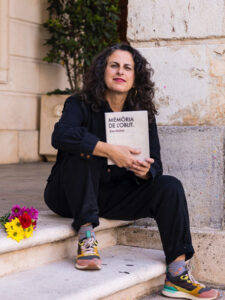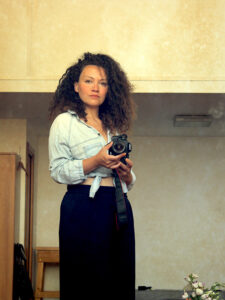
Thursday 8 March there will be an international feminist strike that will shake the foundations of patriarchy and the sixth production of Awirohecho, The Solidarity (of the 8 al 11/3 in the Rialto), the most linked to social movements. At the head of the company and the work –managed from top to bottom by women like Patricia Pardo, who signs the text – we find Carla Chillida, dancer and creator who does not understand theater without political commitment and a rebellious attitude. We talk to her about forgotten women, of patriarchy, of capitalism and revolution.
Atirohecho always puts interest in the workers, the true protagonists of the story. In Solidarity also. Who were Los Solidarios??
Los solidarios was an anarcho-syndicalist action group from the years 20 which was born to confront government repression against the Barcelona labor movement. Its three most legendary members were Durruti, Ascaso and García Oliver, that seen with perspective and from a feminist vision, They can be presented to us as stereotypes of masculinity. We found it very interesting as a discourse and as an artistic resource to feminize this term., rescuing him as “Las solidarias”. Besides, We feminize it because there were also women in the anarcho-syndicalist organization. Women that obviously no one names or remembers. Women with double exploitation status, by class and by gender.
The work vindicates the role of women in the world based on the speeches, poems and testimonies of better-known women such as Clara Campoamor or Federica Montseny, and others completely ignored by a history that men have always written. Introduce us to some of them.
Really the speeches of Clara Campoamor and Federica Monseny, and even Victoria Kent, They are rescued in the work as a historical document, since they are voices more or less recognized in the official story. But the real tribute is to the women of the anarcho-syndicalist movement of the years 30, brave women who created organizations such as the National Federation of Free Women, independent branch of the libertarian movement. And to do so they had to face many obstacles, including his own CNT fighting companions. We rescue these names: Concha Laño, Felisa De Castro, Aurea Cuadrado, Soledad Estorach Esterri, Lucía Sánchez Saornil, Comaposed Mercedes, Protection Poch, Maruja Lara, Isabel Mesa Delgado, Libertad Ródenas, Sara Berenguer, Julia Hermosilla, Maria La Javelina, Gracia Ventura, Concha Guillén Bertolín, Pura Arcos, Pura Pérez Mingorance and Conxa Pérez Collado. But there are many more.
You start from a more personal story to focus, in the second part, in the women who fought during the Republic and the Civil War to win their rights. You start from the personal to reach the artistic, which in your case is always political and combative. What was the creation process like??
The starting point of the process was the personal analysis of the problems, worries and obstacles suffered by ourselves, derived from the construction of gender. Always taking into account our specific context. After that, We realized the lack of female references that we had, and precisely in that search for references is where all these women that we name in the work appeared to us.. Women who reconcile us with our gender.
History teaches us that without rebellion, social conquests are not achieved.. Y The Solidarity advocates for a feminism that not only ends the patriarchal system, also with capitalism. Will the revolution be feminist or not??
Of course, and I would add that this feminism will be class or it will not be. We have to be attentive, because we already know the dynamics of the power of appropriating social struggles and demands to neutralize them. It must be us, working class women, those of us who lead this new fight, from our body and from our creativity. S.M.