
Antonio Méndez Esparza is one of those directors little known to the general public of our country.. But, as happens so many times (too many), The fact that he is little known does not detract one bit from the quality of his work.. Author, until now, of three feature films, two in the field of fiction and a documentary, Méndez Esparza has explored the living conditions of the most disadvantaged in society. Yes in here and there, his first job, He told us about life in a small border town in Mexico, in Life and nothing more investigated the difficulties experienced by a single mother in an African-American community in the United States., country in which he resides and where he teaches filmmaking classes. Both films can be seen on the Filmin platform.
In his third fiction proposal, the director, born in Madrid, addresses his first piece filmed entirely in Spain based on a novel by the writer Juan José Millás. let no one sleep introduces us to Lucia, a woman who works as a computer scientist for a large company dedicated to offering dental services. Each of his days is due to the routines of a job where he suffers all kinds of humiliations. One day, The company appears deserted because its bosses have been arrested for an accusation of fraud and Lucía loses her job. Starting here, You will have to rebuild your entire world. As, at your age, She knows that no one is going to hire her., decides to try his luck and, while he waits to be paid the back wages and the settlement that he is still owed, becomes a taxi driver. Starts, So, For Lucía, a new life in which she will find a much more confident version of herself and eager to explore the world around her., breaking the chains that bound her to herself and to a degrading and aimless monotony. On the way, will meet Braulio, an actor with whom she will have a one-night relationship, a Roberta, a theater director, and Ricardo, a famous writer who will try to seduce her. Background, a gray city of Madrid, where it is always raining, full of souls searching, how can they, an exit. let no one sleep It opens this Friday 17 November in commercial rooms.
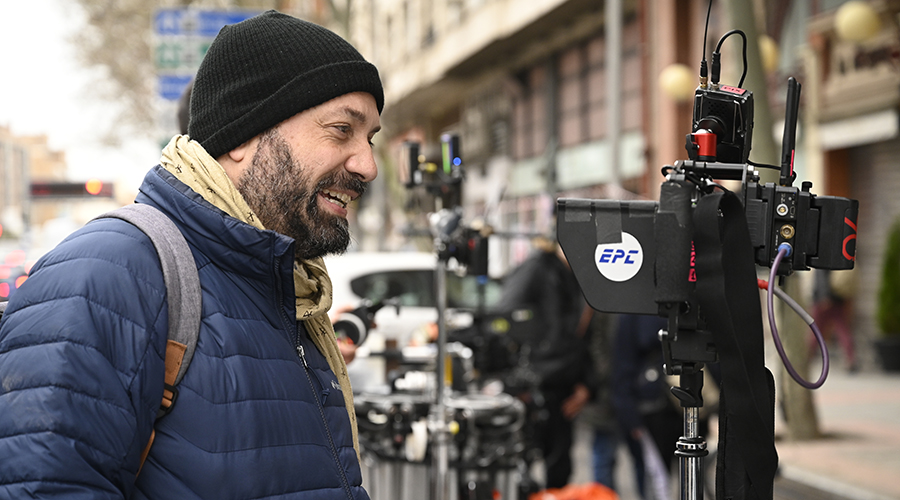
I was thinking that, somehow, All your films could be titled “Life and Nothing More.”
(Laughter) Bueno, now that you say it, Yes, there is a desire of mine to make a film that would be that, although it's never just that. What is always there is this desire to x-ray the present and find a story there.. Of course that goes a little against, let's say, of conventional drama. But there is a desire, which is very intense, to embrace that idea of life and nothing more. That, let's say, is the engine.
I say it because, seeing let no one sleep and comparing it with your previous work, It seems to me that there is a certain intention in that sense.
Yeah, It is very evident that the background is always that. The thing is that this movie is a story with a very intense dramatic charge.. But if, I think that, in the way of filming and in certain decisions that one makes to embrace those everyday aspects, that desire is glimpsed.
Why did you decide to adapt this novel by Millás?
In me there is always a desire to make films, but I don't always know what movie I'm going to make. You can have ideas, but you don't always explore them fully, many others remain unfinished... I don't even know what this is going to sound like, but, sometimes, it's not so much the story, is the desire to film, the desire to modify reality. Filming has one thing that is very beautiful and that is that, somehow, you mold the world to your size. For me, It's a mix of what you mold and what you find. It's like reliving the present and modifying it. I'm not a very free filmmaker.. Jonás Trueba or Hong Sang-Soo, For example, They are much freer filmmakers than, with less, can work. I don't have that ability, but I have the desire. It's true that I really wanted to film in Spain and I was looking for novels because it was the only way I think I had to approach Spanish fiction.. And the novel made me fall in love, It was the perfect vehicle.. But it's the story, It is the mystery of carrying it out. It is not so much the message or the challenge or the difficulty, It is the possibility of making it grow and seeing if you can understand it.
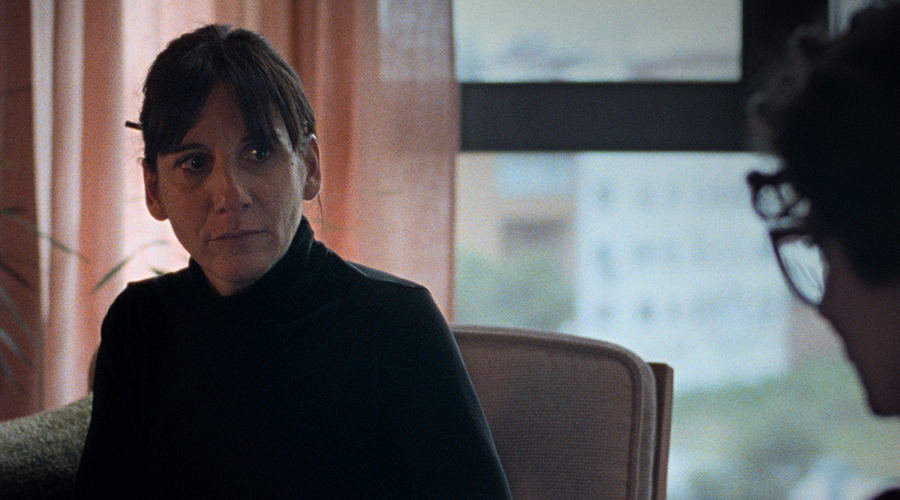
Starting from literary material for the first time, and watching your previous cinema, so attached to a documentary aesthetic, in which you moved with very specific social realities, I wanted to ask you what was the biggest difficulty you encountered when adapting the novel to the screenplay?.
I think that since it was such a novel of the present, Maybe the context wasn't so precise and I knew I had to give that to the novel., give clarity. But that wasn't difficult. In all my previous films I was accompanied by wonderful people, but it is true that, on this occasion [given the production conditions] more people participated and with more experience. For example, I had never worked with a screenwriter. Clara Roquet [script co-writer] He has much more experience than me, understands dramatic structures much better than me, his character development is much more precise. She embraces the possibilities of the script, but me, many times, if a scene doesn't quite work, I don't worry that much. I say: “Well, we'll see about filming.”. I don't focus so much on the script's possibilities., I don't try to decipher it from the moment of conception, but, with her, Yeah. There is also Zeltia Montes, fabulous also on the soundtrack, makeup people, the assistant director, costumes... The film embraced all these elements that illuminated it. On the other hand, it is true that, even though I relate, somehow, with non-fiction cinema, For me the documentary is a very fictional cinema. My films are works of fiction that are nourished by a very true context.. Y, in this case, it's the same.
We are talking about a fiction film, and it is understood as a fiction film, but it is true that the form is deliberately documentary, although I would say that with nuances with respect to your other films, with another much more surreal tone. What difficulties did the change of perspective entail?, of narrative with respect to your previous films?
I don't see it so much as a registry change.. Yes, it is true that there are aspects that escape me a little.. I didn't know the movie was going to be so dark., For example. That's the photographer's job. [Beard Balasoiu], which gives the film a ghostly touch, dark. The weather we spent in Madrid also played a role., it rained a lot, the locker room, etc. I didn't have a great perspective on the film, but I knew that Malena Alterio was in the center, who plays the character of Lucía, and I knew it had to be a character full of nuances and life. And perhaps in those nuances, lives, laughter, sufferings, we would find this change of tone that the film we knew was going to need.
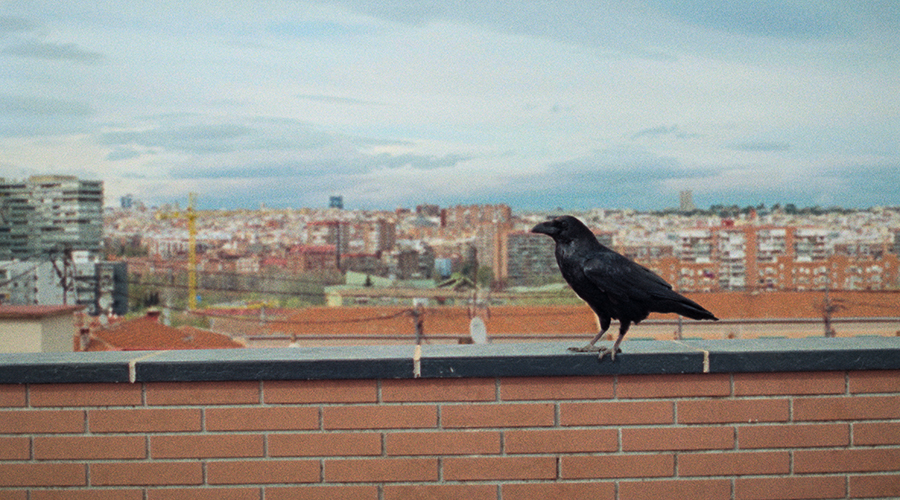
There is a lot of talk about the portrait of Madrid in let no one sleep, of the physical portrait of the city, but what interested me the most is the psychological portrait. That is to say, the film seeks to represent a kind of state of mind.
The movie is almost a trip, an existential odyssey. In this sense, We knew that it was a journey through the interior of Lucía and all the elements that we added were going in this direction: the edition, changing the rhythm sometimes, a certain subjectivity, the use of music and sound... All of this makes for a much more psychological portrait than the images may suggest.. And especially because that was present in the novel. Us, in principle, we buried him, but then we had to make it resurface somehow. I had to be more present and all these cinematographic artifacts are key to making that happen.
I think that the film has something that also unites it with your other works., and it is that, in the end, It is also a portrait of those marginalized in the economic system.. This Lucía character is a victim of the system. Like the characters of here and there o Life and nothing further, It asks how we survive within this order.
Yeah, Yeah, Yeah. I don't believe so much in victims, but yes in circumstances. In that sense, We had to put Lucía in a very clear context of a woman who works, He does what he has to do and is always looking for a way out.. In this interest to x-ray, for making contemporary portraits, For me it is almost inevitable to have this political component in a film.
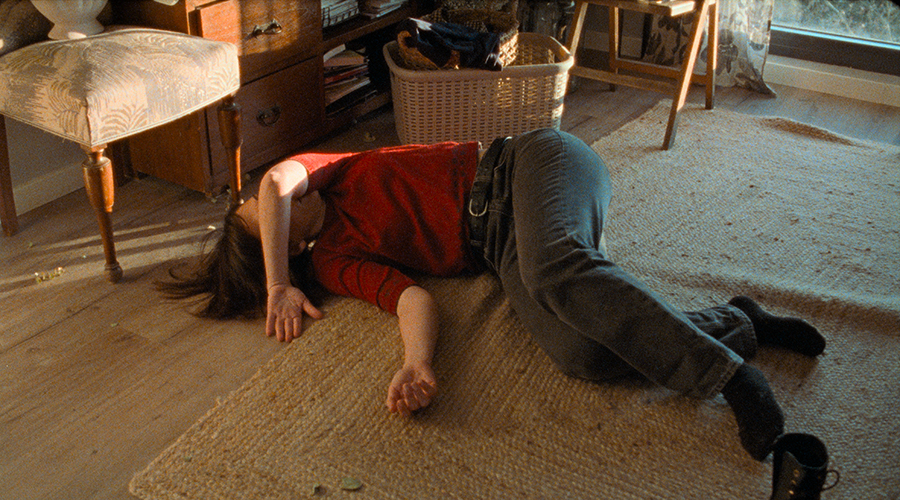
There is a line from the movie that seems to be a crucial element as well.. Does I read little about all this philosophy of positivism from self-help books that gives us advice on how to cope with modern life. I have the impression that, lately, This is being reviewed and it seems to me that the film has some of that criticism when the character of Lucía says that “I feel that something is going to happen.” [Something positive, it is understood], and he who does not change, "he doesn't win". It is that of resorting to a hope that tells you that, despite the adversity, life is going to be wonderful.
I understand what you are saying, fully, but I think that Lucía is a slightly more beautiful character, oldest. I mean, He doesn't do yoga or do whatever is trendy now.. He says it with the sincerity of the ancients. But it is true that, forcibly hangs (laughter). That is to say, I think Lucía is the result of circumstances. We wanted him to be a person capable of loving and creating beautiful things., we didn't just want a woman with a trauma. There is a Mike Leigh movie that I like called Happy go lucky, in which the protagonist is always super positive and, in fact, It irritates people a lot precisely because of that., for being so positive. I didn't want it to be that, but I wanted a bit of that spirit of improvement. Lucía is not a marginal person, but it is in a somewhat fragile situation. But, at once, we wanted it to also have that optimism, that desire to live. Each film has different circumstances, but it is true that, in all my previous films, where I have been so attached to the documentary, I have always met people with a huge desire to live. That's why movies always have a certain shine. It's not a shine that I put on, It's a shine that I have found. For me that is important.
While watching the movie I was reminded of Jack Lemmon and this middle class character who is tragic and comic, at once.
Bueno, for me, when I thought about Malena, I thought of Shirley MacLaine in The apartment because he has that thing so tender, so beautiful and, at once, so tragic. O, bueno, Fernando Fernan Gómez, that has this comic and tragic thing, at once. Regina, in Life and nothing more, It also had something comical about it, but the movie may have gagged him, although sometimes it stood out. This character, because of how it is written in the novel, I had something very spontaneous and unheard of, and we embrace that to give it a certain lightness. I think it is an absolute success.
I was referring to that figure that represents that typical citizen. Here is a woman, Lemmon is a man, but it is that citizen who, in the background, even without knowing it, is a victim of the system. has to survive, He has a vital optimism that helps him overcome conflicts, but around him, everything is very tragic.
There is a very beautiful thing in what you are saying and that I fall for now. I have thought: the rogue. But she's not naughty. There's that Spanish picaresque thing, but, at the same time, There are also many people who always do the right thing.. Ella, in that sense, It's very Jack Lemmon. In The apartment, Jack Lemmon is a guy who does everything right. Yeah, I think that, In that she was that exemplary citizen..
I think there is something that is in your previous films and that, somehow, is also here. I mean that relationship between reality and fiction. In fact, she asks that writer she knows, something similar: what do you think of reality? I ask you, What is your relationship with reality from fiction?? What relationship do you have with reality when creating fiction??
For me, the film is a real artifact, that is to say, somehow, exists. I mean, exists in a temporal space. It's very real, but at the same time it is very lie. There is always a contradiction. For example, when I made the documentary [Courtroom 3H], For me it was a work of fiction because it is heavily edited.. And that's where all the tricks of fiction come out. In all this debate, In the end what I always answer is that it is the artist's point of view. In the end, Fiction is a story with a point of view. Before writing existed, people told stories. Each one would tell them in a different way and there was one that was better than the other., but they were all true, they were all different, true without being. It was about, simply, of that: tell me a story. I think cinema itself is something real. It's a fact, it is an action, exists. Whether it is true or false is important to the creator (laughter)
I was referring to the so-called social realism, because of how much truth fiction has to contain with respect to the social truth it portrays.
I think it depends a lot on the movie.. That is to say, It depends a lot on the creator and what he intends.. For me it is very important. It gives me legitimacy. That is to say, For me it's almost an excuse to make the film. It makes me certain that the film can exist. There are other movies that tell stereotypes, or archetypes, but, for me, investigate that social context and show it, It's always been a very important part of making movies. Besides, many times, as soon as you start to look closely at reality, you see that it has many more nuances, It is much richer and it is much more human than you can expect..