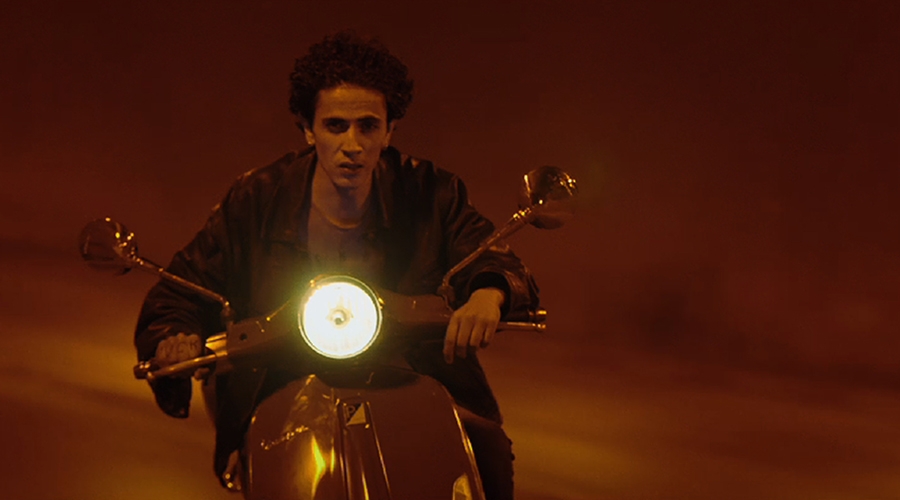
Fifth session of the official section that takes us to the lands of Tunisia. In Streams, Amel is the mother of an impetuous teenager named Mamoun.. The relationship between the two is very close and they have a happy coexistence., only clouded by the presence of her husband and father of the young man, a frustrated man who spends the day drunk and without contributing anything to the family economy. Mamoun's dream is to be a professional goalkeeper on a soccer team. For it, He needs some contacts to boost his career and that his mother tries to get through the owner of the factory where he works.. but this, despite the promises he makes, At the time of the final commitment it always seems that he tries to avoid it. one night, her boss's partner invites her to dinner using the same hook. At the end of dinner, the man offers to take her home. Amel will soon understand what his intentions are.. off the road, the man tries to abuse Amel, but she resists, when they are surprised by the police. Despite his statement and without any evidence other than the man's testimony, Amel is arrested and convicted of prostitution.
Thus begins a real ordeal for Amel and her son.. humiliated, with his reputation destroyed after going to prison, Amel will have difficulties reorganizing her life. While, affected by the rage and helplessness caused by what happened to his mother, Mamoun beats up a boy from his soccer team, forcing him to escape from the police and his teammate's brother who is chasing him to take revenge.. From there, Mamoun will begin a life of crime in a spiral towards a personal hell that, as the work progresses, We understand that it is the same hell in which contemporary Tunisian society lives..
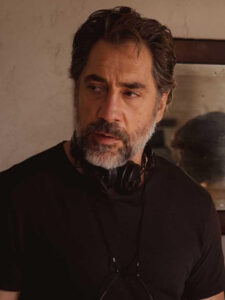
The first thing that catches your attention Streams of Mehdi Hmili is that, seen the terrible martyrdom suffered by its characters, We are facing an almost completely autobiographical work.. “It is a film that tells a personal story of me and my mother. “A painful story about the difficulties I have gone through throughout my life”, commented the director at a La Mostra press conference. “It's a movie that meant a lot to me.. I started it in 2019 and I made it for my mother and me because I wanted to escape from those ghosts of the past that were haunting me.. In fact, the original title of the film means that: out the ghosts. “I needed to make this film so I could turn the page and move on to a new story.”, the director commented.
But, leaving aside personal issues for a moment, Streams It is a film that wants to be a mirror of something else. "In this case, I also wanted to tell the story of Tunisia. In fact, What I want to show are the last ten years in Tunisia after the revolution. It is a society in full free fall where aspirations have completely disappeared. I wanted to tell this vision of a society where religion and violence have destroyed everything.. It's a truly black society. From the outside it may seem that Tunisia is an example of a democratic country, but the reality is very different because, in the end, you realize that religion rots everything, rots the population”, says Mehdi Hmili. “I wanted to talk about the LGBT community, which can't seem to be displayed, that has to be hidden. I also wanted to talk about prostitution and the family because, in this case, when the characters decide to change their lives, the system is going to punish them. When the mother leaves prison, We avoid showing what that prison is like because the real prison is the society in which he lives.. I also wanted to show this youth abandoned to their fate, who wants to self-destruct. when I was young, I also wanted to self-destruct. I wanted to destroy my heart, my life, I wanted to hurt my father, to my family, and this was a kind of revenge against the system”.
Once the family home has been dismantled, what remains are two devastated souls, incomplete. Both, mother and son, They will have to meet again to heal their wounds. But if a dark future opens up for Mamoun, For Amel things are going to be much worse. Jumping from one job to another, She will be subjected to harassment from every man who crosses her path.. “In this film we see how sexual harassment ends up affecting women.”, what is the victim. We realize that the system ends up punishing her a lot and that the consequence is that it completely destroys her.. It is something that I have experienced firsthand.”, explained the Tunisian director to the festival audience. “This took away the most beautiful years of my life and that is why I wanted to make this film, to show it to the world, so that this pain and suffering that I have experienced had meaning and to realize that, many times, We see the Arab world and realize that everything is a lie, that violence against women is everywhere, at work, in the streets. Happens in Egypt, Yeah, but Tunisia is not much better. The state punishes women who, against these abuses, they want to file a complaint, and we, like men, we have to fight, “We have to combat this scourge and we have to show it so that it can be seen that this is a hypocrisy in which the Arab world lives.”, concluded.
It is very difficult to talk about a film like So she doesn’t live without revealing or, at least, give some clue to that capital event on which all the work revolves. Revealed or even suggested what that fact consists of, It would break the surprise and the possibility of the film causing any type of dramatic effect in the viewer., killing all the work. So, if you intend to see it, We would find it legitimate for you to stop reading this chronicle from this moment on.. If not the case (It is also possible that you have already seen it), we continue.
So she doesn’t live introduces us to a couple, he and she. We understand that we are in the first moments of the morning of any day of your lives.. They are lying in bed. She just woke up, while he continues sleeping, until she gently wakes him up to go to work. Then, we see them at the breakfast table. These two scenes show us an almost idyllic and peaceful world. Because of the conversation they have, we know there are some problems (with work, with an old partner of hers), nothing that can't be handled. But a completely unexpected event will come to destroy this world.. And here are the notes on the plot.
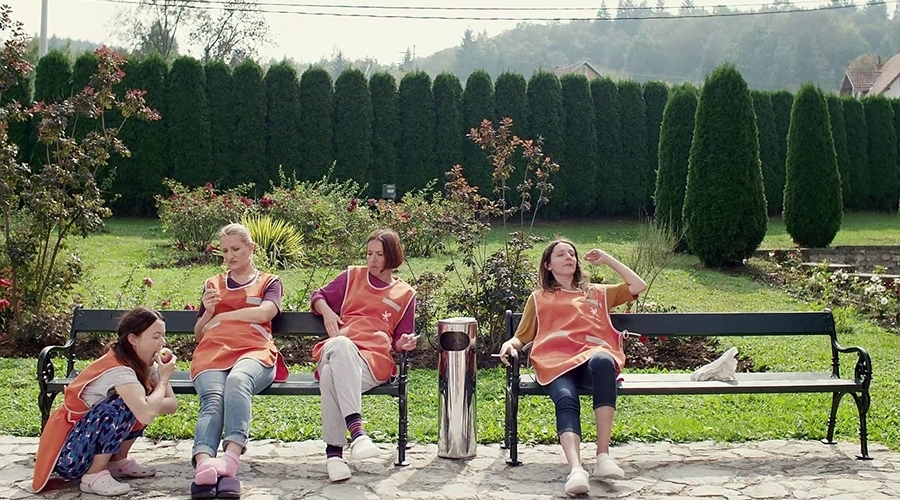
With these notes, Faruk Lončarević puts together his film by combining different scene-frames. In each of these paintings we are given certain information that gives us clues about what is happening and, at the same time, It takes us one step closer to the final resolution of what we can consider as the plot of the film.. In this case, It is worth highlighting the ability of the Bosnian director to manage the internal time of the scenes in an exercise that is pure cinematographic mathematics..
This game with time is perhaps the most powerful weapon in the film. Faruk Lončarević plays by regulating the expectations of a spectator who at all times is forced to anticipate what is going to happen. In fact, almost from the first moment, knows or intuits what is going to happen. But it doesn't matter. That is the secret that Lončarević keeps, the fact that, somehow, one knows. You know and, at the same time, you don't want to know. That is the biggest obstacle. When what you are already waiting for happens, emotions shake our guts. Pain, rabia, impotence, frustration. Somehow, we want to intervene in the action and stop it, thing that, Of course, it's impossible. This is the effectiveness of the artifact we are facing.
Faruk Lončarević takes his time in order to achieve the greatest possible naturalness. That pushes us to reflect on everyday life.. It's more, We could say that this event is everyday or happens in reality and here the film questions or intercedes in the mechanisms of representation. If fiction, generally, It tries to extract that truth hidden in reality from that artificial representation, making us believe that what is false is true., here we try to capture reality itself. That symbiosis with reality, makes the monster we see on screen even more monstrous, enhancing what the director wants to be revealed to the viewer.
in this game, the complicity of actors who are deprived of conventional tools is necessary, Well, it's not just the dialogues and actions that count., but that space between actions or phrases (written or improvised, we don't know). are they, The actors, those who create those spaces and build the cadence of the scenes, putting the end point of each of them and marking the step towards the next.
And at the bottom of all this, is found, definitely, Haneke. Maybe the difference is that, while in the Austrian cinema, the facts (violent) They are a tool to lead the viewer against their own securities., What is relevant here is the fact itself. Haneke throws the viewer against his own contradictions. Faruk Lončarević is on much safer ground at all times. And this may be the film's biggest weakness.. TRUE, That fact cannot but move us., scandalize us, even. It is difficult to understand that anyone would enjoy what is shown to us on the screen. However, when the tape ends, one wonders where the director is pushing us. After the resolution of the plot, we feel relieved and sigh: “thank goodness, "There is justice in the world.". Something Haneke would never have done. G.LEON