The life after
Monday 24. Babel Room 4. 18h.
Mars 25. Babel Room 4. 20.30h.
Nostalgia
Monday 24. Babel Room 4. 22h
Friday 28. Babel Room 1. 20.30h
Fourth session already, y, with that, We cross the halfway point of the Official Section programming in competition for this edition of La Mostra.
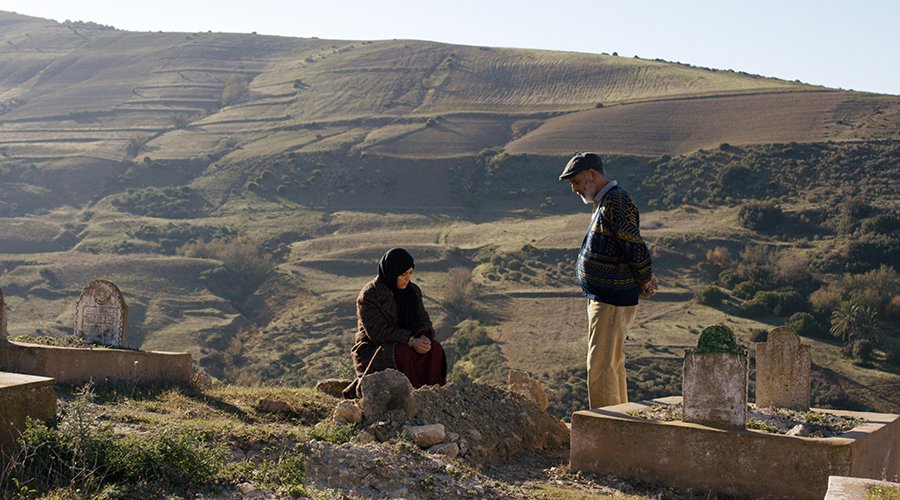
The day started with the screening of the Algerian film The life after by director Anis Djaad. The film places us in a small town where Hadjer lives. y Djamil, mother and son respectively. When this story begins, The recent death of their husband and father has left them unprotected. Djamil works in the field, while his mother works as an employee in the cleaning service of the local town hall. One day, the group of day laborers of which Djamil is a part finds the body of a town resident hanging from a tree. has committed suicide. The event makes a strong impression on Djamil, who quickly returns home. Warned of what happened, Hadjer asks his boss for permission to leave work early. To address this issue, her boss makes her go to his office. And here the misunderstanding occurs. For no one knows what pirouette (informers are always anonymous), The idea begins to spread through the town that the mother has had relations with the municipal official. Efforts to deny the rumor are fruitless and Hadjer's reputation is called into question.. Such is the harassment by the town's residents, that mother and son are forced to abandon him. Begin, So, for both, a real ordeal.
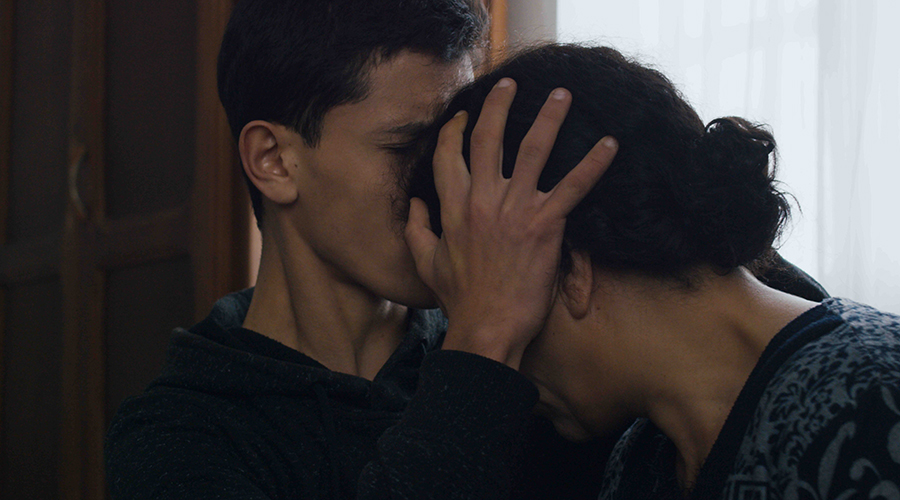
In a way, The life after It is a job that has many elements of connection with Vera dreams of the sea, the Kosovo film that we saw the previous day. Both films share a protagonist: a woman who, before the loss of husband, is helpless, economically and physically. like there, Hadjer must also take care of his son, which will bring you quite a few problems. How it happened to Vera, the protagonist of Anis Djaad's film carries the survival of her offspring on her shoulders, the fruit of her womb, putting your survival before your own well-being. Hadjer, like Vera, must fight, besides, In a world of men who will try, one way or another, to take advantage of her. Husband dead, It remains a free rental property and everyone feels they have the right to possess it.. The custom again, Culture, mark the limits and barriers, although here the film shows some contradictions. Fleeing from the doom that pursues them, Our protagonist goes to the city where she is welcomed by a friend who provides her with accommodation.. The relationship of this new female character with her husband, it's different. He is a man without a job who is always dealing and lives off his wife.. However, Contrary to what you might think, here she is the one who calls the shots. A small contradiction that weighs on the drawing of characters and undermines a certain plausibility of the plot. In the end, We also find the search for that father figure who replaces the absent one and provides the necessary protection... or maybe not..
Y, at the bottom, as usual, the decadent reality of a corrupt country, Algeria, moral, politically and culturally. A country that is bleeding, unable to stick his head out and offer the new generations a way out, a future. All possibilities tested, only a dream remains: Europa, Spain. One last jump in that endless flight.
From the Cannes festival and with its brand new candidacy for the Oscars for Italy, arrived in Valencia, Nostalgia, by director Mario Martone. Martone's film tells the story of Felice, a middle-aged man who returns to his native Naples to visit his mother for the last time after 40 years of absence. But the reason for this sudden visit is another: Felice wants to be accountable for her past. During his youth, Felice was a boy like any of the young people that Father Luigi, responsible for the local parish of the Sanità neighborhood where he grew up, try to get out of the clutches of the local mafia. An event that occurred then with Oreste, your best friend, ends in tragedy. As a result of this event, Felice fled her country and rebuilt her life. your friend, however, He became one of the most dangerous mafia bosses. But Felice is determined to meet him again., resolve debts and recover the intimacy that once united them.
Con Nostalgia, Mario Martone returns to the Naples of his childhood and part of his filmography to do an exercise that tries to play with the emotional to involve the viewer. After all, we all have or have had a mother, we all had our own youth. Felice's mother and youth blend in with the audience's own memories in the room in a sentimental give and take that drags the film along in its first half. (almost mathematical).
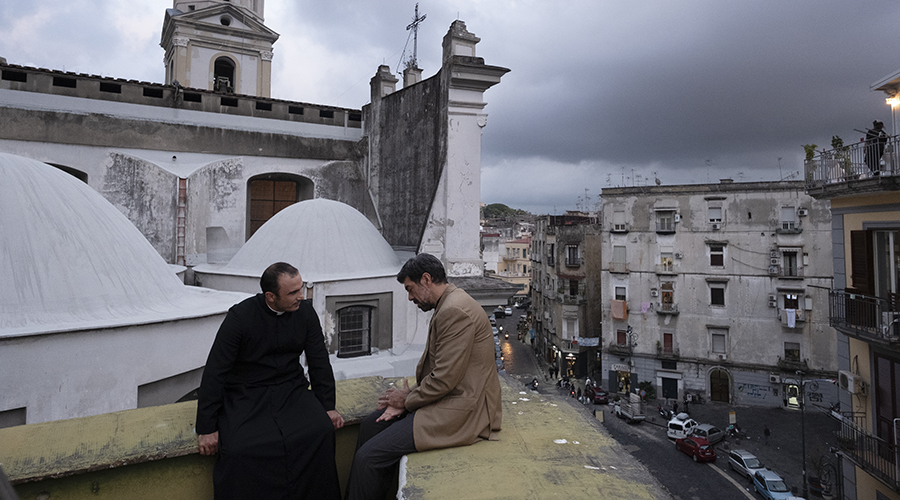
The second part, however, focuses on the possibility of that possible encounter, dramatic, between the two old friends. Against the warnings of the priest and the neighbors of the neighborhood where he grew up, against the warnings that Oreste himself sends him, Felice will try to find him by all means. In your comings and goings, Felice serves as cicerone of a world, again, in permanent moral and physical decline, and where the forces of evil operate freely. Against all this tragic landscape, if he raises the figure of the healer, single point of color in such a gray context.
Martone's film focuses much of its attention on this geographical and human description of the neighborhood., of its streets, of its decaying dilapidated buildings, almost in ruins, but, above all, of a human landscape for which the director feels sincere love. In this sense, we find the scene in which Father Luigi takes Felice on a tour of the neighborhood. Luigi wants to take advantage of his new friend's visit to send the message that he can get out of misery. For Marlone, under physical ruin, there is a human landscape of great value. The family gathering around the living room table, a glass of good wine, A hearty meal and a good conversation are the values of life and the greatest potential against fatality. At the same time, Martone pushes us to reflect on the traps of that nostalgia that gives the film its title., whose outcome is predictable for anyone who understands how the rules of melodrama work. Yes ok, it's true too, that there may be no other way out. G. LEÓN