
Vera dreams of the sea
Domingo 23. Babel Room 4. 18h.
Monday 24. Babel Room 3. 22.30h.
Wolf and dog
Domingo 23. Babel Room 1. 20h. With the presence of the director, Claudia Varejão
Wednesday 26. Babel Room 1. 20.30h.
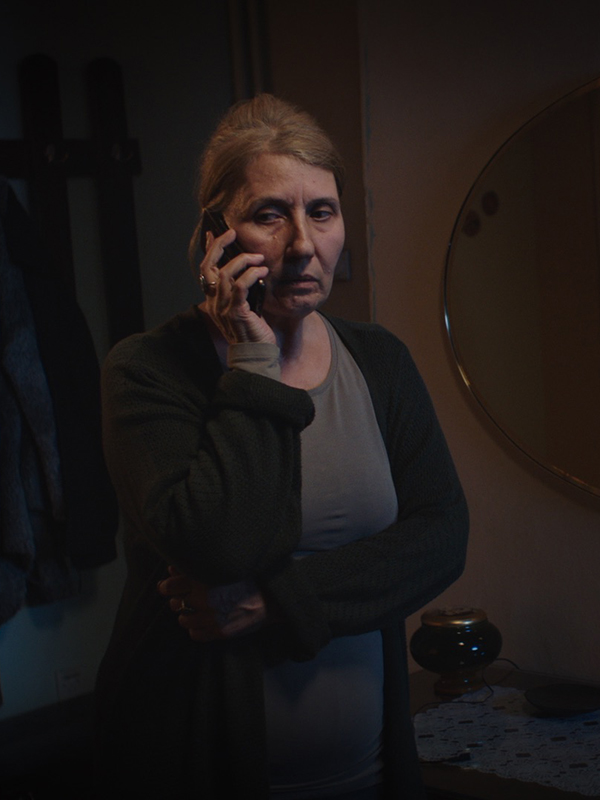
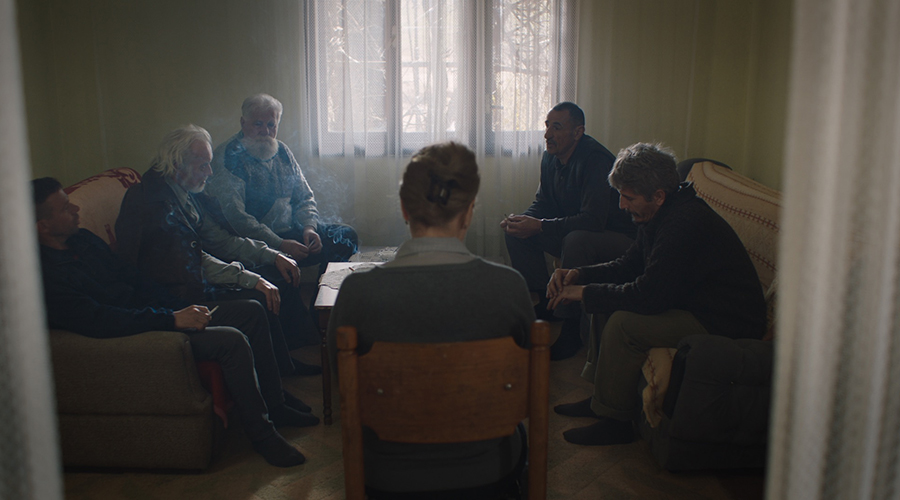
Vera dreams of the sea opened the third screening session of the official competition section of the 37th edition of the Mostra de Valencia Cinema del Mediterrani. The tape, of Kosovo nationality (among other producing countries) tells the story of a woman, Vera, who is already on her way to old age and who must face the sudden suicide of her husband, a judge retired from the profession. Vera is a tough woman who works as a sign interpreter for deaf and mute people or as a translator for television.. But his strength of character is crushed when he must face an unexpected event.. After the death of her husband, Vera tries to manage the inheritance of a house that her husband owned in her hometown. Everything seems in order until her husband's cousin claims ownership of the home under the deceased's supposed promise of having given it to him while he was alive.. In the absence of evidence of this, Vera refuses to sign the corresponding papers. The pressure received from family members, townspeople and, finally, some dark interests, They will put her in a difficult situation.
“Vera dreams of the sea was written by Doruntina Basha, screenwriter of the film and also a childhood friend of mine”, commented director Kaltrina Krasniqi regarding the origin of this project. “[Doruntine] He offered me to read the script for the first time in 2014, and the story moved me quite a bit because I couldn't remember the last time in my life that I had seen a movie in which a woman of that generation was the protagonist. And this is not just the case in the cinema.. You don't see that many women of that generation in literature., theater or cinema. And through this character, I saw the opportunity to tell a pretty deep story., not only about Kosovo, but also about economic disparities around the world”.
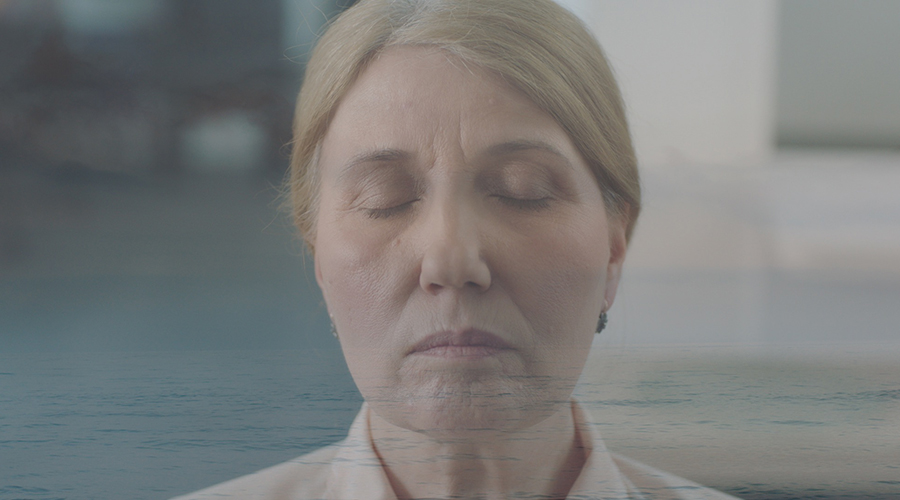
The movie, as expressed by a sign at the end of it, It is dedicated to the director's mother. This reference put the commentator on the trail of a possible biographical value of the story., and although Krasniqi herself denied this relationship, She did find similarities that linked her to her maternal experience and that she expanded, out of sympathy, to a whole generation. At the center of this recognition, There is the situation of a woman who was displaced from certain fundamental rights within Kosovo society.. “There are films that are always personal in one way or another. My mother divorced my father in the mid-1990s. 80. That was not a very popular decision., especially in that period. So, He fought for four years against my father in court for sharing the property and, [after that time] ended up defeated”, the director explained. “You have to understand that Kosovo women get the right to vote in 1941. And they obtain the right to equal ownership in 1945. What this tells us is that tradition and legislation do not go hand in hand.. Tradition is stubborn, so it needs to be pushed to change. In today's Kosovo, the issue of women and property has not changed since the time my mother divorced my father, does 30 years. At that level, when I dedicate this movie to my mom, “I actually dedicate this film to the women of that generation and their struggle.”
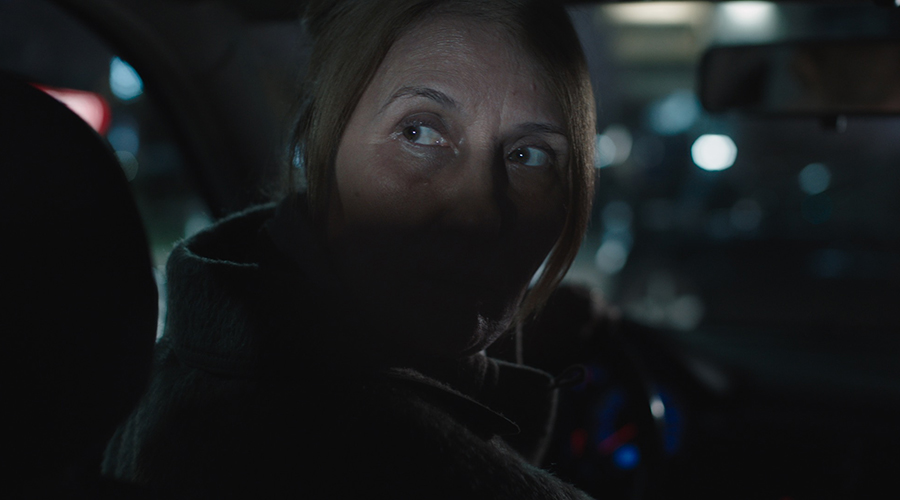
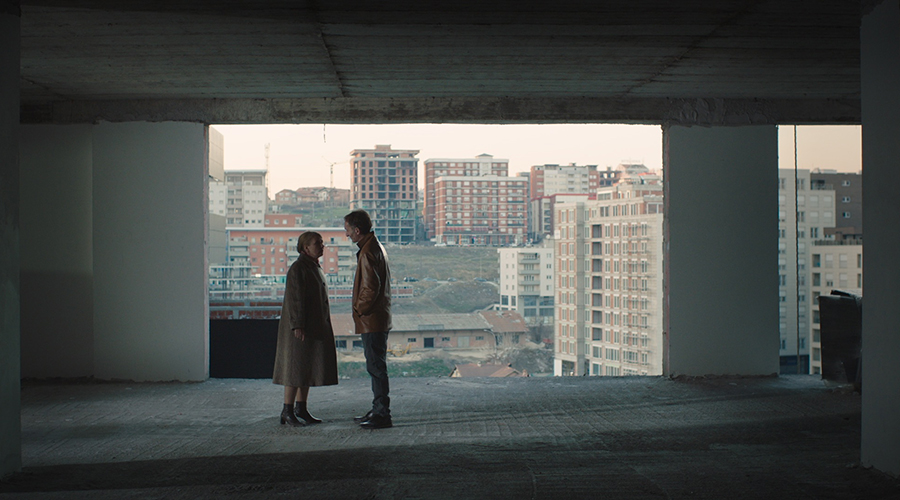
Vera's story, transcends, as the director herself suggests, the particular experience to look beyond, to a country that, throughout the 20th century and part of the 21st century, lives a process of constant decomposition and crisis. For Krasniqi, this reality paints a panorama of degradation, not only spiritual, cultural, also political and economic. Vera goes to the television station to report on the news of the day. In the news, The story profiles a society overwhelmed by speculation and cases of corruption. “In post-war Kosovo there had been a radical change in the social and political landscape. As a result, all those who have lived on the margins were isolated, especially women, but also people of color and LGBTQ communities. Every time a radical change occurs, like rebuilding a country after a war, “All these people become collateral damage.”, explanate. The social level is mixed, in this way, with the political. This is what Krasniqi herself told the media: “It is almost impossible for these two realities not to interact. They are part of each other, are intertwined in daily life. For me it was quite interesting to see that from the perspective of a woman who has lived through all the social changes. It must be understood that Vera is a woman who was born after World War II., at some point in the years 50. So, has lived through the Yugoslav communist period, then the radical changes of the Milosevic regime and, then, the war. In all those periods there was not a decade in which he could breathe and in which his reality was not intertwined with the political climate..
Just as it happens on the socio-political level, Vera dreams of the sea It is a film that is built on two levels, the narrative, that is to say, the facts that build the plot, and the metaphorical. In this second aspect, We highlight two elements that we share with the director. The first of them refers us to the character's work as an interpreter of signs, a skill that, as the movie tells, Vera has inherited from her mother, a woman without resources, Like her, a script decision that could not be coincidental. “Vera was always a sign language interpreter from the beginning of the script, that was his job. This was very moving for me because it implied that she was a person who interpreted the world in depth.", explicaba Kaltrina Krasniqi. “This is the only inheritance he has received from his mother. If you think about it, Women have been passing on certain skills to their children.. And when your mother teaches you something, "Hope it's a lesson for you to survive all your life.".
The other reference is the presence of that sea to which the title of the film refers and which appears throughout the film as Vera's dream.. “Kosovo is a landlocked country.. So, when we think of the sea, we do it in very romantic terms. The sea is a place of peace and tranquility. The film opens with a scene in which you feel that there is a future somewhere by the sea. But, with her husband's suicide, this sea becomes a nightmare. The sea is, in himself, a very old cinematographic element and has several interpretations. For me it was very strong regarding Vera, because she is a very contained woman. She is not loud, It is not aggressive. She is contained even in the confinement of her home. And the sight of the sea was a great element to dive deep into his psyche as the story unfolds.", the director sentenced.
Wolf and dog Portuguese Cláudia Varejão, was going to star in the second screening of the day. The film places us in the present day on the island of São Miguel, in the Azores archipelago. There we found Ana, a young woman who works as a tour operator for a local ferry service and lives with her brother and parents. From here, A series of situations develop that will reveal to us the process of Ana's awakening to her own sexuality., motivated by the arrival to the island of a friend who returned from Canada and with whom she has fallen in love. At the same time, we will meet Luis, a young queer who has to deal with his father's rejection because of his condition. The role of religion in a society apparently closed and subject to tradition, it will be, again, the origin of all the adaptation conflicts of these characters.
Perhaps the most interesting thing about this production is the way it adapts Varejão's story.. Wolf and dog It is a ribbon that is resolved in the form of those patchwork or blanket made up of several scraps.. If we look at one of those scraps or a piece of fabric, It will be difficult for us to guess what we are seeing. To escape this kaleidoscopic effect, we will have to withdraw and wait to be able to admire the complete frame of the composition. Cláudia Varejão has composed a narrative that moves away from cause-effect processes, to offer a series of situations, seemingly unconnected, that do not contain all the information by themselves, but a piece of it. We will have to complete the entire plot and add details to understand. It is not trivial, in this sense, the method that Varejão has used to compose his work. Coming from the realm of documentary, The Portuguese director turned to the island's own inhabitants to create the script for her story. In interviews with them, Varejão will compile and articulate the story of his own experiences. This results in an amalgamation of situations that, at times, they may seem disjointed, but what, little by little, they will make sense.
However, This working method has the disadvantage that it can remain a mere disguise for a shallower depth.. An interesting way, but that ends up imposing itself on the content. There is no doubt that Varejão has a powerful eye for creating evocative images. The game of compositions and, above all, the use of light, They stand out on the screen and at times seduce our spectators' gaze.. The game, however, history's credentials exposed, goes from evocative to a certain repetition, according to what we understand what the director wants to tell us or where she says we should set our sights. As explained in the session with the press, Varejão's intention focuses on showing the gray spaces in a patriarchal society controlled by religion and traditions. However, the result does not appeal to us in that sense. In Wolf and dog everything is black or white, light and darkness. Thus, that world of tradition always appears dark, opaque, It almost takes us back to the Middle Ages. On the other hand, the world of the queer community is bright and full of color. There are no nuances in history from one side or the other., which is missing to build a different story, a new point of view. On the contrary, Varejão's work focuses more on emphasizing, through the image, those irreconcilable differences. The performances of non-professional actors, they don't do, but to redound even more this separation. See, as an example, the clash that Luis has with his father in the procession. As a result of all this, composite, as we say, the pieces, looking deep, we find a story that we have seen many times. Somehow, We already know all this that he tells us. G.LEON