My Vesna:
Saturday 22/10. Babel Room 4. 16h.
Concerned citizen:
Saturday 22. Babel Room 4. 18.30h. With the presence of the director, If Haguel
Monday 24. Babel Room 4. 16h.
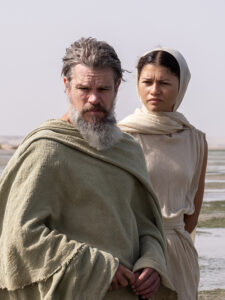
Second screening session of the Official Section in competition at the Mostra de Valencia. The day started with the dual nationality film, Slovenian and Australian, My Vesna, by director Sara Kern.
Based on the director's own immigration experience, The film presents the story of a family of Slovenian immigrant parents in Australia with two daughters already adapted to the new social and cultural reality of the new country. (unlike their daughters, the father barely knows how to speak english, while those behave like any other local). The moment the tape starts, the family has just suffered the loss of the mother. This event affects all the characters emotionally.. The father is an opaque and taciturn man. The eldest daughter, an adolescent flame, He writes poems in a notebook as a means of expressing his desire to escape the inevitable future that awaits him. (to be, herself, madre). While, Sara, the little daughter, He tries to maintain control and balance between his sister's rantings and trying to keep his father afloat.. Given this situation, the small frictions and clashes caused by the sadness that the absence of the mother figure brings to the characters and the emotional burden caused by the loss, not just physics, of horizons that all this implies, will spark a difficult coexistence between the three.

Shot in a square format, Perhaps the highlight of this film is how Sara Kern manages to create emotional environments. It's not so much what happens to the characters as that haze of psychological sadness that seems to envelop everything., which is giving us clues about what his film tells. It is very relevant, in that sense, the use of light in most sequences. Indoors, strong chiaroscuros predominate, at night, or the nuanced lights through the windows of the house, during the day. Abroad, We will perceive that this city in which we are located is almost always cloudy. The furniture, the clothes, the absence of luxuries, complete the picture. Exterior landscape as an image of the characters' interior landscape.
There is in My Vesna some issues that seem important. We found, So, the issue of the weight of immigration and the difficulties of adapting to a new environment. And here a curious paradox occurs, and it is that, while the father, subtracting the problem of losing his wife, seems better adapted or less demanding with the new environment, his eldest daughter, better established, as we said, on the cultural level, seems immersed in a state of constant dissatisfaction and existential emptiness that it does not know how to fill.. An emptiness that comes from the very culture with which it has blended in., which implies a veiled criticism of a certain modernity. Against the family structure, self-indulgent hedonism. In this sense, Also relevant is the relationship that Sara has with a girl whose house she goes to ask for some used clothes for the baby that is about to arrive.. Sara, that has nothing or almost nothing, She is grateful for anything she can get for her sister.. your friend, however, has it all. A whole that treats with disdain or capriciously, a lack of values that appeals to an equally emotional void that will develop throughout the film. The friendship between both girls, as well as the relationship with a new mother, will make both find their way in the reformulation of a new possible family, of new, stronger sentimental ties for everyone. In the end, We find in each other a group of souls that look for each other to fill that hole they have inside..
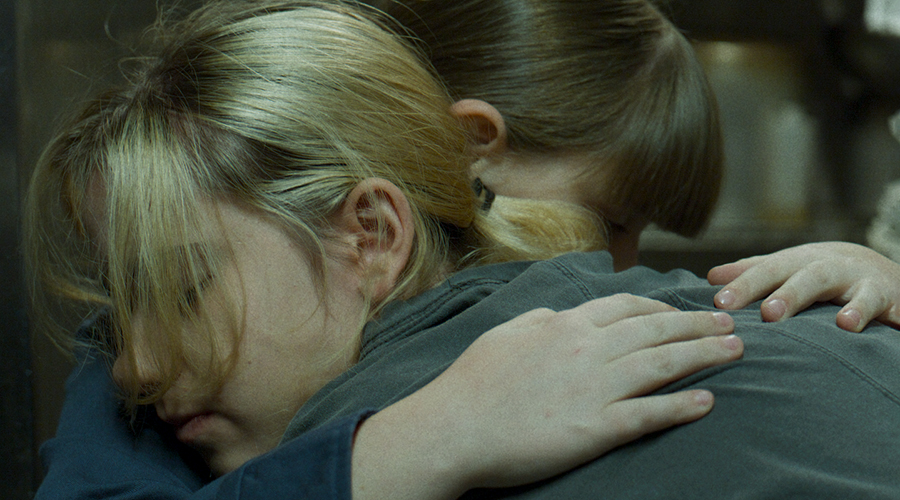
This could be, at least, one of the explanations of this movie. But there could be many more, not so much because we are facing a narrative open to interpretation, as well as the fact that the Australian director fails to focus the object of her work. We have a pregnant girl who, obviously, does not want to have the child. We have a father who, faced with the loneliness of the loss of his wife, secludes himself from others. We have a little girl, Sara, what, perhaps to compensate for the disappearance of his mother, decides to take his place in the family. It's just that, at once, We also have the impression that the film fails to link all these elements into the same common path., remaining as brushstrokes of stories, notes of what could have been and whose ultimate value escapes us. We know there is a drama, or various dramas, but we don't know what they involve us in. We can grieve the loss of a mother and the effect it has on a specific family., but beyond a certain respect, It does not concern us as spectators. We know the entrance to this world, but we can't find our exit door, where do you want to take us.

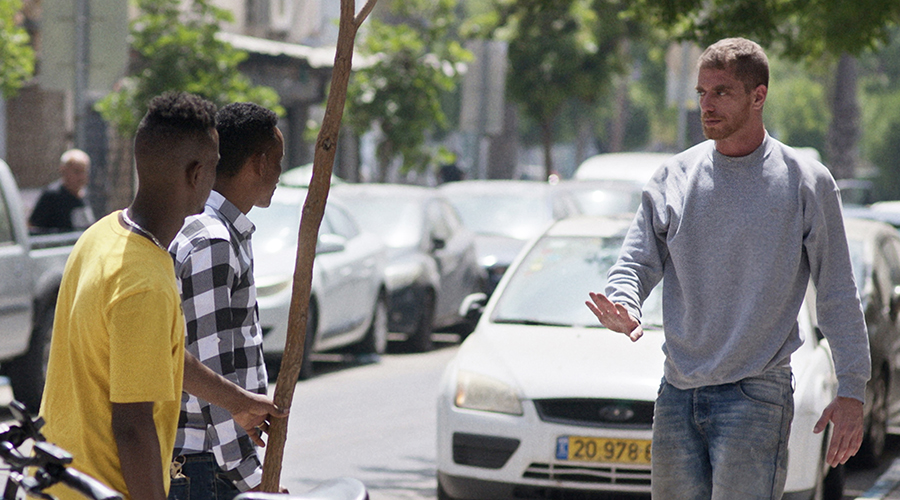
The Israeli film Concerned citizen completes the duo of passes of the official section of our second day of the festival. If Hagel, director, screenwriter and producer of the film introduces us to the world of Ben and Raz, an upper middle class gay couple who have settled in a nice apartment on the marginal outskirts of the city of Tel Aviv. From a certain point of view, the couple feels committed to certain political values of tolerance in cultural diversity, hence they have chosen that area to live, mostly immigrant and lower class. However, problems will arise soon. Ben makes a call to the police to report that some young black men are leaning on a small tree that he himself has planted on the sidewalk of his street.. Police intervention ends in physical brutality and, as it seems, with the death of one of those young people. Ben will have to bear this fact on his conscience.. The problem is that, of all this, his true identity emerges. An identity that, against his own speech, shows his contempt for racial and class minorities, and a political commitment that is nothing more than petty aesthetic snobbery.
Yes ok Concerned citizen does not propose great formal discoveries, We cannot but recognize the value of its director when it comes to putting under the magnifying glass the false political consciousness that dominates the supposedly progressive upper classes of his country. (and I would expand it to the rest of the West). A leap into the void that, in these times of political correctness and cancellation of ideological dissent, it involved a lot of problems, as he commented in a session with the press after the first screening of the film. Yet, the reception in the different countries that has occurred in various festivals around the world (the film came from the Berlin Panorama section), seemed to contradict a reaction, a priori, less favorable in a world in which contradicting certain consensuses, It is already a risky operation.

“I think the reaction has been different in the audiences, whether it was in Berlin or Italy or, here", explained Idan Hagel. “In Israel the reaction has been different, first because it is spoken in Hebrew and the film talks about a type of situations and values that are very specific to Israel. I think in Israel they have seen this as satire and feel that the film reflects their own values with humor. The film has allowed a debate to resonate about these own values. I'm a little surprised because I thought the movie would provoke an angrier reaction., but it hasn't been like that. I think people enjoyed the review of the movie., that the film deals with issues that they feel within them, but the ones they are not allowed to talk about. In Europe, I think the answer has emphasized more on issues like surrogacy, about gentrification, while in Israel the issue is about racism”, explanate.
The clues on which it puts us Concerned citizen They are very clear. To questions from the press, Hagel answered the following: “The fact that the main character is a liberal gay [understand, here, progressive] makes you feel like you belong to a tribe or a political group. Sometimes, When we are part of a political group we do not fully understand how we should feel or what we should think on certain occasions., and the protagonist reaches a point where he has to determine how he feels or what he thinks about this situation.. There is like a third eye of liberalism before which it sees itself. He doesn't like what he sees, but the person is still him. This is the conflict that exists between who we believe we are and how we react.. In my case, I don't think it's so much a criticism., like the portrait of a reflection on what reality is. There is a tragicomic element there.”
Whether its author wants it or not, the criticism is exposed in his story. Ben and Raz have decided to have a child through surrogacy.. It will be from here on in that they begin to question their decisions.. Do you really want your child to grow up in such a conflictive environment?? “There is another thing that fascinates me and it is the phenomenon of being gay in Israel. It is based on the assumption that being gay one is liberal. But in Israel, maybe in other places it is different, it's not so much like that. For example, I notice that there is a change in the gay community. In some cases, can be very right wing, not knowing their origins, his story, ignoring the struggles that have taken place for equality in this community. And I think this is something I talk about in a certain way in the film.", Hagel explained. “These rare mutations exist in the gay community in Israel because it is a society with deeply rooted family values.”. The gay community seeks normalization through a family itinerary. This struggle of the family is what has caused these changes among the community.”
But if you can boast about something Concerned citizen is to have achieved a high level of truthfulness about what he tells us. A script in accordance with the canon intervenes in this, but meticulous and precise, and the choice of actors who, somehow, They already correspond to the prototypes you want to portray. “On the one hand, films like Who's Afraid of Virginia Woolf o Eyes Wide Shut, where you work with real couples and give this feeling of privacy, intimacy between couples, the director explained about his choice of Shlomi Bertonov and Ariel Wolf, actors and couple in life, to represent its main characters. “The second reason is because I am a little lazy and I wanted a couple of actors who would bring this dose of reality to my work and I would save myself this work of giving realism to what we were doing.. I didn't want to spend my time explaining what intimacy was., privacy and that's why I wanted them to be a couple, I wanted it to be something that was already ready to eat., that it was the basis on which we would work on the story and the conflict. I didn't want to give anyone privacy lessons., “I wanted it to be something that felt realistic.”. Well said and done. G.LEON