UNTIL SUNDAY 23/10
CCCC. Museum, 2
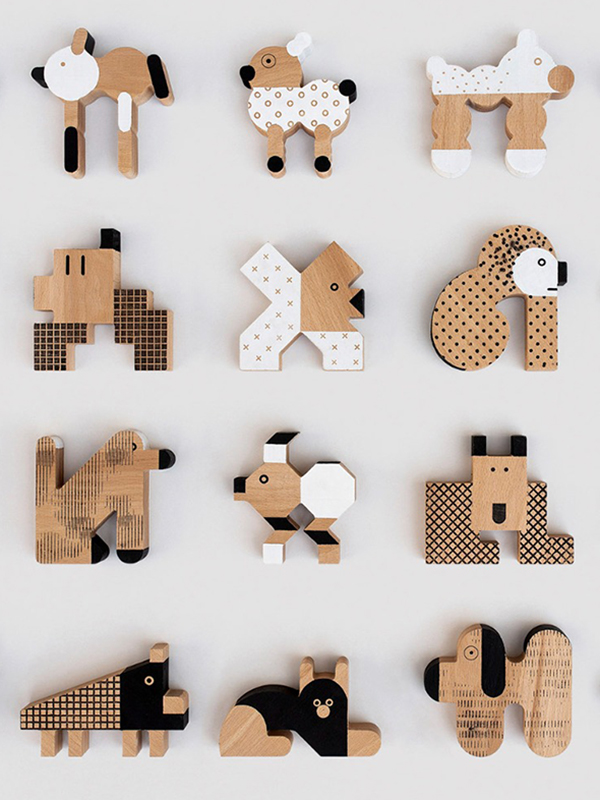
In the Carlos Pérez room. The exhibition could not occupy another room Play with design with which Animals invites us to enjoy the design applied to the game, to childhood and fun. In a new tribute to the great toy designer and collector who was Pérez, the first to let toys into the museum. Leading designers from all over the world have donated their works to be displayed on very playful modular pieces that are in tune with the theme of the exhibition.. Logically, these works cannot be touched, but Play with design It has been conceived as an invitation to play and to play you have to touch. Three games have been devised expressly so that the children (and whoever wants) mount, dismantle, tour, invent and fit, For example, a set of magnets designed by Milimbo that is inspired by one of the posters designed by Isidro Ferrer for the festival The little theater of Lausanne. The first part of the tour calls for nostalgia, brings together games from the fifties, sixties and seventies of an absolute modernity, heirs of the Arts and Crafts and the Bauhaus. Like the Playsacks of 1967 by South African Fredun Shapur (for the first time in Spain), a wonderful collection of animal costumes made with colorful paper bags. Or the Playplax modular toy (1966) by Patrick Rylands present in the permanent collection of the Victoria and Alberts Museum from London. O el ABC Animal (1968) who designed Cruz Novillo for the Pyrenean Match packs. Juanjo Oller de Milimbo recalled at a press conference that there is also ideology in the game and that in these, conceived more than half a century ago with the aim of lasting, made with noble materials, equality was promoted, responsibility and sharing. The second part of the tour is focused on contemporaneity and brings together finished pieces, models, prototypes and designs created in France, Holland or the United Kingdom by masters of international design who have cultivated scenic design illustration, he paper cut, ceramics, the graphic sign or the combinatorial game. Among them, several Spaniards such as the Isidro Ferrer National Design Award, Raquel Fanjul (Cachetejack), Héctor Serrano y Pep Carrion. An exhibition dedicated to the first creative exercise we humans practice, the game, in which touching is allowed. S.M.