
UNTIL SUNDAY 24/3
CARME CENTER. Museum, 2
Llorenç Barber believes that music must be more lifest in life than a staff, That you have to "leave the auditoriums for the auditors" and remove the music in the open so that the people enjoy it. The music that is made there is wonderful, But it's not wonderful, There is much more to discover and invent. According to him, Today work is very focused on the score, that has almost become the object and the end result; unfortunately, The stage has been poured into the background. Bad situation of starting, especially if you live in a country that despises music. What will die the dictator (1975) Until the Socialists arrived in power (1982), Barber recalls nostalgic a sweet transition in which it was allowed to experience and nail the paw, But things changed and all ended up being obstacles for those who wanted to play with electronic music, improvisation or minimalism. Spain has lost other ways to create, “We are heroes to stay out of the story”, stated the artist at a press conference, convinced that the avant -garde music that was made in the rest of the world would not have entered the country if he had not scheduled it. And it is that, Besides musician, philosopher and theoretical, Barber was an excellent programmer in launching the Ensems Festival of exhibition of current music and sounds, still active 45 editions after, which he directed only four years because he did not hold anymore (Barber dixit). The same year 1978 He created the mundane music workshop dedicated to offering musical concerts that they used as a raw material non -conventional sounds produced by water, the wind or the paper.
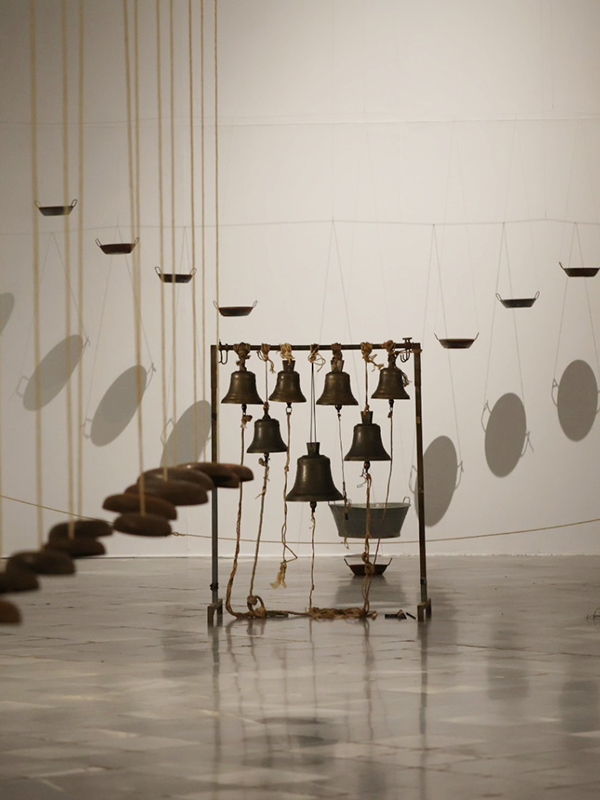
But, If something is known to the Aielo musician is for his concerts made with the "dong" of bells, some as illustrious as the Oviedo Wamba, The bell that is the most time in use around the world, more than eight hundred years. These concerts are not composed of accurate notes but of a kind of colored melody in which barber relates severe and sharp tones, Sounding whole cities sounding to the compass of their bell towers. This is what he christened as "multifocal music" to be produced from various sounds. Although the musician and instrument are the same, Music changes if space and viewers do. But Barber is much more than a bell concert, This is just a thread of the many that has developed to invent new ways of writing music. The relevance of the character and his career are unquestionable, but the difficulties of successfully raising a sample focused on sound art, too. In The construction of a multiple us The lifelong documentation is combined (Press collections, photographs, Posters of festivals and concerts, small works of visual poetry and music scores) with instrumental installations that the public can make sound. For example, and TAKELOKO made with oxidized pans, An organ that works with metal plates or a sambori with sound boxes inspired by a piece of seventies where sparrows created the melody when collecting bread crumbs thrown on the surface. A large row of floating structures in the form of an inverted gas chocolates that sound and swing when they are hit, A drummer made of traditional bronze bells and a composition of metal books of different size that hang at various heights so that large and children make them sound chickpea chickpeas. The first great retrospective dedicated to Llorenç Barber begins to save the debt of Valencia with this pioneering artist of sound art at national level. S.M.