FROM THURSDAY 29/9 ON SUNDAY 12/2
VAT. Guillem de Castro, 118
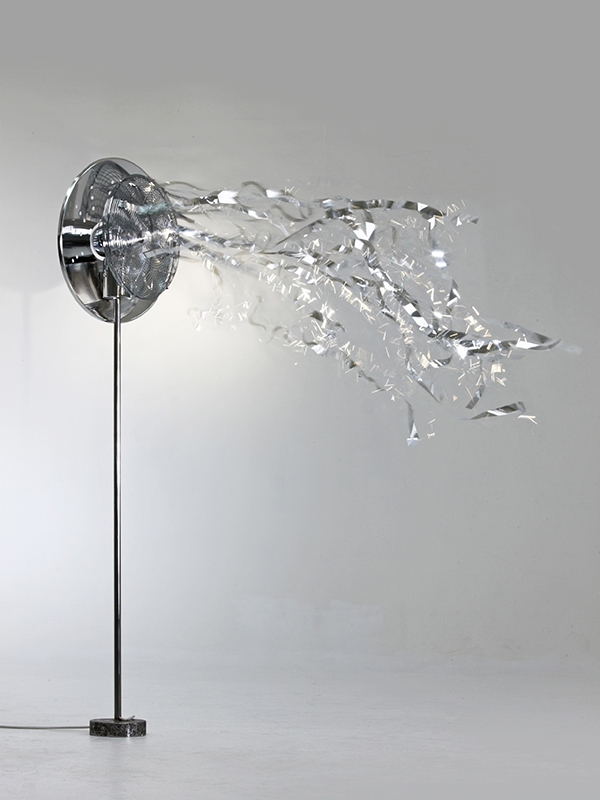
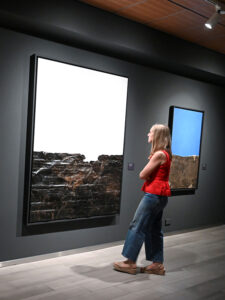
World War II ended, Europe is devastated and in a state of shock which will emerge little by little in the decade of 1950, when a series of artists based in Dusseldorf, Antwerp, Milan, Amsterdam, Paris or Zagreb will begin to move away from the prevailing expressionism from groups that seek to rethink art. A generation of artists who lived through the war as children and wanted to get away from the void by enlivening the spirit of the purest avant-garde.. Far from the void. ZERO and post-war art in Europe reviews the main movements that took place on the continent between 1957 y 1966, since the young German artists Heinz Mack and Otto Piene turned their work spaces into exhibition halls and promoted one-night exhibitions, las evening exhibitions; until they dissolve the magazine ZERO created to accompany the seventh of these samples. Collaboration between creators, public involvement, self-publishing, the figure of the artist as curator and organizer of exhibitions and events, The development of critical discourses and the management of aesthetic debates were the key contributions of artists whose work was overshadowed by the emergence of pop art in the mid-sixties and the acceleration with which artistic movements followed one another from then on.. They, however, They were avant-garde painting with fire, treating light as material, making the paint vibrate, introducing mechanical movement (kinetic art) and illusory (on art), advocating monochrome, automatism and seriality, and producing the first experiments in computer art. In addition to the aforementioned ZERO group from Düsseldorf (Heinz Mack, Otto Piene and Gunter Uecker), IVAM recovers the work of Piero Manzoni and Enrico Castellani (Milan), from the Dutch Nul group, of the Spanish Team 57 (Jorge Oteiza), the Jean Tinguely and Yves Klein. The first introduced movement in his mechanized sculptures and the second fascinated his contemporaries with the development of monochrome painting., one of the leitmotif that spread the most. The new IVAM exhibition reviews the main movements that took place in Europe between 1957 y 1966 taking the ZERO group as a reference, spearhead of other artists connected in international networks of complicity that gave rise to exhibitions, events, publications, new ideas and debates in the bustling decade of 1960. AU