
UNTIL MONDAY 13/4/2026, 7€
M. SCIENCES (CAC). Professor Lopez Piñero, 7
It seems that digital and immersive exhibitions are not a passing fad. We have had them in the Valencia Marina, at the Mercantile Academy, even, at the Bancaja Foundation, and permanently, at the “new” digital arts center Bombas Gens, which is dedicated exclusively to exploiting a genre designed for all audiences. not strange, so, that the Science Museum has chosen this format to celebrate its 25th anniversary, and he has done it around - to finish securing the shot - a world reference in art and science that has become quite a pop icon: Leonardo da Vinci. In collaboration with the Leonardo da Vinci Museum in Rome, the experience Leonardo da Vinci. 500 years of genius Fusiona Art, Science and technology on a journey that crosses the visionary ideas of the Renaissance genius.
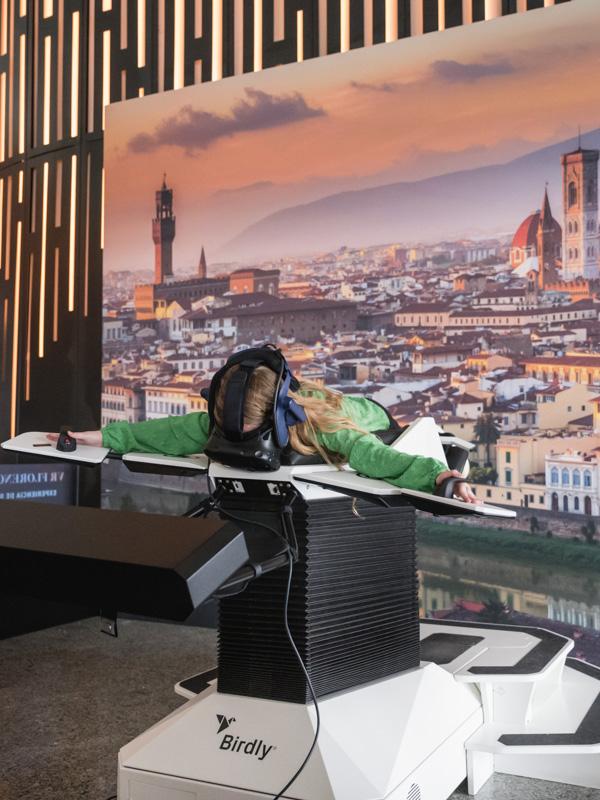
You will be able to live Leonardo's dream of flying like a bird, flying over Florence with virtual reality (+3,5€). The multisensory gallery will transport you to the streets of Florence, the canals of Venice and the grandeur of Milan, combining images and sounds of the Renaissance. You will also be able to decipher the mirror writing and the pages of the Leicester Codex (1504- 1506), a compilation of texts and drawings mainly dedicated to hydraulics and water movement, geology and astronomy. On the other hand, Leonardo envisioned the ideal city, he designed vehicles, innovative weapons and mechanisms, and did aviation studies with parachute prototypes, gliders and mechanical wings. The exhibition also explores his advances in the domain of water and light, with inventions that laid the foundations of modern science. In the artistic and anatomical field, the show takes you into the secrets of the Mona Lisa with an exact 360º replica that reveals its most hidden details. You will also find The Home of Vitrubi in the interactive area, an immersive installation that uses advanced scanning technology to explore Leonardo's obsession with capturing the symmetry and proportionality of the human body. Finally, thanks to the OrganKits project of the University of Murcia, you will be able to examine real organs and discover how some of his theories were not confirmed until the 21st century. An exhibition to entertain yourself discovering the legacy of a visionary who revolutionized science, l’enginyeria and l’art. AU