UNTIL SUNDAY 2/6
VAT. Guillem de Castro, 118
The IVAM once again invites an external curator to rummage through its collection to create a self-referential exhibition with which to draw chest, that ends ben unflat, since Guillem de Castro's museum was a pioneer in the creation of a photographic collection after concluding that photography was an artistic medium in its own right. Photography lived a complicated life for many years, aspiring to become an art with own identity, but without finishing believing it or finding external recognition. Its reproducibility took away that aura of a unique and original work, called into question the creative genius of the artist, and this, made things difficult. It has been many years since the IVAM awarded the art category to photography and bet on it, that's why it's quite a benchmark of the genre. He has already taken advantage of it by opening exhibitions around photomontage, urban photography or women photographers, I had to find him, so, a new approach that would move away from the worn-out avant-gardes (years 20-30) of which the museum has incredible funds. The new aspect chosen to study the photographs in the museum collection is their ability to be in the middle. Conceived for the headquarters of the IVAM in Alcoi, The photograph of the mig brings to the fore those photographs that, since the fifties, they do not operate as a standalone image, but as an instrument to arm new devices of artistic communication and generate new meanings, in the form of performance, pop art, art conceptual, postmodernism, body art, staged photography, new objectivity, documentary or digital image.
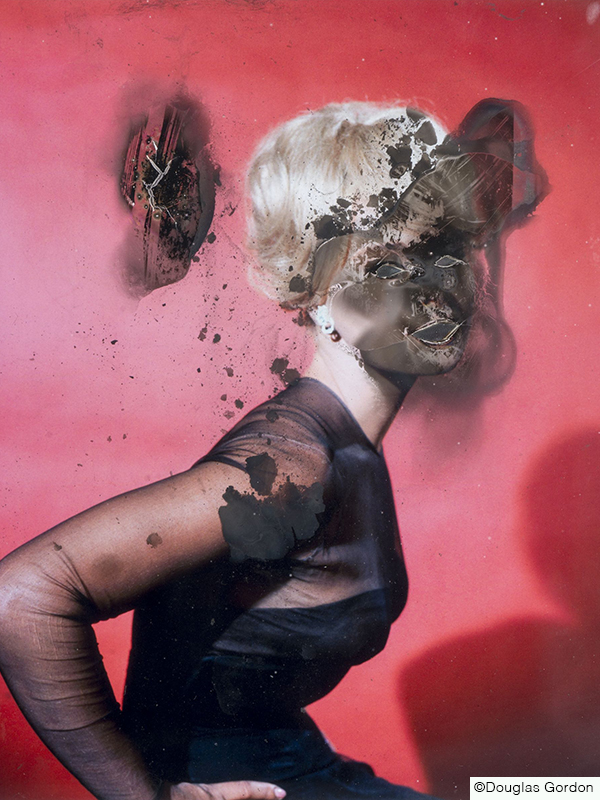
In this exhibition, the fundamental American photography headed by Robert Frank, that young Swiss photographer who, a few cartera, composed a bleak vision of the United States that did not fit well with the ideal of a prosperous country in full economic growth. In the following decade, Lee Friedlander constructed a new vision of American cities by framing storefront surfaces, rear-view mirrors or revolving doors that revealed their presence and that of other anonymous figures with the reflection. See here two examples of photography as a document. Pop artists such as Richard Hamilton or Robert Rauschenberg redefined the images of advertising and the media through the collage, pastiche or serigraphic reproduction. But in the IVAM exhibition you will find work by the colleague Sigmar Polke, more corrosive and linked to austere German pop, who took technically deficient photographs where he questioned the seductive image of women by showing the female body as a dark object of erotic desire in the work Weekend I-III. in parallel, conceptual art made photography a means of documenting places, processes and actions, an imprint that leaves a record of the artistic experience. This is the side he explored performer Valie Export, artist present in the exhibition dedicated to art popular that inaugurated the IVAM a few weeks ago, also built with own funds. The artists you will find are not necessarily photographers or, at least, not exclusively. John Baldessari cut out, decontextualizes and links still images from B-movies to resignify them, Laurie Simmons photographs domestic scenes made with toy furniture and dolls to question the educational models imposed on women and Douglas Gordon he removes the eyes and mouths from the portraits of famous actresses of the fifties and sixties such as Janet Leigh or Barbara Satnwyck and places in the empty specular backgrounds where the person who contemplates the image is reflected, causing a disturbing crossing of identities. These artists, and many more, they confirmed that the photograph was more than just an eyewitness account, it was a manufactured image that could be given many meanings, a mechanism with a narrative and conceptual dimension that could serve as a belt for ideological transmission. S.M.