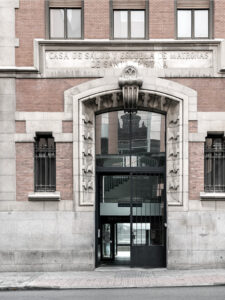

Fine Arts Museum. Saint Pius V, 9
Despite its theme, This exposure has been conceived far from the devotional character. Indeed, deals with the Virgin, But this, under the mantle, hide a gripping story of street fighting, machismo, marketing and national cohesion, the story of how a Sevillian brawl ended up becoming a state matter. In the 17th century, The Immaculate Conception was gaining great importance among believers who, like the franciscans, They defended that he was the most perfect being in the world because he did not suffer original sin. On the other side, The Dominicans affirmed that Christ was the only savior and that no one could overshadow him (and even less a woman!). The confrontation became violent in the streets of Seville and a great marketing campaign based on the visual arts began., the printing press and popular festivals to defend the perfection of Mary. The street controversy reached the Court and from there to the Holy See, who recognized his perfection in 1854, and during the process it became the main devotion of the Iberian Peninsula and a symbol that united all the kingdoms that made up the Hispanic monarchy. (others like the virgins of Pilar and the Desamparados, o San Isidro, They had strong geographical roots). Well then, In this exhibition, the Museum of Fine Arts deploys that marketing campaign that was very complex on a visual level because it defended something that was not very narrative and very abstract.: “perfection” and “purity”. It ended up generating its own iconography (Virgen Tota Phra) to represent Mary, a beautiful woman (we live in a platonic world), sola, and usually dressed in white and blue. With music from the time in the background and in the dark (only direct light on the paintings) we find jewelry by Juan Sariñena, Agustín Gasull and José Vergara, Jerônimo Jacinto Espinosa, author of The Immaculate Conception and the Juries of Valencia, one of the very few group portraits of the Spanish Baroque. Gonçal Peris (one of the main figures of Valencian Gothic painting), Francisco Pacheco (teacher and father-in-law of Velázquez), Francisco de Herrera the Elder, Antonio Palomino, Francisco de Zurbarán and Francisco Ribalta are other teachers who tell us the story of how the devotion to the Immaculate Conception of Mary was created in the 17th century.. S.M.