
UNTIL SUNDAY 1/9
F. BANCAJA. Pl. Tetouan, 23
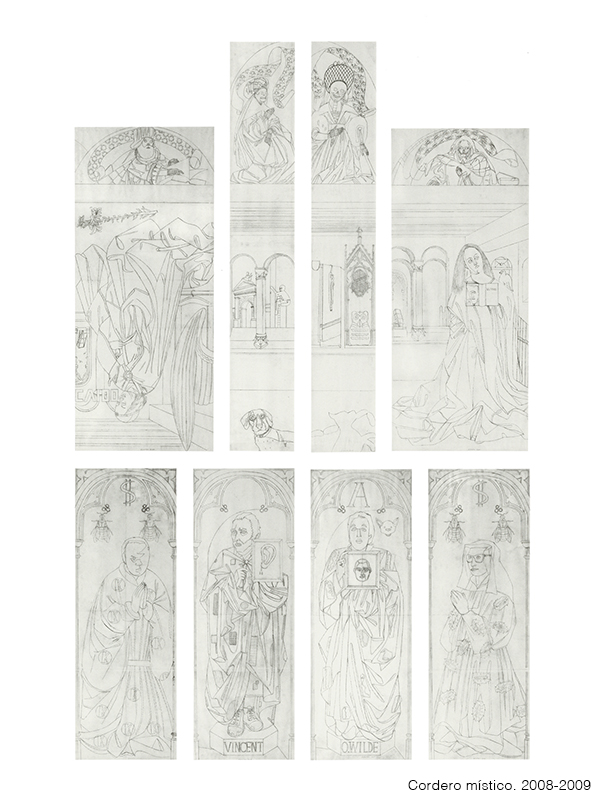
Eduardo Arroyo was a good draftsman, but his paintings are not a waste of technique (always subordinated to the story), but of imagination and political denunciation. The Bancaja Foundation brings together work produced by the Madrid artist between the sixties and 2018 (year of his death) to give a good account of their social and political concerns, his strong opposition to the Franco dictatorship, his forced exile to France and his passion for cinema (negro), the story, music and literature, where the figure of Oscar Wilde stands out. Subtle and acidic while explicit in his political positions, Arroyo developed a very unique iconography marked by boxers, chimney sweeps, bullfighters, calaveras, flamenco and flies within narrative and enigmatic large-format paintings. Made with flat and bright colors (yellow abounds), without depth and typical frames of cinema or comics that bring it closer to pop art, although he never felt pop. His work is part of the New Figuration that advocated a return to figurative painting after years of art dominated by abstraction.. He looks to the past (Goya, Velázquez…) to create your own present. For sample, los 21 drawings that recreate the panels of the mystical lamb by the Van Eyck brothers—for the first time in Valencia—where Adam and Eve are dressed as modern men and women (although they continue to cover themselves with the vine time), donors become Citizen Kane and Peggy Guggenheim; the lamb in flies (artist's identity); Saint John in Van Gogh and Oscar Wilde; and the judges and knights of the lower part of the altarpiece in dictators like Mobutu, Pinochet and, of course, Franco. Criticism of Francoism is a constant in the exhibition, oozes in the painting Different types of Spanish reactionary mustache or various aspects of the Various Activities Union (Beware of the irony of their titles) where he laughs at the masculine and authoritarian aesthetics of the post-Franco war, in the portrait of a miner's wife named Tina whose hair was shaved several times for rebelling against fascism (Sama of Langreo), or in the dwarf jester with pointed mustaches personifying his criticism of the artists who stayed in Spain dancing the water to the dictatorship (Portrait of the dwarf and the court jester). He had to go into exile and captured this imposed reality that marked his life in the painting The return from exile, exhibited in this exhibition—the first after his death in 2018—which closes with The ghost ship inspired by opera The Flying Dutchman by Richard Wagner. Francoism, exile and cultural concerns from the perspective of a self-taught and multidisciplinary artist who left us his biography in paintings, sculptures, drawings and collages ironic and enigmatic. S.M.