UNTIL SUNDAY 29/10
CAIXAFORUM. Eduardo Primo Yúfera, 1A
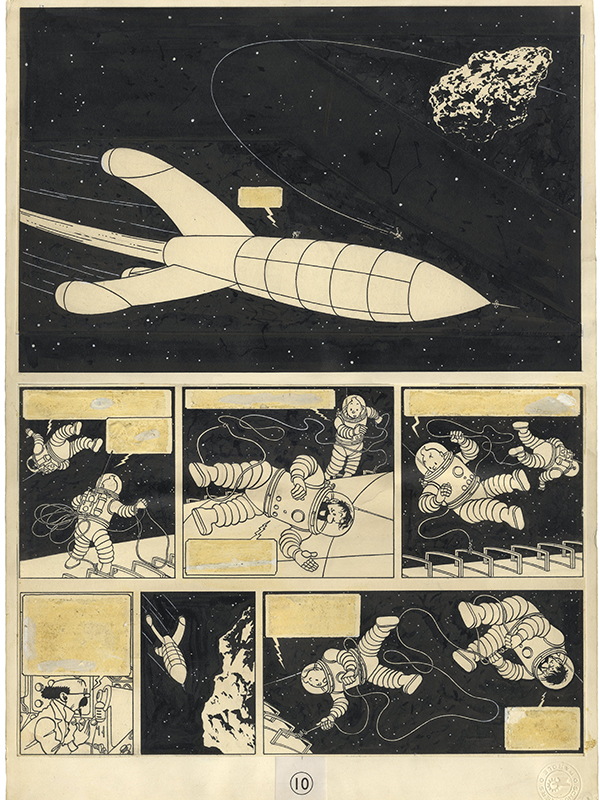
A few days after the inauguration of Comic. Dreams and history Francisco Ibáñez died, The father of Mortadelo and Filemón And of so many other characters for Spanish graphic history, Like the neighbors of that mythical building 13 From Rue Perbe that is recreated on a large scale in the sample. The Valencian Paco Roca leaves his mark with an self -referential diorama in which he himself, In front of your drawing table, Look back to recognize the work of the teachers who preceded him. And it is that, The Spanish, With his successful satirical magazines of infinite throws, It is one of the most prominent European traditions of the genre. The exhibition raises a chronological tour that starts with the appearance of the first balloons in the vignettes of the American and European press, When the dialogues of their characters began to be framed within floating snacks. The invention is attributed to The Yellow Kid (1895-98), of which you can see a playback and an original, very difficult to get because at that incipient time I had no value, The important thing for the authors was to be published and the public did not even consider that behind those drawings there was an artist who drew by hand. In the seventies the paradigm would change and the sale of originals that reach three million euros began. They splashed the sample great classics in the history of the comic as Little Nemo in Slumberland (1905) where Winsor McCay narrated every Sunday in New York Herald The dreams of a boy named Nemo before falling out of bed in the last vignette. O Kat (1913) by George Joseph Herriman, An author praised by Picasso himself. Until the twenties the comic had a clear humorous intention (hence its name), but realism and eagerness of adventures began to appear in characters such as Dick Tracy (1931), Betty Boop (1926) o Popeye (1929), that little they had children, or of Tarzan (1929) they Harold Foster, meticulous author who came to invest ninety hours in creating his weekly vignette of The brave prince (1937) And he had the boldness to make the character age with him. After World War II, comics for adults loaded with sex proliferated, gangsters and violence, But in the United States, It was expected, A puritano movement became strong that pointed to the editors the path of self -censorship (They invented comics code authority in 1954) And the superheroes began to wear muscle in their white adventures of impeccable moral. In the CaixaForum sample, one of the first pages of Spiderman (1962) Signed by Steve Ditko. Changing third, In the local section, Valencian Editorial characters parade like Roberto Alcázar and Pedrín (1940), The mask warrior (1944) o Pumby (1954), And some cover of the magazine is sneak TBO edited by Bruguera, the other great Spanish comic engine that has read the word "comic" and illustrious as Zipi and Zape (1948) o Superlópez (1973). The next section is dedicated to the Franco-Belgian comic with the ineffable Tintin at the head, from which an original has been brought despite the complicated matter: he 99% The Hergé Foundation treasures them. Of course, They also have their space Asterix y obelix of banquet with the bard managed in a corner or the Blueberry by Jean Giraud before being known as Moebius. In the Italo-Argentina section an original of Mafalda And the tour ends with digital comic, graphic soap opera Will Eisner, fanzines, comics undergroundby Robert Crumb, Gilbert Shelton o Charles Burns y un original de Calvin y Hobbes Bill Watson, an author who has always renegated the merchandising and that he refuses to sell originals, How are you very much gives your friends and alas! of the one who dares to sell them to make box. CaixaForum presents the comic as a witness of reality and as a creator of parallel illusions where two secret agents of the T.I.a some fools that reflected the professional tensions that were lived in postwar Spain and continued hooking the Spaniards generation after generation during generation during generation during generation more than sixty years. S.M.