UNTIL SUNDAY 30/3
CAIXAFORUM. Eduardo Primo Yúfera, 1A
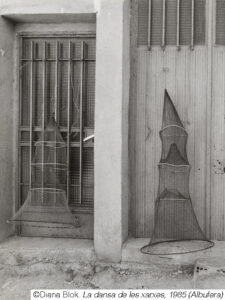
It has been difficult for us to understand that, as human beings, we are part of nature, that the division between nature and society does not make any sense. But Charles Darwin had already made it very clear in The origin of species there for him 1859 establishing the common ancestry of all living beings, including humans. A couple of decades later, zoologist Ernst Haeckel would pick up the gauntlet, strengthening the relationship between biology and art with his lithographs of jellyfish and protozoa.. His illustrations would influence movements such as arts and crafts in england, he Art Nouveau In France, he Art Nouveau in Germany and modernism in Spain, whose great representative, Antoni Gaudi, would have been inspired by Haechel's marine organisms for the architectural details of arches and balustrades. The avant-garde movements, supporters of the maxim form follows function, They opposed ornamental aestheticization and that was where the enthusiasm for the biological universe ended.. until in 1924, with the emergence of the surrealist movement, the forms emerging from nature were imposed again. That's where the exhibition gains strength. Art and nature made in collaboration between Caixaforum and the Pompidou Center, with works from the 20th century from all artistic disciplines (paint, sculpture, photograph, video and design) that remind us that the fascination with the forms of nature is as old as art.
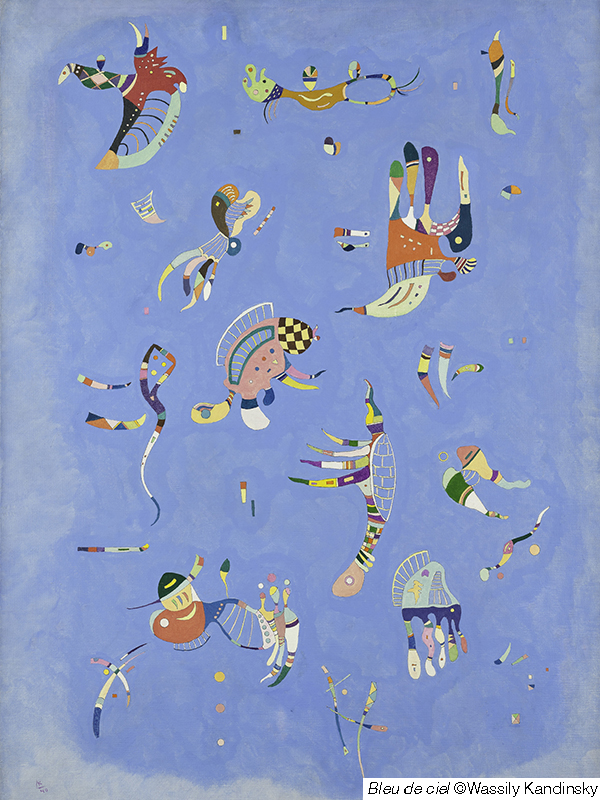
The surrealists collected all kinds of insects to observe them live and were especially fascinated by praying mantises.. we see it, For example, in bronze sculpture Woman with throat slit (Woman slit throat, 1928) where Alberto Giacometti reflects his misogynistic fears: The woman with her throat cut, equated to a handful, she is willing to devour the male, symbolizing a dangerous trap for male desire. Giacometti's angular and threatening forms contrast with the roundness and sensuality of the white plaster sculptures of organic shapes of Jean Arp. These evoke at the same time the conception, growth and metamorphosis, processes that govern the world of living beings. Arp, Joan Miró and Alexander Calder will be the maximum representatives of this organic trend that emerges, at once, of surrealism and abstract currents. But they also metamorphose the human body Salvador Dali with their ass men or Pablo Picasso with their flower women, present in the sample. O Vassily Kandinsky, who introduces forms inspired by nature in abstract works such as Sky blue (sky blue, 1940).
Well into the decade of 1960 will go one step further, Nature stops being a model of inspiration and becomes a source of creation. Enter the scene land art, that intervenes in the same land, often on a monumental scale, so that an aerial view is required to understand the entire work. It is the case of Spiral breakwater (1970) of Robert Smithson in the Great Salt Lake of Utah for which five thousand tons of black basalt were moved. It is a moving sculpture subjected since then to the rigors of nature and at Caixaforum you can see a film in which Smithson gives voice to the story of the construction of the work and records himself traveling through the spiral. At this time it also appears, from Italy, art povera, that uses natural elements such as branches, feathers, leaves, stone and coal to create humble and poetic works. As an example, Tree (1973) of Giuseppe Penone. From a smooth, rectangular block of wood, Penone sculpts the shape of a young bush that seems to emerge from the material naturally, as if stripped of its shell.
Hoy, Designers and architects are interested in new biomaterials from biological organisms that have the ability to react to changes in the environment and have developed an ecological awareness that was unthinkable a few decades ago.. For example Neri Oxman, which is inspired by natural ecosystems to create biomaterials that can be produced on an industrial scale and leave no waste, if not they biodegrade. In Caixaforum his Stalasso (2010), a piece made of prismatic structures. Many contemporary plastic artists are also showing their environmental concern in their works., as Cristiana de Marchi, who displays letters with very illustrative stamps addressed to world leaders expressing different environmental concerns; o Tetsumi Kudo, that in Your chrysalis portrait in the cocoon (1967) represents the human as a cybernetic monster inside a contaminated and toxic plastic cocoon that offers no protection. This is how we are, No protection, facing a nature run amok due to climate change that is not going to have mercy on those beings called humans who are not taking care of it as if it were their home. S.M.