
OF SATURDAY 11/10 ON SUNDAY 2/11
F. CHIRIVELLA SORIANO. Valeriola, 13
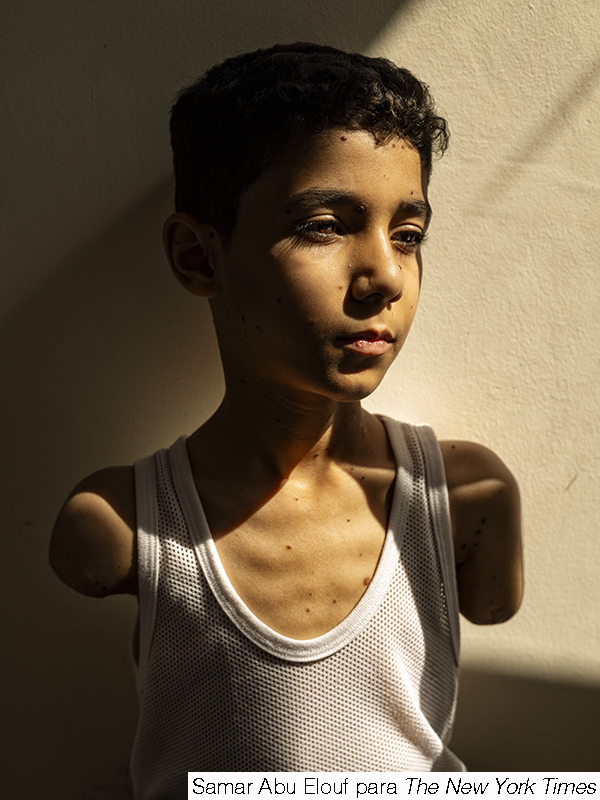
like last year, The winning image of the most important photojournalism contest in the world tells us about death and mutilation in Gaza, derived from the genocide that is being perpetrated, with light and stenographers, Netanyahu's Zionist government. If last year the World Press Photo (WPP) awarded the snapshot of Inas Abu Maamar hugging, heartbroken, the shroud of his five-year-old niece killed in a bombing over Khan Yunis, this year Mahmoud Ajjour stands out, A nine -year -old boy to which the Israeli army has left without arms. Between strong light contrasts, poses serenely, sad and dejected, but with all the dignity that fits in his small body.
Last year, When this exhibition with the best images of the WPP arrived in Valencia, there was talk of 41.000 Palestinians killed during the massacre; today they are 70.000, although the UN rapporteur for Palestine suspects that the figure may be higher. What is already a proven fact is that the Gaza Strip has the largest number of amputees. per capita from all over the world. The author of the winning image, Gazan photojournalist Samar Abu Elouf, was evacuated from the Palestinian territories in December 2024 and lives in the same Doha residential complex as Mahmoud. There he has dedicated himself to documenting the reality of the few seriously injured Gazans who have managed to leave to receive medical treatment..
Gaza attracts targets for obvious reasons, but there are other sadly recurring themes in the contest. Night Crossing tells us about the migration phenomenon, concretely, freezes a scene in which a group of Chinese migrants warm themselves during a cold rainy night, after crossing the border that separates Mexico from the United States. Another fixed theme of the WPP exhibition is climate change. In Droughts in the Amazon, a young man brings food to his mother, who lives in a village that used to be reached by boat. Hoy, due to the brutal drought that plagues the Amazon, He has to walk two kilometers through a dry and desolate riverbed. They are three of the outstanding photographs of the exhibition that collects the best of a contest that changed three editions ago to try to shake off the colonialist stink.. He was criticized for the fact that local authors were usually supplanted by Western “envoys.”, so the organization decided to divide the contest by region with the aim of promoting diversity. In this edition, 42 of the winners are citizens of the region protagonist of the stories they represent. S.M.