
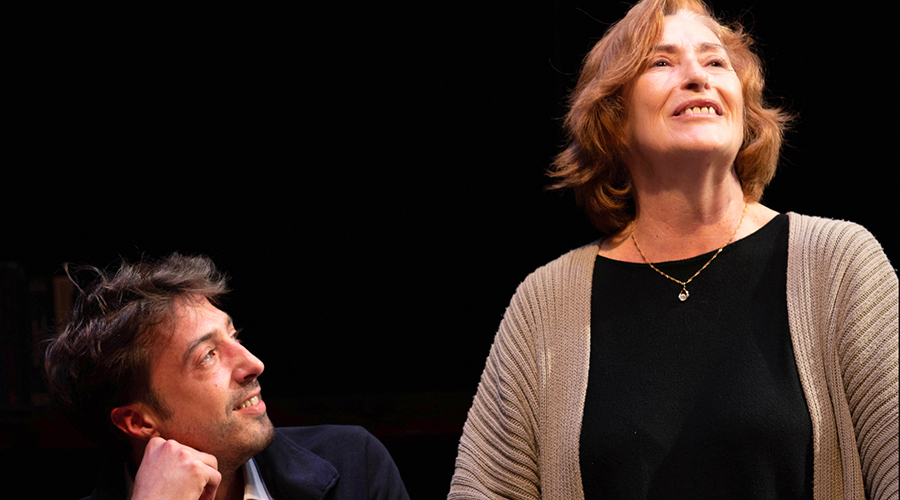
About to celebrate thirty years of experience, the Micalet Theater Company premiered its 39th own production at the end of April, The swallow, inspired by the homophobic attack at an LGBTQ+ bar in Orlando at the 2016 which left about fifty dead. Only two actors on stage, Bruno Tamarit and Pilar Almeria, actress above all, but also director, dubbing actress and founder of this leading company of Valencian theater made in Valencian which is betting this time on a play by Guillem Clua premiered in London in 2017 which already has more than 25 international productions.
to begin with, tell us what it's about The swallow.
It is the story between two people: a singing teacher, Amèlia, which is me, i Ramon, who is a little young, thirty years old, he comes to which I give him singing lessons. As the play goes on, it is discovered that they have something in common, which I won't say because I don't want to do spoiler. The swallow talk about love, of pain, of the blame, of many things that affect us as human beings. The contradiction, which is such a thing, tan, humana, is very present, as is love in all its aspects. It is a fantastic work in which the relationship between the two characters is basic, it is a head to head which has points of humor and tenderness, has vindictive points… It is a very work, but so much, very complete. And for two actors it's a gift.
The work is signed by Guillem Clua, National Culture Award 2022 in the Dramatic Literature category, author of the theatrical comedy Smiley that was an international phenomenon and showrunner of the series that Netflix made following it. What would you highlight about the Catalan author?? What are the strengths of the text of The swallow?
Clua is a well-known author, I don't have to advertise it because it's all done. He writes with supreme intelligence, does theatrical carpentry. He is a great connoisseur of what it is to write theater, creates very rich and varied characters. specifically, of the work of The swallow, I read the play and fell in love with how it was written. I knew they had done it but I haven't seen any assembly. The dramaturgy is perfect, it is built as if it were one thriller because you discover things very little by little. The audience is left feeling intelligent because they have discovered things that the character himself does not yet know. It is a very rich and very well constructed text, with a very lively language, a masterpiece indeed. I think that people will see the work with great pleasure because they will be able to laugh, you can cry, will be able to identify with the characters…
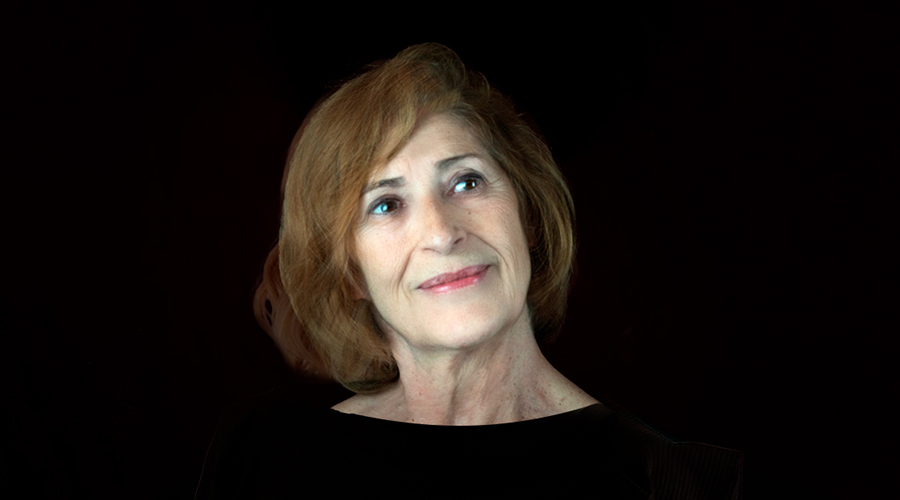
Your role in the work has been interpreted in Spanish and French by Carmen Maura and in Catalonia by Emma Vilarasau. You told me that you have not witnessed any montage of The swallow, but seeing how other actresses have approached the role you're about to play is helpful or can mess up the character creation process?
I wouldn't have cared at all to have seen them, but if I have to see them expressly to make the character I prefer not to see them. It is one thing that he had seen it and had a memory, But, really… No. Because in the creation of the characters there is always a point of view that is very personal and I am absolutely convinced that, to them 25 actresses who played the character of Amelia, we all contributed from our point of view. Because actors work with this sensitive material that is emotions, we work with a specific imaginary, and what counts in the end is the director. From all the material that, both Bruno and me, let's put on the stage, The director [John Peris] is what shapes what he wants to tell with that text. Often, with the same text, I'm not saying that different things are being told, but there are different points of view to tell the same story. Obviously, my imagination, my language, it has nothing to do with that of the latest Portuguese actress who just debuted. Although we start from very universal emotions, that is why a company in Portugal or Prague may be of interest to you, Always, Always, each one speaks from his culture, from his imagination and from the things he has experienced.
You have had Bruno Tamarit in four plays from Company Teatre Micalet (CTM). what do you like about him? Why did you choose it to interpret yours? partner in The swallow?
From the first work I did with him in [Nadal at home] The Cupiellos, how ugly of my fill, sometimes we discuss it. He has already done my son, he is tired of knowing, I made his sister! [laughs] in The three sisters i, We buy, in The swallow, we don't have a clear relationship. The fundamental thing about Bruno is his look on stage. I find myself in Bruno's eyes, it is very easy to work with him because he is an actor who always conveys truth, he is an actor who listens to you, he is a generous actor. It was Joan's idea, but when he told me he was thinking about Bruno, I thought: fantastic.
You are artistic director of the CTM together with Joan Peris. In these almost thirty years you have performed works by Chekhov, Sanchis Sinisterra, J.B. Priestley, Manuel Mills, Rodolf Sirera and Eduardo de Filippo, among many others. We only find four or five female authors in your repertoire, why?
Us, normally, we do universal repertoire and, unfortunately, the female incorporation is quite recent. We are not a company that only does contemporary theater and if we use authors from the past, unfortunately, at that time women did not write yet. But it is a great luck that women make dramatic literature today, because we contribute. I don't do it, I would like to, I am unable to write a work, but I see the women who are writing now and I think they have so many things to say… In The poison of the theater we made a bet: it was a story written for two men and we made it two women. Many works that are written for men in universal literature would be interchangeable for women, obviously, we are absolutely ready to play roles that in other times have been assigned to men.
right, I remember Chema Cardeña telling me in an interview that actors have no gender.
No, the truth is no [laughs].
What should a text have for you to pay attention to?
I think I answered you before. When we read this work specifically, it moved us. Sometimes I propose a work to Joan and sometimes it is he who proposes it to me, but since he is the one in charge, always says: "there must be something that moves me". And when he says that, he touches his belly. i mean, there are things that move you to tell them, and there are things that don't interest you, next movie. From his point of view as a director, or if I have proposed a work so that there is a character that I can play, there must always be something that moves us emotionally. It is very difficult to explain, but you read a text and say: "I want to do it". It is not intellectual, I couldn't define you exactly. Theater does not have to be a pedagogical thing from my point of view, it has to raise situations, worlds and other ways of living life so that the people who go to see this show can open their minds. But I don't want to tell anyone what to think. It is not the interest of the theater, the interest of the theater is to open people's minds so that they know that there are other worlds and other ways of living that are much more varied than theirs. This is the fundamental thing about theater, show worlds very different from yours and emotions very similar to yours even if the worlds are so different. If a theatrical performance doesn't make you feel, so it really doesn't have much interest.
Al 2021 you will put eleven characters on stage with The Three Sisters, in The swallow you are just two. Hard times are coming? You need to tighten your belt?
Yeah, clar, clar, obviously. There is a bad habit in changes of government, especially in culture, where people always want to influence. I read the same, which is also another thing, that culture doesn't usually matter too much to the people who rule. It should be shielded just as contracts are shielded. The Teatre, music, all that means opening people's souls and making them better. Culture makes people live better, help to live, has therapeutic effects, it is so important… And we are still not giving it importance. I think that in the countries that are a little more advanced they do know this and the culture is shielded and does not undergo these changes that we have, that every time there is a change in government there are changes in the ways of doing things. We think there is an uncertain future and, then, let's lower the sail a bit because we don't know too well what will happen. When governments change, it takes a while to get used to things, In Principi, they haven't painted too well. It has been almost a year since the change and we have not yet started, there is a lot of uncertainty and we don't know too well yet what will happen, then…
Councilor Vicente Barrera is talking about generating non-politicized programming. You have an idea what he means by that?
When he talks about "non-politicized" I don't know what he means, sincerely. Because all life is politics. Every time a person opened their mouth, ell, when you open your mouth, is doing politics. Tots, every time we give an opinion about the way to live, about people's chances of living, all this has a political meaning because politics is life. It is the way to make it possible for people to live better, or worse. It is impossible to be impartial, not when you do culture or a play, every time you open your mouth, somehow, you are issuing an opinion and that opinion has a point of view.
I heard you say in an interview that "culture is not just entertainment, it's identity". How the Micalet Theater helps to create identity?
It is very big words to say that "we create identity". Us, from the beginning, without any kind of militancy, without any fighting purpose, we did the works in Valencian. Sincerely, we did it in a natural way. The three people we made the company, Joan, Ximo and me, we came from towns, none of us was from Valencia: I came from Alcoi and Joan and Ximo from Castelló. then, for us, the only way to do theater was in our language. We found the problems later in Valencia, when we say: "what's going on, nobody speaks Valencian here?”. It felt like we were in Salamanca. Speaking in Valencian is my way of conveying my feelings because it is my mother tongue. In an interview, Ricardo Darín was asked why he didn't go to Hollywood and he said: besides I don't feel like it to interpret the that happens to drugs or to the mobster, aside from that, is that I want to express myself in the performance in my language, because for me loving in English is not the same as loving in Spanish. We have continued to do what we thought all our lives, and this consistency, this stubbornness, it has given us a very loyal audience that knows that if they come to the Micalet they will see shows, not only in Valencian, that too, but of artistic quality, with consistency, with the company seal. This pleases and comforts us, and although sometimes you say “ouch, per favor, I'm sick of starting again", it is the force that pushes us to continue.
Regarding the language, it is unquestionable that fiction written in Valencian helps to take root and spread the language, but standardization can make dialogues lose authenticity. Three philologists die when someone says "so", but it is a word that is used on the street. What do you think of this reflection?? It is more important to take care of the linguistic correctness than the naturalness of the dialogues?
This has a very clear trap. A sector of society says that the language should be written as it is spoken. I do not agree with this at all. What happens is that the standardization of our language is still in its infancy, then, make assertions of this type about our language, which is a minority language, it's a conflict. Us, from the beginning, we have tried to use the most popular expressions with linguistic correctness, because we intend to reach the viewer. Is more, we have come to invent levels of language that were not. In the second work we did in the company, editors spoke, upper class people, some aristocrats, and we made them speak with a very high level of Valencian, when that was absolutely unthinkable, because people with a high cultural level of Valencian society have no reason to have a very high level of Valencian. In the first work we did there were many expressions and phrases made from Valencian. In the pronunciation, we usually use "vore" instead of "see" because in the colloquial "vore" is correct. Our works, Always, Always, are written correctly. From time to time we consider each other: "if we say this word, no one will understand it", and many times we say: "let them learn one in this work". But that depends a lot on the work. In The Evil of Inishmaan parlàvem d’a rural environment and in the original work of Martin McDonagh hi there was some slang, then we made a superhuman effort for that version to reflect a way of speaking that anyone could recognize. We are very careful in how we do it, we try to make the language correct, at least colloquially. We are concerned that things are said well, but if we can use a word that brings people closer to the stage, we use it.
The concept of "freedom" is being used to question the presence of the Valencian in public. the freedom, for example, of parents to choose the language in which their children learn at school. How to counter-argue against such a powerful concept as "freedom"?
"freedom", that word so suffered. It's not about freedom. Parents do not have the freedom to make the study plan, no? Dic. They don't have the freedom to make the curriculum because they don't have the ability and that's something the teachers have to do. It is absurd to have an autonomous government, have an official language such as Valencian, and that no one knows how to use it afterwards. This on the one hand, but it is that, after, for children it is fantastic to learn Valencian because it gives them a bilingual ability that is already established in our culture. Knowing languages can do them no harm, quite the opposite. Whether it will be useful for them to know Valencian or not, it is already a political issue, it depends a lot on the people who are in charge, they will make it useful or not according to their convenience.
Xavi Castillo's political mockery is a classic of the Micalet Theatre, but when Rita's characters, he money junkie or the Moorish captain of Alcoi they stopped making headlines, they stopped having a theatrical pull. With the current political landscape, there is good reason for Pot de Plom to invent new characters?
You should ask Xavi that. What I can tell you is that Xavi Castillo is an actor like the top of a pine tree, I think he is our Dario Fo. We are very lucky to have a person who has such a brutal point of view. It's not easy. I see things and I get angry, and don't take me out of here. But asking them once gave me a catharsis, which is what he does on stage with the audience… Talk about things you've seen on TV and you've been impressed and at the moment you're laughing. This is such an important thing, what Xavi does is so important, and very difficult. He is a great actor and I think we are very lucky to have him and that he can do these collective catharsis sessions criticizing what is happening in our society.
The thirteenth of May 2025 the Micalet Theater Company thirty years ago. What are you planning to celebrate??
What are we?, of moment, said "you, we've been thirty years!”. We are people who are dedicated to making theater continuously, and this kind of events, which are important, we solve them at the last minute. We are not planning people, we will make a book, and we will make one, and we will make a… We do theater, which is an ephemeral thing. Vas, you do the work and it's over. Joan and I have discussed it, nothing will be left of us when we disappear because we have been too little to leave a book, I don't know, a trace of where we were. I think that what we have been able to do during these thirty years is what people have experienced, what has served him to be better, to realize something, for having enjoyed, for being angry… We are absolutely happy to have reached so many people during these thirty years. I still don't know too well what we are going to do… THEATER.