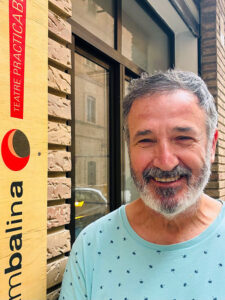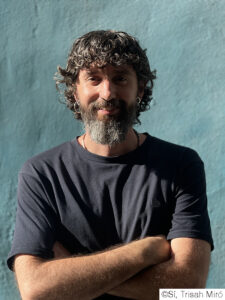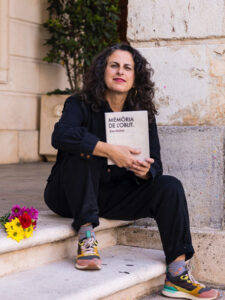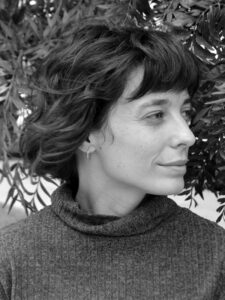

A town that suffers the process of depopulation. New inhabitants who, encouraged by a program launched by the city council, They arrive to start a new life. One or more mysteries to solve. The arrival of new neighbors will arouse the suspicion of some of the town's inhabitants to the same extent that it provokes the enthusiasm of others.. But the reaction of these and those does not respond exclusively to their cultural prejudices.. In the Valley, small fictitious town in the interior of the Valencian Community, everyone has their secrets. Round, among other spaces, in the town of Alfondeguilla, in Castellón, the valley, the series, It is the first fiction production of À punt. in the distribution, many familiar names and new ones that will soon be familiar to the public. Behind the controls of this ship that set sail on air last Sunday 22 of September, directors Pau Martínez meet (The kaseron, Reset, Innocent) and Ana Ramón Rubio (Without life). We spoke with them on the occasion of this premiere. GERARDO LEON
What is the origin of the series?
Ana Ramon: Bueno, to me it is that, when they called me, everything was already set up. It had been written by David Cansany, Quico López and Paco López Diago. The characters were already created, The whole plot was already set up...
Pau Martínez: It must be said that it is a project that comes from those that were presented to the High Advisory Council [of the Media Corporation], before the TV was on. The thing is that the original project was very different. I haven't read anything about the original project., but not on TV, when it started, Not even the production company was enthusiastic about the scripts and they turned it around. I think it was more customary, less with the stuff of mystery and thriller what is he wearing now.
What is it like to direct a series with four hands?? How have you organized yourself??
P:M: Bueno, Well, talking a lot in the previous. Then, on the shoot, We had little time to talk. She was in charge of the exteriors, there in Alfondeguilla, which is something that people have highlighted a lot. They really like landscapes.
A.R: Man, The truth is that the series breathes a lot when you leave. And with prior work. With plenty of rehearsals with the actors, trying to square each other.
P.M: Yeah, that in the creation of characters we were both, when the actor began to make the character his own. what did we have? Two or three weeks of rehearsals?
A.R.: Three, believe.
P.M.: We were with all the characters. With some we insist more, but we stayed two or three days, minimum. But at the level of the actors' tone there was a common prior work. Then, in the staging, we talk some things, but there was more freedom there.

When giving visual coherence to the product, What was the biggest difficulty you encountered??
P.M.: Well I wouldn't know what to say. I remember that, before starting, You came to me with some planning of some of the most important sequences. I gave you some advice, because maybe I have a little more experience in series, but there was no difficulty like that either...
A.R.: Bueno, at first, with the first plans, I was going with my proposal to Pau, and I immediately saw where things were going to go so that later it would be unified and it wouldn't seem like two series in the same episode.
P.M.: In my case, the most complicated thing is always the choirs. And I ate those because they were always in the town bar.. The choirs are when there are ten actors, and they are a sore head because I have to be thinking that he didn't leave me anything: the short shot of this one who speaks, the look, the reaction... And of course, with so little time... What the Americans, or in Madrid (no need to go that far), They have to do a sequence all day, we do it in three or four hours. and I guess, in your case, the cave thing, ¿no?
A.R.: Yeah, above all, the locations that were a little more complicated. The two different caves, The coves of Sant Josep and some caves that were in Alfondeguilla. It was the most complicated, especially on a physical level because, for anything, you had to walk twenty minutes. Or when we recorded in the caves we had to get on the boats. You waste a lot of time on logistics and in the end you don't have much time to shoot.

The series tells the conflicts between the inhabitants of a town before the arrival of new inhabitants. The eternal conflict between those inside and those outside. Are we so closed?
P.M.: I don't think it's something just from Valencia.. I think it happens all over the world.. There are people who find it more difficult to accept the stranger who comes from outside and there are people who handle it better. But I don't think it's just from Valencia.
A.R.: No, It is the general mistrust that we all have. Besides, here [in the series] It is a town that is becoming depopulated, So it is also normal that the arrival of new ones can raise some mistrust, because you always think “and this why will come here? Why would you come to a town where there is nothing? Why do you need us to give you a house and a job??"It always seems like they come running away from something or looking for something.".
One of the strongest bets of the series is the aesthetic part. How did you propose it?? Was it a bet of yours?? Was it a decision of the producer?
P.M.: When I came to the project (It was before talking to Ana, Then I talked to her about it), I told the producer: “mira, I don't want to do The white farmhouse”. With all due respect, I already did it at the time, it's very nice, But in five years things have changed a lot.. People are very accustomed to series of high quality at a formal level. Let's make a more cinematic roll. And it's something I talked about with the photo dire, Victor Entrecanales, and he loved the idea. So, we started talking about references. I passed him Happy Valley, he passed me Big Little lies. Y, above all, Big Little lies he proposed it for the use of light, because he wanted to make a game that Americans play a lot and that is, in any interior, the light from outside is very powerful, burned, and then, inside the lamps are lit. It is a way to illuminate with your own lamps and justify any light entry.. At the same time we wanted it not to be a light with which everything could be seen very well.. I said, If a character comes from the shadow and enters the light, so let it come into the light, but the entire decoration is not illuminated. Play with better lighting, riskier. In fact, Victor, based on those conversations we had had, A dossier was prepared with my contributions, yours and those of the producer (that he loved) and sent it to the TV. But if, the aesthetic line went a little there. Do something different from what Canal had done 9 and a little more similar to what is being done on platforms like Netflix or HBO.

Would you say that the Valencian public is “prepared” (I don't know if it's the right word), that already accepts this type of proposals.
P.M.: I think so.
A.R: Yeah.
P.M.: The thing is that now everyone has Netflix at home... What's more, the evolution of the series, Even those made in Madrid are going along that line. Telecinco is risking more, Antenna 3 you are risking more on a visual level. Then we can talk about the script., but on a visual level, series like The Money Heist o flour They are much riskier than what was done four years ago, For example.
A.R.: Yeah, the viewer now asks for that. I don't mean to say that he used to settle for anything., but right now he is much more demanding because he is receiving many more references from all over and he already has that habit. So, If you don't make a product that is somewhat powerful...
P.M.: Especially with a certain type of series. one daily, no. People who go to watch a soap opera every day do not expect this type of aesthetic. If you make a sitcom, Well neither. but here, that we were going to play with a tone of thriller and dramatic, I think it was playing.
Now that you mention the thriller I wanted to ask you about the tone. the valley It is a mix between soap opera with those elements of mystery that you mention. What difficulties did you encounter in finding the right tone??
P.M.: Well, talking about it with the actors, asking for naturalness. There are plots of certain characters, of the two older ladies, For example, or the character of Ximo, the traveling salesman, that have a more traditional point and less of thriller. But, working with them. They caught him right away and, although some plots may be more traditional, they don't come out excessively, ¿no?
A.R.: Yeah, I think that was the hardest part. When I started reading the scripts, what worried me most was finding the tone, precisely, because there were some plots that were much more thriller, but there were others that were more customary. But the plot also strengthened it a little because when people from outside came to town, each with its own mystery, both locals and outsiders, In the end this fusion of tones is quite justified.

Tell me about the scripts.
P.M.: I think that in general they have done a very good job.. But that's what I said before: lack of time. I think it is very important to dedicate enough time to the scripts before considering production.. And the first scripts were already there and were very well worked on.. As we started filming and the scripts arrived, the scriptwriters were “on their asses” and that is a risk. I particularly think there should be fewer characters because it weighs you down a lot.. It hinders you as a screenwriter when it comes to proposing plots for all the characters and ensuring that they all have importance and weight.. And then, When it comes to developing the characters with the actors it is complicated because, Since there are so many and they all have to appear in each chapter, there is no time to develop them. Now that I'm watching series like Mindhunter, The entire series is carried out by three characters and the rest are secondary characters practically in the chapter.. Of course, there the characters grow a lot. Oh well, I don't know if it's the TV that asks for it or the scriptwriters who are used to working like this because they are scriptwriters who come from The white farmhouse. But I would particularly bet on fewer characters. Not just for a second season, but also in other series.
the valley It is the first fiction series of À punt. How have you experienced the premiere and that “pressure” of being examined by the public??
A.R.: We feel very “historical”, TRUE? (laughter)
P.M.: Yeah (laughter) The truth is that it is something that I had not considered until the series premiered.. When we were filming I had the feeling of doing something that was not yet being done on TV., because there were many fiction projects approved at the time, but they had not started. I really realized when we launched. There I said, "guests, which is the first. We have gone down in history as the network's first fiction series. Well man, it's the host. But I'm telling you that during filming I didn't think about it..
A.R.: Besides, we didn't know when it was going to be broadcast because in the end that depends on television.. We didn't know if it was going to be released in September or if it was going to be kept in a drawer (laughter)

Since Canal was closed 9, There has been a long break in Valencian production. Now it's time to start that machinery again, What do you think has been the biggest obstacle??
P.M.: Do you know what happens? In reality, many of the people who are on the team came from Madrid and have not stopped working.. yes that, For example, it was difficult to find focusers. Here the camera operator worked with a focus puller, which is not common in series. That marks a point of quality, also. But apart from that, These are people who had not stopped and now continue working. Much of the team is now in the stranger [another series of Á punt] that started shortly after we finished, and they are people who are camera operators, of sound that, In fact, They don't stop and they work well. Here in Valencia there are good professionals. the valley It was the first fiction, but, since productions started, people started working continuously. In fact, I started a documentary series in August of last year and it was difficult for us to find cameras. And now that we are starting the second season, we are having a hard time finding a camera operator because everyone is working.. They are very valid people, very good.
A strong point of the series is the actors. Tell us about the distribution.
A.R.: Man, the casting is very, very good, in general. We have some actors who are practically lifelong like Marta Belenguer, Angel Figols, Jose Manuel Casany, Isabel Rocatti and Pilar Almeria who have been working for a long time and who are very good in the characters. Then there are some new discoveries like, For example, Jorge Motos, which has been one of the successes of the casting. O Nazareth Alacil, which also comes from Tell me and a couple of other series. There is a little bit of everything. I think that, in general, the entire cast is very good.
P.M.: Then there have been combinations that have worked very well. For example, Pilar Almeria with Óscar Ramos, What does your son do?, they have a naturalness, a brutal chemistry. And Pilar with Isabel Rocatti, who had not worked together and give off a naturalness that you believe everything.
A.R: Ximo Solano's trio, María Almudever and Isabel Rocatti, what is a family nucleus, also works very well.

As you have commented, the valley It is a very choral series, with many characters. What has been your biggest headache when coordinating such a large cast??
A.R.: Bueno, Pau, who was the one who made the choirs, has suffered much more from that..
P.M.: Each actor asks for his space and time and, Of course, when we go with these rhythms that we go, well sometimes, when an actor comes and asks you things, you start: a ver, where are we? Because of course, we are in chapter eight, but we are going to shoot a sequence in chapter five and you have to be very clear where the character is at.. He, as an actor, also, but sometimes they are lost. The scripts arrive a few days before and how sequences of different chapters are shot, keep that connection[continuity] emotional is one of the most complicated things.
During the presentation of the series, the position of free-to-air television with respect to new platforms was discussed.. How should free-to-air televisions face the new consumer habits??
P.M.: Bueno, I think that being very clear that there are people who are going to see it live and others who are going to see it on demand. You have to know how to live with that. The point is to be very clear that your consumer is not going to be alone on live television, but many people are going to go a la carte later. For example, I myself have become accustomed to watching series when I want and how I want.. Probably, I only watch one episode every night, but the one I want and at the time I want. I don't sit on the network to see when they broadcast it. I have already gotten used to that and most of the spectators, also. Not just young people. I see that my parents do it.
A.R.: Yeah, They have to know that they have to adapt to consumer habits and, but, the consumer will go somewhere else.
What do you think a regional television should have?, within this process, to attract the viewer?
P.M.: Well, it has to have elements that the viewer will not find on another network or on another platform.. First, in this case, the language. Normally, the viewer from Valencia will not watch another series that speaks in Valencian than on this channel.. And then differentiated plots, that they are also universal because the theme of the town that is left uninhabited serves elsewhere. Besides, They have to give a level and you have to offer something that people have the feeling that they could see it on a platform. Do not lower the level because it is autonomous. No, you have to give a high level, but with those plot elements, of the language, which you can only see in this chain.
A.R: Yeah, I think that's the key, that what you are going to find on À punt or any regional television is different from what you are going to find on any other television; but, it wouldn't make sense either. Both in fiction and in news programs or in programs such as documentaries..
P.M.: I'm thinking about the IB3 series [autonomous television of the Balearic Islands] who are now triumphing, in which one has the feeling that what happens to the protagonist could appear in an English series. But not, She is a Mallorcan girl, with its reality in Palma de Mallorca. What happens to you in your daily life can happen in London, but it's very personal, very from Palma de Mallorca, etc. And so, as a spectator, From the outside you see it and you are interested in it just as we are interested in a series that takes place in Arkansas and we are cool with what life is like there. We don't know if that's what life is like there., but it attracts us. So, it's about giving that little point, that someone from Galicia can say, damn the valencians, What's wrong with them?