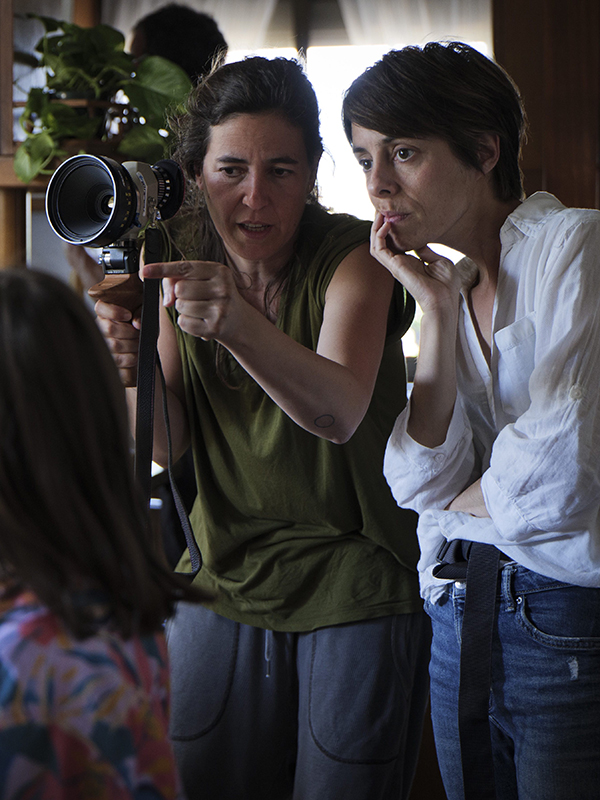

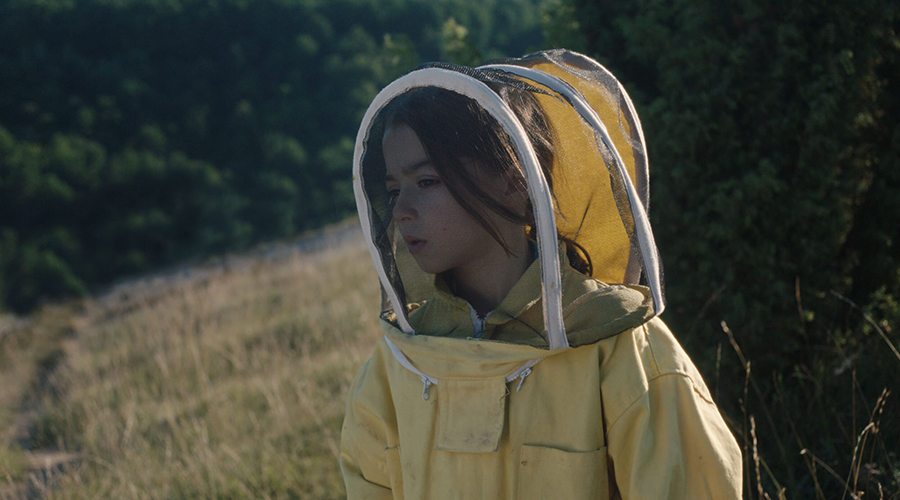
Silver Bear for Best Performance at the last Berlin Film Festival, Golden Biznaga at the last Malaga festival… With these credentials on the resume, The film was presented last Friday in commercial theaters 20.000 bee species, the feature debut of Basque director Estibaliz Urresola Solaguren.
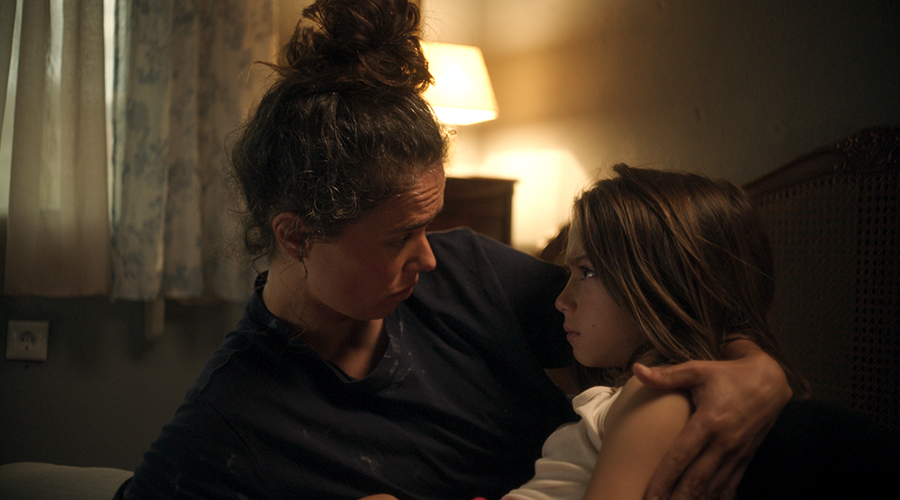
The film addresses one of the most delicate issues in the current political landscape of our country.: transsexuality in childhood. The argument leaves no doubt. Cocó is an eight-year-old girl who does not seem to fit into the social context in which she lives.. Cocó must spend a few days in his grandmother's town, with his mother and brothers. Cocó doesn't seem to like this plan very much.. Wherever it goes, she feels uncomfortable. But if there is something that bothers you, above all, they call him Aitor, the name his parents gave him at birth. Maybe Cocó is not his name either.. His name has not been found yet, or he hasn't told anyone, not even his mother, a woman in middle age who also doesn't seem to be very happy with her situation, both in the area of motherhood, as with your partner or in the professional field. Besides, Grandma is there, a religious woman who maintains a distant relationship with her daughter, Coco's mother, And he doesn't seem to understand the situation either., and aunt, perhaps the only one who can shed some light on all this. All these plots, apparently independent, they intersect on this tape, influencing each other until they find a solution that, in the background, It's the same for all the characters.. Who are we, really? We spoke with its director, Estibaliz Urresola Solaguren about this production. G.LEON
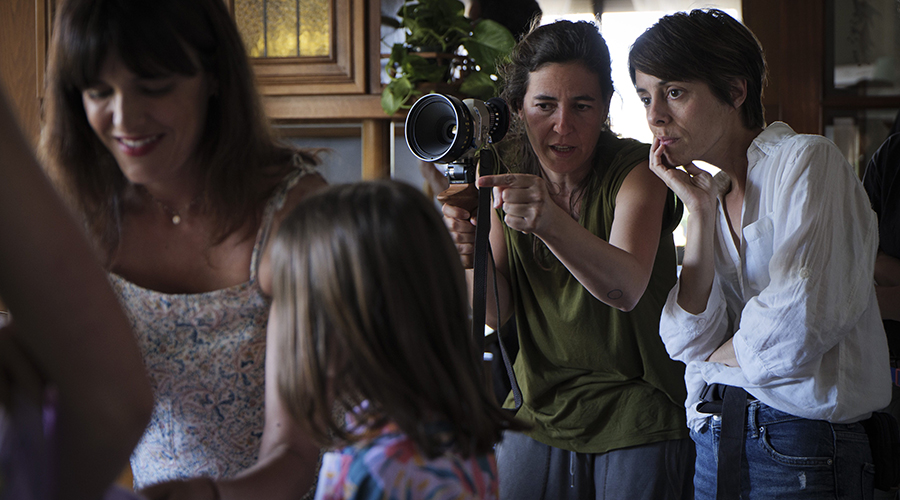
First of all, the title. Why did you choose this title??
Bueno, Bees are the guarantors of biodiversity in nature. Without them we would not exist and, however, It is an animal that generates a lot of fear and a lot of rejection in us.. And I think that happens with all the realities that we do not know., that are distant for us, that scare us. But, when you get close to the animal and discover the way it organizes itself, Everything changes. Then, There was another idea and that is, inside the hive, there are different bees, and although each one has a different and unique function, They are all necessary for your survival. That also brings me to the idea of family., to the family hive, how the individuals that make it up are different, They are diverse, but they are all necessary and contribute to the unit. Just as the hive is much more than the sum of the individuals because it is a living organism in itself., The family is also an organism that carries inheritances, who keeps secrets, where the past is still present and continues to affect and shape, and affecting and conditioning the relationships of the members. And then, there is this 20.000. I knew there were many species of bees. I searched on Google and it told me there was 20.000, which is a large enough number to continue talking about diversity and how, even in trans experiences, there is no single account of the process. Diversity is also present in the reality of people.
Although when reading the synopsis it may not seem like it, 20.000 bee species It's a rather choral film.. Somehow, all the characters are looking for their place.
This was the idea that came out in the interviews [What did you do during the documentation process?] And the fathers and mothers told me that the ones who had made the transition had been the others.. A family told me directly that making this accompaniment, this process, it had been a gift. They told me about a learning opportunity, to rethink all the automations with which we function, all the systems and rules we reproduce, many times unconsciously. A chance to stop and listen and look, to shine a light on them, to also see how that experience had affected them and themselves.. That communication process that had been activated or that had awakened within the family, had been a healer for all the members. That idea seemed super valuable to me and it had to be in the film, that's why there is that choir. In the end, The family is like a micro-society or a small society, and bringing together these diverse women, from different generations, with different life experiences and conditions, in some way you can represent, even if slightly, the different positions that there may be in society around the transgender issue.
In fact, The treatment of the plot is so choral that it seems that, at times, you are avoiding the issue. The plot is like meandering, but without occupying the center. What is the reason for this decision??
Bueno, I also wanted to accompany the character, being able to see how it develops in different areas, beyond the question of identity. How a girl expresses herself and relates and discovers an environment unknown to her, how he interacts with people… It was about giving more dimension to the character, that wasn't just seeing her as a trans girl dealing with all the aspects related to identity. Being able to connect with her as a person in discovering the world and learning, hear…
In 2020 the documentary was released A girl (Sébastien Lifshitz), I don't know if you know him.
Yeah.
When addressing the topic, What did the treatment from fiction give you??
Bueno, It also gave me the opportunity to investigate myself.. I am not a trans person. For that reason I think it was important not to focus only on the support of the trans character, because of legitimacy. However, incorporating the figure of the mother as part of the social body, I felt more identified, per generation, by way of thinking, for the question of also living gender identity in relation to professional life and motherhood, etc.. In that way, I could build a paradigm, a context in which to explore things that also worried me or worried me, or reflections that, from my point of view, I wanted to capture the gender issue in the film.; build, like more for this, that family, looking for the characters and shaping them, and talking about many things that also concern me as an author.
The film is inspired by a real event (suicide in 2018 of a trans boy in the Basque Country). What has it been like or what have you given up in the transition from this event to a dramatic story??
I think it has a lot to do with what I just told you about searching for what was inside me that was being so questioned with the issue of trans childhood so that it was not just a reproduction of testimonies., but how to make it my own or connect it with what moved me when I was so attached and so committed to this theme.. This has surely been the most personally expensive part to bring to light., to find and identify to transfer to the script, and that is condensed and synthesized quite a bit in the character of the mother. Give up? Bueno, there could have been the question of naturalness. It seems that, when making fiction, you sacrifice truth and naturalism. The biggest challenge in the writing phase has been the construction of the characters and themes, and in the directing phase it has been to reach that naturalism. Try not to have to give up that naturalness because it is a fiction. And for that I think it has been necessary to find the method of working with actors and actresses. The script is very written. Yes, there are small spaces open for certain improvisations in certain sentences., For example, with the girls. I raise the situation and then I leave it there.. But in other sequences it was more complicated because the adults had to execute a script that was written, but, at the same time, I didn't want the girls to learn any lines of text. So, It was like trying to reconcile that approach with boys and girls, to explain the motivations of the characters a lot, without giving them explicit lines of text, and make that coexist with an execution of the text lines of the adults, more precise and more faithful to the script. That made, although the girls and boys perfectly understood the tangential instructions that he gave them, In each take maybe they could say the phrases in a different way. That forced the professional actresses to be super attentive., to see how your character reacts to those modulations that may have. I think it has been one of the keys. That and having focused the rehearsal part with more intention of generating a family memory than trying to rehearse the specific scenes of the film., generate those relationships, those situations of conflict or rapprochement between them. These two questions have managed to make up for this possible renunciation of naturalism.. And then there are more formal decisions, how not to use extra-diegetic music so as not to manipulate the viewer's emotions either; a camera setup, of light and scenography where I have renounced many of the artifices that cinematographic language itself can offer, a staging that is as transparent as possible to bring the viewer closer to that naturalism.
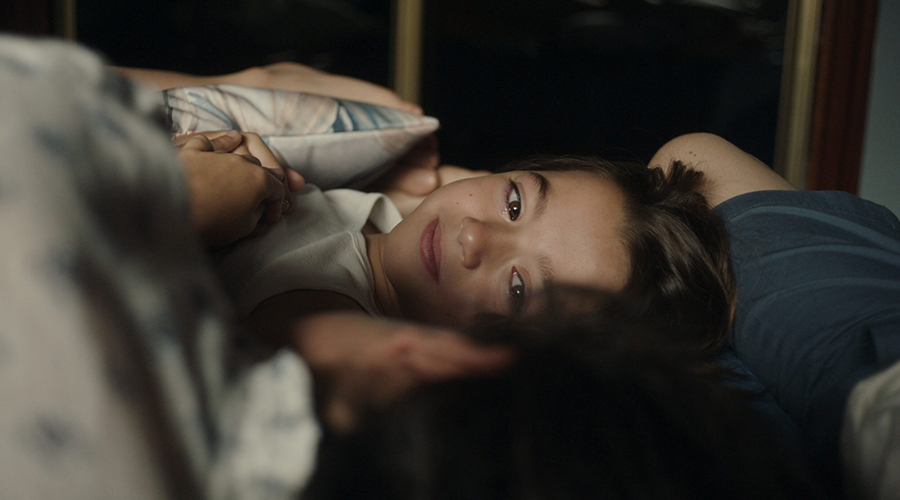
There is an image that I think is very relevant in the film, which is that of the mutilated body.. Everywhere there are severed bodies, pieces of bodies… The mother models in her workshop [she is a sculptor] bodies that are not complete, the girl plays with a doll that is missing a part, etc. What value did that visual element have for you??
The fact that the girl plays with the doll, (a sequence that comes right after the scene in which the mother is working in the workshop) It was like that resonance of proposing a mirror game in which the child reproduces what the adults do.. But, in the case of the mother, That idea allowed me, not so much talking about how a trans person has to mutilate their body or adapt it to adhere to the established system. Precisely, the phrase “a girl's penis must always be clean” [what the aunt says at one point in the movie] It serves to give entity and possibility of existence to that body with a penis that is that of a girl.. In the case of the mother, with all that workshop work, What has interested me is exploring the idea of how even the body itself is constructed.. We often talk about how gender is what is constructed and the body is what is natural., but there is also this idea that bodies are built, that the different parts of the body are also socially constructed. That's why an elbow is not the same as a breast., not even a vagina is the same as a knee; All of this is part of that look of the social body towards the parts of the body.. And how the character of Ane, the mother, transfer this, which may also have to do with the way she thinks and approaches the issue and which is trying to guarantee her son a space for free expression, without prejudices... That idea of hers that everything is constructed, that there are no things for boys or girls, at a certain point it becomes your own limit to see what is really happening. Ella, somehow, reacts to that legacy that the father offers, to that drawing of what the man's body and the woman's body are, that is in the hands of that absent father who is, in the end, the patriarchal system in which society develops, but also this family. and the mother, although she is the heir to that passion and that sculptural vocation, also brings another philosophy to working with bodies. I think all of this helps to understand the place or the psychology of Ane's character..
You told me that, somehow, you express yourself through those characters, or those characters pass through you. Just like every movie involves the transformation of a character (in this case, of several), How would you say the film has transformed you??
It is a question that I have been asked sometimes and it is difficult for me to answer it because I think that, in the end, It is not a transformation that happens overnight., but it is a process that has taken place throughout this time and that is gradually being installed inside., You hardly even detect the change until you look back and say… uhmm I don't know. When I approach this topic, I do it from a respectful and understanding perspective., but it is true that I have learned a lot about human beings in general. By approaching all these families I have learned to find in all the people I have interviewed, despite its contradictions, that there is in the human being a drive for life that emerges in the least expected situations and that makes, when the truth prevails, Let us be able to do much more and understand much more and embrace much more that which is unknown and painful to us.. I have learned a lot from fathers and mothers who, probably, They also presented themselves to you with an image, and in that conversation, In that sharing and in that reflection you discover unexpected aspects. It has to do with how we read people and are left with an image., We give roles and labels to people as soon as we meet them and, accidentally, and even if you feel that you are going to make a transformative film in this sense, you can fall prey to those labels. People are worlds, very rich universes, very full of lights, of shadows, of contradictions, of everything, and experiences like this are a learning opportunity.