PROJECTIONS
Thursday 20. The Rambleta. 19h. inauguration gala. With the presence of the director, Jordi Nunez, and the film team.
Friday 21. Babel Room 4. 21h. With the presence of the director, Jordi Nunez
Saturday 22. Babel Room 1. 20h
The long-form debut of the Valencian director Jordi Núñez will have the privilege of being the film that opens the 37th edition of the Mostra de Valencia Cinema del Mediterrani. The tape, presented to the media on the eve of his first official pass, introduces us to Carla's life, a young Venezuelan immigrant who works in Valencia in a beach restaurant. Carla's life takes place between the local bar and the need to take care of her mother., cancer patient. While, He shares his leisure time with his group of friends in which he doesn't seem to quite fit in.. at a party, Carla confesses to her friend Marina that she is in love with Víctor, an attractive boy and, definitely, leader of the group. Carla will achieve her goal, but the problems are just beginning. The interference of the Navy itself in their relationship, will mess things up. From here, the distance, the passage of time, They will be presented as remedies to the pain you feel. At the center of all this, the problems of a generation of young people who, as usual, They look for their place.
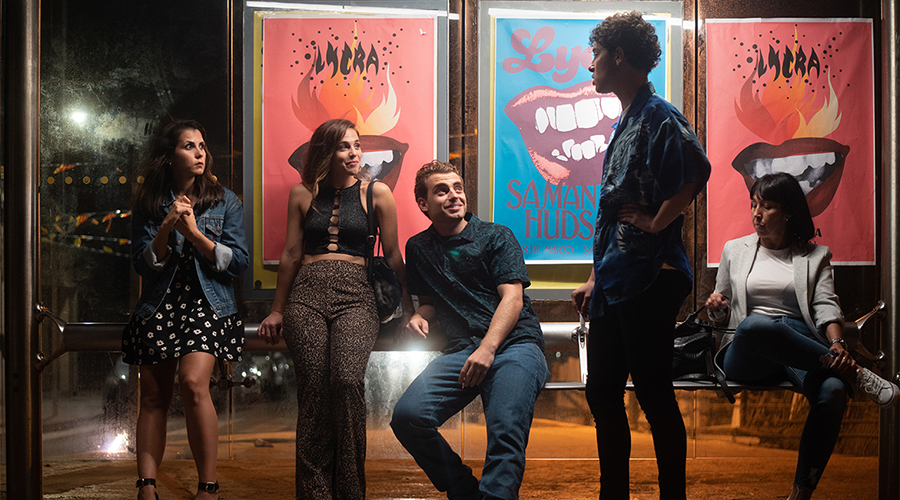
“The film tells the story of Carla, but, at the same time, It is a very choral film, in which Martín's stories also converge [another member of the group of friends], Marina's and Victor's. But it is, through Carla's eyes, who we entered the group and who we left with. For me the film talks about healing through friendship and love, and the need for forgiveness in order to be free.”, explained Jordi Núñez after the screening of the film.
This impression of lived experience affects the actors in the film themselves and, due to their generational proximity, to their relationship with the characters they play. “Being Venezuelan, There is a part of immigration experience that I have in common with my character. When you go to another country, being very young, There is the need to fit in and acceptance by the people who are in the place you arrive at.. Fortunately, My experience has been more positive than Carla's. (laughter), but there is something to that” commented the actress Nakarey regarding this issue.. “As a generation, I do see certain dynamics of friendships portrayed that I believe are repeated and that are recognizable.”, not only for us, but for people our age who can see the film”, explanate.
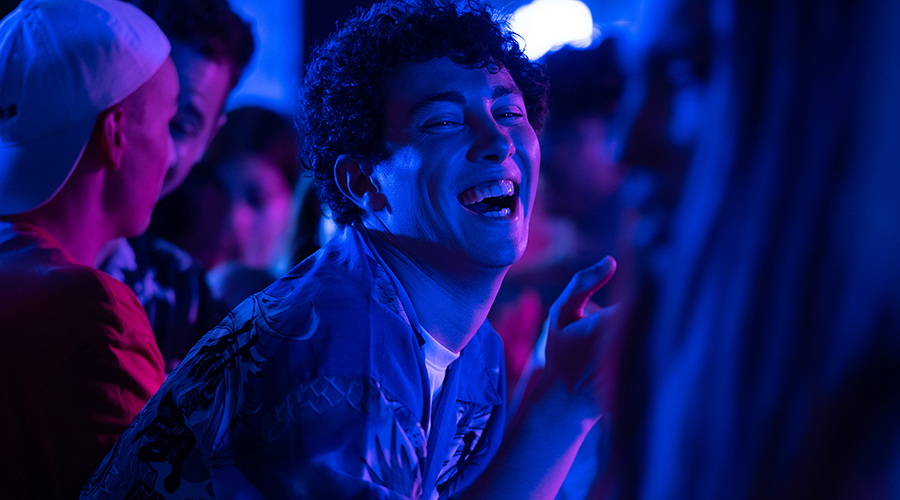
What we know It is a work that is limited to a story model that we can recognize in films like Peter's friends de Flame, and that has taken root in Valencian cinema among different generations, case of movies like Things to do before you die by Cristina Fernández and Miguel Llorens, also presented at the festival, or the recent premiere of the adaptation of We will not kill ourselves with guns by María Ripoll. Núñez associates this narrative form with his own personal experience, what inspired him to tell this story. "In the end, I think it's key, when you face the construction of a story, talk about something you know. But, at once, It is also important to distance yourself from it. When presenting this film, This structure allowed me to take elements, sensations of my youth, and thus be able to rub two stones of reality together and make some sparks of fiction fly. with that, I began to work referring to Douglas Sirk's melodrama or classic films that excite me a lot, such as Splendor in the grass y, somehow, I built a story that is a coming of age why, vitally, at this moment in my life, asked me to do a coming of age”, explanate.
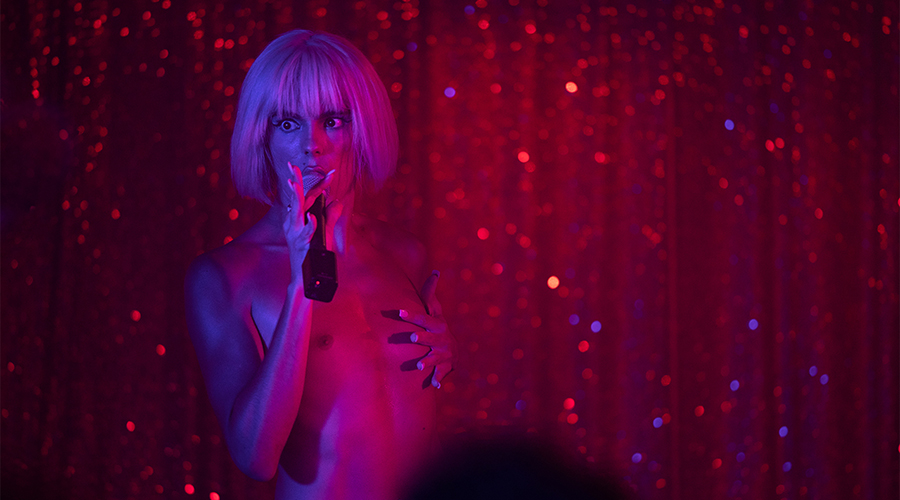
Like any narrative of this type, the well-known generational confrontation could not be missing. Although in the background of fiction, parents and children confront here, as usual, two visions of life that are not understood. “I found it interesting because they are characters who have seen the mistakes of the previous generation or have intellectualized them and, somehow, They want to get out of them and build something else.. But, paradoxically, It is as if they left one prison to enter another”, Jordi Núñez explained to the media. “There is a phrase in the movie that does not talk about this, but it says: we flee from a regional festival to recreate another. We're talking about this not working., but, in the end, What it reflects is a dissatisfaction that cannot be satisfied.”, the Valencian director remarked. “That confrontation with the other generation seems to me to have also been a source of comedy.”, and an opportunity to show a Valencia that is there, that is very present, and?, at once, shows the difficulty of these characters to be who they want to be in the place they love and where they want to stay. There is a character, What is Carla's?, that does not have, by force, roots, that is forced not to have a point of attachment. But we have a character like Martín who, if you want to break your dependencies, It seems that he has to leave Valencia”.
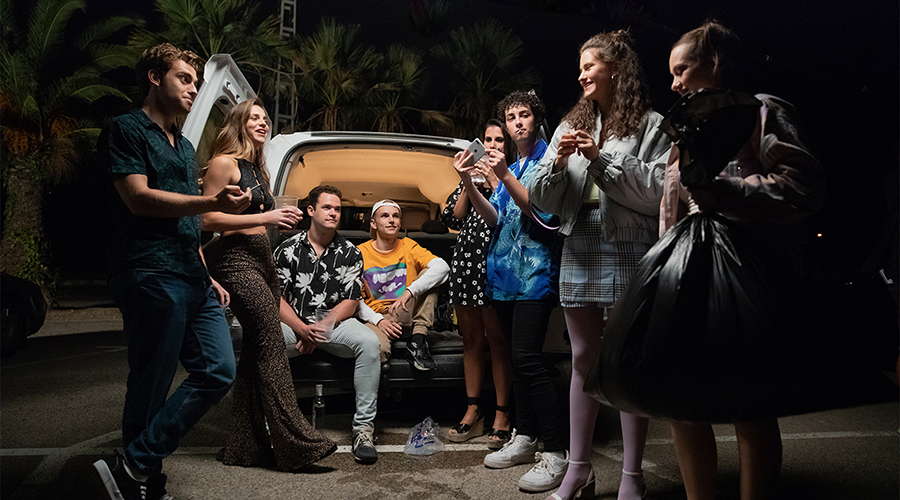
The city of Valencia is, definitely, the other protagonist of the story. A city that is portrayed on its margins, in less precious spaces, but very recognizable, very ours. In the words of Núñez: “The port, that part of the city has a prevailing presence. The port had to be meant with the idea of destination. From the first moment, when the characters are on the beach, destiny is already there, behind them, is calling. Both, there is the idea of time, of small dissatisfactions and cycles, like the diabolical rondo that Douglas Sirk talked about. I found it very interesting because, in the end, all the characters, except Carla, they follow those same circles. In the end, “She manages to become aware thanks to the fact that she distances herself from it.”
But the spaces are not the only cultural references that we will find in this production. Surprise, For example, listening to the regional anthem as a dramatic soundtrack for a film. This symbol is followed by others, like failures, or things as familiar as Valencian muffins, the surroundings of Pinedo, all of this forming a kaleidoscope of images that give the film a certain kitsch tone that Núñez assumes naturally.. "In the end, They are elements that are there, that are part of a whole and that have to be integrated and dialogue in an ironic way, sometimes, with the story. For me this whole world of failures is a kind of representation, allegory of Carla's past, and also a ritual of mourning that allows her to accept it. That end of the first act in which she has fallen in love and has achieved her goal of being with Victor and, suddenly, confronts the fire again, generates a dialogue that is loaded with irony and, at once, puts a mirror before the viewer, so that each one can put themselves in the place they consider.”

This is the context. The form will be marked by a narrative that unfolds in three time blocks., interconnected with each other. “I was interested in each one having a very marked energy.”. That the first was like a very naive energy, from the end of high school, that everything is possible because everything is yet to come. The second would be something like flawed. And the third is that of defeat”, Jordi Núñez explained to the press. “When you no longer have what you projected you were going to have, what's happening? That the cycle begins again. So, They celebrate a party with different connotations, but in which a new horizon of possibility opens. I also thought about that idea of time, of that melancholy of the passage of time, of everyday life”. G.LEON