
One of the things that first catches your attention about a large film festival like the Berlin International Film Festival, the well-known Berlinale, is the public response. Tasteful, Listen. Seeing the movie theaters packed to the brim during the ten days that the event lasted reconciles one with the future of an art that, against the most dire forecasts, at least there it seemed that it continues to satisfy the interest of the respectable. I talk about all the sessions that this chronicler attended. All. Sometimes with a full house, others with some holes, few; Many commercial theaters in many of our cinemas would like a similar attendance on any given weekend in a regular session.. Ah, and at any time of the day or night. Let's imagine the scene. A working Tuesday, 22:45 of the night, sala 3 of some multiplexes. The movie, Romanian and in original version. There are no tickets left and at the door of the theater there is a very long line of people waiting for a last-minute slot to be able to attend the screening.. That's how things were. And without distinction, whether they were the formally more conventional films, as in the most radical or extravagant experiments. Every movie had its audience. Not to mention the respect shown by a spectator who was considerate of what he saw on the screen and demanding of himself.. When you go to a cinema, He goes to see a movie and understands that the person next door is doing the same thing, so... silence, the show begins!

This edition of the Berlinale began with a red carpet full of big stars arriving at the festival to support the American director Wes Anderson, that brought its latest production to the German capital. Bill Murray, Tilda Swinton and Jeff Goldblum shined, So, to a ceremony that opened with Anderson's new approach to stop-motion cinema. Con Isle of dogs, Anderson sought to repeat the recognition he already obtained with Fantastic Mr.Fox, And if we take this event as a measure of its future commercial projection, the bet has been successful, as he made more than clear and forceful the award for best direction with which he would win at the close of the contest. It always remains to be revealed, for this chronicler, what sometimes distinguishes the award for best film from the award for best direction (Isn't the one who “directs” the best film a better director??; o, said another way, Won't the best movie be the one that is best directed??), but this is another story.

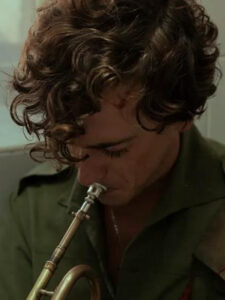
With Anderson, The quota of great media stars was covered by the presence of two renowned directors such as Steven Sorderberg and Gus Van Sant., both with clearly minor films within their respective filmographies. In his umpteenth return to the big screen (after his umpteenth announcement of retiring from making movies) Sorderberg grabbed a mobile phone camera to tell us, in Unsane, the vicissitudes of a young woman who, escaping from his past, starts working in a mental clinic. Soon the space of that hospital would become a cell in a film that sought to put the viewer on the border between reality and fiction., madness and sanity, but that got tangled in the twists and turns of a script that resorted to the resources of the horror genre and plunged towards a very convoluted exit.. The director Gus van Sant was equally aseptic with his long Don’t worry, he won’t get far on foot (something like Don't worry, won't go very far on foot) ironic title that brought us closer to the complicated biography of the American cartoonist John Callahan, whose life of excesses with alcohol would end up prostrating him in a wheelchair for the rest of his days after a spectacular traffic accident. Van Sant tells this story of redemption with the hands of a good craftsman, proving that he is a good strategist (He is also responsible for the script), but moving far away from its riskiest bets. Don´t worry… It is a kind and friendly job, thank you, fundamentally, to the participation of a casting of actors who successfully cover their role (there's Joaquin Phoenix, Jack Black or the less recognizable Jonah Hill, accompanied from time to time by a Rooney Mara who appears very little on screen, but what, when he does it, devours every frame), although more discursive and moralistic than on other occasions, with a little less delay. A film that will give viewers a good time, but that will leave little trace in the memory of its most picky followers.

But, apart from these big names, The greatest interest in this contest would be focused on the works of those other less known directors with whom the program of its official section was going to be completed.. And here we were going to find everything, some interesting pieces (or resolved) and others that would trigger the disbelief of spectators and critics in attendance. Starting with the seconds, one would end up wondering what criteria made certain works worthy of being in the main competition, in many cases lower, regarding the quality of its production and its formal risk, to other films that had been relegated to other sections such as Forum or Panorama, with less media impact, but with greater cinephile interest. We are talking about works that presented some original idea at the beginning., but they were lost in development. This is the case of Transit, by German Chistian Petzold. Transit mixes past and present to reflect on the problem of immigration. However, to make us participate in this conflict as Western spectators of our time, Petzold resorts to a most suggestive plot pirouette. After the rise of the Reich, Nazi army troops assault French territory, which would not be new if this event were not located, not in the middle of the 20th century, as we thought until now, but in our days. In this context, a young man, Georg, tries to flee Marseille in search of a better life in the distant American continent. To do this, he will have to impersonate a famous writer whose death he is accidentally involved in.. So far everything is going well. The problem with the latest work of the director of films like the highly celebrated Phoenix, is exposed when developing his speech in a collage of characters whose biographies he insists on telling us in detail, finally muddying the main story, which ends up being lost and which is helped very little by the insertion of a persistent voice-over overly explanatory, that would put an end to all intention of subtlety.

More confusing and convoluted if possible, it was presented, already from the same title, also German production My brother heybt Robert and is an idiot (My brother name is Robert and is an idiot), de Philip Gröning. In a marathon lasting almost three hours, Gröning intended to reflect on the relationship of the modern subject with the measurement of time to which the rhythm of our societies subjects us.. two brothers, Robert and Elena, They let the hours pass in a lot next to a service station next to a road lost in an anonymous landscape. She studies philosophy for an exam with the impertinent collaboration of her brother. With these credentials, Gröning traces a long path between gratuitous reflection and the coven of sex and violence with which he closes his work.. The German director's intentions are clear. Gröning aims to mix the time he refers to in his speech with the time of the narrative, breaking the rules of fiction in a work that seems (and it only seems) ignore ellipses. Y, as we said before, the idea is not all bad, but he doesn't know how to control it. We will not deny that, at times, My brother... offers glimpses of good cinema, but the constant appeal to the same dramatic resources (comings and goings to the gas station, the relationship of the brothers with the employee of this business) makes the tape fall, after the first half hour, in an elliptical rhetoric, with no beginning or end or goal to focus on, provoking the disinterest of a spectator who, finally, will fall into boredom, exhausted by the effort of trying to figure out where they want to take him.

The same question would assail the audience of one of the best promoted films of this contest., Swiss-British production, The best of none (The real estate), another of those movies that started off strong, but they ended up deflating as the minutes of projection passed. Co-directed by Axel Petersén and Måns Månsson, The best of none tells the story of Nojet, a sexagenarian who inherits an apartment building in the center of Stockholm from her recently deceased father. Nojet will have to deal with tenants, the sordid people in charge of the maintenance of the property and the mysterious owner of a party room in the basement if he wants to preserve his economic and material interests. And so far everything is going well. With these elements, Petersén and Månsson draw a sharp story that aims to be a criticism of the difficult situation of the filthy real estate market in modern cities.. To thread their argument they count, as best ally, with a brilliant Léonore Ekstrand in the role of this cunning and uninhibited woman, along with very effective photography and staging. But, for some incomprehensible reason, the script gets out of hand in the last quarter of a story that, of the strictest and dirtiest realism, moves on to the most bizarre pastiche and with which both directors end up dynamiting all the work done previously. A final sequence with a Nojet driving a speedboat in true Rambo style, ends up expelling from the screen a viewer who does not fully understand at which intersection on which road he took the wrong direction.

In this context, pieces would appear like The outlying island 22. July (Utensils, 22 of July), by Norwegian Erik Poppe, a work without so much spectacular display, but infinitely more compact, forceful and effective. The outlying island recounts one of the most tragic episodes in the recent history of Norway: the assault, and 22 July of the year 2011, at the hands of a criminal linked to far-right organizations, of a group of young people who were on the island that gives its name to the film, enjoying a few days of camping and that would end the life of 69 of them. Poppe sticks his camera to one of the attack victims, nineteen-year-old Kaja (fictional character, transcript of the real victims) and follows her throughout the island in a harrowing escape to save her life and that of her sister Emilie.. Shot in a single shot, an hour and a half long sequence, The film is an exemplary exercise in containment and mastery of staging and dramatic timing.. Poppe masterfully plays with two essential elements. The first of them is a directing of actors that does not give rise to any objection. The work that this group of young actors does is, simply, flawless. The other element on which it is based is the use of sound, a resource that allows the director to manage the viewer's expectations at will, playing with the proximity or distance of a murderer whom we never see, but whose threatening presence is transmitted to the audience in each frame. So, Erik Poppe composes a crude and ruthless plea against the far-right paramilitary movements that, worryingly, It seems that they are finding their place in this very civilized Europe of ours.. It's hard not to indulge in this exercise in narrative insight.. Is it possible to add more silence to absolute silence? What does a crowd sound like when it stops breathing?? Erik Poppe and his team managed to cause this effect at some point during the screening of this bewitching work..

It was no less suggestive to attend the screening of one of those minor films that, perhaps because they were not expected, made a very pleasant impression on the respectable. We talk about Dovlatov, by Russian director Alexey German Jr. We are in the city of Leningrad, In the year 1971. a young writer, Sergey Dovlatov, He tries to make a living with insipid collaborations for official publications in the Russia of the still thriving Soviet Union. (there are twenty years left until its final fall). But young Dovlatov's literary ambitions are much higher.. for him, worthwhile art involves a realistic and critical look at reality and, specifically, of the living conditions of the Russian popular classes, thing that, as is logical, clashes with the pretensions of a regime that only understands culture as an exaltation of official values. Outside of that, there is nothing. Dovlatov faces off, So, to a system with Kafkaesque overtones sustained by complacency and silence, at all levels, of a society subjected under the weight of military and political authority. Alexey German uses Dovlatov's tragic story to make an intelligent plea, deeply ironic and, in some passages, fun (despite the drama it addresses), in favor of the difficulties of the freedom of art against the impositions of power, always and in any condition, willing to silence dissonant voices. But if this work attracts attention for something, it is because of the deep and very serious portrait of that feeling of helplessness that afflicts anyone who has the need to say something that they are not allowed to say.. And this is when the film connects with the current viewer., Well, it's not so much what you want to express., like the very fact of not being able to talk about what one wants. A feeling that begins to sink in little by little, first lightly, then deeper, as we delve into the events that this feature film develops. and here, and knowing that the film may be open to multiple interpretations, one has to wonder if we have made any progress. Dovlatov, The movie, would finally win the award for best production and costume design, a minor award (although not for those responsible for both departments of the film), but that placed on the podium of the winners a work that deserved some type of recognition.

And there, at the top of the pedestal, would shine, to the taste of the jury, German-Romanian production Touch me not, from debutante Adina Pintille. A controversial award, like so many others, but according to what this commenter saw, very deserved. About the filming of a supposed documentary, the director herself (which appears as such in the film) tells us about Laura's conflicts, a mature woman facing her greatest fear: simple physical contact with your peers. This situation hinders their personal relationships and, specifically, with sex, which he tries to compensate thanks to sporadic rental encounters with different characters whom he pays to watch them enjoy their own sexual pleasure.. At the same time, Laura works in a hospital where there is a therapy group for people with different conflicts related to the physical acceptance of their bodies.. In the union of Laura's own problems with the dilemmas that these characters face, Adina Pintille traces a suggestive experience that places us before our own taboos about the human body and our beauty codes.. On a first level, Pintille's film works like the performances of a Marina Abramovic, For example, in which the viewer contrasts his own aversions, your own conception of normal, and starkly confronts the limits of his prejudices and tolerance. Also in the eyes of the other, that look that, when we approach it directly, serves as a mirror of ourselves. The eyes of the other as a path to self-knowledge. But what this debut film stands out for is the paths it opens in the relationship between reality and fiction.. It is not so much that the Romanian director has used the excuse of filming to make a mockumentary., which is not the case. Pintille places his camera at a certain distance from his characters, as if it were a spy-eye that, without them knowing it, sneaks in to record those moments in which they give an account of their most intimate confessions about themselves and others and, So, show their vulnerabilities, exposing to a spectator that, at the same time, is exhibited with them. Pintille created, in this way, a round trip between the projected image and the cinema audience.

And with this closing we said goodbye to a Berlinale that left us, We said at the beginning of this chronicle, the image of rooms packed with spectators, of queues of impatient movie fans who, by herself, already considered our presence well spent in a city that, despite being immersed in winter, she was understanding with the visitor. one week later, a new polar air storm would cause temperatures to drop to less pleasant levels. Next year… more. GERARDO LEON