
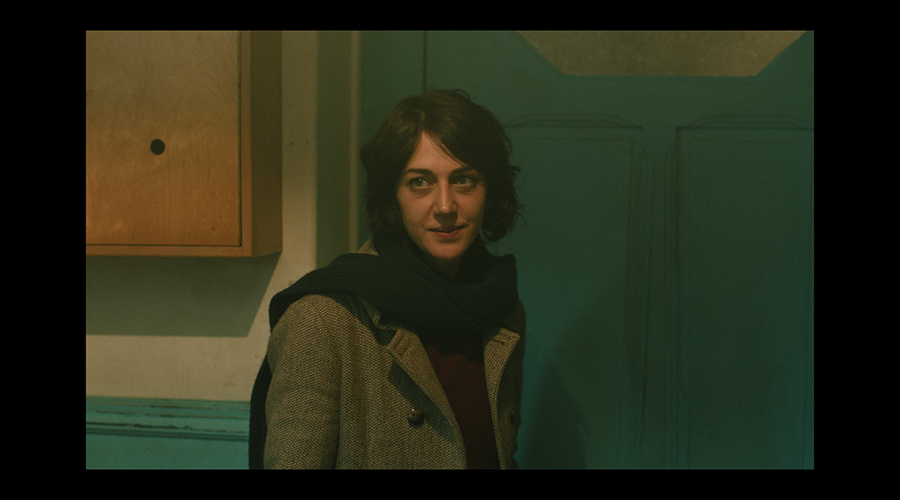
Sixth day of the 40th edition of La Mostra de Valencia and third feature film in its competitive Official Section that points to the immigration conflict as the axis of its plot. Piece of a foreign life, second full-length work by director Gaya Jiji on her second visit to the contest, introduces us to Selma, a Syrian woman who flees to France to escape the war that is ravaging her country. Despite the many difficulties that we sense he has suffered along the way, Selma finds a job as a kitchen assistant in a small cafe in the city of Bordeaux. The problem is that Selma does not have residency papers., what complicates your life. One day, a labor inspection forces her bosses to put her on the street, which further clouds his situation. Desperate, Selma goes to a regular customer of the cafeteria, a young lawyer who, after facing your own doubts or misgivings, decides to help her.
One of the biggest problems when facing a certain cinema with a “theme” or that addresses social issues depending on what, It is not so much to what extent we are able to read your message, but rather what particular point of view a film contains on that issue or whether the form it takes as a narrative manages to involve us as viewers..
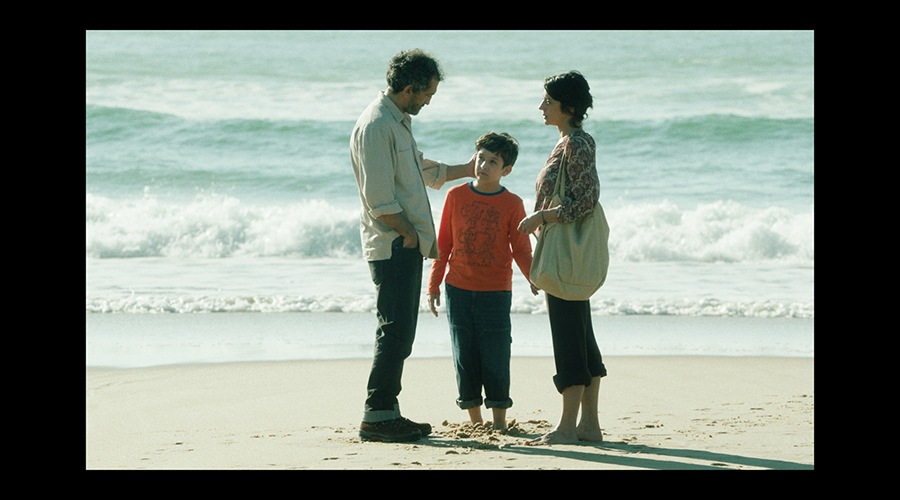
Regarding the point of view, Let us think that both in the case of Promised heaven like in Aisha can’t fly away and in this production, is addressed, somehow, the same underlying issue. Change the origin of the main characters, change the face of the oppressors, but the purpose of each job does not vary: show the marginalization to which those who are forced to leave their country due to poverty or war will fall, whether in Tunisia, in Egypt or, like here, in Europe. Y, as usual, ahead we come across a state that puts all kinds of obstacles.
However, It will be in the way this story is presented when the proposal shows its true effectiveness. So, and Promised heaven was shipwrecked due to a script that was too calculated, something similar is going to happen here. It is not that one feels alien to the difficulties that all the Selmas in the world can go through., but, put his case in a concrete dramatic form like the one Gaya Jiji proposes to us, this one doesn't reach us emotionally. We can think of it as abstraction, but the film experience can be boring to us, what does not take away or put on us as beings sensitive to the misfortunes of others.
Putting our attention to work, we find in Piece of a foreign life, many topics to address, like losing home, the problem of abandonment in motherhood (as Naney, one of the protagonists of Promised heaven, Selma has left her son behind), the look of that other who observes us as if we were a stranger, the problem of loneliness, even among yours, or the swings of love (Selma gives up on her husband, captured by Bashar al-Assad's police). The problem here is that none of these questions, neither together nor separately, they articulate a story.
Gaya Jiji sets her expectations, again, in the strength of its main character, but also again, falls due to lack of a clear dramatic background. Jiji describes the process that Selma is going to go through and there we will go through all the stages, from his first obstacles when encountering the different borders that he will have to overcome, the process to legalize your situation, economic difficulties, etc. The problem is that, In your movie, Selma is overcoming these obstacles without the slightest difficulty, getting away with all of them in a truly simple way. And if this is so, one might ask, where is the conflict? And without conflict there is no story.
To cover this absence of real drama, Gaya Jiji relies on a series of visual elements that give gravity to its proposal. The first of them is guided by the division of the film into blocks separated by some faded to black.. But artificially separating some sequences from others does not establish the tone of a narrative that is read, against the intentions of the Syrian director, in continuity, as if these fades did not exist, with which the effect loses all its strength as an element of narrative emphasis.
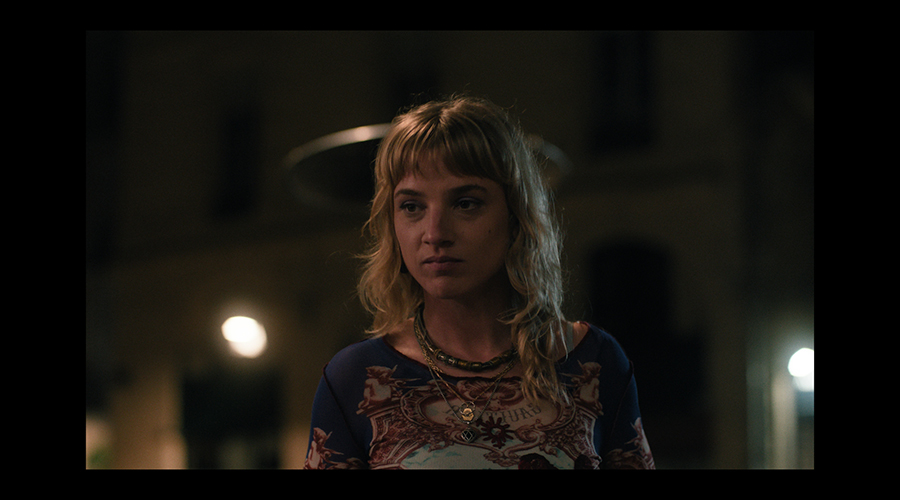
Gaya Jiji wants to bring to the foreground the feelings that assail her main character at each stage of this process, hence the importance it gives to looks, but these do not reveal anything to us, It is the facts that place the axes of your proposal and these are very clear. clear and, frequently, lacking a certain verisimilitude, case of some of Selma's reactions or how the script forces certain coincidences, possible?, how to deny it, but dramatically underdeveloped as is the relationship that Selma will have with her lawyer. This attempt to make up for the lack of conflict in the film also lies in the use of extradiegetic music to which a melancholic tone is given with all intentionality., but it does not achieve its purpose of giving body, that is to say, bring to the foreground those emotions that Gaya Jiji wants to convey to us.
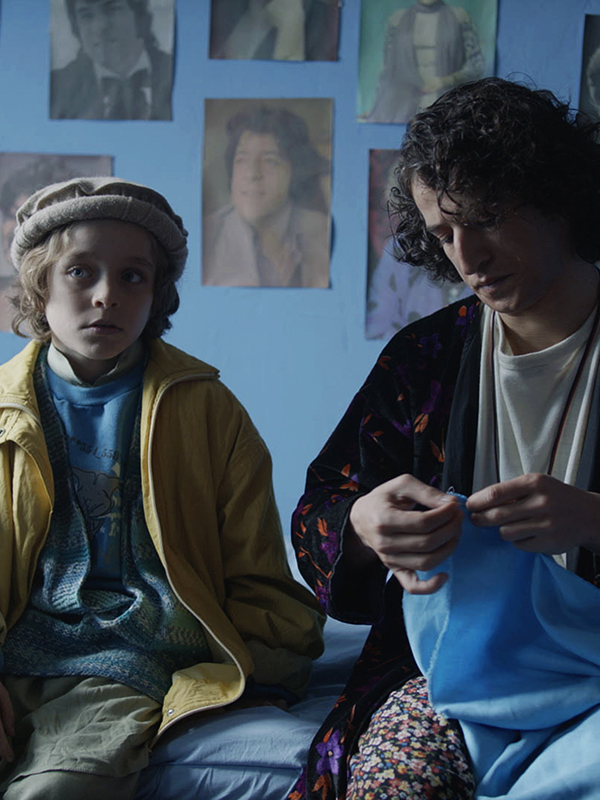
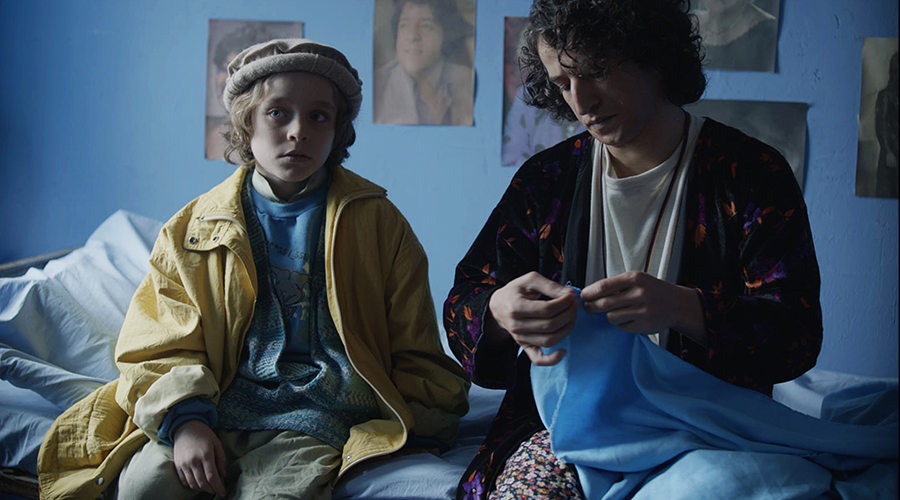
Nearest, the second of this day's films felt closer, Turkish production Cinema Jazireh, second full-length work by director Gözde Kural. This tape brings us closer to Lila, an Afghan woman searching for her missing son. We are under the Taliban regime, forcing women to stay at home, because they can only go outside if they are accompanied by their husband. This circumstance forces Lila to make a decision.: dress up as a man. While, to a place called Cinema Jazireh, A group of children arrives who are going to be in the care of men dedicated to a mysterious business.. And it is that, despite the sign that welcomes the visitor and as we will discover, Cinema Jazireh is not a cinema, but a dating place for men.
Supports Gözde Kural's proposal, first of all, a very careful staging in which, as in the case of Aisha can’t fly away, highlights the location work. Spaces, in this case open, that fulfill their narrative and metaphorical meaning, they give volume or accompany the drama that the characters suffer. We're talking about dusty roads here., of towns built by houses destroyed by the war and barely connected to each other, mirror of a disjointed social structure. Gözde Kural plays and puts emphasis on these places, giving themselves time to leave the viewer with the impression of distance between them, marking in this way the abandonment and loneliness that its inhabitants suffer., which is perhaps the first or even the main question hidden behind the particular plot of his film.
Consequence of this deliberate breakdown of the community, An omnipresent power makes an appearance whose influence is hidden in the fear hidden in the heart of every man or woman who inhabits these lands., Kural tells us. After several days of fruitless searching, Lila falls ill due to fever. In that state of physical and mental dissociation, approaches a man who he believes is burying his son's body. Because of his condition, Lila faints and, although it will be attended, the man, who soon discovers his disguise, warns them of the danger to their lives. Fear that also hovers over the clandestine activities carried out by the owners of Cinema Jazireh. Fear of threatened punishment, above all, to women. Fear of what it seems, as the movie tells us, a trafficking of children passed from hand to hand as mere merchandise for exploitation.
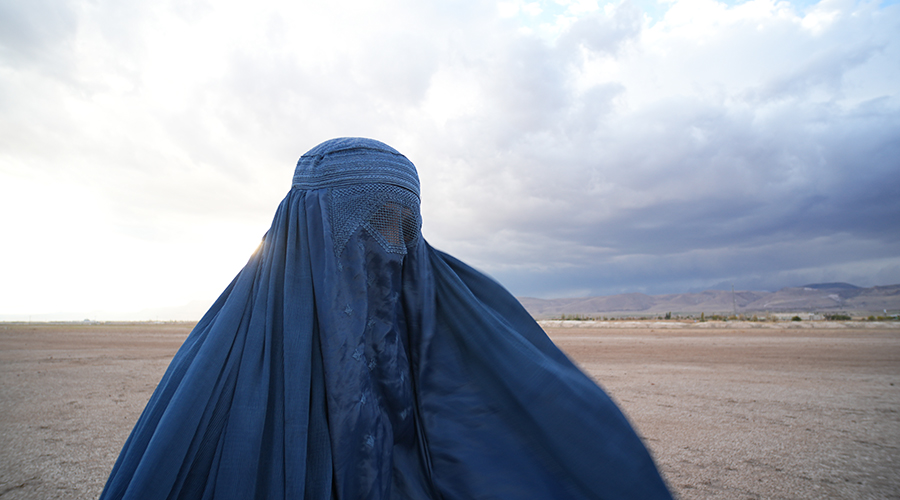
It is worth highlighting from Gözde Kural's film a structure that tries to escape from the main lines of the classic story. There is a beginning here, development and outcome, If you can call that the inevitably open ending that it proposes to us; The difference is that this development is sustained, more than a simply causal reason, in the protagonist's own erratic search. Lila goes from one place to another like a zombie, stumbling without a clear clue to put her on the right path. Only chance will lead her to take some steps that support the hope of finding her son.. Gözde Kural is not so interested in resolving the conflict that he has put as a premise, how to put the viewer in that time, that void in which the despair of those who move, in the background, He has no hope when facing the impossible.
This attention to time, commendable as a proposal, However, it weighs at times in a narrative that perhaps dilates too much in a piece that reaches, about very few events, its more than two hours duration. This makes Kural take too much pleasure in some situations that end up being somewhat repetitive., somewhat artificially retaining information that, although it helps support the resolution of its small plot, It also causes a certain dramatic force to be lost, causing the viewer to reach the final section of the film with their attention somewhat worn out..
Being a remarkable film, The other obstacle is found in a gaze that is perceived as alien to the society that one aspires to portray.. Perception that is exposed in the point of view and confirmed in the subsequent conversation with the director. Kural bases his story on a series of stories told by Afghans in conversations he had during a time he visited the country before the entry of the Taliban.. Among the surprises that this experience brought, The contrast appears between his perception of the events that he was told and that of the inhabitants of those lands who saw many of these dramas with an aura of normality., the normality of someone who lives everything as something everyday. Perhaps it would have been interesting to give voice to that other perception, typical of those who experience all this in first person, than that of the one who looks and judges from the outside. GERARDO LEON