
Perhaps one of the most entertaining things that happens at a film festival results from the curious associations that the organization of the programming leads us to.. So, Putting two or three films together in the same day points both to the intentions of the programmers and to our own imagination., that will establish connections, relations, thematic and formal, in a sometimes unpredictable game or, even, capricious. in that game, films with certain similarities are sometimes united in the same block, which enhances both its virtues and weaknesses, as we saw yesterday. Other times, works with very different approaches come together., which does not mean that these connections cannot be established. This is the case of the two sessions that have crowned the fifth day of the Official Section in competition with La Mostra.
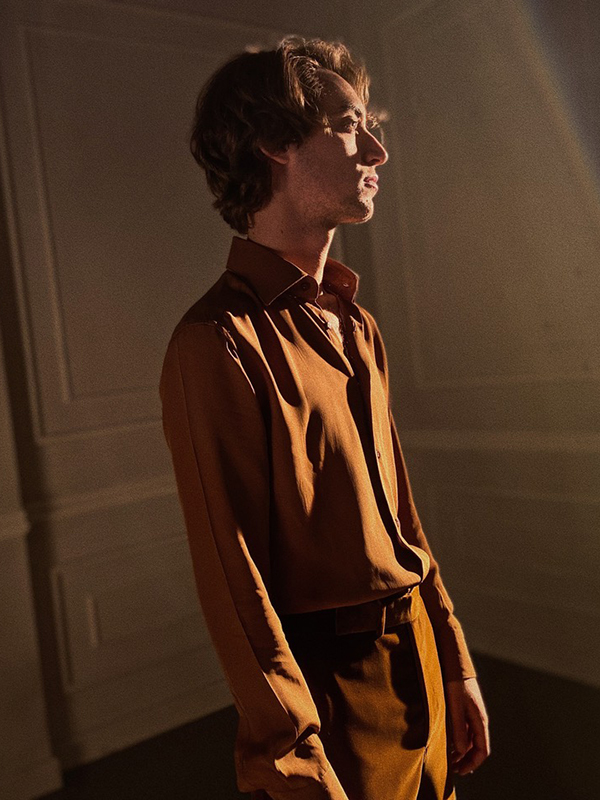
brings us closer Orpheus, feature debut by Italian director Virgilio Villoresi, to a new interpretation of the well-known Greek myth. Based on Comic Poem (poem in comic or comic) by Dino Buzzati, published in 1969 and considered the first Italian graphic novel, Villoresi's film introduces us to a young and melancholic pianist named Orfeo who has spent his childhood imagining fantastic stories about an abandoned villa across the street from where he lives.. one night, after a performance, Orpheus meets the beautiful Eura, with whom he is going to fall in love. But just when their love is at its peak, Eura mysteriously disappears without a trace. Desperate, Orpheus continues with his life until, one night, observes from the window of his house how the translucent figure of Eura passes through, like a ghost, the entrance door of the mysterious villa. Following his beloved, Orpheus will try to cross the door to meet her, entering a fantasy universe that will take him to the very underworld from where he will try to rescue her.
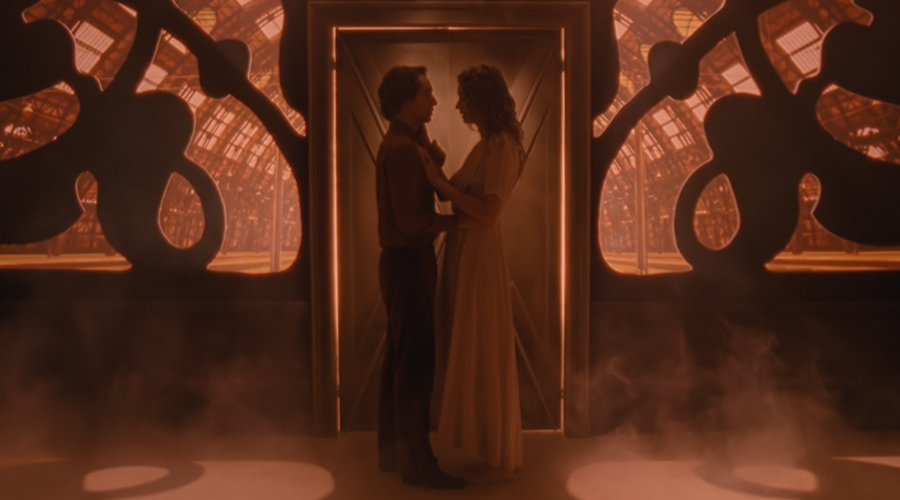
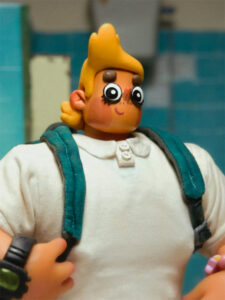
With this line of argument, Virgilio Villoresi proposes a baroque game of cinematographic techniques that combines from the real image, to traditional animation and stop motion in a true visual collage that moves between the gothic or romantic story and the purest surrealism. To build your fantasy, Villoresi has dedicated himself to the application of all types of visual manipulations as a tribute or artistic starting point to the origins of cinema, which includes the use of traditional decorations to create transparencies or double exposures, the use of perspectives and optics, among other tricks, in a piece that has been shot, besides, in the classic 16mm. Result of all this hard work (The film took two years to make., according to Luca Vergoni, the actor who plays Orpheus, at the festival press conference) A work has come out that has no shortage of references to claim, according to the director himself or those who have already seen it since its premiere at the Venice Festival, and that include everything from the psychedelic fantasies of Alejandro Jodorowsky, Terry Gilliam's cinema, Dario Argento, Maya Deren, Kenneth Anger, the quay brothers, Fellini, Jean Cocteau, Luis Buñuel and I think we would be unfair if we did not mention the father of all this, the essential George Méliès.
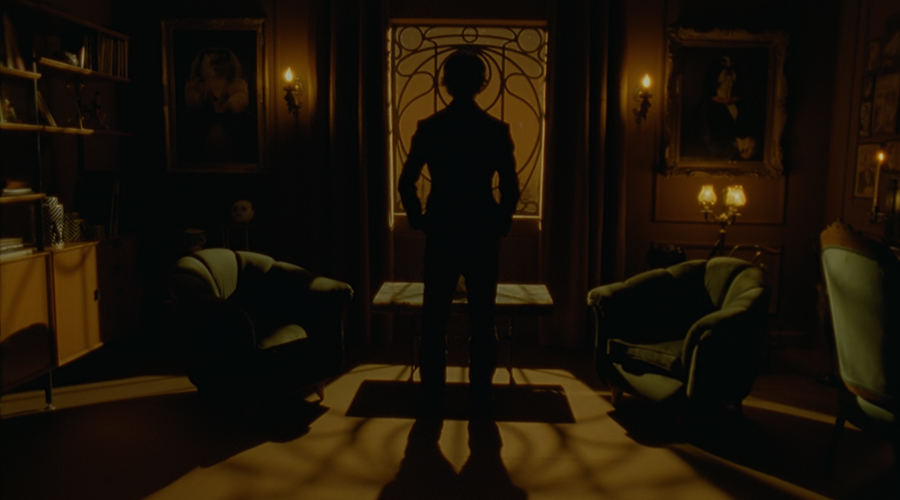
With these clothes, Virgilio Villoresi, with the invaluable collaboration of Angelo Trabace, the composer of a captivating soundtrack, has staged a piece that contains complex imagery that poses a challenge to the viewer., which both comes from the original comic on which the film is based and from his own contribution to the adaptation process.. A work that puts the real world on the same level as surveillance, that of the living with the dead, a border underworld, we could say, very far from our perception of everyday life and, however, very attached to this. Like in the Buzzati comic, after passing through the front door, Villoresi places this underworld in the city of Milan. But, as in the rest of the elements that come into play, It's an inverted Milan, metaphor of this coexistence between heaven and hell to which we have referred and which, on a first reading, It seems that the author refers us.
Symbolic or metaphorical value that permeates each frame of the film and whose ultimate meaning is not always clear, even, perhaps voluntarily or intuitively, for Villoresi himself, and that results in an open work and, therefore, subject to all kinds of speculation or, simply, to the freedom of the spectator who is frequently exposed to all types of sensations, fruit of its relationship with the images that flow across the screen with great display of prodigality. So, in one of the most notable scenes of the film, Orpheus is invited by a kind of spirits (called melusines) to put his face in a pond to find out the cause of his beloved's death. In this scene we discover a Eura attacked by a type of spider that will tear her body. What this spider represents can be as specific or ambiguous as you wish..
This profusion of visual and symbolic elements results in a dense work to which a single viewing undoubtedly does little justice., but that perhaps also suffers from a lack of moderation, both in the practice of so many techniques and aesthetics that coexist in a single work, as if to the measure of a dramatic time that expands in the room despite its few 74 minutes long. One might also wonder what it means for the author to claim the myth of Orpheus himself today.. Is it a call to a kind of transcendentality? Is it a redemption of the idea of romantic love or is it, on the contrary, an attempt to stage its impossibility? Many unanswered questions surrounding a piece that is in many ways ambiguous, of which, at times, one has the impression of feeling outside, as expelled. A proposal that is more of a challenge for the author himself in the task of transferring to the screen the fantasy of the original work on which it is based than in establishing a conversation with the audience..
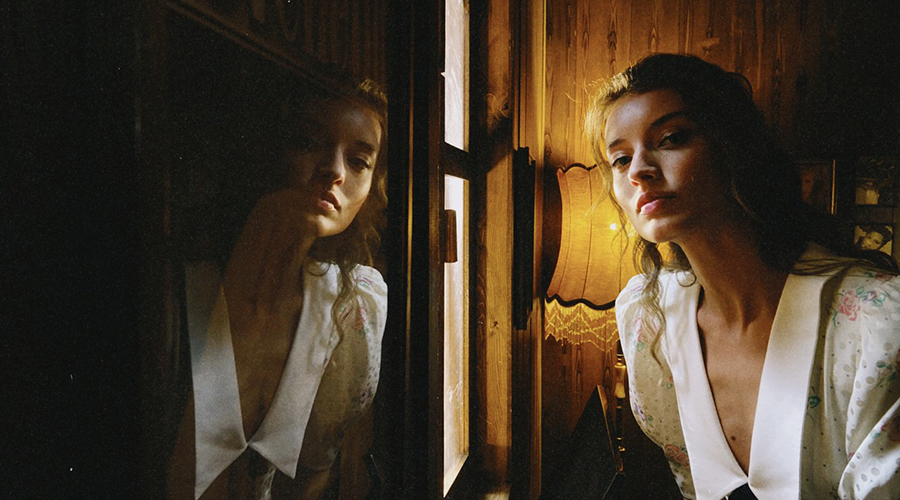
While Orpheus took us through the realms of abstraction and the dilemmas of the soul, the egyptian tape Aisha can’t fly away by the director Morad Mostafa brought us back to earth. This disturbing film tells of the vicissitudes that Aisha will suffer, a young Sudanese immigrant who lives in a slum neighborhood in the city of Cairo. Aisha works as a caregiver for an obscure company that hires her services to meet the needs of older people.. Daily, Aisha gets up from her cot in the gloomy and dilapidated house where she lives and walks through the city to serve some clients who, frequently, they abuse her. as payment, receives the money paid to him by a contractor who tries to skimp on his salary (to her and the rest of the women, all immigrants, who work for the company). But, if this wasn't enough, Aisha must also deal with the leader of a gang of criminals who uses her to break into the homes where she works under the threat of losing the apartment where she lives and who knows what other sufferings..
Like in Promised heaven (title that would also fit this production) the Tunisian film by Erihe Sehiri, Morad Mostafa uses his main character as an excuse to take a look at the situation of African immigration in contemporary Egypt. The crucial difference is that, where there the structure of the plot was put at the service of the discourse until the strategy became too evident, here it happens the other way around, It is the force of the story that leads us to the debate.

A difference that is transferred to different aspects of this production. As Sehiri, Mostafa gives a good part of the power of his story to his main character. But where the French director used her leading women as pieces of a pre-established puzzle, standing in front of them, Mostafa is behind. It is Aisha who guides us through her world, not the director. The message is, well, in what happens for the simple reason that it happens every day, not because someone has put their finger on it.
A much more complex main character, despite his silence (prudent, perhaps induced by fear), a woman full of contradictions that the viewer will have to deal with. Not everything in Aisah's life is black or white, because hers is an implacable world in which survival prevails over moral principles, which forces her to do things that surpass her.. A world where violence is at the foot of the street, presence that orders a structure of dependencies that leaves no other space for salvation than flight to another country (for those who can afford it) or death. Morad Mostafa shoots that violence intelligently, physical violence, but also psychological violence that nullifies or hides our own humanity.

Again, space becomes more than just a background setting. Continuing with the comparison, If in Sehiri's film everything was presented in a luminous white, here the stage is literally a dunghill. Landscape of streets devastated by gang wars, but also by a poverty that has corroded everything. Even the homes of the clients Aisha is going to serve seem affected by this same corrosion..
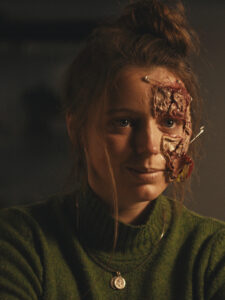
a physical deterioration, also moral, that has its reflection in the characters' own bodies. Thus, Aisha suffers a lacerating rash that covers her entire belly. We do not know how he contracted this disease., but what is clear is that their living conditions are closely related. Dilapidated bodies like that of the poor cook whom he visits from time to time and who offers him a plate of spaghetti, bodies that will finally be scattered on the street when a war that has no end breaks out. Guerra, again, among those who have nothing to stay there, at the lowest and that, curiously, symbolically, perhaps it represents her salvation for Aisha. Or maybe not. Maybe tomorrow another will come to replace the dead to continue exploiting it..
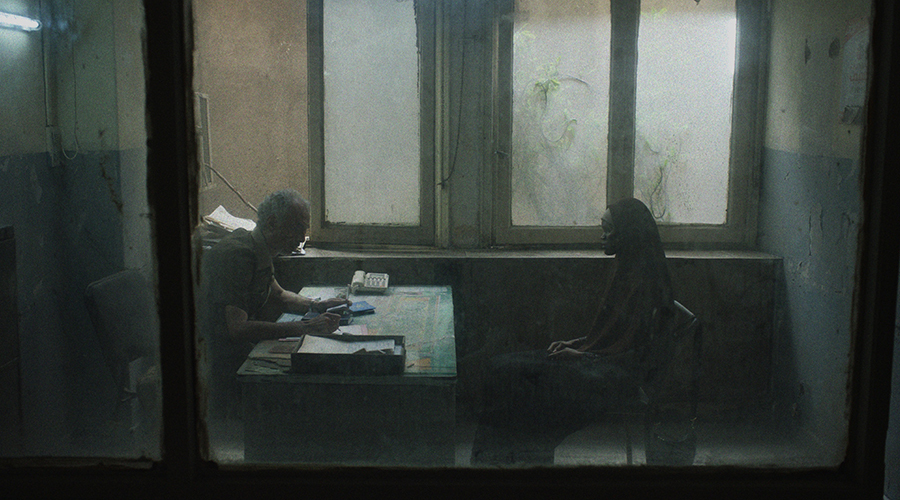
As in Virgilio Villoresi's film, Morad Mostafa, reluctant to give clues out loud (something that the Italian does fall into) It also relies on the symbolic to reinforce its proposal. From time to time, Aisha has a vision of a huge ostrich that appears as some kind of fantasy or spirit. A totem animal? Your guardian angel? The herald of death? Mostafa subtly uses this element to establish, where the words have been removed, as a link between Aisha and the viewer in a game of suggestions that is truly disturbing due to its radical truthfulness..
Morad Mostafa has done brutally crude work. So much so that, as the tape progresses, one wants to reach the credits to finally leave this world. And I don't say this as a demerit of this job., but the other way around. That is precisely its effectiveness. When the lights turn on, a question flies over the viewer's head: how is it possible? And one goes out into the street and feels ashamed of oneself, which is the best tribute that can be paid to this film. GERARDO LEON