
The halfway point of this edition of La Mostra has passed, Some common elements can already be seen in a good part of the proposals that make up the programming of the Official Section. This fifth session of the contest began with the Moroccan production Backstage by filmmakers Afef Ben Mahmoud and Khalil Benkirane, that arrived at the contest a year after passing through the Venice festival. This film tells the story of a dance company that, after an eventful performance, They must travel to the next stop on their tour. On the way, the bus they are traveling in suffers an accident, forcing them to stop until help arrives. Night has fallen and, after being abandoned by their driver, The members of the company will have to resume the march under their own power.. They walk in the dark through a forest that appears to be a hostile territory.. Along the way, their differences will be exposed, old grudges, sentimental conflicts that have corroded the coexistence between them.
As the two filmmakers commented after the screening, Backstage It is a film that stands, in the first place, as a recognition, precisely, to dance as a form of expression, seeking at the same time to articulate an approach, in his own words, as had not happened before in the cinema. Afef Ben Mahmoud and Khalil Benkirane carry out this approach not only through the different performances that we will see throughout the film., but trying to get the spectator to “enter” the dance, to be part of it. To do this, they turn the camera into another body that accompanies the dancers in their movements to give the audience the opportunity to feel that they are participating from within., endowment, by the way, to each gesture of greater expressiveness, establishing emotional connections that go beyond the experience of the mere observer looking from the audience.
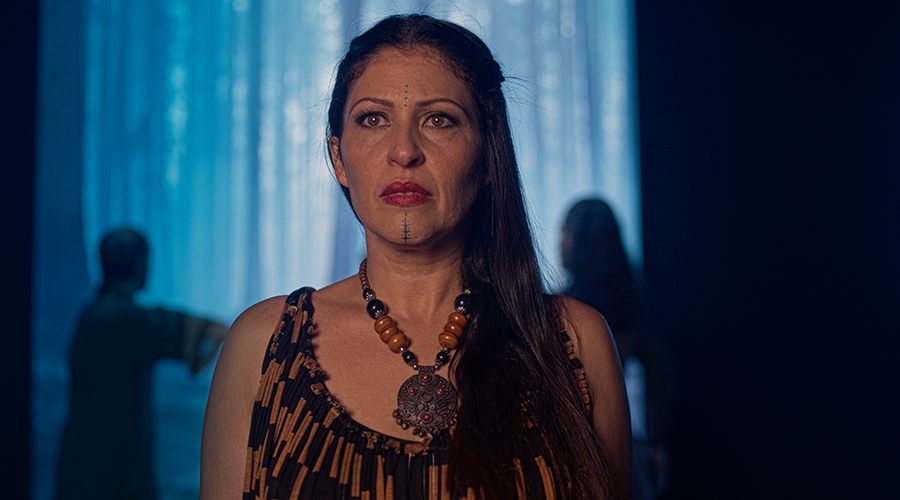
The search for that most intimate link with dance will be reflected in the relationships established between the characters.. Once again we find ourselves here in a hybrid space between styles, with clearly theatrical elements, seasoned with good doses of the mechanisms of the fantasy story and the classic structure of the musical genre. With these premises, The two directors establish a dialogue between dance and dramatic development in a round trip in which plot and movement enrich each other until they become, as the actress and screenwriter Afef Ben Mahmoud explained in the meeting with the public, inseparable. Again, the form gives meaning, meaning to the narrative.
So, This strange journey that the characters undertake will not only serve as an excuse to solve their problems, but it will give them the opportunity for each of them to reconnect with their work, with an art that is, after all, your own way of expression, your way of being and connecting with the world, what they are. There can be no dance if body and soul are dissociated., if they don't talk to each other. Aida, the main dancer, suffers an accident because of Hedi, with whom you have a relationship, symptom that something is not working between them. Nawel, the director, She tries to overcome her grief over the death of her husband., who appears in a series of visions in which she talks with him. At the same time, Ilyes, another of the dancers, He tries to convince the young Sondos to accept his marriage proposal, while she resists, afraid of seeing her career and aspirations end if she became pregnant, as he wishes.
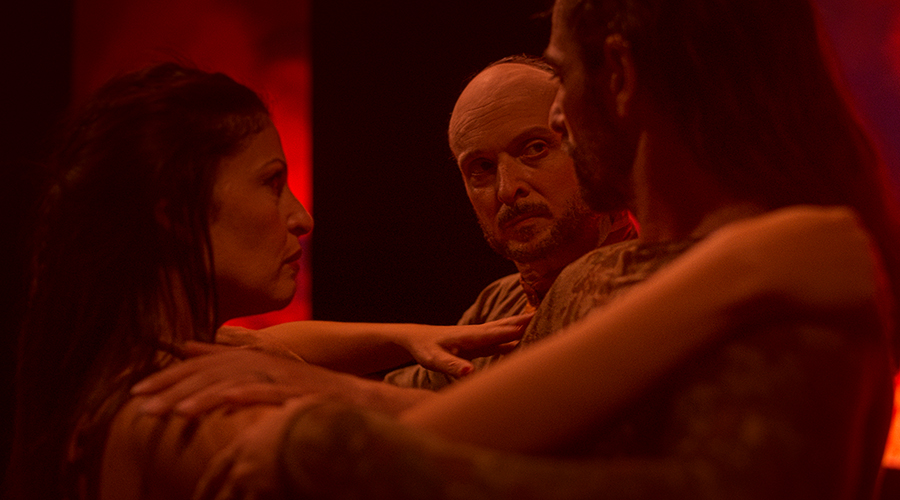
Backstage, however, It is not just a mere exploration of the backstage of the world of contemporary dance., just as the title describes. In one of the most beautiful scenes in the movie, The night sky opens and the moon brightly illuminates a clearing in the forest. aside, Nawel encounters the majestic image of a deer calmly grazing, oblivious to the presence of the troupe. Inspired by this image that connects with a more ancestral self, Nawel starts dancing. Then, the rest of the members of the company follow her. But, after going through some vicissitudes, His dance is different from his last and unfortunate performance.. There's something in your movements, in the way of expressing, that looks different, deeper and more transcendent. It's not about dancing for the sake of dancing, to repeat some movements on a stage. These are bodies that, at last, They talk to themselves and, then with the same nature, bodies that connect with an ultimate meaning of existence, that of the characters and that of the viewer. After all, dance has been part of all cultures since we have been in this world. Why do we dance?, the authors seem to ask and ask us.
As a curiosity, as explained by the two directors at the first screening of the film, It should be noted that, although all the characters speak in Arabic, each one of them does it in a different dialect. This data, imperceptible to Western audiences, gives a new dimension to this story, well, as it happened in a talking film by Manoel de Olvieira, despite speaking different languages, the characters understand each other perfectly. A fantastic license that allows Afef Ben Mahmoud and Khalil Benkirane to take their proposal towards its true reflection. It is not surprising, reached this point, that the dance company is called precisely “Without borders”. a plea, at last, to tolerance between different, to the mutual understanding of our bodies, but also the different visions of seeing life, a call again to build community in a new, increasingly diverse world, but forced to live with each other.
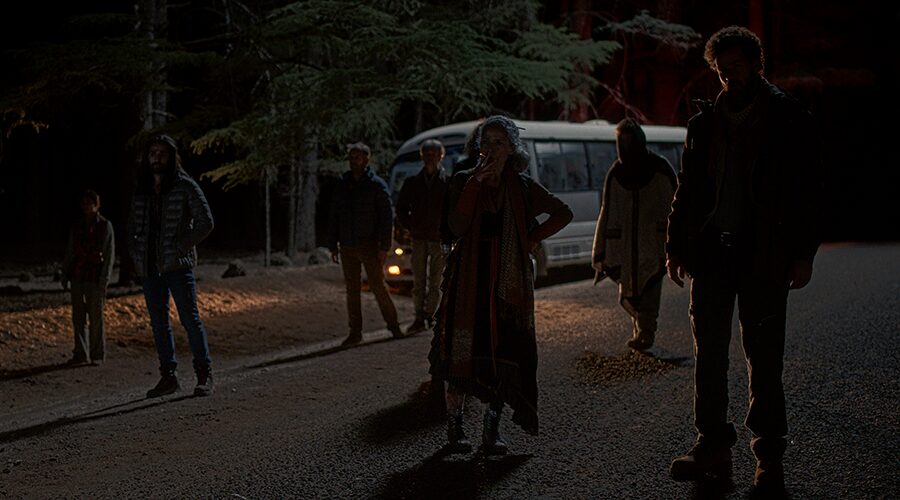
The second proposal of this fifth day of screenings of the Official Section of La Mostra brought us, in turn, the second Tunisian production of this edition. Presented worldwide at the Locarno festival, The red children has many points of thematic connection with Who do I belong to, tape that we had seen the previous day.
Lotfi Achour's film places us somewhere between the Mghila Mountains, in the center of the country. Here, two young shepherds, Achraf and Nizar, They drive a modest herd of goats. At a given moment, Nazir encourages Achraf to visit a special place that he wants to show him.. The two children, unconcerned now about the flock and their obligations, They enjoy bathing in a small stream that runs along the bottom of a rocky ravine. Then, tired of their games, They rest under the shade of a tree. They know that the area is a prohibited space, but they don't care. That's when the boys are surprised by some men who violently beat them.. Stunned, Achraf wakes up after the attack. Next to him, lies the body of Nizar whose head has been severed. Embarrassed, Achraf obeys the men who tell him that, under threat of losing his own life, he must take his friend's head to his family.
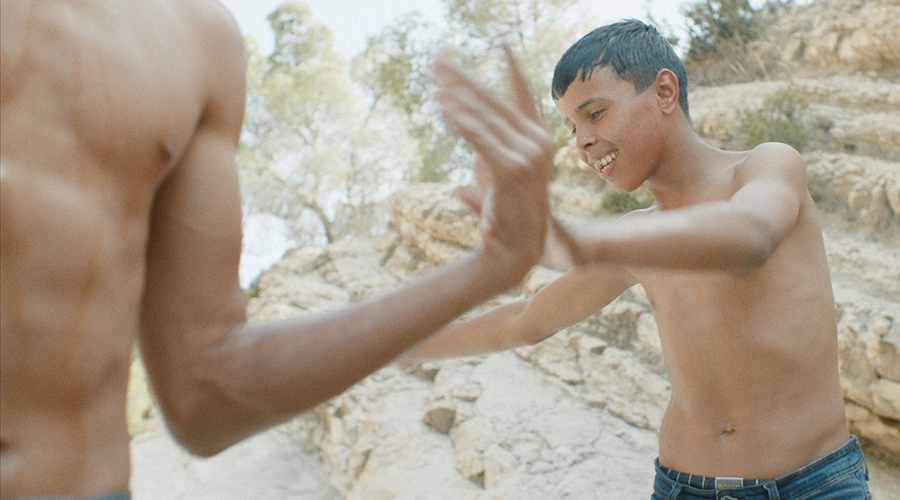
Like in Who do I belong to, Lotfi Achour once again confronts us with the presence of Islamist groups in Tunisia. But if there we took the side of the aggressors, here we stand on the side of their victims. In his film, Achour reconstructs a real case that occurred in the year 2015, a few months after the attack on the Bataclan theater, In France, and that was going to shock the entire country. The tape becomes, thus, in a complaint about the incidence of radical Islam, a song against violence, although it is mitigated on the screen, expresses its results in all their crudeness.
Violence that, again, It preys on the most humble layers of society. As the director himself said during the presentation of his film, after initial public promises to protect the area's inhabitants, The Tunisian government began to forget about the issue., allowing new crimes to be committed. In his film, Achour points out the hypocrisy of some rulers who have left people abandoned to their fate who have no choice but to leave their homes and towns to survive.. Next to him, of course, media more concerned with morbidity than with reporting and denouncing the atrocities committed by Islamists, on the one hand, and government, on the other. A cornered town that doesn't seem to find a way out.
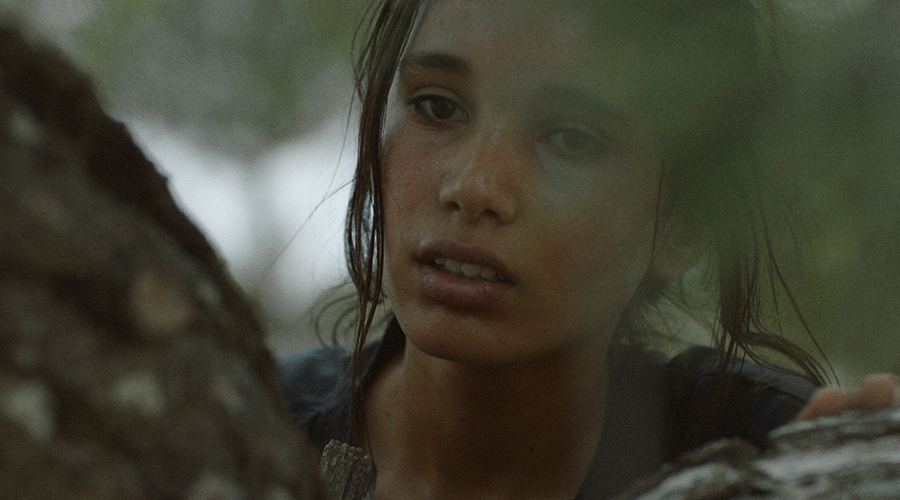
Where in the film Meryam Joobeur focused on motherhood, here the children will be the protagonists. Childhoods abruptly broken, fractured childhoods that, suddenly, will take a giant leap into the darkness of the adult world. As he said after the screening, Achour aims to put the viewer in the mind of Achraf, to accompany you on this subjective journey towards your own internal hell, which is none other than understanding and assuming what has happened.. In one of the first sequences of the film, Achraf returns to his village with his friend's head kept in a sports bag. On the way, He meets other boys from the town who, oblivious to the drama, they play a soccer game. Incited by the boys and forgetting for a moment his mission, Achraf agrees and starts playing. But the boy is much tougher than usual.. Something is starting to change inside him. It will be a little later, sim embargo, when he gives his parents the head of his son, when Achraf begins to understand.
and again, as happens in several of the proposals that we have already seen at the festival, The landscape takes on its own role here until it becomes another character in the plot.. arid lands, harsh areas that impact with equal harshness on the lives of its inhabitants and that serve as a hiding place for its enemies. Lands that hide traps, lands of life and death. The natural beauty of spaces appears corrupted by the ignominy of men.
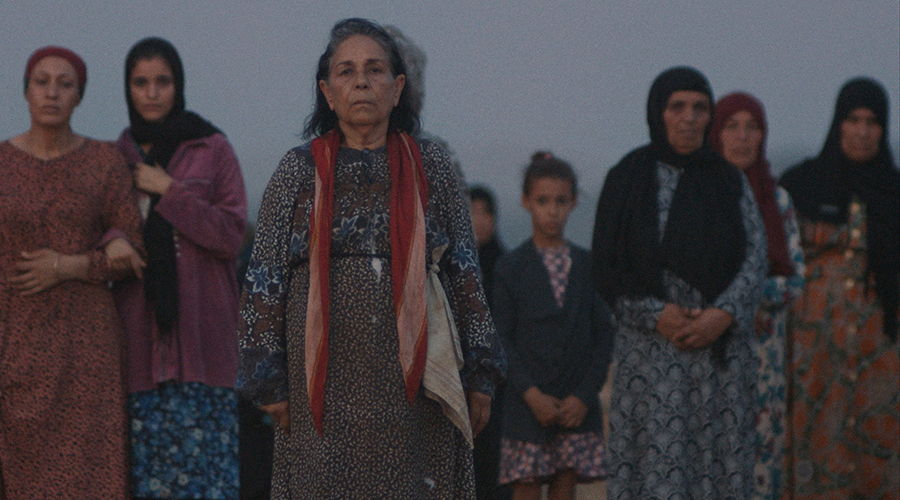
Again, the fantastic mixes with reality, this time through a series of visions in which Achraf talks again with Nizar. Achraf accompanies a group of adults to the place where they were attacked to recover the child's body. Danger lurks again, after turning any bend. Some visions that refer us to the same process of mourning that Achraf is suffering., definitely, and no matter how much it hurts, He will have to let his friend go to the other world, leaving him alone again.
Although Lotfi Achour demonstrates a certain naivety when posing some situations, The film takes flight as it focuses on the most human part of its characters.. In that sense, The red children doesn't hide anything. Your message is not exactly hopeful. And it doesn't have to be.. Things are like that, and hiding it is of no use to anyone or anything.. GERARDO LEON