It is not the first time that we see in this edition of La Mostra a proposal that tries to play with the modes of the fantasy genre. There was talk of magical realism in the case of A private bathroom and we also talk about mixture in the case of The life next door by the Italian Marco Tullio Giordana.
Who do I belong to, by Tunisian director Meryam Joobeur, first of the two films that starred in this fourth session of the Festival's Official Section, joins this list and does so in an even more premeditated way. Joobeur's film puts us in a particular situation: the recruitment of young Tunisians by the terrorist group ISIS. We are somewhere in the north of contemporary Tunisia. Among women in a modest rural region there is the same uncertainty. Where are our children? Are they still alive or dead? These are questions that have tormented Aicha since Medhi and Amine, his two oldest children, They left to join the ranks of the Islamist group to fight in the Syrian war. Luckily for Aicha she still has Adam's company., the youngest of the three brothers, but the pain of Medhi and Amine's absence still gnaws at her inside, darkening your life
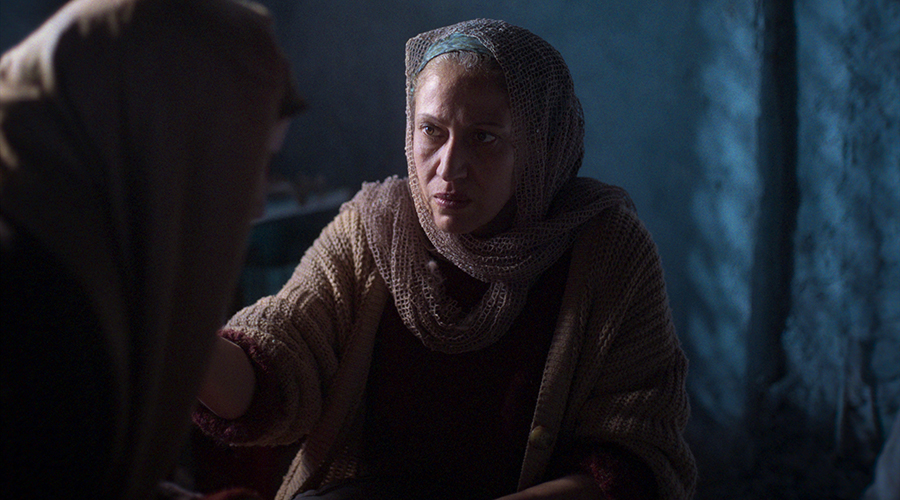
One day, however, Medhi unexpectedly returns home. Aicha's joy is immense. But Medhi doesn't come alone; He is accompanied by a strange woman who is wearing a hijab that only allows her to show her eyes.. This situation arouses Brahim's misgivings, Aicha's husband and father Medhi who does not accept the imposition that that clothing represents and disowns his son for what he has done. But another question clouds the return of his Medhi: what happened to Amine? Where is? As if all this were not enough, Things still get complicated when a series of disappearances begin to happen in the town coinciding with the arrival of Aicha's son and his wife., who remain hidden in the family home in order not to be discovered by the police. Besides, nightly, Reem, Medhi's strange and silent wife, He leaves the house without us knowing where he is going.
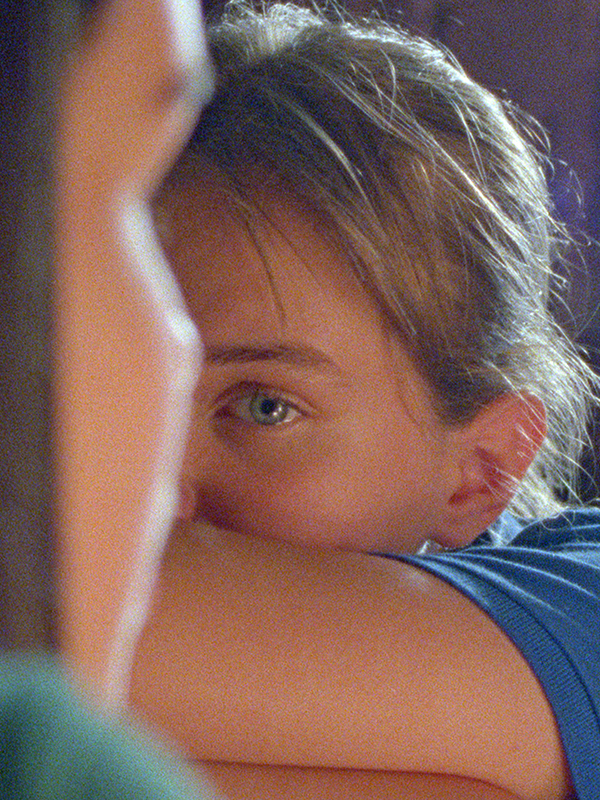
Who do I belong to It is a proposal that moves, from the point of view of both the story, as in the form, between several poles. we could say, as we advertise, that the film draws on the tradition of the fantasy genre, but to this are also added other ingredients of the police thriller and, even, of horror cinema. Meryam Joobeur deliberately plays with the viewer's expectations. Why has Medhi returned?? Who is that woman who accompanies him and to whom he seems to feel subjected?? Or is she the one who is subject to him?? Joobeur delays the answers, letting the viewer dwell on his own prejudices. Reem's eyes, his deep look, expressionless, his strange silence, the suspicions generated from a culture that is strange to us, threatening, to which her clothing refers us, the way in which he gradually controls all the members of Medhi's family until he ends up breaking it up from within, They refer us to an almost demonic presence. The use of music with clear references of the genre and that underlines the scenes also contributes to this impression.. A camera that focuses on the very close-up shots of the characters and a montage that focuses on their gaze underpins the impression of mystery that runs through the entire film..
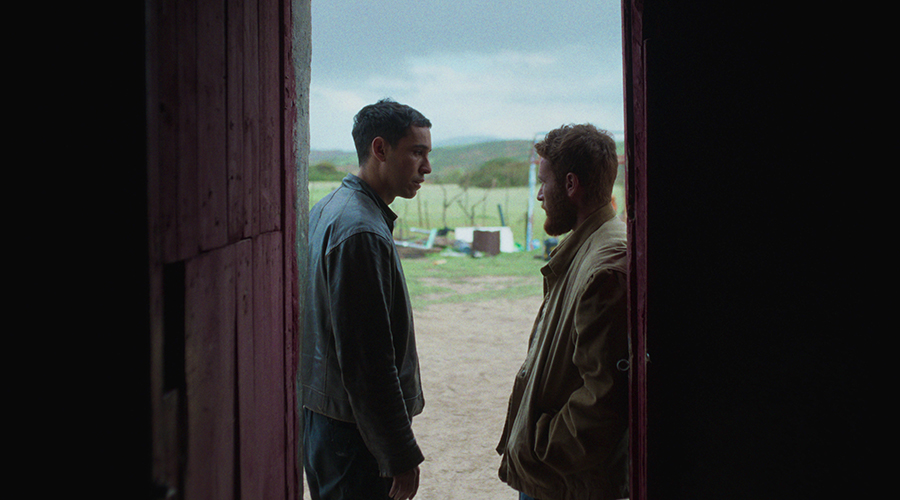
A mystery that will be reinforced by another mystery. And Raisa has certain sensory qualities that prompt her to have premonitory visions.. This element will help the story move between two worlds, that of sleep and that of wakefulness, also marking in a very noticeable way the tone of the narrative. There is still a third mystery that refers us to those strange disappearances that the also young Bilal is investigating., childhood friend of Mehdi and Amine, who has now become a police officer. Bilal knows that Mehdi has returned to the village, but, in deference to his mother, the one who wants, protects him and guards against giving him away. What consequences will that decision bring??
Who do I belong to addresses several issues. On the one hand, It tells us about the consequences of war and religious fanaticism that takes advantage of the harsh living conditions of certain social contexts.. But perhaps the most original thing about Meryam Joobeur's proposal is that it does not do so from the point of view of those involved or their victims., but of those who suffer the indirect consequences of their actions, of those who are waiting, in the rear, of families and, very especially, women. Because somehow at times somewhat intricate in a plot with so many axes, Joobeur's film puts women in the foreground. Women who are mothers. But a motherhood that also comes into conflict with itself. Brahim disowns his son for what he has done by joining the ISIS militias and, above all, for having dragged his brother into it, and wants to throw him out of the house. But Aicha, his mother, She vigorously opposes her husband until she breaks his will.. Aicha's emotional dependence on her children will be about to destroy what is left of her family.. She runs, at the same time, as the spirit of salvation for his lost son and also as the cause of his own fall.

This game of ambiguities that affect form and substance will end, however, for working against Meryam Joobeur's proposal. And the Tunisian director generates so many expectations about her characters that the output will have to be especially satisfactory.. However, both in terms of the speech and the resolution of the different plots that have been raised (and that we will not reveal), there are too many loose ends, too many contradictions or perhaps it would be better to speak of a lack of precise connection between them. An unnecessarily long tempo and the use of close-ups, somewhat forcefully delaying the reactions of its characters, mark a repetitive staging., finally defining a piece that is too self-conscious, that suffers from an excess of sensationalism that will end up lowering the interest in the symbolism that Joobeur imprints on his images, ending up imposing a message that, finally, after many comings and goings, being outlined, It won't be entirely clear either., as evanescent or ungraspable as everything else.
The mix of styles will also be the tone of the second of the day's proposals titled When the pone rang de la directora serbia Iva Radivojević. A proposal that stands, again, by a fine line of argument that will support a series of reflections.
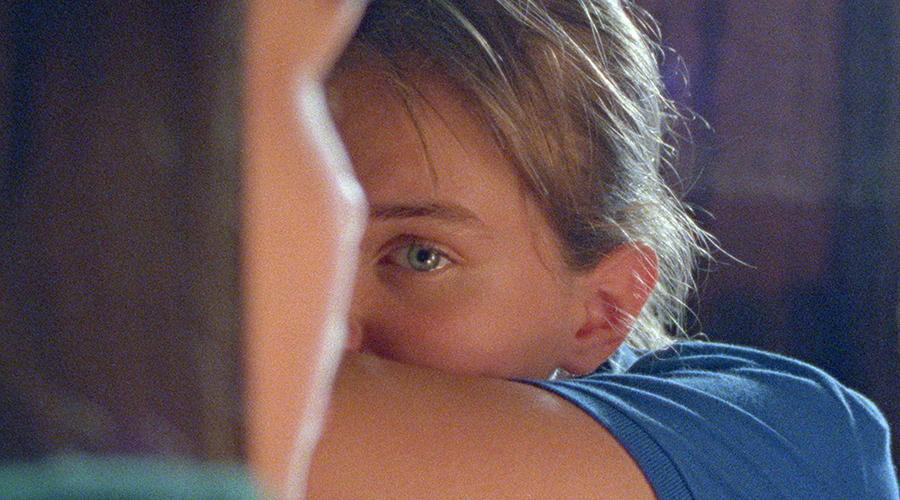
We are in some city in the former Yugoslavia, In the year 1992. Lana is a girl 11 years when he receives a call at his parents' house announcing the death of his grandfather. that call, been a long time, will be related to another fundamental event in your life: the war that, in a short time, will end up dismembering his country. In Lana's memory, other images of that now distant past remain linked to these two situations., scenes with a neighborhood neighbor, Government, a young man hooked on sniffing glue, visits to the hairdresser with his brother, to the video club, walks around the city, goodbye to her friends, the reaction of the elderly to that situation, a song by a pop-rock group that he saw at some point on TV at home, y, above all, the image of some suitcases, essential element for a trip that, as the protagonist tells us, has no return.
On the wall of the family house, an old clock shows the exact time of the call. “When the phone rang it was Friday at 10:36 in the morning and this country existed”, says a voice-over. These two motifs will be repeated throughout the narrative, marking the cadence and rhythm of a film that, again, plays with visual elements typical of documentary while moving in the space of fiction, of what was rebuilt, managing to smooth the border between both genders so that they can dialogue with each other, reinforcing, at that meeting point, their potential or, at least, exploring other alternative paths.
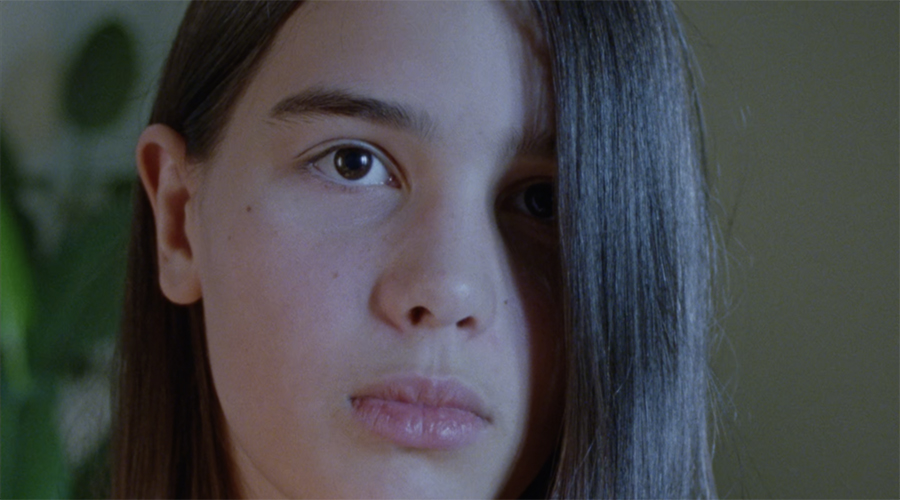
A style exercise that serves, from that hybrid space, to talk to us, first of all, of individual and emotional memory in the face of the great events of history. A fragmented memory that breaks with the logic of continuity so beloved in fiction. This is the first challenge that Iva Radivojević faces us, well, as your movie suggests, that impression of a complete whole, cerrado, TRUE, it's just a trick. A movie is made of fragments, plans, images, extracts of sounds that, together, They give that impression of continuity. And the same thing happens with our memory. In the case of fiction, We will be the ones to fill the empty spaces, subjecting ourselves to deception. In our memories, We will also try to provide coherence, meaning to our lives.
To show that fragmentation and, at the same time, sustain unity impression, Radivojević uses that voice-over that will recount the events experienced. A voice of memory that travels indistinctly forward and backward, that repeats passages, scenes, deforming them, sometimes more precise, retailer, others more vague, as if she were talking to herself, thing we all do when we remember. In that sense, The feeling of truthfulness will be given by the relationship established between the verb and the image. What was said as reliable proof of truth, even if it's only half. This allows the Serbian director (or should we say yugoslav?) use very few staging elements. It is enough for the voice to say, to give credibility to what is reported, giving body to the images, turning them into lived reality, complete.

When the pone rang It is a film that tells us about the pain of leaving your country, your home, your friends, your world, at a very young age. A film loaded with a feeling of nostalgia for that past, childhood nostalgia, nostalgia for a place that has been forever erased from history, a country without a possible future. A place to which, no matter how much you want, can't go back. Yugoslavia no longer exists. There are the towns and cities that once made up that political territory, emotional, but the country has disappeared. Is it possible to return to a place that is no longer? What do we do with his memory, with your memory? Who takes care of that? Who are we? GERARDO LEON