
It is not easy to explain the plot of a film like farouk de la directora turca Aslı Özge, which arrived at the Mostra after winning the Feprisci prize in the Panorama section of this year's Berlin Festival. And the reason for this difficulty is due, among other things, because the tape runs through so many meanders that, finally, fails to find a clear center on which to pivot.
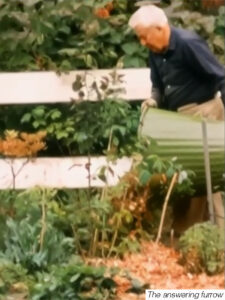
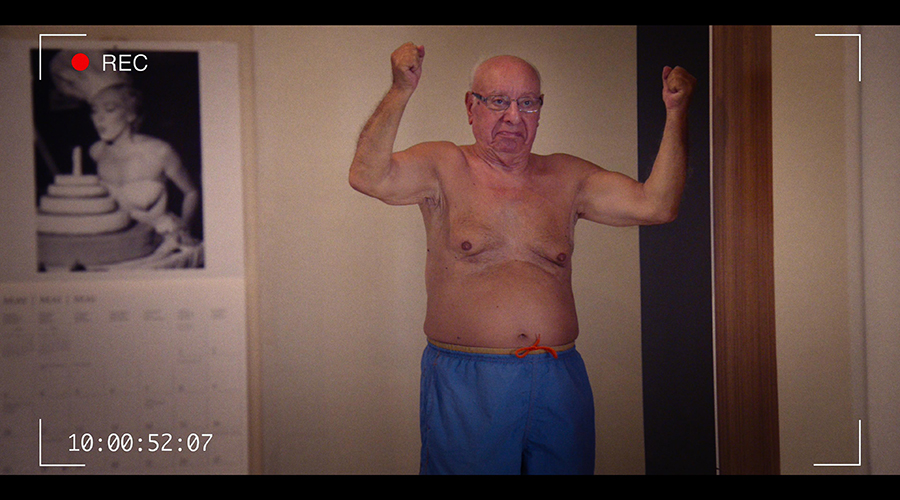
We have a man older than 90 years called Faruk, like the title. As the movie tells us, Faruk finds himself at a crossroads: a construction company has proposed, along with the rest of the neighbors of the building in which he lives, demolish their houses to build a new housing block with a structure that is better prepared for earthquakes, a common problem in the region. In principle, The residents of the building do not understand why they should undertake this project when not long ago they made a series of renovations that, it is supposed, solved that problem and that had meant a significant financial outlay. In fact, Faruk does not seem very convinced of the operation, not only because of the inconvenience of having to leave your home, also because you will have to look for new accommodation to live in during the construction process of the promised new homes. And the truth is that the conditions offered by the construction company, the layout of the new house, They don't convince him either. While, water hija Özge, director of this project, He's making a movie about the whole process..
Trying to delve into the images and in accordance with what Özge herself said after the presentation of her work, farouk It is a film that addresses, among other issues, the problem of gentrification in the city of Istanbul. According to that story, The state demands for preventive measures against earthquakes have encouraged the mischief of businessmen and builders who have fueled, it is supposed, the displacement of the most humble people from their neighborhoods. The problem, to understand us, It's just that that doesn't appear on the screen..
Yeah, We have a couple of builders who look very bad.. At every meeting he has with the neighbors, more than making things easier for them, It seems like they are trying to deceive you., pushing them at every step to accept your proposals. This impression is not motivated by the movie, sino, as it happened in Who do I belong to, by the prejudices of the viewer himself. As soon as one has had to be involved in this type of situation, You will know that in these relationships the first thing that arises are suspicions and, generally, justly. But, beyond stereotypes, That does not mean that the film gives us clues that this mistrust is justified.. At the end of the process, The building seems to be still in progress and the apartments will be delivered. To all the neighbors, salvo (spoiler beware!) to one, to Faruk himself for reasons unrelated to this conflict and that, surprisingly, involve his daughter, the director of the film. It is at that moment when, scrupulously following the narrative, that supposed speech against real estate speculation, falls, and one wonders what this is all about, what do they want to tell us.

This does not mean that farouk, The movie, do not propose any interesting question, case of the question of loneliness and helplessness to which, frequently, Older people find themselves faced with administrative bureaucracy in a state that does not make things easy for them. farouk, The character, He is determined to solve his problems alone. He doesn't want to bother his daughter who is mired in the financing process for her film. But, little by little, we will see that the situation is going to overwhelm him. At your age, lack of energy, The intricacy of the process leaves him stunned to the point of recognizing to himself that he is going to need help... from his daughter..
Another interesting question refers us to the idea of community, seen in this work as a group of subjects that each moves according to their particular interests and tastes.. It is enough to attend a stairwell meeting in any building in the world to know that this is the case.. To every problem that Faruk puts in front of the plans that the builders present to him, there is always a neighbor who, convinced of the operation, will try to pressure you to accept the conditions. But, according to what the movie tells, although we suspect it, It is also not clear to us whether it is finally malice on the part of the neighbors., Faruk's own stubbornness or both at the same time. Doubt will also cause this plot line to fall when we reach the final resolution of this story..
At the beginning of the movie, Faruk appears before the director's camera while she gives him some instructions. Shortly after, we see him walking down the street, while the film crew records their movements. When the scene ends, the director announces to her people that the shot must be repeated, Well it seems that something has not gone well. This idea of breaking that level of reality in the film is repeated several times throughout the film.. Aslı Özge gives his images a documentary aesthetic with which he intends to appropriate the value of the genre to give truth to his story., yes ok, on the other hand, The director goes out of her way to show us that everything we are seeing is pure artifice.. However, This formal game between appearance and reality adds nothing to the narrative.. That the documentary is a genre that has a lot of imposture is something we have known since the first pioneers of cinema. But that does not break the illusion effect in any way or in all cases.. In this way these interruptions do not report anything to the story, beyond an aesthetic element, imposed to incorporate the character-director as another piece of the plot.
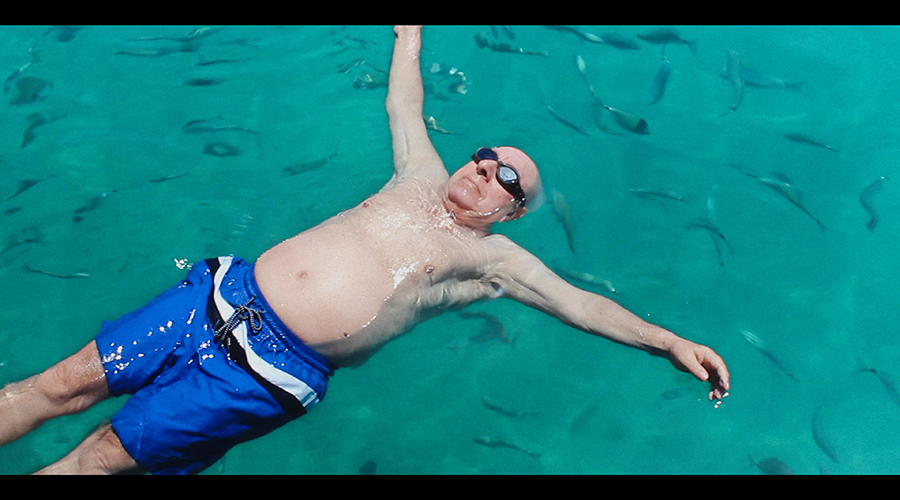
An argument that, We understand after Aslı Özge's intervention at the presentation of his film, could have continued until a long time later. and there, as he said, Those elements of speculation that he says his film refers to do appear., in the reality that takes place outside the screen. But, very probably, time and resources (It has taken seven years to complete this production), They forced her to close the story, introducing a surprising effect that will give a lot to talk about, but not only does it not fit into the director's speech, but dismantles his intentions. A false closure. And if you have to explain, off-screen, what does your film say, something is not right.
Maks is a criminal lawyer who works for a prestigious law firm serving Dinko Horvat., a wealthy businessman from his country. At the beginning of this story, Maks and his partner have managed to clear Horvat of a murder charge. But Maks knows that the acquittal has been conditioned by a judicial process that has been rigged by the businessman himself., that has bought the judges. Persecuted by his bad conscience, Maks prepares to denounce the misdeeds committed by Horvat. It is not the first time that a case like this has been charged.. In fact, The businessman's entire history is filled with other similar complaints from which he has always escaped unpunished.. But facing Horvat will come at a high cost for Maks. Besides, the lawyer will meet Nina again, a former lover with whom he will restart a relationship, perhaps already fleeing from a marriage that is failing.
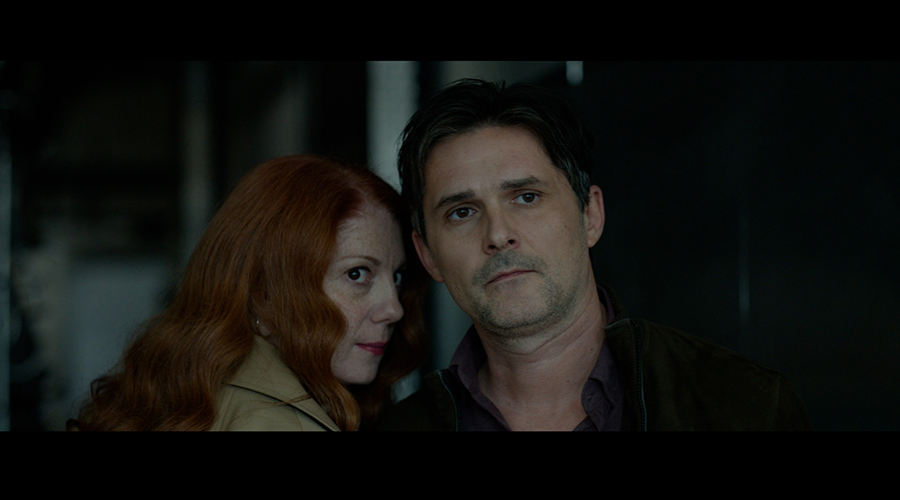
This is the argument of It all ends here, del director Croatian Rajko Grlić, old regular at the festival in which he already participated twice in his previous stage. Grlić brought one of the most conventional proposals of this edition, a social drama with thriller overtones based on a piece by the writer Miroslav Krleža published in 1938
Grlić takes the text to the present century to offer us an x-ray of the political situation in his country. After the fall of communism and the subsequent dismantling of Yugoslavia, Croatia suddenly became a party democracy dominated by pressure groups and opportunists who would make a killing by enriching themselves at the expense of supporting a corrupt system., lacking the most basic guarantees. This message articulates Grlić's proposal. The problem Maks is going to face is not that Dinko Horvat is a powerful businessman, is that his tentacles are so deep that he almost seems erected into an indestructible king who cannot be overthrown..
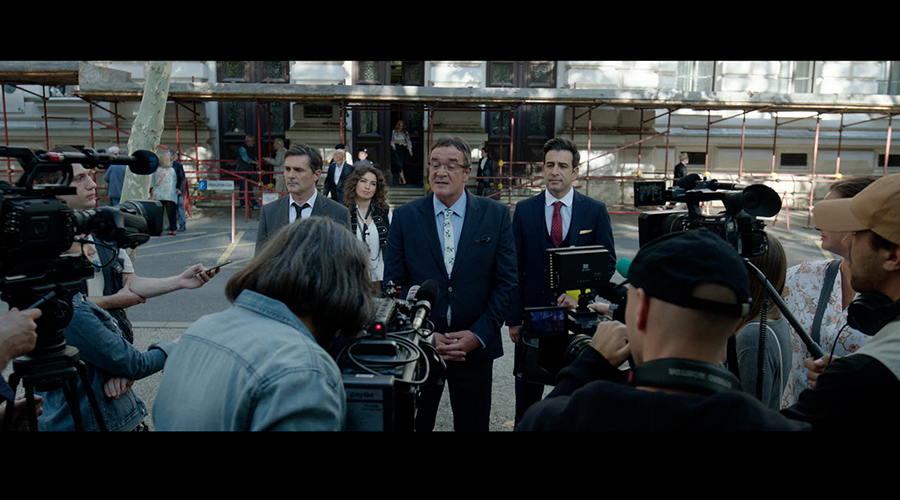
Rajko Grlić and scriptwriter Ante Tomić, They create a well-structured artifact in which the pieces fit together to serve the conflict.. The problem perhaps is that the enemy they build is so insurmountable that it is difficult to get out of the plot presented in an elegant way.. This circumstance, makes the film gradually become a funnel with only one exit left. A resolution, however, which is unsatisfactory, a kind of deux ex machina, logical on the one hand, but it gives the impression of a solution that is perhaps too simple for the mess we have embarked on.. And that is precisely the problem with thrillers., that at the exit you will find all your virtues or problems.
The intentions of the authors cannot be criticized., but their drawing of the situation they want to describe becomes somewhat rough in its development. Everything here sounds like a classic cinema stereotype: a man sorry for his past, another powerful man, a femme fatale... It all ends here, maintains the right pace and gets the viewer through the hour and a half of footage without too many setbacks, but it does not hide great secrets that dazzle, neither in substance nor in form, and justify their presence in this official section. GERARDO LEON