Second session of the Official Section of La Mostra de València and, with her, two radically different films, both in the theme or the issues they address, as in your formal proposal, dramatic and discursive structures and criteria.
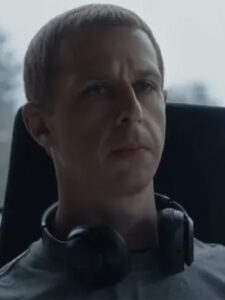
In For freedom (The end will be spectacular, in its English title) We are located in the city of Diyarbakir, in southeastern Turkey, specifically, In the year 2015. Physically surrounded by the ancient Assyrian walls that delimit its center, The Kurdish majority that lives there feels politically and socially subjugated by the tight control that the Turkish government exercises over the population.. Given this situation, a group of Kurdish youth decides to organize resistance and confront the oppressors. With precarious methods, An urban guerrilla is organized that will manage to challenge, first, to the police, then to the army that will come to replace it as the confrontations take place, until turning the city into a real powder keg.

Dirigida por Ersin Çelik, For freedom es, In fact, a collective work resulting from the work of the Rojava Film Commune, a group based in the Syrian city that gives it its name, very close to the border with Türkiye, and whose objective is the development of several projects related to cinema within its community. As one of the producers of the film explained, Diyar Hesso, The tasks of the Rojava Film Commune focus on three fronts within the region: the education and training of young filmmakers, the screening of films in an area where cinemas are non-existent, enabling spaces such as theaters and social centers, and film production. With a clearly vindictive character, the Rojava Film Commune was born with the intention, in Hesso's own words “to change the perspective of how the stories of our region are told.”, always told from a foreign perspective. Generally, These stories are made by the most media maintreme international images that portray people who have beautiful faces, but they are poorly educated and are always fighting ISIS. They never reflect the truth and are often, even, contemptuous of the revolution, with people, with what they fight for or what they believe in or what is happening there. So we want to change that narrative.".
This political and discursive intention substantially marks all the formal solutions of this work.. For freedom He makes his dramatic bet by placing the camera next to the resistant militia and does not deviate from that point of view at any time.. From here, more than a story, What we are going to witness are a series of situations that serve as a mirror of what the situation of siege and resistance that the city suffered was.. As was confirmed on the screen and later confirmed by those responsible, It is the memory of the combatants that is reflected here, It is their experiences that structure and give meaning to the film.. That's how it is, that it will be the combatants themselves who represent themselves in fiction. “Two of the survivors of the siege represented themselves. In fact, most of the fighters [that appear in the movie] They represent themselves because they have all fought on different fronts. In the end, everyone has lived these stories in first person. For example, one of the commanders fought in Raqa (capital of ISIS), and he joined the film team because he knew the importance of telling this story. with them, We agreed that it was not possible to liberate the country only by fighting. If we didn't tell the story, I wasn't going to survive. It was a way for these comrades to survive in history. The script was written after the meetings we held with the survivors of the siege, so they could tell their own story,” commented the producer.
This almost biographical or documentary character, permeates the entire film and contains, in himself, the intentions of those responsible. “The siege was not only a military siege, but a siege of narrative. That is to say, The Turkish government did not want this story, told from the region, went outside. "They wanted to erase all history.", explained Diyar Hesso after the screening. For the actors who participated in the production, This character of personal memory marked the experience of what the filming meant and, therefore, the recreation of some events that they themselves had experienced. “On an emotional level, the difficult thing was to tell the story of his own friends., his own comrades, with whom they had lived many moments, and some of whom are no longer with us, they are dead. Some of the actors and part of the crew that participated in the film also died in the resistance against the Turks.. Besides, it's sad, but the story, unfortunately, continue, because the war continues in other places in Kurdistan.”

But, How is a film of these characteristics produced in such an economically punished region?, social and, above all, militarily? "Unfortunately, we didn't have to rebuild the city. Filmamos en Kobane en 2016 after another siege. “All the military vehicles we see in the film are ISIS vehicles that were appropriated by the Kurdish forces,” explains Hesso.. "Obviously, We also had great popular support. All the extras are the inhabitants of the neighborhood where we filmed, who volunteered to do so. Much of the film crew is also volunteer. And then, We also have local financing from the Ministry of Culture and, again, with a lot of popular support around the world. As producer of the film, it's not right for me to say it, but the film had thousands of producers.”
Although the Rojava Film Commune had previously produced other documentary works, It would be the modes of fiction that would bring those responsible closer to the ultimate intentions of this work.. As Diyar Hesso narrates: “In a way we wanted to avoid the way in which the media narrated the history of the region. For example, when there are small skirmishes, like when coalition air forces fight in small towns in the desert against ISIS, That immediately appears in the media around the world.. But no one says that, suddenly, the historic center, with its population, was destroyed. That's not on the news. And that's why we wanted to tell a fiction based on real events, with real characters, with true stories... The objective is for this story to survive over time and reach a wider audience, which was very important for this project.”
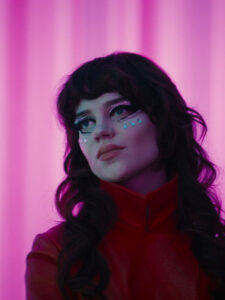
In a diametrically opposite direction, The second screening session of La Mostra offered us the first entirely Spanish production of this edition. It was about The traveling salesman, first feature film by Canarian director Miguel Mejías. A piece that is difficult to describe and whose slight plot line barely gives us a few clues about the intentions of its creator.. Here we have a woman, Angela. with her, at the beginning of the tape, his mother. After her death, Ángela embarks on a journey without a destination through the Canary Islands that will take her to different situations., occasional encounters with other characters, like Michael, a man who picks up on the road and with whom he shares some experiences, equally lost souls, Like her, in search of an elusive something that can be breathed in the air. By the way, Angela likes to shoot things with an old super-8 camera. He also likes butterflies and insects..

In the words of Mejías himself, Angela “is a kind of wandering soul who dedicates herself to bringing strangers, almost like a vampire, which is how film and the camera work, that wanting to suck others, want to feed on that”, commented in front of the public at his festival debut. “Everything revolves around that concept of how we face death, how we decide to live in the face of that experience of death and how it influences our decisions. It's a dark poem. In each plane, emanates that idea of the finitude of consciousness and death.”
In The traveling salesman What he tells us is not so much in the development of the story, as in establishing the appropriate relationships between what we see and those sensations that it produces in us as spectators and those associations that we establish and that point to a very intimate perception of life.. That leaves the viewer alone before the images., without a strong handle to hold on to and that guarantees understanding. These master guides, They undoubtedly conditioned the interpretation that actress Ángela Boix makes of this character with an always lost gaze towards an afterlife that she seems to question., but it doesn't offer you answers. “I think the movie, above all, are questions, more than an attempt to answer things. It is about the experience of how those questions impact one and how one relates to what one does not know., about oneself and what one does not know about life”, explanate, about his Angela in fiction, the actress Ángela accompanying Mejías in the presentation of this work. “In that sense, It was not a preparation based on the construction of a character, but in being able to allow myself and us to inhabit and live those questions, ask ourselves those real questions. Who do I want to be?, how much time do I have left in this life, what do I want, what do I need, what I want and need, are they the same?, Does it coincide??, what it's like to be isolated, “how that isolation translates into one’s body.”

Definitely, in that search for answers or, rather, of questions, the landscape played a main role. Landscape as a spectator of the dramas that devastate the individuals who inhabit it, but also as a reflection of your feelings. In that sense, We could say that the environment is transformed by whoever looks. “When I was making this movie, For me there was something important that was a search for a re-enchantment of the gaze on things, a re-enchantment of cinema, also. I wanted to return that magical veil of yesteryear to the cinema. I love social cinema, but this film asked me to eliminate time and place it in its own world, that it was a journey into the mysterious, even with moments of fantasy. In that sense, This decontextualization of everything was sought. Also so that it was a more primitive encounter with nature”, Mejías commented to questions from the press.
That own look, personal, It contains within itself a declaration of the director's intentions regarding what cinema should or can offer the contemporary viewer.. A necessary reflection in these times when we wonder so much about the survival or not of this form of expression.. “I am interested in cinema as its own language.”. I think that cinema has to be a sensory experience, and more now that they give us everything as very chewed. In that sense, the film tries to bang on the table and remind you that in the cinema you have to get involved, you have to want to feel things, that not everything is clear, that there is always mystery between the characters, there are questions that are not answered. Like Angela, “We have to leave without really knowing what is happening.”, Mejías responded.. "And what I'm looking for is that, atmospheres, spaces where those mysterious questions live. They exist in us, but with so much encouragement, with so much technology, With so many things we forget that we still have music inside us as well., that amazing things still happen, things we don't have answers for. It's a bit of digging into that "yet", almost a search for God.”

At the center of all these reflections, what we find is an isolated individual, precisely when, they tell us all the time, we are more connected than ever. We find that isolation in Angela's own journey., in his gaze, but also in the eyes of his own mother, in the obvious distance that exists between the characters, and between these and the environment, whether the city, where people live locked in their homes without knowing anything about others, like further away, in that always distant there that, we are understanding, Angela will never be there because she may not be anywhere. “I wanted to try to seem like it's an empty world. A world where people don't communicate. There are small nods to certain digital communication, to certain rooms where the others live. The movie was made before confinement, but there is an idea of communication without community that exists today, "That's how our neoliberal society works.", commented the Canarian director. “In the film the characters are isolated from the world, therefore, The question is to what extent our identity is constructed from ourselves or from the other.. I think that in the relationship with the mother or Miquel the links are clearer.. To what extent does she need a human representation or to what extent is Ángela interested in Miquel?, to what extent the individual is interested or, simply, she is interested in not being alone. To what extent she “is” alone”.
This double subjective and objective vision at the same time, intimate, but that refuses any explanation, marks Mejías's position with respect to the viewer, true protagonist of this work, well it will be him, your disposition towards images, what determines the ultimate meaning of this piece. “I invite the viewer on a journey and give them the thought. I don't like to impose my thoughts. I offer you a world and you decide to inhabit it or not., and there your questions come to the surface. Your questions, not the things that I want you to reflect on. from there, I respect the viewer a lot”, Mejías concluded.. “For me, cinema has to be an existential contraction. It has to stir you and do it from the inside, not from dramaturgy. from there, I try to grab the viewer from the senses, from the sensations, but in what is meaning, I invite you to draw your own conclusions.” G.LEON