VAT. Guillem de Castro, 118
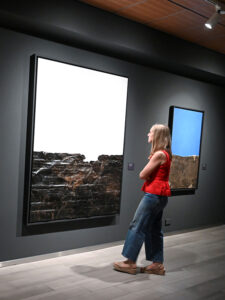
Know the biography of Zineb Sedira It is essential to understand his work, marked by uprooting and nostalgia, since we are talking about an artist of Algerian parents born in the 60 in the suburbs of Paris who emigrated to Britain in 1986. All his work screams Algeria. This is, the Maghreb country where the French colonial occupation lasted the longest (132 years) and the only one where independence was achieved by force, after a bloody and bloody war, a year before Sedira was born in France. Leaving and escaping, traveling to never return are constants in the artistic discourse of this exhibition with which the IVAM continues to explore the art that is created on the shores of our Mediterranean. One of the most iconic pieces of the tour may be Shattered carcasses and architecture of the forsaken, composed of light boxes that illuminate fragments of sunken ships on the coast of Mauritania, from where migrants leave for the Canary Islands to finally reach the European continent. They are rusty and dilapidated ships that evoke the tragedy of failed trips and the bodies that have been left along the way.. Another important work is Sunken stories, also maritime and also about the diaspora, a series made up of six models of destroyed ships (dhows, Traditional wooden sailboats from the United Arab Emirates, India and East Africa) that shipwreck in a “sea” of clear resin with bubbles. The Mediterranean Sea is a constant in the artist's imagination and here it appears as a place of treacherous passage., an obstacle to movement that causes shipwreck and death.
Sedira understood from very early on that, in his work, political work had to be personal, that individual experience could be a way to understand collective memory. That's why he invites us into the living room of his house in London or, rather, to the model of this and what has been reproduced in real size at the IVAM (The real one is on display right now in another Sedira exhibition in Paris). He also lets us browse his collection of comic of the years 90, dark decade (1991-2001) in the history of Algeria marked by the Civil War between the state and Islamist groups that arrived thirty years after the war of independence. If something good came out of that, it was the use that the press, the intellectuals, Journalists and cartoonists used humor to exorcise horror in publications such as El-Menchar, a satirical magazine (something like The Chained Duck in France or Thursday here) that shamelessly caricatures everything and everyone, even to President Abdelaziz Bouteflika himself. It is a collection that was born from Sedira's personal effort to preserve the memory of an Algeria with little interest in archiving its past., neither as an independent country nor as a French colony. The artist's African roots re-emerge in large-format photographs of the interior of the sugar silos of the port of Marseille that refer to slavery, if we take into account which countries are involved in the harvesting of sugar cane (Africa and Latin America) and which in the consumption of already processed sugar (West). A macabre route that, with another form, more presentable, perpetuates exploitation. S.M.